VS

Mitsubishi Eclipse Cross vs Mitsubishi ASX comparison

Compare performance (218 HP vs 158 HP), boot space and price (41,100 £ vs 21,400 £ ) at a glance. Find out which car is the better choice for you – Mitsubishi Eclipse Cross or Mitsubishi ASX?

Mitsubishi Eclipse Cross vs Mitsubishi ASX: Key differences

Mitsubishi Eclipse Cross

4.9 (2 Reviews)
rate
  • markedly more power
  • a bit quicker 0–100 km/h
  • somewhat more trunk space
details

Mitsubishi ASX

4.9 (2 Reviews)
rate
  • clearly cheaper
  • considerably lighter
details

All details on performance, efficiency, range and trunk space can be found in the technical comparison below – including user reviews for both models.

By Achim Sedelmaier

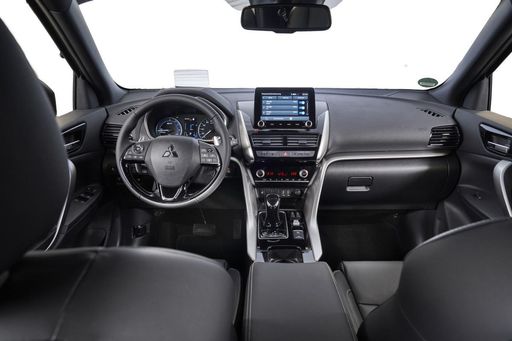
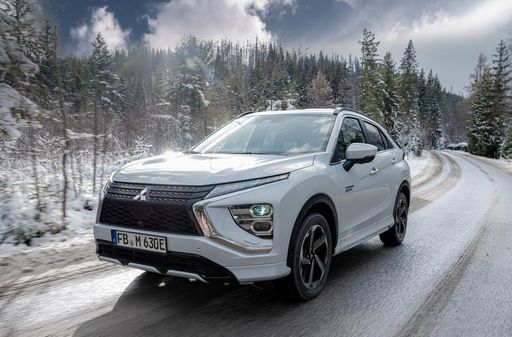
Eclipse Cross

Introduction

In the competitive world of SUVs, Mitsubishi offers two compelling options for enthusiasts and casual drivers alike: the Mitsubishi ASX and the Mitsubishi Eclipse Cross. Both models bring their own strengths to the table, from innovative powertrains to impressive design features. In this article, we will compare these two vehicles, examining their technical specifications and highlighting the unique innovations each has to offer.
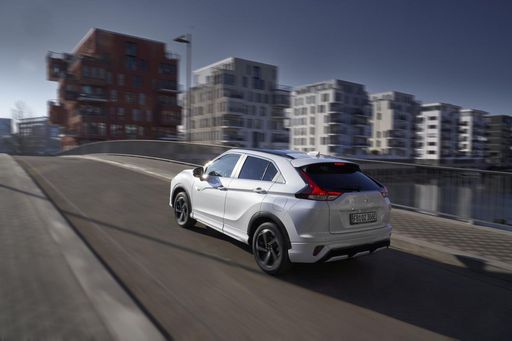
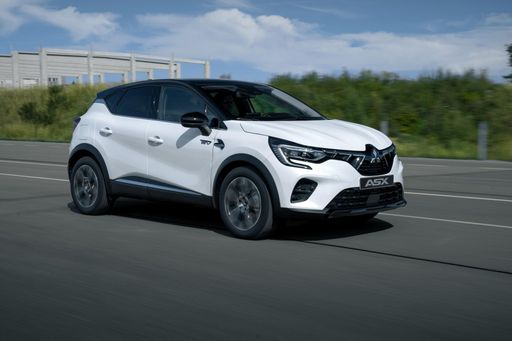
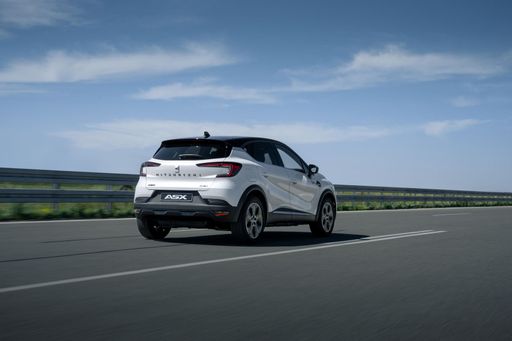
ASX

Engine and Performance

The Mitsubishi ASX provides a variety of engine choices to cater to different preferences. It comes in petrol, petrol MHEV (Mild Hybrid Electric Vehicle), and full hybrid versions. Depending on the selected engine, its horsepower ranges from 91 to 158 HP. The ASX offers both manual and automatic transmissions, including a manual gearbox, dual-clutch automatic, and automatic gearbox options. With front-wheel drive, it can accelerate from 0 to 100 km/h in as little as 8.5 seconds, reaching a maximum speed of 180 km/h.

Meanwhile, the Mitsubishi Eclipse Cross is equipped with a more powerful plugin hybrid engine with 188 HP. Its all-wheel drive system ensures superior handling and traction. Although the Eclipse Cross takes 10.9 seconds for the 0 to 100 km/h dash, it has an electric range of 45 km, making it incredibly efficient with a consumption of just 2 L/100 km.

Eclipse Cross

Dimensions and Space

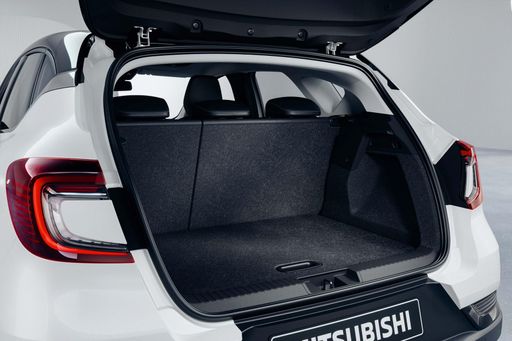
Both vehicles comfortably seat five passengers. The ASX measures 4239 mm in length, 1797 mm in width, and 1575 mm in height. This translates to a trunk capacity of 484 liters, making it ideal for families or road trips. On the other hand, the slightly larger Eclipse Cross, with dimensions of 4545 mm in length, 1805 mm in width, and 1685 mm in height, offers a trunk capacity of 359 liters. Despite its smaller trunk, the Eclipse Cross's body design enhances its aerodynamic performance.

ASX

Emissions and Efficiency

In terms of environmental impact, the ASX offers a CO2 efficiency class of C-D with CO2 emissions ranging between 107 to 135 g/km. It is a relatively efficient choice, with fuel consumption starting from 4.7 L/100 km in the hybrid models. The Eclipse Cross, with its focus on hybrid technology, excels here with a CO2 efficiency class of B and emissions as low as 46 g/km, reflecting its eco-friendly design and technology.

Eclipse Cross

Innovations and Features

The ASX's variety of engine options and flexible transmission configurations highlight Mitsubishi's commitment to providing a customizable driving experience. The Eclipse Cross stands out for its innovative plugin hybrid system, catering to the environmentally conscious driver who values fuel efficiency without compromising performance. Additionally, all-wheel drive further augments its capabilities in diverse driving conditions.

ASX

Conclusion

When deciding between the Mitsubishi ASX and the Mitsubishi Eclipse Cross, potential buyers should consider their driving priorities. The ASX offers versatility with multiple engine options and a larger trunk, making it perfect for those who require more cargo space. The Eclipse Cross appeals to those who prioritize efficiency and hybrid capabilities, ideal for urban use or those looking to reduce environmental impact. Both vehicles reflect Mitsubishi's dedication to blending performance with innovation, ensuring that each driving experience is both powerful and forward-thinking.

Here’s where it gets real: The technical differences in detail

Eclipse Cross

Costs and Efficiency:

Price and efficiency are often the first things buyers look at. Here it becomes clear which model has the long-term edge – whether at the pump, the plug, or in purchase price.

Mitsubishi ASX is clearly cheaper – starting at 21,400 £ , while the Mitsubishi Eclipse Cross costs 41,100 £ . That’s a price difference of around 19,714 £.

ASX

Engine and Performance:

Power, torque and acceleration are the classic benchmarks for car enthusiasts – and here, some clear differences start to show.

When it comes to engine power, the Mitsubishi Eclipse Cross offers markedly more power – delivering 218 HP compared to 158 HP. That’s roughly 60 HP more horsepower.

When accelerating from 0 to 100 km/h, the Mitsubishi Eclipse Cross is a bit quicker – completing the sprint in 7.9 s, while the Mitsubishi ASX takes 8.9 s. That’s about 1 s quicker.

There’s also a difference in torque: the Mitsubishi Eclipse Cross delivers slightly more torque with 300 Nm compared to 245 Nm. That’s about 55 Nm more.

Eclipse Cross

Space and Everyday Use:

Cabin size, boot volume and payload all play a role in everyday practicality. Here, comfort and flexibility make the difference.

Both vehicles offer seating for 5 people.

In terms of curb weight, Mitsubishi ASX is considerably lighter – 1,296 kg compared to 1,922 kg. The difference is around 626 kg.

Looking at boot space, the Mitsubishi Eclipse Cross offers somewhat more boot space – 545 L compared to 484 L. That’s a difference of about 61 L.

When it comes to payload, the Mitsubishi ASX carries only slightly more – 445 kg compared to 413 kg. That’s a difference of about 32 kg.

Who wins the race in the data check?

The Mitsubishi Eclipse Cross comes out clearly ahead in the objective data comparison.
This result only shows which model scores more points on paper – not which of the two cars feels right for you.

from £41,100
Eclipse Cross

Mitsubishi Eclipse Cross

  • Engine Type : Electric
  • Transmission : Automatic
  • Drive Type : Front-Wheel Drive
  • Power HP : 218 HP
  • Consumption kWh/100km : 16.7 - 17.1 kWh/100km
  • Electric Range : 615 - 627 km
Mitsubishi Eclipse Cross
Mitsubishi ASX

Costs and Consumption

View detailed analysis

Engine and Performance

View detailed analysis

Dimensions and Body

View detailed analysis

Mitsubishi Eclipse Cross

Mitsubishi Eclipse Cross combines coupe-like looks with crossover practicality, so you get style without the showroom attitude. It’s an affable daily driver that hides a few quirks behind a confident grin, making it an easy pick for buyers who want personality without fuss.

details

Mitsubishi ASX

The Mitsubishi ASX is a compact crossover that mixes practicality with a no-nonsense personality, making it an easy choice for buyers who want sensible space without the showroom theatrics. It won't set your pulse racing, but its composed ride and user-friendly kit make it a dependable companion for daily errands and weekend escapes — reliable rather than flashy.

details
Mitsubishi Eclipse Cross
Mitsubishi ASX

Costs and Consumption

Price
41,100 - 48,200 £
Price
21,400 - 32,500 £
Consumption L/100km
-
Consumption L/100km
4.3 - 6 L/100km
Consumption kWh/100km
16.7 - 17.1 kWh/100km
Consumption kWh/100km
-
Electric Range
615 - 627 km
Electric Range
-
Battery Capacity
-
Battery Capacity
-
co2
0 g/km
co2
99 - 137 g/km
Fuel tank capacity
-
Fuel tank capacity
-

Dimensions and Body

Body Type
SUV
Body Type
SUV
Seats
5
Seats
5
Doors
-
Doors
-
Curb weight
1,922 - 1,950 kg
Curb weight
1,296 - 1,493 kg
Trunk capacity
545 L
Trunk capacity
348 - 484 L
Length
-
Length
-
Width
1,908 mm
Width
1,797 mm
Height
-
Height
-
Max trunk capacity
-
Max trunk capacity
-
Payload
385 - 413 kg
Payload
397 - 445 kg

Engine and Performance

Engine Type
Electric
Engine Type
Petrol, Petrol MHEV, Full Hybrid
Transmission
Automatic
Transmission
Manuel, Automatic
Transmission Detail
Reduction Gearbox
Transmission Detail
Manual Gearbox, Dual-Clutch Automatic, Automatic Gearbox
Drive Type
Front-Wheel Drive
Drive Type
Front-Wheel Drive
Power HP
218 HP
Power HP
115 - 158 HP
Acceleration 0-100km/h
7.9 s
Acceleration 0-100km/h
8.9 - 12.3 s
Max Speed
-
Max Speed
-
Torque
300 Nm
Torque
190 - 245 Nm
Number of Cylinders
-
Number of Cylinders
3 - 4
Power kW
160 kW
Power kW
84 - 116 kW
Engine capacity
-
Engine capacity
1,199 - 1,789 cm3

General

Model Year
2025
Model Year
2,025 - 2,026
CO2 Efficiency Class
A
CO2 Efficiency Class
D, E, C
Brand
Mitsubishi
Brand
Mitsubishi
DriveDuel uses data analysis and artificial intelligence to evaluate vehicle data and create content. Content is regularly reviewed and improved. The displayed prices are estimates based on German list prices, adjusted to the respective country’s VAT. Country-specific registration taxes are not included. This information is not legally binding.