VS

Mitsubishi Space Star vs Hyundai i10 comparison

Compare performance (71 HP vs 90 HP), boot space and price (11,600 £ vs 14,600 £ ) at a glance. Find out which car is the better choice for you – Mitsubishi Space Star or Hyundai i10?

Mitsubishi Space Star vs Hyundai i10: Key differences

Mitsubishi Space Star

3.8 (1 Reviews)
rate
  • visibly cheaper
  • very slightly lighter
details

Hyundai i10

5 (1 Reviews)
rate
  • markedly more power
  • visibly quicker 0–100 km/h
  • very slightly more trunk space
details

All details on performance, efficiency, range and trunk space can be found in the technical comparison below – including user reviews for both models.

By Achim Sedelmaier

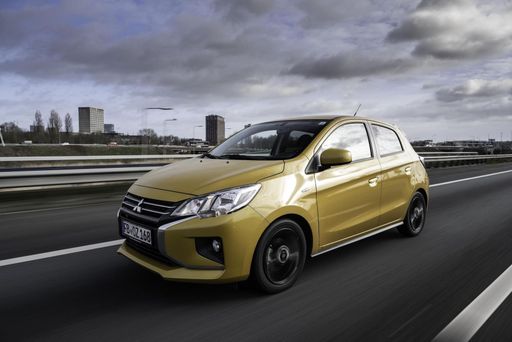
Space Star

Hyundai i10 vs Mitsubishi Space Star: A Dynamic Hatchback Duel

In the bustling world of compact cars, the Hyundai i10 and Mitsubishi Space Star emerge as notable contenders. Both vehicles cater to urban drivers seeking efficiency, comfort, and versatility. In this comparison, we delve into their technical specifications, innovations, and which of these hatchbacks might best suit your needs.
i10

Exterior and Dimensions

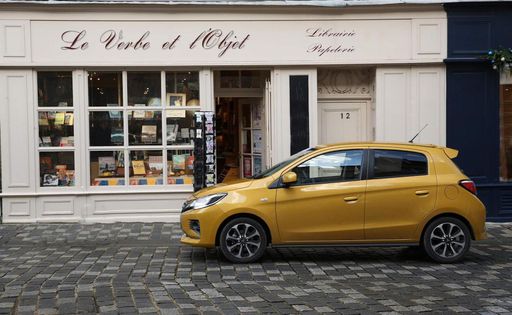
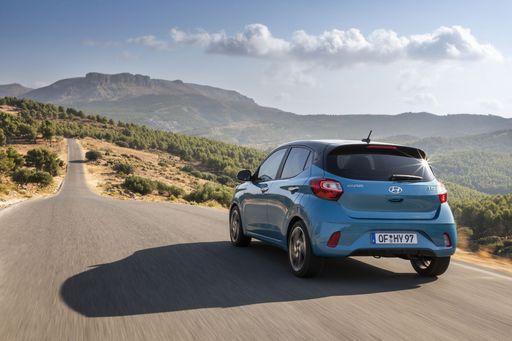
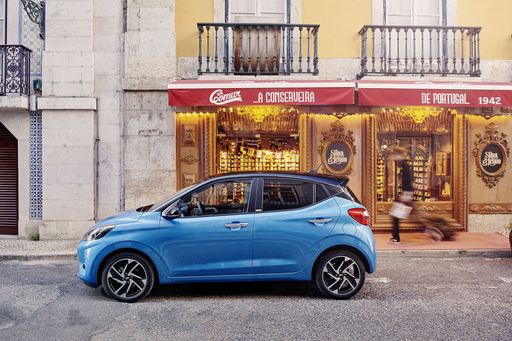
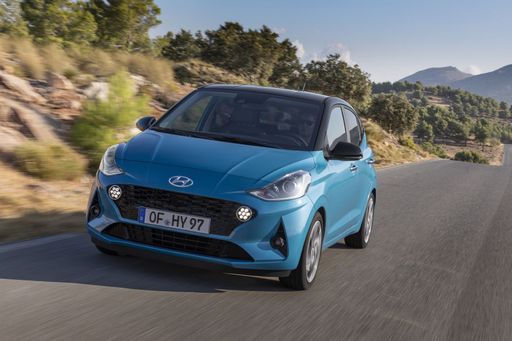
The Hyundai i10 boasts a length of 3670mm and width of 1680mm, providing a compact footprint that's ideal for city maneuvering. Its height stands at 1480mm, making entry and exit a breeze. On the other hand, the Mitsubishi Space Star is slightly longer at 3845mm, though narrower at 1665mm and taller at 1505mm. This extra length translates into a slightly larger trunk capacity, but the i10’s design gives it a sporty and agile aesthetic.

Space Star

Performance and Engine Specifications

The powertrains of these two competitors highlight their unique characteristics. The Hyundai i10 offers a range of engines with outputs between 63 HP and 90 HP, featuring a 998cc to 1197cc engine capacity. It is available with manual or automated manual transmissions, with fuel consumption ranging from 4.9 to 5.4 L/100 km. Moreover, the i10 achieves a maximum speed of 175 km/h and demonstrates an impressive 0-100 km/h acceleration in as little as 11.4 seconds.

In contrast, the Mitsubishi Space Star is equipped with a 1193cc petrol engine delivering 71 HP. It also features manual and CVT transmissions, with fuel efficiency ratings slightly higher than the i10, ranging from 4.9 to 5.5 L/100 km. The Space Star can reach top speeds of 167 km/h, with a 0-100 km/h time of 14.1 seconds for the base model.

i10

Interior Comfort and Space

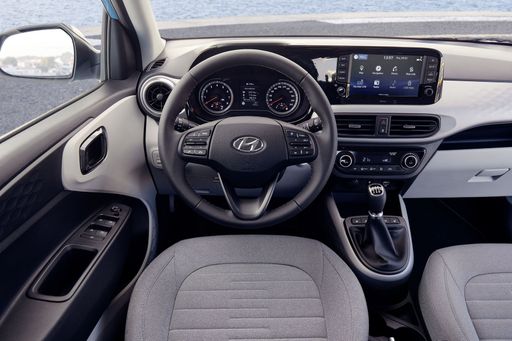
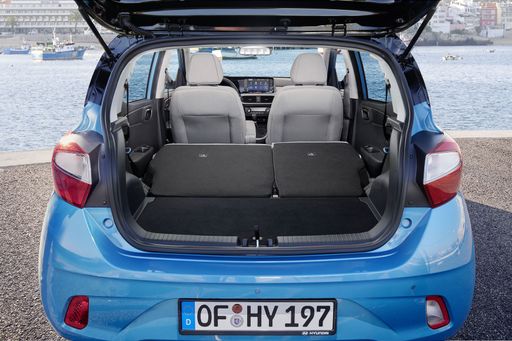
When it comes to passenger comfort, both hatchbacks are designed for practicality. The Hyundai i10 accommodates 4 to 5 passengers with a trunk capacity of 252 liters, providing ample space for everyday needs. Its modern interior features are aimed at enhancing user experience, with intuitive controls and a focus on driver ergonomics.

On the other hand, the Mitsubishi Space Star offers seating for 5 with slightly less trunk space, ranging from 209 to 235 liters, depending on the model year. While the interior may not be as contemporary as the i10's, it still provides adequate comfort and functionality for city dwellers.

Space Star

Technology and Innovations

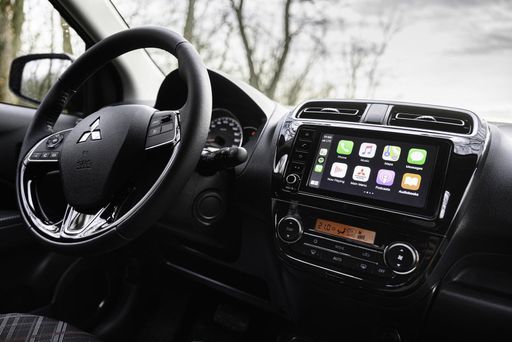
The Hyundai i10 is equipped with the latest technology, including advanced infotainment systems with smartphone connectivity, Bluetooth, and optional navigation, ensuring a connected driving experience. Safety features such as Forward Collision-Avoidance Assist and Lane Keeping Assist enhance its appeal to technology-savvy consumers.

The Space Star, while perhaps lacking some of the more advanced features of the i10, focuses on essential technology that supports safety and efficiency. Basic infotainment systems come standard, but buyers may find the options for connectivity and navigation more limited compared to the i10.

i10

Eco-Friendliness and Efficiency

Both vehicles offer favorable CO2 emissions ratings, with the i10 emitting between 111 and 123 g/km, while the Space Star shows a range from 112 to 125 g/km. This ensures that both cars are compliant with modern eco standards, appealing to environmentally conscious drivers. Hyundai’s use of advanced engine technology optimizes fuel efficiency, while Mitsubishi remains competitive with its own economical practices.

Space Star

Conclusion: Which Hatchback Reigns Supreme?

Ultimately, choosing between the Hyundai i10 and Mitsubishi Space Star boils down to personal preference and priorities. The i10 leads in performance, technology, and interior comfort, making it a better fit for those who desire a dynamic driving experience paired with modern amenities.

Meanwhile, the Space Star excels in a straightforward, no-nonsense approach, ideally catering to buyers prioritizing efficiency and value. As both vehicles aim to charm urban commuters, they represent compelling options in the hatchback segment, each with unique strengths that appeal to various tastes and lifestyles.

Here’s where it gets real: The technical differences in detail

Space Star

Costs and Efficiency:

Price and efficiency are often the first things buyers look at. Here it becomes clear which model has the long-term edge – whether at the pump, the plug, or in purchase price.

Mitsubishi Space Star is visibly cheaper – starting at 11,600 £ , while the Hyundai i10 costs 14,600 £ . That’s a price difference of around 2,914 £.

Both cars consume an average of 4.9 L/100km – no difference here.

i10

Engine and Performance:

Power, torque and acceleration are the classic benchmarks for car enthusiasts – and here, some clear differences start to show.

When it comes to engine power, the Hyundai i10 offers markedly more power – delivering 90 HP compared to 71 HP. That’s roughly 19 HP more horsepower.

When accelerating from 0 to 100 km/h, the Hyundai i10 is visibly quicker – completing the sprint in 11.4 s, while the Mitsubishi Space Star takes 14.1 s. That’s about 2.7 s quicker.

Looking at top speed, the Hyundai i10 is marginally faster – reaching 175 km/h, while the Mitsubishi Space Star tops out at 167 km/h. The difference is around 8 km/h.

There’s also a difference in torque: the Hyundai i10 delivers significantly more torque with 172 Nm compared to 102 Nm. That’s about 70 Nm more.

Space Star

Space and Everyday Use:

Whether family car or daily driver – which one offers more room, flexibility and comfort?

Both vehicles offer seating for 5 people.

In terms of curb weight, Mitsubishi Space Star is very slightly lighter – 940 kg compared to 996 kg. The difference is around 56 kg.

Looking at boot space, the Hyundai i10 offers very slightly more boot space – 252 L compared to 235 L. That’s a difference of about 17 L.

For maximum load capacity, the Hyundai i10 offers slightly more capacity – up to 1,050 L, about 138 L more than the Mitsubishi Space Star.

When it comes to payload, the Hyundai i10 carries only slightly more – 423 kg compared to 400 kg. That’s a difference of about 23 kg.

Who wins the race in the data check?

The Hyundai i10 is clearly superior overall in the objective data comparison.
This result only shows which model scores more points on paper – not which of the two cars feels right for you.

from £14,600
i10

Hyundai i10

  • Engine Type Petrol
  • Transmission Manuel, Automatic
  • Drive Type Front-Wheel Drive
  • Power HP 63 - 90 HP
  • Consumption L/100km 4.9 - 5.5 L/100km
Mitsubishi Space Star
Hyundai i10

Costs and Consumption

View detailed analysis

Engine and Performance

View detailed analysis

Dimensions and Body

View detailed analysis

Mitsubishi Space Star

The Mitsubishi Space Star is a tidy, no-nonsense city car that squeezes surprising interior space into a compact, easy-to-park package. It's not a thrill-seeker's toy, but for buyers after low running costs, fuss-free reliability and sensible day-to-day practicality, it's a clever and cheerful choice that keeps your wallet and nerves happy.

details

Hyundai i10

The Hyundai i10 is a cheeky city car that squeezes big-car confidence into a pocket-friendly package, carving through tight streets with surprising composure and sensible practicality. For buyers after low fuss, sensible equipment and wallet-friendly running costs, it's a smart, no-nonsense pick that makes sense whether you're a first-time driver or need a reliable second car.

details
Mitsubishi Space Star
Hyundai i10

Costs and Consumption

Price
11,600 - 18,700 £
Price
14,600 - 19,000 £
Consumption L/100km
4.9 - 5.5 L/100km
Consumption L/100km
4.9 - 5.5 L/100km
Consumption kWh/100km
-
Consumption kWh/100km
-
Electric Range
-
Electric Range
-
Battery Capacity
-
Battery Capacity
-
co2
112 - 125 g/km
co2
110 - 124 g/km
Fuel tank capacity
35 L
Fuel tank capacity
36 L

Dimensions and Body

Body Type
Hatchback
Body Type
Hatchback
Seats
5
Seats
4 - 5
Doors
5
Doors
5
Curb weight
940 - 1,011 kg
Curb weight
996 - 1,099 kg
Trunk capacity
209 - 235 L
Trunk capacity
252 L
Length
3,845 mm
Length
3,670 - 3,675 mm
Width
1,665 mm
Width
1,680 mm
Height
1,505 mm
Height
1,480 - 1,483 mm
Max trunk capacity
881 - 912 L
Max trunk capacity
1,050 L
Payload
359 - 400 kg
Payload
344 - 423 kg

Engine and Performance

Engine Type
Petrol
Engine Type
Petrol
Transmission
Manuel, Automatic
Transmission
Manuel, Automatic
Transmission Detail
Manual Gearbox, CVT
Transmission Detail
Manual Gearbox, Automated Manual
Drive Type
Front-Wheel Drive
Drive Type
Front-Wheel Drive
Power HP
71 HP
Power HP
63 - 90 HP
Acceleration 0-100km/h
14.1 - 15.8 s
Acceleration 0-100km/h
11.4 - 18.4 s
Max Speed
163 - 167 km/h
Max Speed
143 - 175 km/h
Torque
102 Nm
Torque
93 - 172 Nm
Number of Cylinders
3
Number of Cylinders
3 - 4
Power kW
52 kW
Power kW
46 - 66 kW
Engine capacity
1,193 cm3
Engine capacity
998 - 1,197 cm3

General

Model Year
2,020 - 2,022
Model Year
2024
CO2 Efficiency Class
C, D
CO2 Efficiency Class
C, D
Brand
Mitsubishi
Brand
Hyundai
DriveDuel uses data analysis and artificial intelligence to evaluate vehicle data and create content. Content is regularly reviewed and improved. The displayed prices are estimates based on German list prices, adjusted to the respective country’s VAT. Country-specific registration taxes are not included. This information is not legally binding.