VS

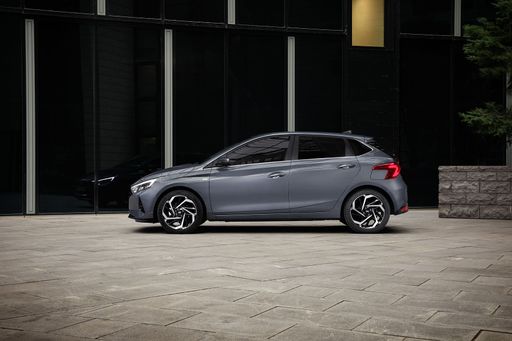
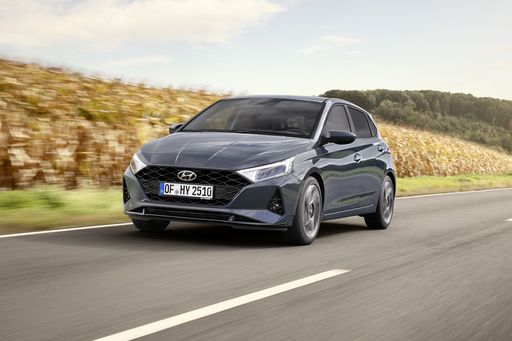
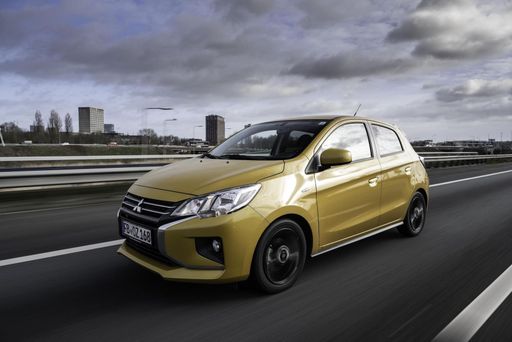
Mitsubishi Space Star vs Hyundai i20 comparison

Compare performance (71 HP vs 90 HP), boot space and price (11,600 £ vs 18,600 £ ) at a glance. Find out which car is the better choice for you – Mitsubishi Space Star or Hyundai i20?

Mitsubishi Space Star vs Hyundai i20: Key differences

Mitsubishi Space Star

  • significantly cheaper
  • moderately more efficient
  • markedly lighter

Hyundai i20

4 (1 Reviews)
rate
  • markedly more power
  • clearly quicker 0–100 km/h
  • visibly more trunk space

All details on performance, efficiency, range and trunk space can be found in the technical comparison below – including user reviews for both models.

Space Star

When it comes to the compact hatchback segment, the Hyundai i20 and Mitsubishi Space Star present themselves as compelling choices for urban drivers and small families alike. Both vehicles combine practicality with modern technology, but they cater to slightly different preferences and needs. In this article, we will delve into their technical specifications, innovations, and overall performance to help buyers make an informed decision.
i20

Design and Dimensions

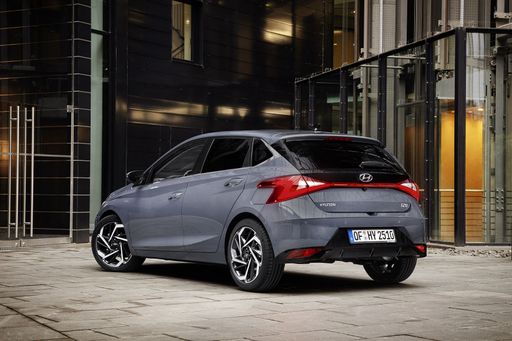
The Hyundai i20 showcases a modern hatchback design with dimensions that make it ideal for city driving. Measuring 4075 mm in length and 1775 mm in width, it offers a spacious cabin and a trunk capacity of 352 liters, suitable for weekly grocery runs or weekend getaways.

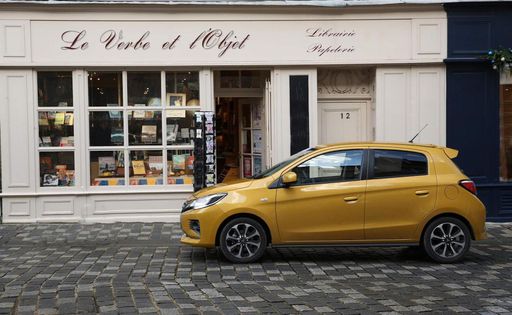
On the other hand, the Mitsubishi Space Star is notably smaller, with a length of 3845 mm and a width of 1665 mm. While its trunk capacity ranges from 209 to 235 liters, it provides adequate space for urban commuting but may fall short for larger cargo needs.

Space Star

Engine and Performance

The i20 impresses with a range of engine options, including both petrol and mild-hybrid petrol variants. In terms of power, the i20 offers up to 100 horsepower with a torque rating of 200 Nm, enabling a brisk acceleration from 0-100 km/h in just 12.1 seconds for the more powerful variant. Its fuel consumption stands at a respectable 5.3 L/100 km, making it efficient for daily use.

Conversely, the Mitsubishi Space Star is available with a single petrol engine offering up to 71 horsepower and a torque of 102 Nm. Its acceleration is notably slower, taking approximately 14.1 seconds to reach 100 km/h. The Space Star, however, compensates with impressive fuel efficiency, boasting consumption figures as low as 4.9 L/100 km.

i20

Transmission Options

The Hyundai i20 offers a choice between a manual gearbox and a dual-clutch automatic transmission, enhancing the driving experience by providing smoother shifts. The Space Star, while equipped with a standard manual gearbox, also offers a CVT for those seeking a more seamless driving experience. Both vehicles feature front-wheel drive, a common trait in this segment offering good traction and stability.

Space Star

Safety and Technology Features

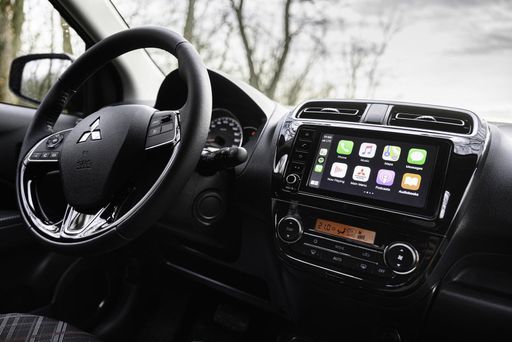
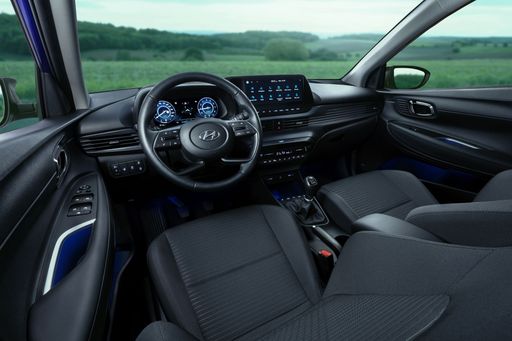
Safety is paramount in both models. The i20 comes packed with advanced safety features including lane-keeping assist and a host of airbags. On the technological front, the Hyundai i20 is embedded with a modern infotainment system, featuring smartphone connectivity options such as Apple CarPlay and Android Auto, enhancing the driving experience.

Mitsubishi has not skimped on safety either but tends to focus on essentials. Although a bit outdated compared to competitors, the Space Star still provides solid safety features while offering a more simplified but functional infotainment system.

i20

Comfort and Practicality

Both cars comfortably seat five passengers, but the Hyundai i20 edges ahead in terms of cabin comfort and build quality. The materials used inside the i20 give it a more premium feel, while the layout and space optimization are commendable. The Mitsubishi Space Star, while functional, is tailored more towards practicality than luxury, featuring basic but comfortable seating.

Space Star

Conclusion: Which to Choose?

Choosing between the Hyundai i20 and the Mitsubishi Space Star boils down to personal preferences and specific needs. The Hyundai i20 appeals to those looking for a stylish, technology-driven hatchback with strong performance and safety features. Meanwhile, the Mitsubishi Space Star attracts buyers with its practicality and efficiency, particularly for city commuting.

Ultimately, both vehicles present a solid option in the compact hatchback market, making it essential for potential buyers to consider their priorities, whether that's performance, comfort, or economy.

Here’s where it gets real: The technical differences in detail

Space Star

Costs and Efficiency:

When it comes to price and running costs, the biggest differences usually appear. This is often where you see which car fits your budget better in the long run.

Mitsubishi Space Star is significantly cheaper – starting at 11,600 £ , while the Hyundai i20 costs 18,600 £ . That’s a price difference of around 6,952 £.

Fuel consumption also shows a difference: the Mitsubishi Space Star uses 4.9 L/100km and is moderately more efficient than the Hyundai i20 with 5.7 L/100km. The difference is about 0.8 L/100km.

i20

Engine and Performance:

Power, torque and acceleration are the classic benchmarks for car enthusiasts – and here, some clear differences start to show.

When it comes to engine power, the Hyundai i20 offers markedly more power – delivering 90 HP compared to 71 HP. That’s roughly 19 HP more horsepower.

When accelerating from 0 to 100 km/h, the Hyundai i20 is clearly quicker – completing the sprint in 11.5 s, while the Mitsubishi Space Star takes 14.1 s. That’s about 2.6 s quicker.

There’s also a difference in torque: the Hyundai i20 delivers clearly more torque with 172 Nm compared to 102 Nm. That’s about 70 Nm more.

Space Star

Space and Everyday Use:

Beyond pure performance, interior space and usability matter most in daily life. This is where you see which car is more practical and versatile.

Both vehicles offer seating for 5 people.

In terms of curb weight, Mitsubishi Space Star is markedly lighter – 940 kg compared to 1,145 kg. The difference is around 205 kg.

Looking at boot space, the Hyundai i20 offers visibly more boot space – 352 L compared to 235 L. That’s a difference of about 117 L.

When it comes to payload, the Hyundai i20 carries moderately more – 465 kg compared to 400 kg. That’s a difference of about 65 kg.

Who wins the race in the data check?

The Hyundai i20 holds a narrow overall lead in the objective data comparison.
This result only shows which model scores more points on paper – not which of the two cars feels right for you.

from £18,600
i20

Hyundai i20

  • Engine Type : Petrol
  • Transmission : Manuel, Automatic
  • Drive Type : Front-Wheel Drive
  • Power HP : 90 HP
  • Consumption L/100km : 5.7 L/100km
Mitsubishi Space Star
Hyundai i20

Costs and Consumption

View detailed analysis

Engine and Performance

View detailed analysis

Dimensions and Body

View detailed analysis

Mitsubishi Space Star

The Mitsubishi Space Star is a tidy, no-nonsense city car that squeezes surprising interior space into a compact, easy-to-park package. It's not a thrill-seeker's toy, but for buyers after low running costs, fuss-free reliability and sensible day-to-day practicality, it's a clever and cheerful choice that keeps your wallet and nerves happy.

details

Hyundai i20

The Hyundai i20 is a cheeky small car that mixes smart styling with sensible practicality, feeling more polished and roomy than you might expect for the money. It’s an easy car to live with, offering engaging handling, a comfy cabin and useful equipment that make daily commutes and weekend errands notably less dull.

details
Mitsubishi Space Star
Hyundai i20

Costs and Consumption

Price
11,600 - 18,700 £
Price
18,600 - 24,000 £
Consumption L/100km
4.9 - 5.5 L/100km
Consumption L/100km
5.7 L/100km
Consumption kWh/100km
-
Consumption kWh/100km
-
Electric Range
-
Electric Range
-
Battery Capacity
-
Battery Capacity
-
co2
112 - 125 g/km
co2
128 - 129 g/km
Fuel tank capacity
35 L
Fuel tank capacity
-

Dimensions and Body

Body Type
Hatchback
Body Type
Hatchback
Seats
5
Seats
5
Doors
5
Doors
-
Curb weight
940 - 1,011 kg
Curb weight
1,145 - 1,170 kg
Trunk capacity
209 - 235 L
Trunk capacity
352 L
Length
3,845 mm
Length
-
Width
1,665 mm
Width
1,775 mm
Height
1,505 mm
Height
-
Max trunk capacity
881 - 912 L
Max trunk capacity
-
Payload
359 - 400 kg
Payload
455 - 465 kg

Engine and Performance

Engine Type
Petrol
Engine Type
Petrol
Transmission
Manuel, Automatic
Transmission
Manuel, Automatic
Transmission Detail
Manual Gearbox, CVT
Transmission Detail
Manual Gearbox, Dual-Clutch Automatic
Drive Type
Front-Wheel Drive
Drive Type
Front-Wheel Drive
Power HP
71 HP
Power HP
90 HP
Acceleration 0-100km/h
14.1 - 15.8 s
Acceleration 0-100km/h
11.5 - 12.8 s
Max Speed
163 - 167 km/h
Max Speed
-
Torque
102 Nm
Torque
172 Nm
Number of Cylinders
3
Number of Cylinders
3
Power kW
52 kW
Power kW
66 kW
Engine capacity
1,193 cm3
Engine capacity
998 cm3

General

Model Year
2,020 - 2,022
Model Year
2,025
CO2 Efficiency Class
C, D
CO2 Efficiency Class
D
Brand
Mitsubishi
Brand
Hyundai
DriveDuel uses data analysis and artificial intelligence to evaluate vehicle data and create content. Content is regularly reviewed and improved. The displayed prices are estimates based on German list prices, adjusted to the respective country’s VAT. Country-specific registration taxes are not included. This information is not legally binding.