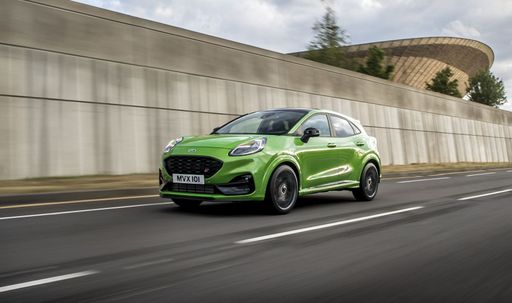
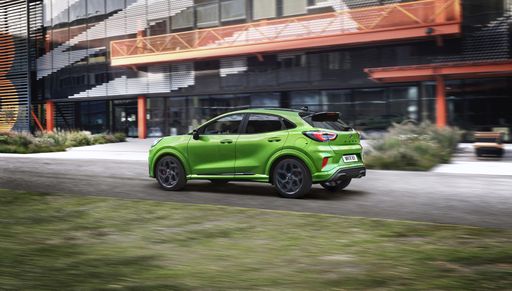
@ Ford Motor Company / Ford Media Center
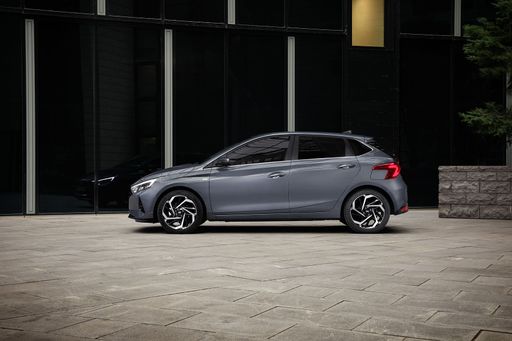
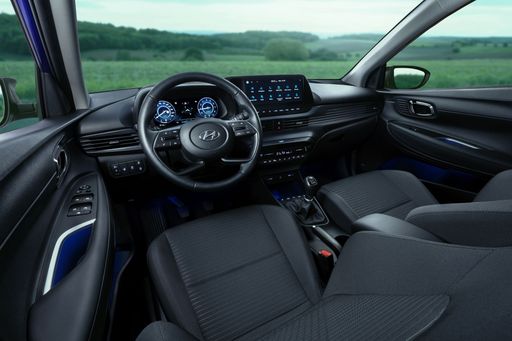
@ Hyundai Motor Company
VS

Ford Puma vs Hyundai i20 – Which car suits you better?

Two cars, one duel: Ford Puma meets Hyundai i20.
Which one wins in performance, efficiency and value for money? Find out now!

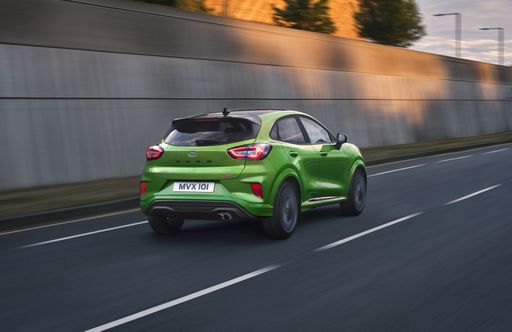
Puma @ Ford Motor Company / Ford Media Center

Ford Puma vs. Hyundai i20: A Clash of Styles and Innovation

In the ever-evolving automotive world, the Ford Puma and Hyundai i20 embody the latest trends and technology. While these vehicles cater to slightly different audience segments, their comparative analysis reveals fascinating insights into their designs, performance, and the innovative features they bring to the table.
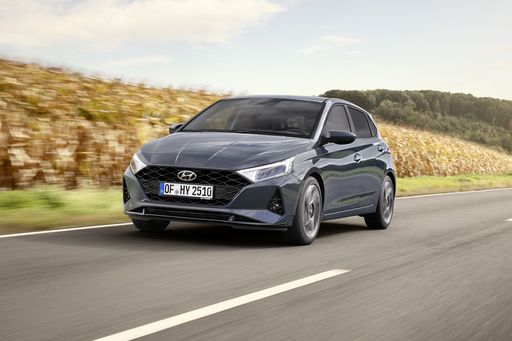
i20 @ Hyundai Motor Company

Design and Body Type

The Ford Puma takes the form of a compact SUV, appealing to those who desire a higher driving position and a sporty look. With a length ranging from 4186 mm to 4226 mm, a width of 1805 mm, and a height around 1550 mm, the Puma brings a robust yet stylish exterior to the scene.

In contrast, the Hyundai i20 is a sleek hatchback, designed for city life and those who prioritize maneuverability and compact design. With dimensions of 4075 mm in length, a width of 1775 mm, and a height between 1450 mm and 1455 mm, it offers a more compact profile but retains an appealing sense of elegance.

Puma @ Ford Motor Company / Ford Media Center

Engine and Performance

Under the hood, the Ford Puma offers a variety of powertrains, including both Petrol MHEV and electric versions, with power outputs ranging from 125 HP to 168 HP. The consumption varies between 5.4 L/100km for petrol and 13.1 kWh/100km for electric models, with an impressive electric range up to 376 km. The torque ranges from 170 to 290 Nm, translating to a dynamic driving experience, and its acceleration from 0 to 100 km/h can be as quick as 7.4 seconds, depending on the model.

The Hyundai i20, meanwhile, offers more modest powertrain options, ranging from 79 HP to 100 HP. The petrol variants exhibit efficiency, consuming between 5.1 and 5.3 L/100km. With torques reaching up to 200 Nm, the i20 is responsive, though its acceleration time stands at a more leisurely 11.1 to 13.7 seconds from 0 to 100 km/h.

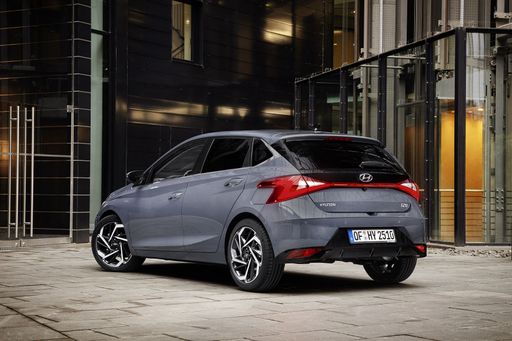
i20 @ Hyundai Motor Company

Transmission and Drive Type

Both models sport Front-Wheel Drive configurations, catering to those who favor simplicity and efficiency. The Ford Puma offers versatility with manual and dual-clutch automatic transmissions, while the Hyundai i20 provides options of manual and dual-clutch automatic gearboxes, focusing more on user-friendly urban driving.

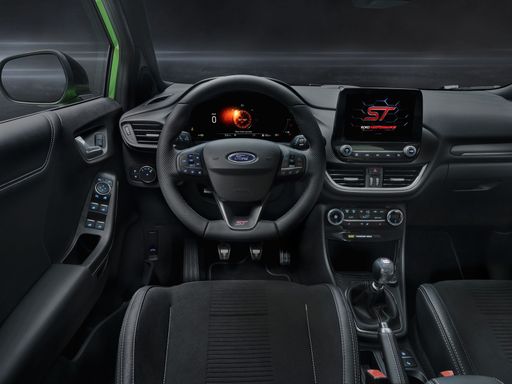
Puma @ Ford Motor Company / Ford Media Center

Innovation and Technology

The Ford Puma integrates advanced hybrid technology within its MHEV models, significantly boosting fuel efficiency and minimizing CO2 emissions with a class as high as 'A'. Features like the electric model's reduction gearbox and its varied driving modes underscore Ford's commitment to innovation.

Hyundai's i20 doesn't fall short either, emphasizing a technology suite that includes various driver-assistance systems aimed at safety and convenience, coupled with attention to reducing environmental impact, boasting a CO2 figure of 120 g/km.

i20 @ Hyundai Motor Company

Practicality and Interior Space

The Puma's SUV design provides ample interior space with a trunk capacity ranging from 456 to 523 liters and a seating capacity for five, making it a practical choice for families or individuals who need extra storage.

The i20 offers a trunk space of 352 liters, optimizing its compact form for urban settings. Its design comfortably accommodates five passengers, focusing more on efficiency and ease of navigation in tight cityscapes.

Puma @ Ford Motor Company / Ford Media Center

Conclusion

In the matchup of the Ford Puma versus the Hyundai i20, the choice hinges largely on customer priorities. The Puma stands out for its versatile power options, robust SUV design, and technological advancements. In contrast, the i20 shines with its compact maneuverability, efficient performance, and urban appeal. Both cars reflect the innovative spirit of their respective manufacturers and showcase the continuous evolution of automotive engineering.

Here’s where it gets real: The technical differences in detail

i20 @ Hyundai Motor Company

Costs and Efficiency:

Price and efficiency are key factors when choosing a car – and this is often where the real differences emerge.

Hyundai i20 has a decisively advantage in terms of price – it starts at 17400 £, while the Ford Puma costs 24800 £. That’s a price difference of around 7371 £.

Fuel consumption also shows a difference: Hyundai i20 manages with 5.20 L and is therefore minimal more efficient than the Ford Puma with 5.40 L. The difference is about 0.20 L per 100 km.

Engine and Performance:

Power, torque and acceleration are the classic benchmarks for car enthusiasts – and here, some clear differences start to show.

When it comes to engine power, the Ford Puma has a clearly edge – offering 168 HP compared to 100 HP. That’s roughly 68 HP more horsepower.

In acceleration from 0 to 100 km/h, the Ford Puma is significantly quicker – completing the sprint in 7.40 s, while the Hyundai i20 takes 11.10 s. That’s about 3.70 s faster.

In terms of top speed, the Ford Puma performs a bit better – reaching 210 km/h, while the Hyundai i20 tops out at 183 km/h. The difference is around 27 km/h.

There’s also a difference in torque: Ford Puma pulls clearly perceptible stronger with 290 Nm compared to 200 Nm. That’s about 90 Nm difference.

Space and Everyday Use:

Beyond pure performance, interior space and usability matter most in daily life. This is where you see which car is more practical and versatile.

Both vehicles offer seating for 5 people.

In curb weight, Hyundai i20 is evident lighter – 1088 kg compared to 1316 kg. The difference is around 228 kg.

In terms of boot space, the Ford Puma offers evident more room – 523 L compared to 352 L. That’s a difference of about 171 L.

In maximum load capacity, the Ford Puma performs minimal better – up to 1283 L, which is about 118 L more than the Hyundai i20.

When it comes to payload, Hyundai i20 slight takes the win – 472 kg compared to 469 kg. That’s a difference of about 3 kg.

Who comes out on top?

Overall, the Ford Puma shows itself to be dominates this comparison and secures the title of DriveDuel Champion.
It convinces with the more balanced overall package and proves to be the more versatile choice for everyday use.

from about £24,800
Puma @ Ford Motor Company / Ford Media Center

Ford Puma

  • Engine Type : Electric, Petrol MHEV
  • Transmission : Automatic, Manuel
  • Drive Type : Front-Wheel Drive
  • Power HP : 125 - 168 HP
  • Consumption L/100km : 5.4 - 5.9 L
  • Consumption kWh/100km : 13.1 - 13.9 kWh
  • Electric Range : 361 - 376 km

Ford Puma

5 (1)
rate

The Ford Puma is a cheeky compact crossover that blends sporty styling with city-friendly practicality, giving drivers a surprisingly fun and composed ride. With clever storage tricks and a lively personality, it’s a smart pick for buyers who want enjoyment without fuss.

details

Hyundai i20

4 (1)
rate

The Hyundai i20 is a cheeky small car that mixes smart styling with sensible practicality, feeling more polished and roomy than you might expect for the money. It’s an easy car to live with, offering engaging handling, a comfy cabin and useful equipment that make daily commutes and weekend errands notably less dull.

details
Ford Puma
Hyundai i20
Puma @ Ford Motor Company / Ford Media Center
i20 @ Hyundai Motor Company

Costs and Consumption

Price
24800 - 36300 £
Price
17400 - 24000 £
Consumption L/100km
5.4 - 5.9 L
Consumption L/100km
5.2 - 5.3 L
Consumption kWh/100km
13.1 - 13.9 kWh
Consumption kWh/100km
-
Electric Range
361 - 376 km
Electric Range
-
Battery Capacity
43 kWh
Battery Capacity
-
co2
0 - 135 g/km
co2
119 - 121 g/km
Fuel tank capacity
42 L
Fuel tank capacity
40 L

Dimensions and Body

Body Type
SUV
Body Type
Hatchback
Seats
5
Seats
5
Doors
5
Doors
5
Curb weight
1316 - 1563 kg
Curb weight
1088 - 1190 kg
Trunk capacity
456 - 523 L
Trunk capacity
352 L
Length
4186 - 4226 mm
Length
4065 - 4075 mm
Width
1805 mm
Width
1775 mm
Height
1550 - 1555 mm
Height
1450 - 1455 mm
Max trunk capacity
1216 - 1283 L
Max trunk capacity
1165 L
Payload
367 - 469 kg
Payload
450 - 472 kg

Engine and Performance

Engine Type
Electric, Petrol MHEV
Engine Type
Petrol
Transmission
Automatic, Manuel
Transmission
Automatic, Manuel
Transmission Detail
Reduction Gearbox, Manual Gearbox, Dual-Clutch Automatic
Transmission Detail
Dual-Clutch Automatic, Manual Gearbox
Drive Type
Front-Wheel Drive
Drive Type
Front-Wheel Drive
Power HP
125 - 168 HP
Power HP
79 - 100 HP
Acceleration 0-100km/h
7.4 - 9.8 s
Acceleration 0-100km/h
11.1 - 13.7 s
Max Speed
160 - 210 km/h
Max Speed
166 - 183 km/h
Torque
170 - 290 Nm
Torque
113 - 200 Nm
Number of Cylinders
3
Number of Cylinders
3 - 4
Power kW
92 - 124 kW
Power kW
58 - 74 kW
Engine capacity
999 cm3
Engine capacity
998 - 1197 cm3

General

Model Year
2025
Model Year
2024
CO2 Efficiency Class
A, D
CO2 Efficiency Class
D
Brand
Ford
Brand
Hyundai
Is the Ford Puma offered with different drivetrains?

The Ford Puma is offered with Front-Wheel Drive.

The prices and data displayed are estimates based on German list prices and may vary by country. This information is not legally binding.