VS

Ford Puma vs CUPRA Raval comparison

Compare performance (168 HP vs 226 HP), boot space and price (23,900 £ vs 22,200 £ ) at a glance. Find out which car is the better choice for you – Ford Puma or CUPRA Raval?

Ford Puma vs CUPRA Raval: Key differences

Ford Puma

3 (11 Reviews)
rate
  • marginally more efficient
  • clearly lighter
  • slightly more trunk space
details

CUPRA Raval

4.6 (2 Reviews)
rate
  • very slightly cheaper
  • visibly more power
  • marginally more electric range
  • only slightly quicker 0–100 km/h
details

All details on performance, efficiency, range and trunk space can be found in the technical comparison below – including user reviews for both models.

By Achim Sedelmaier

Puma

Ford Puma VS CUPRA Raval: overview for buyers

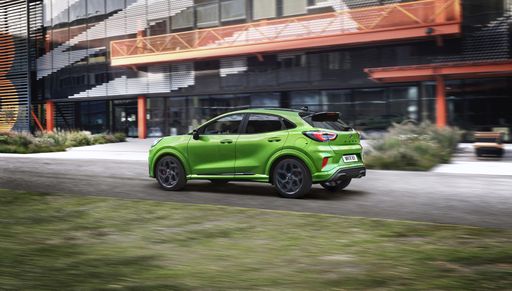
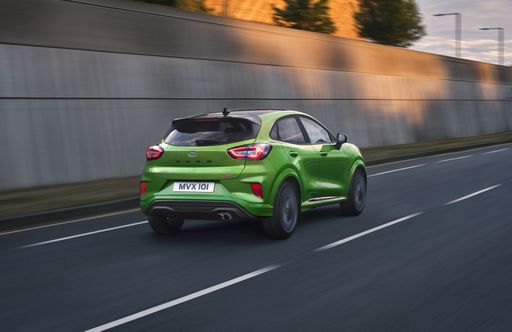
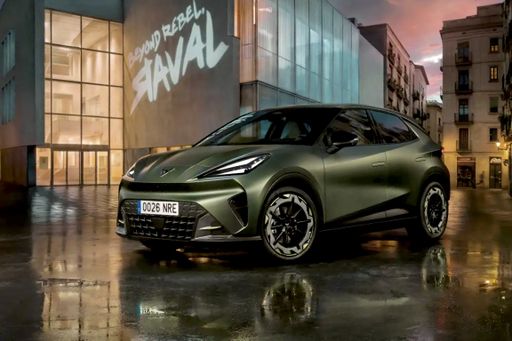
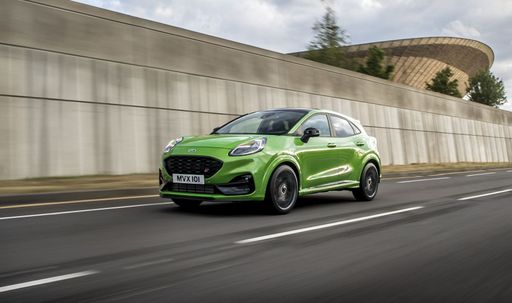
Ford Puma VS CUPRA Raval brings together two small cars with very different priorities — the Puma leans into playful everyday driving and clever utility, while the CUPRA Raval aims for electric shove, tech polish and more rear-seat usability. The Puma feels like a compact crossover that rewards a spirited drive and packs oddball practical touches such as a wash‑able lower storage well. The Raval presents itself as a composed, traction‑rich small electric with a surprisingly large, usable boot and a modern Android infotainment setup. Choosing between them comes down to whether you value lightweight agility and inventive stowage (Puma) or mature electric refinement and rear‑seat comfort (Raval). The sections that follow make those trade‑offs tangible for city runs, long trips and family duties.
Raval

Driving character and real-world performance

The Ford Puma drives with a nimble, eager personality — steering is direct and the car rewards quick direction changes, so it feels smaller and sportier on twisty roads. The CUPRA Raval, by contrast, delivers stronger shove and cleaner traction thanks to its electric drivetrain and front-axle traction aids, so overtakes feel effortless and the car stays composed when pushed. Where the Puma transmits engine character and a slightly firmer suspension that keeps you engaged, the Raval trades a bit of that tactile playfulness for steadier high‑speed composure and a heavier, more planted feel. For buyers who relish driver involvement the Puma will feel livelier; for those who want confident, immediate acceleration and grip the Raval will feel more competent and reassuring.

Puma

Comfort and long‑distance behavior

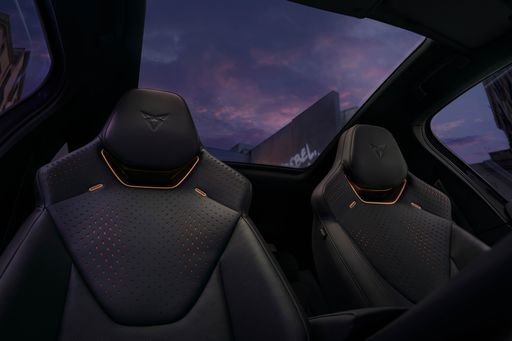
On long runs the Puma surprises with supportive front seats and a stable highway demeanour, but its smaller cabin and three‑cylinder voice under load make long stints less serene than you might want. The Raval is quieter and more composed at speed — its electric powertrain and adaptive suspension provide a less fatiguing cruise and fewer intrusive noises. Rear‑seat space tilts the balance: the Puma’s backseat is tighter and will show its limits on long family journeys, whereas the Raval’s flatter floor and roomier rear make longer trips with passengers noticeably more comfortable. If motorway calm and rear passenger comfort matter most, the Raval has the edge; if you prioritise front‑seat engagement and don’t regularly carry adults long distances, the Puma remains appealing.

Raval

Practicality, cargo and everyday usability

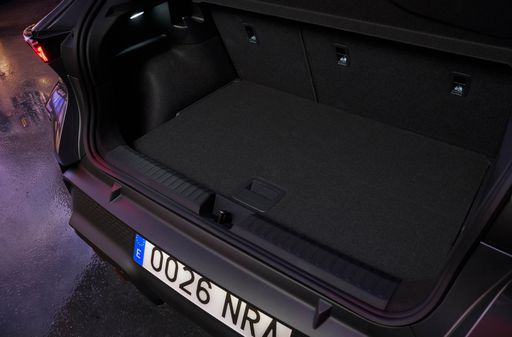
The Puma punches above its size with very clever stowage — the lower, washable compartment and flexible load floor make loading awkward items and muddy kit much less of a chore. The Raval counters with an unusually large, deep boot for its footprint and a useful double‑floor arrangement that turns hatchback space into genuinely family‑useable luggage room. Practical differences emerge in detail: Puma’s low, wide aperture and MegaBox are brilliant for sports gear and cleaning up after outdoor activities, while Raval’s larger overall capacity and flatter rear floor suit bulkier suitcases and grocery runs. Buyers who prize modular, wash‑out practicality will love the Puma’s quirks; those who need more conventional volume and easier rear‑seat usability will prefer the Raval.

Puma

City friendliness, controls and cabin feel

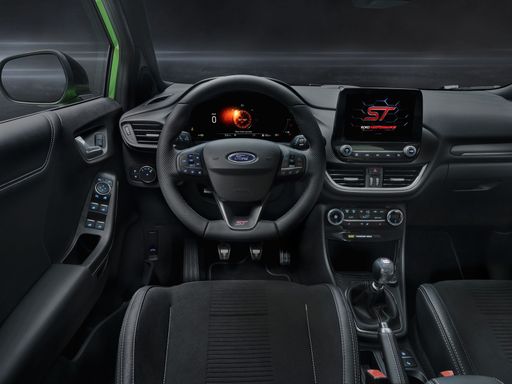
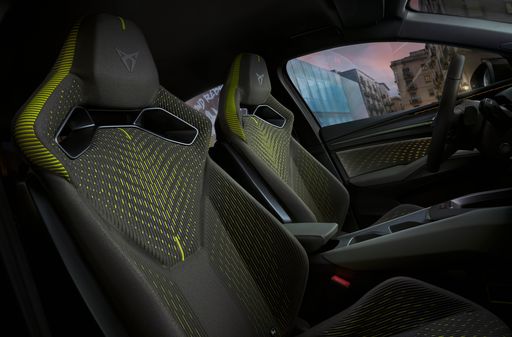
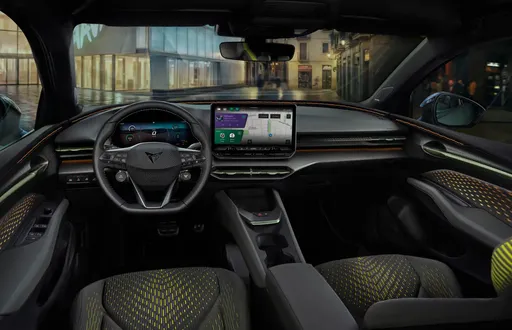
In town both cars are compact and easy to live with, but they approach usability differently: the Puma is nimble and benefits from parking sensors and cameras, yet large roof pillars and touch‑only climate controls can make low‑speed maneuvers and simple adjustments fiddly. The Raval’s one‑pedal driving, refined noise levels and modern Android system feel more seamless for urban commuting, and physical steering‑wheel controls restore some immediacy to common tasks. Interior ambience tips subtly toward the Raval for perceived quality up front and rear‑seat comfort, while the Puma’s cabin emphasizes functional cleverness over soft‑touch luxury. If you want the most effortless city driving and a slightly more premium cabin, the Raval nudges ahead; if you prefer tactile practicality and a sportier steering feel around town, the Puma is better matched.

Raval

Which buyer should opt for which car?

Choose the Ford Puma if you value a playful driving experience, inventive storage solutions and a compact crossover that excels on twisty roads and active lifestyles — it suits singles or small families who prioritise front‑seat engagement and quirky utility. Opt for the CUPRA Raval if you want electric refinement, stronger real‑world acceleration, a roomier rear seat and a large hatchback boot that makes everyday family life easier; it fits buyers who want tech polish and calm long‑distance behaviour. Pricing and trim timing complicate the decision — Puma can be attractive with dealer offers, while Raval’s early trims are positioned upmarket until cheaper base versions arrive — so factor immediate budget and equipment needs. The technical comparison that follows will show the numbers behind these trade‑offs so you can match specification to the practical priorities outlined here.

Here’s where it gets real: The technical differences in detail

Puma

Costs and Efficiency:

Looking at overall running costs, both models reveal some interesting differences in everyday economy.

CUPRA Raval is very slightly cheaper – starting at 22,200 £ , while the Ford Puma costs 23,900 £ . That’s a price difference of around 1,672 £.

In terms of energy consumption, the Ford Puma is marginally more efficient: consuming 13 kWh/100km compared to 13.6 kWh/100km for the CUPRA Raval. That’s a difference of about 0.6 kWh/100km.

As for electric range, the CUPRA Raval offers marginally more range – reaching up to 445 km, about 28 km more than the Ford Puma.

Raval

Engine and Performance:

Power, torque and acceleration are the classic benchmarks for car enthusiasts – and here, some clear differences start to show.

When it comes to engine power, the CUPRA Raval offers visibly more power – delivering 226 HP compared to 168 HP. That’s roughly 58 HP more horsepower.

When accelerating from 0 to 100 km/h, the CUPRA Raval is only slightly quicker – completing the sprint in 6.8 s, while the Ford Puma takes 7.4 s. That’s about 0.6 s quicker.

Both models offer the same torque – 290 Nm.

Puma

Space and Everyday Use:

Cabin size, boot volume and payload all play a role in everyday practicality. Here, comfort and flexibility make the difference.

Both vehicles offer seating for 5 people.

In terms of curb weight, Ford Puma is clearly lighter – 1,316 kg compared to 1,610 kg. The difference is around 294 kg.

Looking at boot space, the Ford Puma offers slightly more boot space – 523 L compared to 441 L. That’s a difference of about 82 L.

When it comes to payload, the CUPRA Raval carries very slightly more – 475 kg compared to 469 kg. That’s a difference of about 6 kg.

Who wins the race in the data check?

The CUPRA Raval shows a few small advantages in the objective data comparison.
This result only shows which model scores more points on paper – not which of the two cars feels right for you.

from £22,200
Raval

CUPRA Raval

  • Engine Type Electric
  • Transmission Automatic
  • Drive Type Front-Wheel Drive
  • Power HP 116 - 226 HP
  • Consumption kWh/100km 13.6 - 16.1 kWh/100km
  • Electric Range 300 - 445 km
Ford Puma
CUPRA Raval

Costs and Consumption

View detailed analysis

Engine and Performance

View detailed analysis

Dimensions and Body

View detailed analysis

Ford Puma

The Ford Puma blends sporty styling with practical everyday usability, making it a smart choice for drivers who want flair without sacrificing versatility. Its engaging driving character and clever interior packaging give it a more dynamic and useful feel than many rivals.

details

CUPRA Raval

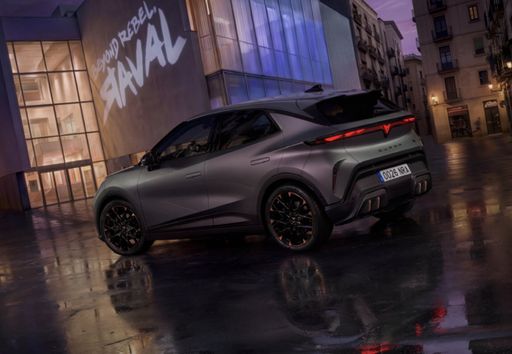
The CUPRA Raval is a compact electric hatch that mixes hot‑hatch intent with genuine everyday practicality, pairing an unusually roomy, flexible boot with a modern Android‑based infotainment that feels responsive. It drives in a composed, traction‑rich way that suits city and family life, though the steering leans toward assuredness rather than playfulness and some climate controls rely on touch sliders that can be fiddly on the move.

details
Ford Puma
CUPRA Raval

Costs and Consumption

Price
23,900 - 36,300 £
Price
22,200 - 39,900 £
Consumption L/100km
5.4 - 5.9 L/100km
Consumption L/100km
-
Consumption kWh/100km
13 - 13.9 kWh/100km
Consumption kWh/100km
13.6 - 16.1 kWh/100km
Electric Range
404 - 417 km
Electric Range
300 - 445 km
Battery Capacity
-
Battery Capacity
-
co2
0 - 135 g/km
co2
0 g/km
Fuel tank capacity
-
Fuel tank capacity
-

Dimensions and Body

Body Type
SUV
Body Type
Hatchback
Seats
5
Seats
5
Doors
-
Doors
-
Curb weight
1,316 - 1,563 kg
Curb weight
1,610 - 1,615 kg
Trunk capacity
456 - 523 L
Trunk capacity
441 L
Length
-
Length
-
Width
1,805 mm
Width
1,784 mm
Height
-
Height
-
Max trunk capacity
-
Max trunk capacity
-
Payload
367 - 469 kg
Payload
470 - 475 kg

Engine and Performance

Engine Type
Petrol MHEV, Electric
Engine Type
Electric
Transmission
Manuel, Automatic
Transmission
Automatic
Transmission Detail
Manual Gearbox, Dual-Clutch Automatic, Reduction Gearbox
Transmission Detail
Reduction Gearbox
Drive Type
Front-Wheel Drive
Drive Type
Front-Wheel Drive
Power HP
125 - 168 HP
Power HP
116 - 226 HP
Acceleration 0-100km/h
7.4 - 9.8 s
Acceleration 0-100km/h
6.8 - 7.1 s
Max Speed
-
Max Speed
-
Torque
170 - 290 Nm
Torque
290 Nm
Number of Cylinders
3
Number of Cylinders
-
Power kW
92 - 124 kW
Power kW
85 - 166 kW
Engine capacity
999 cm3
Engine capacity
-

General

Model Year
2,025 - 2,026
Model Year
2026
CO2 Efficiency Class
D, A
CO2 Efficiency Class
A
Brand
Ford
Brand
CUPRA
DriveDuel uses data analysis and artificial intelligence to evaluate vehicle data and create content. Content is regularly reviewed and improved. The displayed prices are estimates based on German list prices, adjusted to the respective country’s VAT. Country-specific registration taxes are not included. This information is not legally binding.