VS

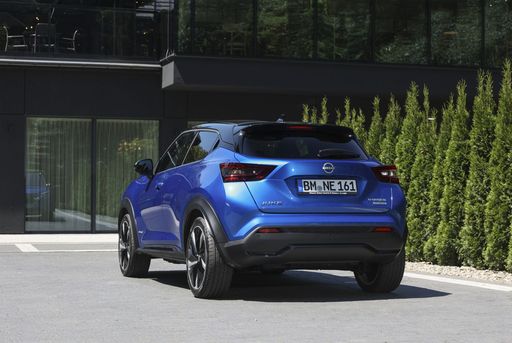
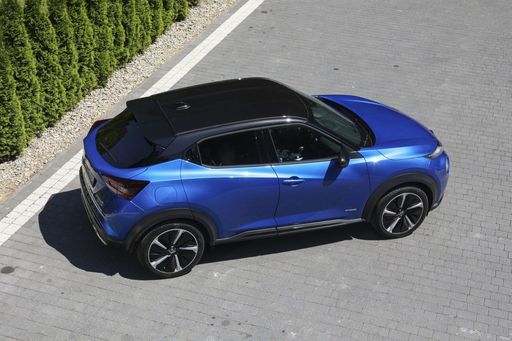
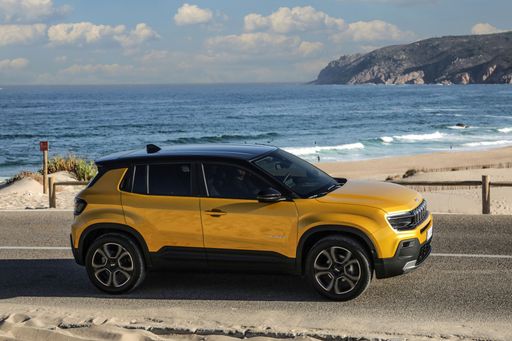
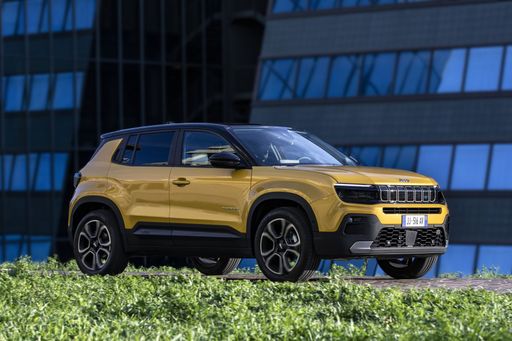
Nissan Juke vs Jeep Avenger comparison

Compare performance (143 HP vs 156 HP), boot space and price (21,400 £ vs 22,500 £ ) at a glance. Find out which car is the better choice for you – Nissan Juke or Jeep Avenger?

Nissan Juke vs Jeep Avenger: Key differences

Nissan Juke

5 (1 Reviews)
rate
  • only slightly cheaper
  • very slightly more efficient
  • marginally more trunk space
details

Jeep Avenger

4 (8 Reviews)
rate
  • very slightly more power
  • moderately quicker 0–100 km/h
  • barely lighter
details

All details on performance, efficiency, range and trunk space can be found in the technical comparison below – including user reviews for both models.

By Achim Sedelmaier

Juke

Jeep Avenger VS Nissan Juke: city‑friendly B‑SUVs with different agendas

The Jeep Avenger and the Nissan Juke arrive at the same compact SUV crossroads but point in distinct directions for real buyers. The Jeep Avenger leans into a comfy, robust personality with a variety of powertrains that include a pure‑electric and an off‑road‑minded 4xe option, while the Nissan Juke plays a sharper, cockpit‑focused card with a modern 12.3" screen and punchy petrol or hybrid choices. That contrast shapes everyday life: the Avenger feels like a forgiving urban companion, the Juke like a boutique small SUV that prioritises driving neatness and technology. If you search pages for Jeep Avenger VS Nissan Juke, expect to trade raw practicality and motorway composure against infotainment polish and tauter handling. Choose by priorities rather than headline claims—each answers a different set of real‑world needs.
Avenger

Character and driving feel

The Jeep Avenger projects a relaxed, confidence‑first character: soft suspension, light steering and a settled ride that soaks up city imperfections without fuss. By contrast the Nissan Juke is more alert and composed, with quicker steering and firmer damping that gives it a more controlled, slightly sportier demeanour on twisty roads. The Avenger’s electric and hybrid iterations emphasise smooth pull and usable torque, which suits stop‑start traffic and occasional gravel; the Juke rewards drivers who want a connected, engaged feel but can expose rougher surfaces more readily. Both have gearbox quirks—the Avenger’s EV controls can feel unfamiliar and the Juke’s DCT can be hesitant at low speeds—so a test drive in your typical traffic is decisive.

Juke

Comfort and long‑distance behavior

For daily commutes and short trips the Jeep Avenger delivers a noticeably gentler ride, making it the easier car to live with on uneven urban streets and for school runs. The Nissan Juke’s firmer setup and, on larger wheels, a choppier response mean longer motorway stints can feel noisier and more tiring, especially if you prefer a quiet cabin on high‑speed runs. The Avenger’s BEV variant is efficient and calm at moderate speeds but has a restricted top‑end that makes prolonged high‑speed cruising less relaxed than in some rivals. In short, choose the Avenger for cushioning and ease over medium distances, and the Juke if you accept a firmer ride in exchange for sharper composure and cabin tech.

Avenger

Practicality, cabin feel and usability

Inside, the Jeep Avenger is built around practical needs: excellent front‑seat space, loads of small storage and physical climate controls that work without hunting through menus, though much of the cabin relies on hard plastics that temper the sense of premium finish. The Nissan Juke cleans up the cockpit with a sleeker layout, higher‑resolution screens and generally quicker software, so it feels more modern and polished from the driver’s seat despite having fewer rear conveniences. Both cars squeeze rear legroom, so three adults in the back are a stretch, but the Juke’s small rear glass and thick C‑pillars make the back feel more claustrophobic than the Avenger’s airier front. Boot practicality is another trade‑off: the Juke’s petrol versions offer generous capacity but a high loading sill and fewer tie‑down points, while the Avenger’s opening and loading ergonomics are more user‑friendly though payload and real volume vary by drivetrain.

Juke

City friendliness and everyday usability

When the job is tight parking, reverse maneuvers and urban scrapes, the Jeep Avenger’s short overall length, upright bonnet and protective exterior cladding give it a clear everyday advantage. The Nissan Juke is equally compact and nimble, but worse rear visibility and a sometimes jerky dual‑clutch at low speeds make urban stop‑and‑go less serene unless you pick the hybrid and softer wheel option. The Avenger’s practical detailing—stowage, robust bumpers and simple switches—favors buyers who value fuss‑free ownership in dense traffic. If most of your miles are inside city limits and you prize easy placement, the Avenger tends to feel more forgiving; if you want a peppier, tech‑forward cockpit while accepting a few urban compromises, the Juke is more characterful.

Avenger

Who should pick which car — buyer‑fit guide before the specs

If you prioritise a relaxed ride, easy parking, a functional cabin and the option of an electric or 4x4‑tinged layout, the Jeep Avenger will suit city‑centric families and lifestyle buyers who prefer comfort over sporty manners. The Nissan Juke is better for buyers who want a sharper driving presence, a modern infotainment experience and a bolder cabin ambience, provided you can live with tighter rear seats, a high boot sill and a firmer ride. Safety preferences also matter: the Avenger’s recent ratings and the Juke’s stronger assistance package should be factored into family decisions. With those practical fit points in mind, the technical comparison that follows will unpack powertrain behavior, consumption and cargo figures so you can match numbers to the real‑world trade‑offs above without picking an overall winner prematurely.

Here’s where it gets real: The technical differences in detail

Juke

Costs and Efficiency:

Price and efficiency are key factors when choosing a car – and this is often where the real differences emerge.

Nissan Juke is only slightly cheaper – starting at 21,400 £ , while the Jeep Avenger costs 22,500 £ . That’s a price difference of around 1,157 £.

Fuel consumption also shows a difference: the Nissan Juke uses 4.7 L/100km and is very slightly more efficient than the Jeep Avenger with 4.9 L/100km. The difference is about 0.2 L/100km.

Avenger

Engine and Performance:

Power, torque and acceleration say a lot about how a car feels on the road. This is where you see which model delivers more driving dynamics.

When it comes to engine power, the Jeep Avenger offers very slightly more power – delivering 156 HP compared to 143 HP. That’s roughly 13 HP more horsepower.

When accelerating from 0 to 100 km/h, the Jeep Avenger is moderately quicker – completing the sprint in 9 s, while the Nissan Juke takes 10.1 s. That’s about 1.1 s quicker.

There’s also a difference in torque: the Jeep Avenger delivers markedly more torque with 260 Nm compared to 200 Nm. That’s about 60 Nm more.

Juke

Space and Everyday Use:

Whether family car or daily driver – which one offers more room, flexibility and comfort?

Both vehicles offer seating for 5 people.

In terms of curb weight, Jeep Avenger is barely lighter – 1,180 kg compared to 1,274 kg. The difference is around 94 kg.

Looking at boot space, the Nissan Juke offers marginally more boot space – 422 L compared to 380 L. That’s a difference of about 42 L.

When it comes to payload, the Jeep Avenger carries somewhat more – 502 kg compared to 427 kg. That’s a difference of about 75 kg.

Who wins the race in the data check?

The Jeep Avenger is decisively ahead in the objective data comparison.
This result only shows which model scores more points on paper – not which of the two cars feels right for you.

from £22,500
Avenger

Jeep Avenger

  • Engine Type : Petrol MHEV, Electric, Petrol
  • Transmission : Automatic, Manuel
  • Drive Type : Front-Wheel Drive
  • Power HP : 100 - 156 HP
  • Consumption L/100km : 4.9 - 5.7 L/100km
  • Consumption kWh/100km : 15.5 kWh/100km
  • Electric Range : 400 km
Nissan Juke
Jeep Avenger

Costs and Consumption

View detailed analysis

Engine and Performance

View detailed analysis

Dimensions and Body

View detailed analysis

Nissan Juke

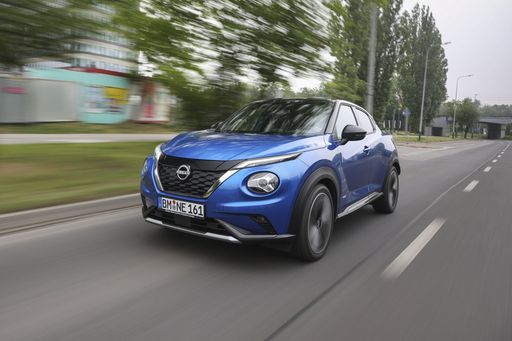
The Nissan Juke is a pocket-sized crossover that refuses to blend in, with quirky styling and a cheeky stance that turns heads at every traffic light. It’s ideal for shoppers who value personality and nimble urban driving over maximum practicality, delivering surprising pep and a well-equipped feel for everyday fun.

details

Jeep Avenger

The Jeep Avenger shrinks Jeep's boxy, adventurous styling into a city-friendly electric crossover that looks just as at home on tight streets as it does on muddy weekend lanes. It's a savvy pick for drivers who want go-anywhere attitude without the truck-size ego — practical inside, lively around town and ready to tackle a bit of rough stuff when the mood strikes.

details
Nissan Juke
Jeep Avenger

Costs and Consumption

Price
21,400 - 31,800 £
Price
22,500 - 35,000 £
Consumption L/100km
4.7 - 6 L/100km
Consumption L/100km
4.9 - 5.7 L/100km
Consumption kWh/100km
-
Consumption kWh/100km
15.5 kWh/100km
Electric Range
-
Electric Range
400 km
Battery Capacity
-
Battery Capacity
-
co2
105 - 136 g/km
co2
0 - 129 g/km
Fuel tank capacity
-
Fuel tank capacity
-

Dimensions and Body

Body Type
SUV
Body Type
SUV
Seats
5
Seats
5
Doors
-
Doors
-
Curb weight
1,274 - 1,405 kg
Curb weight
1,180 - 1,520 kg
Trunk capacity
354 - 422 L
Trunk capacity
355 - 380 L
Length
-
Length
-
Width
1,800 mm
Width
1,776 mm
Height
-
Height
-
Max trunk capacity
-
Max trunk capacity
-
Payload
405 - 427 kg
Payload
494 - 502 kg

Engine and Performance

Engine Type
Petrol, Full Hybrid
Engine Type
Petrol MHEV, Electric, Petrol
Transmission
Manuel, Automatic
Transmission
Automatic, Manuel
Transmission Detail
Manual Gearbox, Dual-Clutch Automatic, Automatic Gearbox
Transmission Detail
Dual-Clutch Automatic, Reduction Gearbox, Manual Gearbox
Drive Type
Front-Wheel Drive
Drive Type
Front-Wheel Drive
Power HP
114 - 143 HP
Power HP
100 - 156 HP
Acceleration 0-100km/h
10.1 - 11.8 s
Acceleration 0-100km/h
9 - 10.6 s
Max Speed
-
Max Speed
-
Torque
200 Nm
Torque
205 - 260 Nm
Number of Cylinders
3 - 4
Number of Cylinders
3
Power kW
84 - 105 kW
Power kW
74 - 115 kW
Engine capacity
999 - 1,598 cm3
Engine capacity
1,199 cm3

General

Model Year
2025
Model Year
2026
CO2 Efficiency Class
D, E, C
CO2 Efficiency Class
C, A, D
Brand
Nissan
Brand
Jeep
DriveDuel uses data analysis and artificial intelligence to evaluate vehicle data and create content. Content is regularly reviewed and improved. The displayed prices are estimates based on German list prices, adjusted to the respective country’s VAT. Country-specific registration taxes are not included. This information is not legally binding.