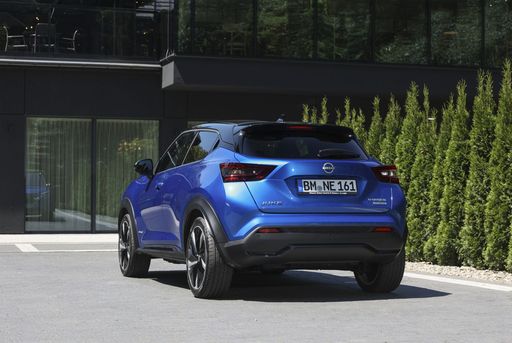
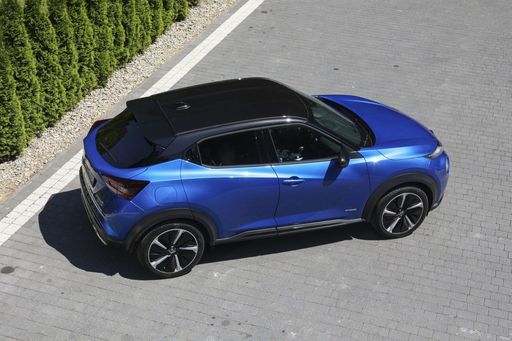
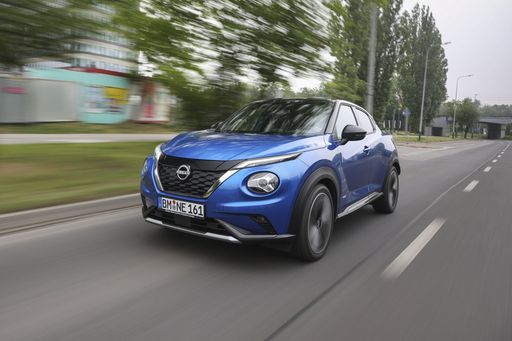
@ Nissan Motor Corporation
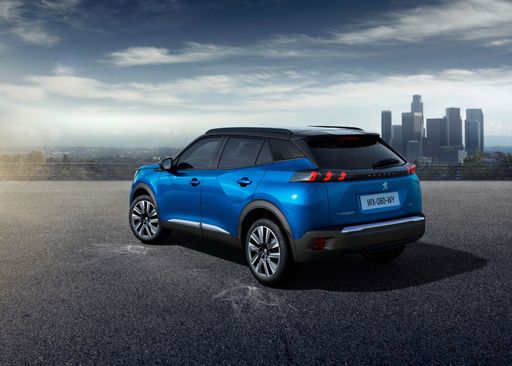
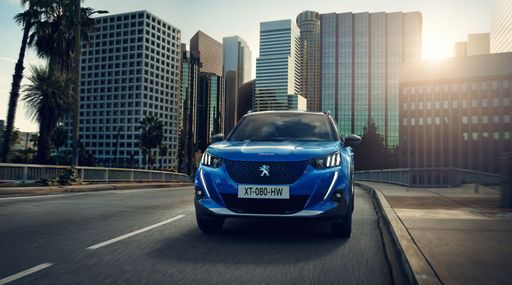
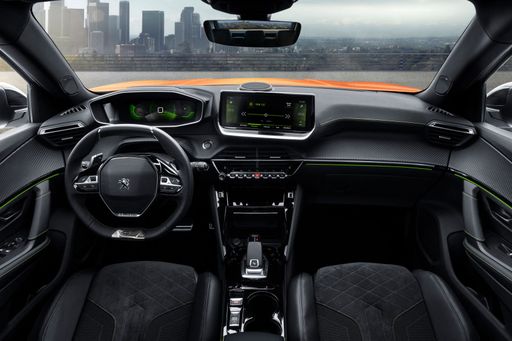
@ Peugeot / Stellantis Media
VS

Nissan Juke vs Peugeot 2008 – Which one offers the better deal?

Both models have their strengths – but which one suits you more?
Compare performance, efficiency, price and space directly: Nissan Juke or Peugeot 2008?

Juke @ Nissan Motor Corporation

Introduction: A Clash of the Compact SUVs

As the compact SUV market continues to heat up, two contenders, the Nissan Juke and the Peugeot 2008, stand out with their unique designs and compelling features. Both vehicles bring a mix of modern styling, innovative technology, and efficient powertrains, making the choice a bit more challenging for potential buyers. In this article, we will compare the two models across various aspects, from technical specifications to innovations, to help you make an informed decision.
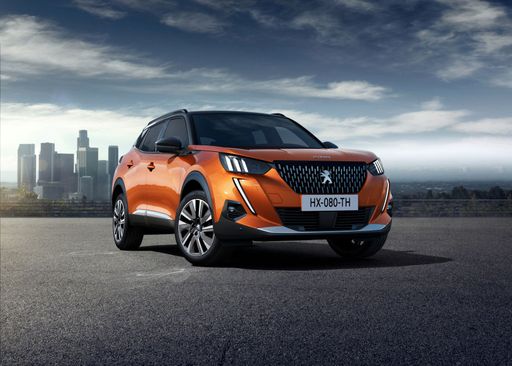
2008 @ Peugeot / Stellantis Media

Performance Specs: Power on the Pavement

Under the hood, the Nissan Juke offers a range of petrol and full hybrid engine options, delivering power outputs of 114 HP and 143 HP respectively. These engines, combined with a choice of manual or dual-clutch automatic transmissions, provide a responsive and enjoyable driving experience. The Juke can accelerate from 0 to 100 km/h in as little as 10.1 seconds and boasts a top speed of 180 km/h.

In contrast, the Peugeot 2008 presents a slightly different lineup with petrol MHEV and electric options. With power outputs ranging from 101 HP to a robust 156 HP, the 2008 can achieve impressive acceleration times, with some variants reaching 0 to 100 km/h in just 8.3 seconds. Its top speed of 206 km/h places it ahead of the Juke, making for a more thrilling driving experience.

Juke @ Nissan Motor Corporation

Fuel Efficiency: A Green Choice

When it comes to fuel efficiency, both the Juke and 2008 excel in their respective categories. The Nissan Juke offers admirable consumption rates ranging from 4.7 to 6 L/100km, depending on the engine variant. This is a respectable figure for a compact SUV, ensuring that drivers can enjoy long journeys without frequent stops at the pump.

The Peugeot 2008 takes the lead with its electric variant, which achieves an impressive electric range of up to 406 km. Its petrol engines also maintain efficiency, consuming between 5 and 5.7 L/100km. This innovative approach positions the 2008 as an appealing choice for environmentally conscious consumers.

2008 @ Peugeot / Stellantis Media

Interior and Comfort: Space to Breathe

Inside, both vehicles comfortably seat five passengers, but the interior aesthetics and functionalities differ significantly. The Nissan Juke boasts a trunk capacity of 422 liters, offering ample space for everyday needs. Its distinct interior design and customizable features add a touch of personality, making it appealing to a younger audience.

On the other hand, the Peugeot 2008 slightly exceeds its competitor with a trunk capacity of 434 liters. The interior is characterized by a sleek and modern design, featuring the latest technology and a user-friendly interface. Both vehicles offer a host of tech features, but the 2008's advanced infotainment system and optional connected services give it a slight edge in this department.

Juke @ Nissan Motor Corporation

Safety and Technology: Innovation at Its Best

Safety is paramount in today’s automotive industry. The Nissan Juke delivers multiple safety features, including a suite of advanced driver-assistance systems (ADAS) such as emergency braking and lane-keeping assistance, ensuring peace of mind on the road.

The Peugeot 2008 matches these offerings with key safety technologies and additional functions such as adaptive cruise control and parking assistance. Both vehicles have received commendable ratings in crash tests, reinforcing their commitment to passenger safety.

2008 @ Peugeot / Stellantis Media

Conclusion: Which SUV Reigns Supreme?

Ultimately, the choice between the Nissan Juke and the Peugeot 2008 boils down to personal preferences and priorities. If you are looking for a sportier drive with a more distinctive design, the Juke could be the right choice for you. However, if eco-friendliness, advanced technology, and slightly more trunk space are higher on your list, the 2008 might be the better option.

Both models showcase innovative features and reliable performance, making them worthy of consideration in the competitive compact SUV market. Test-driving each vehicle could help you discover which SUV aligns with your lifestyle and driving needs.

Here’s where it gets real: The technical differences in detail

Juke @ Nissan Motor Corporation

Costs and Efficiency:

Price and efficiency are often the first things buyers look at. Here it becomes clear which model has the long-term edge – whether at the pump, the plug, or in purchase price.

Nissan Juke has a slightly advantage in terms of price – it starts at 21400 £, while the Peugeot 2008 costs 24500 £. That’s a price difference of around 3077 £.

Fuel consumption also shows a difference: Nissan Juke manages with 4.70 L and is therefore minimal more efficient than the Peugeot 2008 with 4.90 L. The difference is about 0.20 L per 100 km.

2008 @ Peugeot / Stellantis Media

Engine and Performance:

Power, torque and acceleration are the classic benchmarks for car enthusiasts – and here, some clear differences start to show.

When it comes to engine power, the Peugeot 2008 has a slight edge – offering 156 HP compared to 143 HP. That’s roughly 13 HP more horsepower.

In acceleration from 0 to 100 km/h, the Peugeot 2008 is noticeable quicker – completing the sprint in 8.30 s, while the Nissan Juke takes 10.10 s. That’s about 1.80 s faster.

In terms of top speed, the Peugeot 2008 performs slightly better – reaching 206 km/h, while the Nissan Juke tops out at 180 km/h. The difference is around 26 km/h.

There’s also a difference in torque: Peugeot 2008 pulls clearly perceptible stronger with 270 Nm compared to 200 Nm. That’s about 70 Nm difference.

Space and Everyday Use:

Cabin size, boot volume and payload all play a role in everyday practicality. Here, comfort and flexibility make the difference.

Both vehicles offer seating for 5 people.

In curb weight, Peugeot 2008 is hardly perceptible lighter – 1263 kg compared to 1274 kg. The difference is around 11 kg.

In terms of boot space, the Peugeot 2008 offers barely noticeable more room – 434 L compared to 422 L. That’s a difference of about 12 L.

In maximum load capacity, the Peugeot 2008 performs slightly better – up to 1467 L, which is about 162 L more than the Nissan Juke.

When it comes to payload, Peugeot 2008 barely noticeable takes the win – 447 kg compared to 427 kg. That’s a difference of about 20 kg.

Who comes out on top?

Overall, the Peugeot 2008 shows itself to be is largely superior and secures the title of DriveDuel Champion.
It convinces with the more balanced overall package and proves to be the more versatile choice for everyday use.

from about £24,500
2008 @ Peugeot / Stellantis Media

Peugeot 2008

  • Engine Type : Petrol, Electric, Petrol MHEV
  • Transmission : Manuel, Automatic
  • Drive Type : Front-Wheel Drive
  • Power HP : 101 - 156 HP
  • Consumption L/100km : 4.9 - 5.7 L
  • Consumption kWh/100km : 15.50 kWh
  • Electric Range : 406 km

Nissan Juke

The Nissan Juke is a pocket-sized crossover that refuses to blend in, with quirky styling and a cheeky stance that turns heads at every traffic light. It’s ideal for shoppers who value personality and nimble urban driving over maximum practicality, delivering surprising pep and a well-equipped feel for everyday fun.

details

Peugeot 2008

The Peugeot 2008 is a stylish, city-friendly crossover that packs big character into a compact package, turning mundane errands into a mildly entertaining drive. Its clever interior layout, polished looks and confident ride make it a smart choice for buyers who want practical daily sense with a touch of flair.

details
Nissan Juke
Peugeot 2008
Juke @ Nissan Motor Corporation
2008 @ Peugeot / Stellantis Media

Costs and Consumption

Price
21400 - 30100 £
Price
24500 - 40300 £
Consumption L/100km
4.7 - 6 L
Consumption L/100km
4.9 - 5.7 L
Consumption kWh/100km
-
Consumption kWh/100km
15.50 kWh
Electric Range
-
Electric Range
406 km
Battery Capacity
0.60 kWh
Battery Capacity
51 kWh
co2
107 - 136 g/km
co2
0 - 129 g/km
Fuel tank capacity
46 L
Fuel tank capacity
44 L

Dimensions and Body

Body Type
SUV
Body Type
SUV
Seats
5
Seats
5
Doors
5
Doors
5
Curb weight
1274 - 1405 kg
Curb weight
1263 - 1623 kg
Trunk capacity
354 - 422 L
Trunk capacity
434 L
Length
4210 mm
Length
4304 mm
Width
1800 mm
Width
1770 mm
Height
1593 mm
Height
1523 mm
Max trunk capacity
1237 - 1305 L
Max trunk capacity
1467 L
Payload
405 - 427 kg
Payload
407 - 447 kg

Engine and Performance

Engine Type
Petrol, Full Hybrid
Engine Type
Petrol, Electric, Petrol MHEV
Transmission
Manuel, Automatic
Transmission
Manuel, Automatic
Transmission Detail
Manual Gearbox, Dual-Clutch Automatic, Automatic Gearbox
Transmission Detail
Manual Gearbox, Reduction Gearbox, Dual-Clutch Automatic
Drive Type
Front-Wheel Drive
Drive Type
Front-Wheel Drive
Power HP
114 - 143 HP
Power HP
101 - 156 HP
Acceleration 0-100km/h
10.1 - 11.8 s
Acceleration 0-100km/h
8.3 - 10.9 s
Max Speed
166 - 180 km/h
Max Speed
150 - 206 km/h
Torque
200 Nm
Torque
205 - 270 Nm
Number of Cylinders
3 - 4
Number of Cylinders
3
Power kW
84 - 105 kW
Power kW
74 - 115 kW
Engine capacity
999 - 1598 cm3
Engine capacity
1199 cm3

General

Model Year
2024
Model Year
2023 - 2025
CO2 Efficiency Class
D, E, C
CO2 Efficiency Class
D, A, C
Brand
Nissan
Brand
Peugeot
What drive types are available for the Nissan Juke?

Available configurations include Front-Wheel Drive.

The prices and data displayed are estimates based on German list prices and may vary by country. This information is not legally binding.