VS

Nissan Qashqai vs Audi Q3 comparison

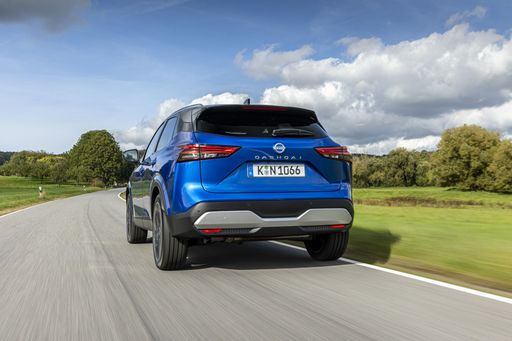
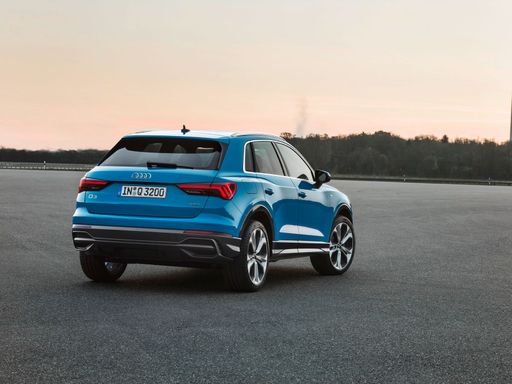
Compare performance (205 HP vs 272 HP), boot space and price (29,600 £ vs 38,200 £ ) at a glance. Find out which car is the better choice for you – Nissan Qashqai or Audi Q3?

Nissan Qashqai vs Audi Q3: Key differences

Nissan Qashqai

4.9 (3 Reviews)
rate
  • markedly cheaper
  • somewhat lighter
  • only slightly more trunk space
details

Audi Q3

3.9 (2 Reviews)
rate
  • visibly more power
  • clearly more efficient
  • markedly quicker 0–100 km/h
details

All details on performance, efficiency, range and trunk space can be found in the technical comparison below – including user reviews for both models.

By Achim Sedelmaier

Qashqai

Battle of the SUVs: Audi Q3 vs Nissan Qashqai

The compact SUV segment is growing rapidly, and two prominent contenders vying for supremacy are the Audi Q3 and the Nissan Qashqai. Both vehicles offer a compelling mix of style, innovation, and functionality. However, they have their unique characteristics and technologies that set them apart. In this article, we will dig deep into their technical aspects to help you decide which SUV reigns supreme.
Q3

Performance and Engine Options

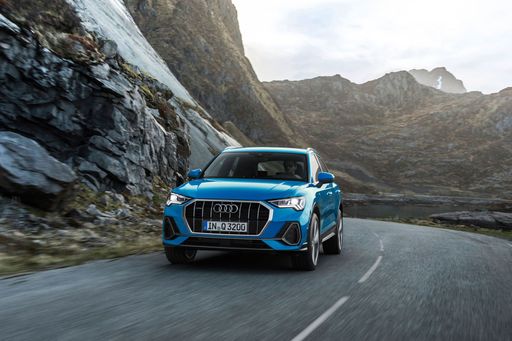
The Audi Q3 boasts a diverse range of engine options, offering both petrol and diesel variants. Power outputs range from 150 HP to an impressive 245 HP, ensuring that there's a choice for every driver. The Q3's turbocharged engines deliver robust torque ranging from 250 Nm to 400 Nm, resulting in swift acceleration. The model can achieve 0-100 km/h in as little as 5.8 seconds, while top speeds can reach up to 237 km/h, depending on the engine configuration.

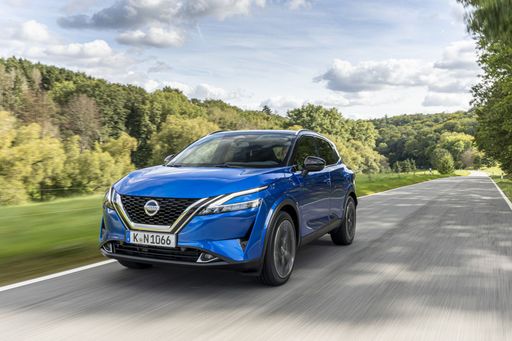
On the other side, the Nissan Qashqai introduces a blend of petrol MHEV and full hybrid engines, creating a different performance spectrum. Power outputs range from 140 HP to 190 HP, with peak torque hitting 330 Nm. The Qashqai manages 0-100 km/h in 7.9 seconds for its swiftest variant, with a top speed of 206 km/h. Although slightly less powerful than the Q3, the Qashqai leans into efficiency with consumption figures as low as 5.1 L/100km in its hybrid configurations.

Qashqai

Fuel Efficiency and Environmental Considerations

Fuel consumption is an essential factor for many drivers. With the Audi Q3, fuel efficiency varies across its engine lineup, with estimates generally around 5.5 to 8.5 L/100km. The diesel variants offer some of the best efficiencies in the lineup. However, the Qashqai shines particularly in this department, with consumption figures as low as 5.1 L/100km for its hybrid models and a CO2 emission range that can go as low as 116 g/km.

In terms of environmental impact, the Qashqai has a slight edge due to its advanced hybrid technology, allowing Nissan to classify its CO2 efficiency as 'D' or better. Conversely, the Q3 sits in classes 'E' and 'F', signaling less environmentally friendly performance metrics compared to its rival.

Q3

Interior Comfort and Technology

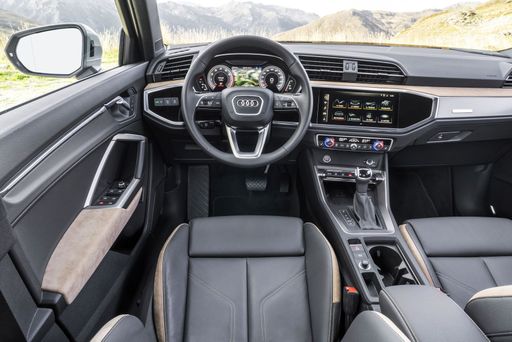
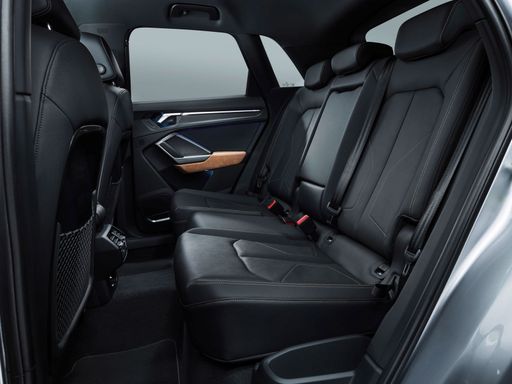
The interior quality of the Audi Q3 is often lauded as luxurious and sophisticated, showcasing premium materials and high-end finishes. The Q3's trunk capacity stands at 530 liters, offering generous storage for everyday needs. Its robust infotainment system, including the Audi Virtual Cockpit, provides an immersive driving experience with top-tier digital interfaces.

Meanwhile, the Nissan Qashqai offers a more pragmatic approach to interior comfort. The cabin is spacious, with a focus on usability. The Qashqai provides a slightly smaller trunk capacity of 479-504 liters, depending on the specific model. Infotainment options in the Qashqai include modern connectivity features, but they may lack the polish of Audi's superior technology. However, the Qashqai includes nifty driver-assistance features as standard, including ProPILOT Assist, enhancing the driving experience.

Qashqai

Safety and Driver-Assistance Features

Safety is non-negotiable for vehicles in this segment, and both Audi Q3 and Nissan Qashqai are equipped with a suite of safety technologies. The Q3 incorporates Audi's advanced safety and driver-assistance systems, including adaptive cruise control, lane-keeping assist, and emergency braking. These features blend seamlessly into the high-tech offerings that Audi is known for, providing not just security but also peace of mind.

The Qashqai, trained on Nissan's Safety Shield technology, includes features like intelligent emergency braking, rear cross-traffic alert, and blind-spot warning. While the Qashqai’s offerings are commendable, the Q3’s systems are often seen as more refined and integrated, catering to those who prioritize an all-encompassing luxury experience.

Q3

Conclusion: Which SUV Comes Out on Top?

Choosing between the Audi Q3 and Nissan Qashqai ultimately hinges on personal preference. If you seek luxury, powerful performance, and high-end technology, the Audi Q3 is your go-to option. Conversely, if efficiency, practicality, and cost-effectiveness are your priorities, the Nissan Qashqai makes a compelling case.

Both vehicles cater to the specific needs of modern drivers, ensuring that regardless of your ultimate choice, you'll be acquiring a well-engineered SUV that promises comfort, performance, and style. Therefore, it may just boil down to which driving experience resonates more with your lifestyle needs.

Here’s where it gets real: The technical differences in detail

Qashqai

Costs and Efficiency:

Price and efficiency are often the first things buyers look at. Here it becomes clear which model has the long-term edge – whether at the pump, the plug, or in purchase price.

Nissan Qashqai is markedly cheaper – starting at 29,600 £ , while the Audi Q3 costs 38,200 £ . That’s a price difference of around 8,623 £.

Fuel consumption also shows a difference: the Audi Q3 uses 1.7 L/100km and is clearly more efficient than the Nissan Qashqai with 4.3 L/100km. The difference is about 2.6 L/100km.

Q3

Engine and Performance:

Power, torque and acceleration are the classic benchmarks for car enthusiasts – and here, some clear differences start to show.

When it comes to engine power, the Audi Q3 offers visibly more power – delivering 272 HP compared to 205 HP. That’s roughly 67 HP more horsepower.

When accelerating from 0 to 100 km/h, the Audi Q3 is markedly quicker – completing the sprint in 5.7 s, while the Nissan Qashqai takes 7.6 s. That’s about 1.9 s quicker.

There’s also a difference in torque: the Audi Q3 delivers moderately more torque with 400 Nm compared to 330 Nm. That’s about 70 Nm more.

Qashqai

Space and Everyday Use:

Cabin size, boot volume and payload all play a role in everyday practicality. Here, comfort and flexibility make the difference.

Both vehicles offer seating for 5 people.

In terms of curb weight, Nissan Qashqai is somewhat lighter – 1,420 kg compared to 1,635 kg. The difference is around 215 kg.

Looking at boot space, the Nissan Qashqai offers only slightly more boot space – 504 L compared to 488 L. That’s a difference of about 16 L.

When it comes to payload, the Audi Q3 carries marginally more – 535 kg compared to 516 kg. That’s a difference of about 19 kg.

Who wins the race in the data check?

The Audi Q3 is decisively ahead in the objective data comparison.
This result only shows which model scores more points on paper – not which of the two cars feels right for you.

from £38,200
Q3

Audi Q3

  • Engine Type : Petrol MHEV, Petrol, Plugin Hybrid, Diesel
  • Transmission : Automatic
  • Drive Type : Front-Wheel Drive, All-Wheel Drive
  • Power HP : 150 - 272 HP
  • Consumption L/100km : 1.7 - 8.6 L/100km
  • Electric Range : 118 - 119 km
Nissan Qashqai
Audi Q3

Costs and Consumption

View detailed analysis

Engine and Performance

View detailed analysis

Dimensions and Body

View detailed analysis

Nissan Qashqai

The Nissan Qashqai is a compact crossover that blends everyday practicality with a comfortable, composed driving experience and a smart, well finished interior. It feels sensible and versatile for city life and longer trips, appealing to buyers who want a reliable, low fuss family car.

details

Audi Q3

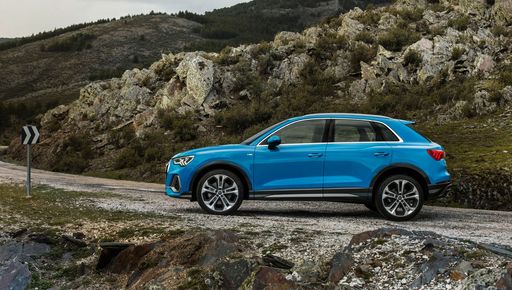
The Audi Q3 is a compact premium crossover that blends sharp styling with a well-crafted interior, making it an appealing choice for urban drivers who want a touch of luxury. It delivers a composed ride, intuitive tech features and a practical cabin, so it works well as a comfortable daily driver with an upscale feel.

details
Nissan Qashqai
Audi Q3

Costs and Consumption

Price
29,600 - 39,900 £
Price
38,200 - 52,900 £
Consumption L/100km
4.3 - 6.8 L/100km
Consumption L/100km
1.7 - 8.6 L/100km
Consumption kWh/100km
-
Consumption kWh/100km
-
Electric Range
-
Electric Range
118 - 119 km
Battery Capacity
-
Battery Capacity
-
co2
98 - 152 g/km
co2
39 - 195 g/km
Fuel tank capacity
-
Fuel tank capacity
-

Dimensions and Body

Body Type
SUV
Body Type
SUV
Seats
5
Seats
5
Doors
-
Doors
-
Curb weight
1,420 - 1,624 kg
Curb weight
1,635 - 1,900 kg
Trunk capacity
479 - 504 L
Trunk capacity
375 - 488 L
Length
-
Length
-
Width
1,835 mm
Width
1,859 mm
Height
-
Height
-
Max trunk capacity
-
Max trunk capacity
-
Payload
446 - 516 kg
Payload
505 - 535 kg

Engine and Performance

Engine Type
Petrol MHEV, Full Hybrid
Engine Type
Petrol MHEV, Petrol, Plugin Hybrid, Diesel
Transmission
Manuel, Automatic
Transmission
Automatic
Transmission Detail
Manual Gearbox, CVT, Reduction Gearbox
Transmission Detail
Dual-Clutch Automatic
Drive Type
Front-Wheel Drive, All-Wheel Drive
Drive Type
Front-Wheel Drive, All-Wheel Drive
Power HP
158 - 205 HP
Power HP
150 - 272 HP
Acceleration 0-100km/h
7.6 - 9.9 s
Acceleration 0-100km/h
5.7 - 9.2 s
Max Speed
-
Max Speed
-
Torque
260 - 330 Nm
Torque
250 - 400 Nm
Number of Cylinders
3 - 4
Number of Cylinders
4
Power kW
116 - 151 kW
Power kW
110 - 200 kW
Engine capacity
1,332 - 1,498 cm3
Engine capacity
1,498 - 1,984 cm3

General

Model Year
2,025 - 2,026
Model Year
2,025 - 2,026
CO2 Efficiency Class
E, C
CO2 Efficiency Class
E, G, B, F
Brand
Nissan
Brand
Audi
DriveDuel uses data analysis and artificial intelligence to evaluate vehicle data and create content. Content is regularly reviewed and improved. The displayed prices are estimates based on German list prices, adjusted to the respective country’s VAT. Country-specific registration taxes are not included. This information is not legally binding.