VS

Nissan Qashqai vs Ford Focus comparison

Compare performance (205 HP vs 280 HP), boot space and price (29,600 £ vs 27,500 £ ) at a glance. Find out which car is the better choice for you – Nissan Qashqai or Ford Focus?

Nissan Qashqai vs Ford Focus: Key differences

Nissan Qashqai

4.9 (4 Reviews)
rate
  • slightly more efficient
  • visibly more trunk space
details

Ford Focus

4.6 (1 Reviews)
rate
  • only slightly cheaper
  • noticeably more power
  • clearly quicker 0–100 km/h
  • very slightly lighter
details

All details on performance, efficiency, range and trunk space can be found in the technical comparison below – including user reviews for both models.

By Achim Sedelmaier

Qashqai

Overview: Ford Focus VS Nissan Qashqai in everyday terms

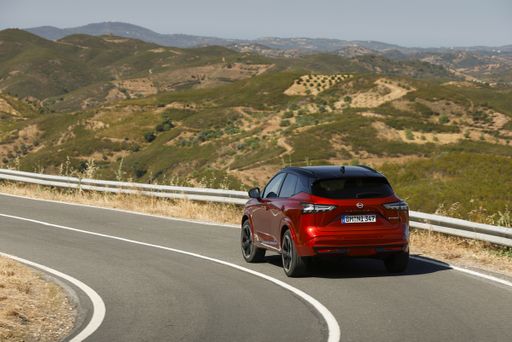
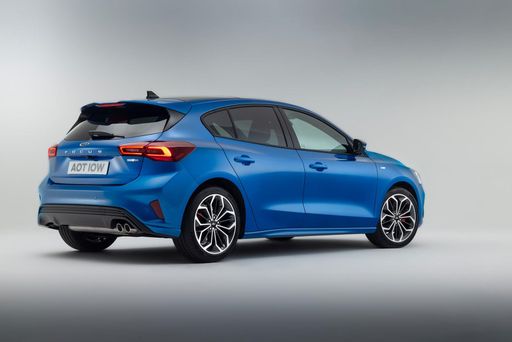
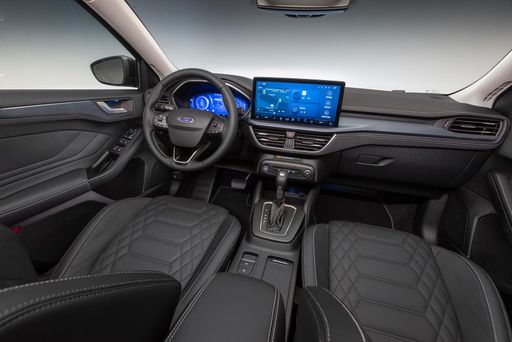
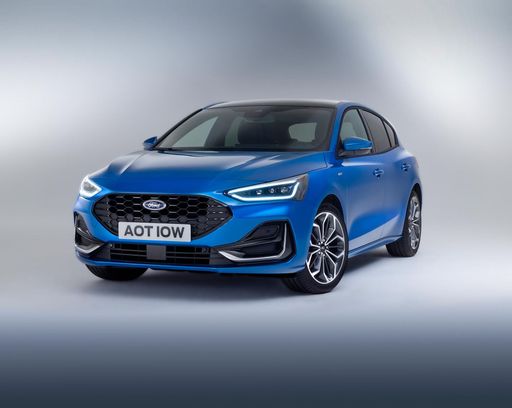
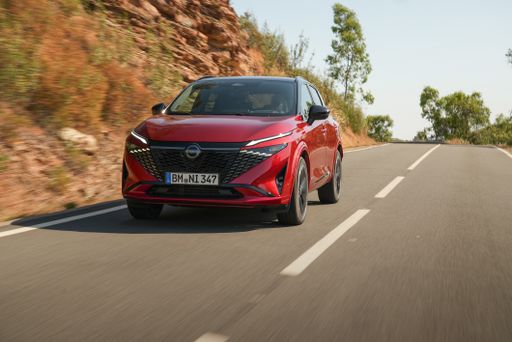
Ford Focus VS Nissan Qashqai frames a clear choice between a compact, driver‑oriented hatch and a calm, family‑friendly crossover. The Ford Focus leans toward engagement: crisp steering, firm body control and a cabin that keeps you connected to the road. The Nissan Qashqai trades that immediacy for a gentler, more composed personality with an EV‑like drive feel and a tech setup aimed at stress‑free daily use. Both cars suit families and commuters, but they approach comfort, space and controls very differently. Read on to see which bits of each car match real life: cornering, long trips, city chores and the small everyday irritations that matter most.
Focus

Driving character and handling

The Ford Focus makes itself known on the first bend: steering is quick and communicative, body control confident, and the car rewards an active driver who wants to hustle through corners. The Nissan Qashqai, by contrast, is neutral and composed — tuned for predictability rather than thrills, so it feels safer and more relaxed when you’re not trying to extract lap‑car behaviour. That means the Focus is better when you value engagement and sharper passing, while the Qashqai suits drivers who prefer calm, linear responses and less feedback through the steering. Both are stable at speed, but the Focus connects you to the road more, whereas the Qashqai insulates you from it.

Qashqai

Comfort and long‑distance behavior

On long motorway runs the Ford Focus is surprisingly serene and keeps wind and road noise well controlled, though a sportier suspension or large wheels will make it feel firmer underfoot. The Nissan Qashqai excels at cushioned cruising when fitted with mid‑sized wheels: seats are comfortable, the drivetrain behaves almost like an electric car in town and the resulting calm helps reduce fatigue. If you do a lot of high‑speed motorway miles, the Focus’s sharper chassis and strong engines give confidence and brisk progress; if you value relaxed, low‑stress miles with smoother responses, the Qashqai is the likely favorite. In short, choose the Focus for engaged, confident long journeys and the Qashqai for relaxing, low‑effort distance driving.

Focus

City friendliness and everyday usability

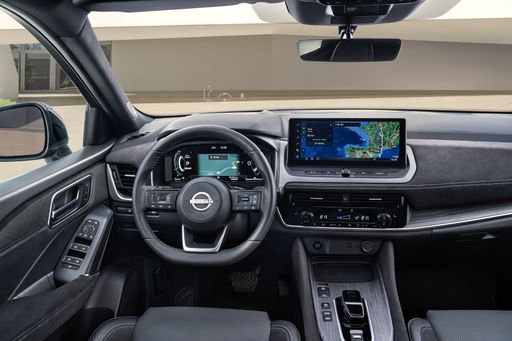
In town the Nissan Qashqai is the easier companion: the e‑power drive feel makes short trips and stop‑start traffic effortless, 360° cameras and clear Google‑based navigation simplify tight parking, and physical climate controls remove fiddly distractions. The Ford Focus is compact and nimble with precise steering that makes lane changes and parking quick, but its touchscreen‑centric climate controls can interrupt tasks and demand more attention. Both cars benefit from parking aids, yet the Qashqai’s raised seating and camera suite make urban manoeuvres feel less stressful for less confident drivers. Practically, city buyers who prize simple, low‑stress operation will lean toward the Qashqai, while those who enjoy a more hands‑on drive will prefer the Focus.

Qashqai

Practicality, cabin space and perceived quality

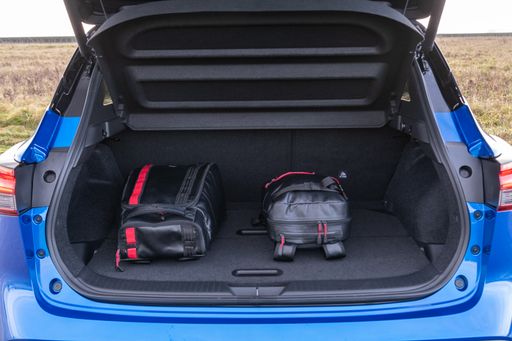
The Ford Focus surprises with generous rear legroom that suits taller passengers and family life, though its hatchback boot is more modest and the load lip is noticeable when lifting heavy items. The Nissan Qashqai offers a larger cargo hold in plain terms and an easier step‑in height, but a raised floor option and some trims can reduce usable vertical space and raise the loading lip. Inside, the Qashqai often feels a touch more refined in quieter trims and benefits from tactile controls, whereas the Focus’s cabin is functional with larger infotainment hardware but shows more hard plastics at close inspection. Translating that to daily use: the Focus gives better rear passenger comfort; the Qashqai gives more real‑world boot flexibility and a slightly more grown‑up feel to its controls.

Focus

Who should buy which car — buyer fit and what to check next

If you prioritise driving pleasure, on‑road engagement and a brawny feel on fast roads, the Ford Focus will match those priorities better; its sharper steering and stronger performance reward drivers who like to be involved. If you want low‑effort daily driving, excellent city efficiency, modern Google‑centric infotainment and an elevated seating position that eases family duties, the Nissan Qashqai is the more natural fit. Before you decide, check wheel size and trim choices carefully: they change comfort, noise and usable boot space on both cars, and the different control philosophies (touchscreen‑first in the Focus versus physical buttons in the Qashqai) are worth testing on a real drive. The technical comparison that follows will break down engines, fuel behaviour and cargo measures so you can match those numbers to the real‑world trade‑offs described here.

Here’s where it gets real: The technical differences in detail

Qashqai

Costs and Efficiency:

Looking at overall running costs, both models reveal some interesting differences in everyday economy.

Ford Focus is only slightly cheaper – starting at 27,500 £ , while the Nissan Qashqai costs 29,600 £ . That’s a price difference of around 2,091 £.

Fuel consumption also shows a difference: the Nissan Qashqai uses 4.3 L/100km and is slightly more efficient than the Ford Focus with 4.9 L/100km. The difference is about 0.6 L/100km.

Focus

Engine and Performance:

Power, torque and acceleration are the classic benchmarks for car enthusiasts – and here, some clear differences start to show.

When it comes to engine power, the Ford Focus offers noticeably more power – delivering 280 HP compared to 205 HP. That’s roughly 75 HP more horsepower.

When accelerating from 0 to 100 km/h, the Ford Focus is clearly quicker – completing the sprint in 5.7 s, while the Nissan Qashqai takes 7.6 s. That’s about 1.9 s quicker.

There’s also a difference in torque: the Ford Focus delivers markedly more torque with 420 Nm compared to 330 Nm. That’s about 90 Nm more.

Qashqai

Space and Everyday Use:

Whether family car or daily driver – which one offers more room, flexibility and comfort?

Both vehicles offer seating for 5 people.

In terms of curb weight, Ford Focus is very slightly lighter – 1,330 kg compared to 1,420 kg. The difference is around 90 kg.

Looking at boot space, the Nissan Qashqai offers visibly more boot space – 504 L compared to 392 L. That’s a difference of about 112 L.

When it comes to payload, the Ford Focus carries very slightly more – 560 kg compared to 516 kg. That’s a difference of about 44 kg.

Who wins the race in the data check?

The Ford Focus is clearly superior overall in the objective data comparison.
This result only shows which model scores more points on paper – not which of the two cars feels right for you.

from £27,500
Focus

Ford Focus

  • Engine Type Petrol MHEV, Diesel, Petrol
  • Transmission Manuel, Automatic
  • Drive Type Front-Wheel Drive
  • Power HP 115 - 280 HP
  • Consumption L/100km 4.9 - 8 L/100km
Nissan Qashqai
Ford Focus

Costs and Consumption

View detailed analysis

Engine and Performance

View detailed analysis

Dimensions and Body

View detailed analysis

Nissan Qashqai

The Nissan Qashqai is a compact crossover that blends everyday practicality with a comfortable, composed driving experience and a smart, well finished interior. It feels sensible and versatile for city life and longer trips, appealing to buyers who want a reliable, low fuss family car.

details

Ford Focus

The Ford Focus remains a clever all‑rounder that balances sharp handling with everyday comfort, making it a strong choice whether your commute is city streets or country lanes. Its practical cabin and sensible running costs mean you’ll spend more time enjoying the drive and less time worrying about ownership, with a playful streak underfoot that keeps things interesting.

details
Nissan Qashqai
Ford Focus

Costs and Consumption

Price
29,600 - 39,900 £
Price
27,500 - 42,700 £
Consumption L/100km
4.3 - 6.8 L/100km
Consumption L/100km
4.9 - 8 L/100km
Consumption kWh/100km
-
Consumption kWh/100km
-
Electric Range
-
Electric Range
-
Battery Capacity
-
Battery Capacity
-
co2
98 - 152 g/km
co2
117 - 183 g/km
Fuel tank capacity
-
Fuel tank capacity
52 L

Dimensions and Body

Body Type
SUV
Body Type
Hatchback
Seats
5
Seats
5
Doors
-
Doors
5
Curb weight
1,420 - 1,624 kg
Curb weight
1,330 - 1,529 kg
Trunk capacity
479 - 504 L
Trunk capacity
392 L
Length
-
Length
4,382 - 4,397 mm
Width
1,835 mm
Width
1,825 - 1,844 mm
Height
-
Height
1,438 - 1,482 mm
Max trunk capacity
-
Max trunk capacity
1,354 L
Payload
446 - 516 kg
Payload
495 - 560 kg

Engine and Performance

Engine Type
Petrol MHEV, Full Hybrid
Engine Type
Petrol MHEV, Diesel, Petrol
Transmission
Manuel, Automatic
Transmission
Manuel, Automatic
Transmission Detail
Manual Gearbox, CVT, Reduction Gearbox
Transmission Detail
Manual Gearbox, Dual-Clutch Automatic, Automatic Gearbox
Drive Type
Front-Wheel Drive, All-Wheel Drive
Drive Type
Front-Wheel Drive
Power HP
158 - 205 HP
Power HP
115 - 280 HP
Acceleration 0-100km/h
7.6 - 9.9 s
Acceleration 0-100km/h
5.7 - 11.8 s
Max Speed
-
Max Speed
186 - 250 km/h
Torque
260 - 330 Nm
Torque
170 - 420 Nm
Number of Cylinders
3 - 4
Number of Cylinders
3 - 4
Power kW
116 - 151 kW
Power kW
85 - 206 kW
Engine capacity
1,332 - 1,498 cm3
Engine capacity
999 - 2,261 cm3

General

Model Year
2,025 - 2,026
Model Year
2,022 - 2,024
CO2 Efficiency Class
E, C
CO2 Efficiency Class
D, G
Brand
Nissan
Brand
Ford
DriveDuel uses data analysis and artificial intelligence to evaluate vehicle data and create content. Content is regularly reviewed and improved. The displayed prices are estimates based on German list prices, adjusted to the respective country’s VAT. Country-specific registration taxes are not included. This information is not legally binding.