VS

Nissan Qashqai vs Honda HR-V comparison

Compare performance (205 HP vs 131 HP), boot space and price (29,600 £ vs 29,700 £ ) at a glance. Find out which car is the better choice for you – Nissan Qashqai or Honda HR-V?

Nissan Qashqai vs Honda HR-V: Key differences

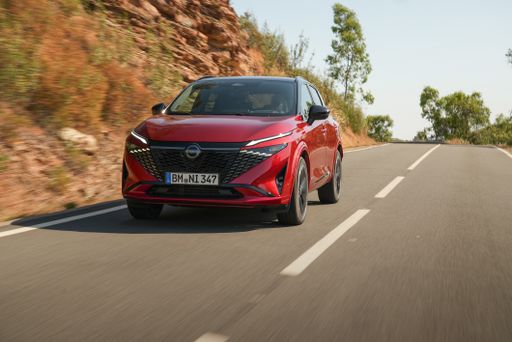
Nissan Qashqai

4.9 (3 Reviews)
rate
  • marginally cheaper
  • visibly more power
  • noticeably more efficient
  • visibly quicker 0–100 km/h
  • only slightly lighter
  • clearly more trunk space
details

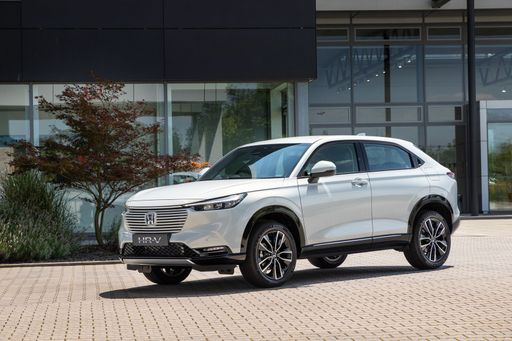
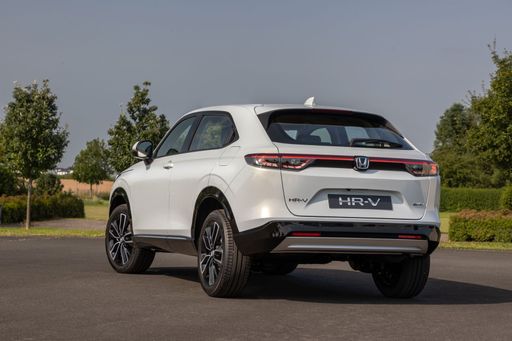
Honda HR-V

4.3 (15 Reviews)
rate
details

All details on performance, efficiency, range and trunk space can be found in the technical comparison below – including user reviews for both models.

By Achim Sedelmaier

Qashqai

The SUV Showdown: Honda HR-V vs. Nissan Qashqai

In the competitive compact SUV market, the Honda HR-V and the Nissan Qashqai stand out as two compelling options, each offering a unique blend of performance, comfort, and innovation. As automotive enthusiasts, we dive into the technical aspects, innovations, and features that set these two vehicles apart. Let’s explore what each has to offer!

HR-V

Engine and Performance

The Honda HR-V is equipped with a full hybrid engine, producing a competent 130 HP. This is paired with a continuously variable transmission (CVT) that allows for smooth acceleration, reaching 0 to 100 km/h in about 10.7 seconds. The HR-V boasts a top speed of 170 km/h, making it a suitable choice for urban commuting as well as highway travel. Moreover, it delivers impressive fuel consumption at 5.4 L/100 km, contributing to lower emissions with a CO2 output of 122 g/km.

On the other hand, the Nissan Qashqai offers a broader engine range, including petrol mild-hybrid (MHEV) and full hybrid options, with powers ranging from 140 HP to a striking 190 HP. This diverse powertrain lineup includes a choice of manual or automatic transmissions (CVT), accommodating various driving preferences. The Qashqai excels in acceleration, with some variants reaching 0 to 100 km/h in just 7.9 seconds, while its top speeds can climb up to 206 km/h. Fuel efficiency varies from 5.1 to 6.8 L/100 km depending on the model, with CO2 emissions ranging from 116 to 154 g/km.

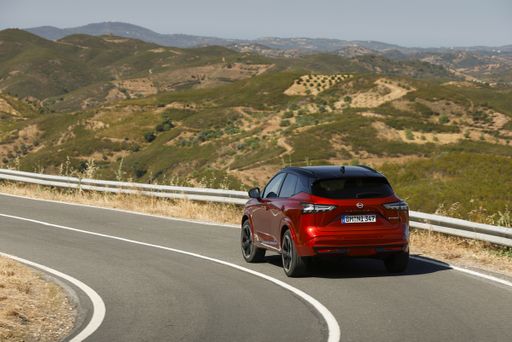
Qashqai

Dimensions and Interior Space

Dimensionally, the HR-V measures 4,340 mm in length and 1,582 mm in height, providing a spacious cabin for five passengers, along with a trunk capacity of 335 to 320 liters, depending on configuration. Despite its compact stature, the HR-V is designed to optimize space, making it a practical choice for everyday usability.

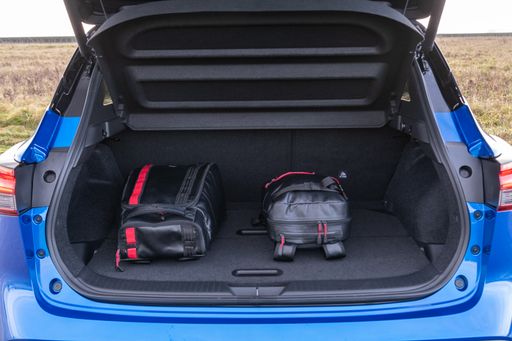
The Qashqai, slightly larger at 4,425 mm long and 1,625 mm tall, also seats five but offers a panoramic and spacious interior, boasting a trunk capacity of up to 504 liters. This added space makes the Qashqai an appealing option for families or those who need more cargo room without sacrificing comfort.

HR-V

Safety and Technology Innovations

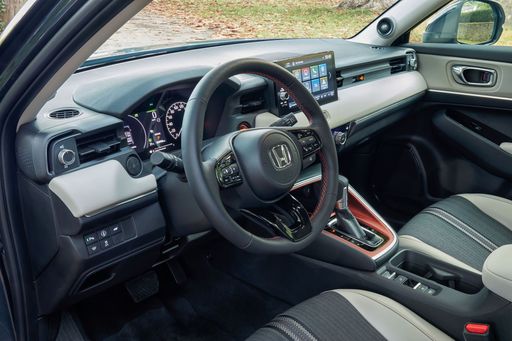
Both vehicles come equipped with advanced safety features. The Honda HR-V includes a robust suite of Honda Sensing technologies, enhancing driver confidence with adaptive cruise control, collision mitigation braking, and lane-keeping assist. This comprehensive safety package provides a reassuring experience for both the driver and passengers alike.

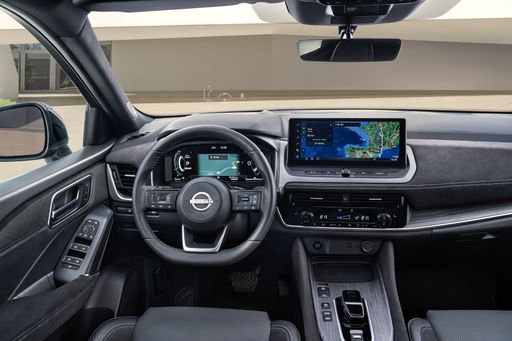
Meanwhile, the Nissan Qashqai embraces innovation with its ProPILOT Assist technology, offering semi-autonomous driving capabilities. This system provides features such as intelligent cruise control and lane centering, allowing for a more relaxed driving experience. Additionally, the Qashqai includes a 12.3-inch digital dashboard and an advanced infotainment system that supports Apple CarPlay and Android Auto, aligning with modern connectivity demands.

Qashqai

Conclusion: Which SUV Reigns Supreme?

Ultimately, the choice between the Honda HR-V and Nissan Qashqai will depend on individual preferences and priority features. The Honda HR-V offers excellent fuel economy and a solid hybrid performance, making it ideal for eco-conscious consumers. In contrast, the Nissan Qashqai shines with its performance versatility, spaciousness, and cutting-edge technology.

As both models continue to evolve with industry trends, they remain formidable competitors in the compact SUV segment, guaranteeing that buyers have options to suit their specific needs and lifestyles. In this showdown, either would prove to be a savvy choice for savvy consumers looking for reliability and style on the road.

Here’s where it gets real: The technical differences in detail

Qashqai

Costs and Efficiency:

Price and efficiency are key factors when choosing a car – and this is often where the real differences emerge.

Nissan Qashqai is marginally cheaper – starting at 29,600 £ , while the Honda HR-V costs 29,700 £ . That’s a price difference of around 137 £.

Fuel consumption also shows a difference: the Nissan Qashqai uses 4.3 L/100km and is noticeably more efficient than the Honda HR-V with 5.4 L/100km. The difference is about 1.1 L/100km.

HR-V

Engine and Performance:

Power, torque and acceleration are the classic benchmarks for car enthusiasts – and here, some clear differences start to show.

When it comes to engine power, the Nissan Qashqai offers visibly more power – delivering 205 HP compared to 131 HP. That’s roughly 74 HP more horsepower.

When accelerating from 0 to 100 km/h, the Nissan Qashqai is visibly quicker – completing the sprint in 7.6 s, while the Honda HR-V takes 10.6 s. That’s about 3 s quicker.

There’s also a difference in torque: the Nissan Qashqai delivers markedly more torque with 330 Nm compared to 253 Nm. That’s about 77 Nm more.

Qashqai

Space and Everyday Use:

Beyond pure performance, interior space and usability matter most in daily life. This is where you see which car is more practical and versatile.

Both vehicles offer seating for 5 people.

In terms of curb weight, Nissan Qashqai is only slightly lighter – 1,420 kg compared to 1,452 kg. The difference is around 32 kg.

Looking at boot space, the Nissan Qashqai offers clearly more boot space – 504 L compared to 319 L. That’s a difference of about 185 L.

When it comes to payload, the Nissan Qashqai carries a bit more – 516 kg compared to 418 kg. That’s a difference of about 98 kg.

Who wins the race in the data check?

The Nissan Qashqai stands well ahead of its rival in the objective data comparison.
This result only shows which model scores more points on paper – not which of the two cars feels right for you.

from £29,600
Qashqai

Nissan Qashqai

  • Engine Type : Petrol MHEV, Full Hybrid
  • Transmission : Manuel, Automatic
  • Drive Type : Front-Wheel Drive, All-Wheel Drive
  • Power HP : 158 - 205 HP
  • Consumption L/100km : 4.3 - 6.8 L/100km
Nissan Qashqai
Honda HR-V

Costs and Consumption

View detailed analysis

Engine and Performance

View detailed analysis

Dimensions and Body

View detailed analysis

Nissan Qashqai

The Nissan Qashqai blends practical, family-friendly packaging with SUV styling that refuses to shout, making it a sensible and dependable choice for everyday life. It’s comfortable to live with, economical on the road, and neatly equipped enough to feel modern without ever feeling precious — perfect if you want crossover versatility without the drama.

details

Honda HR-V

The Honda HR-V is the sensible compact crossover that blends roomy practicality with a composed, friendly drive, making it an easy pick for buyers who want everyday usability without fuss. It won’t thrill hardcore enthusiasts, but its clever packaging, comfortable cabin and low-key styling make life simpler — and that’s exactly the point.

details
Nissan Qashqai
Honda HR-V

Costs and Consumption

Price
29,600 - 39,900 £
Price
29,700 - 35,400 £
Consumption L/100km
4.3 - 6.8 L/100km
Consumption L/100km
5.4 L/100km
Consumption kWh/100km
-
Consumption kWh/100km
-
Electric Range
-
Electric Range
-
Battery Capacity
-
Battery Capacity
-
co2
98 - 152 g/km
co2
122 g/km
Fuel tank capacity
-
Fuel tank capacity
-

Dimensions and Body

Body Type
SUV
Body Type
SUV
Seats
5
Seats
5
Doors
-
Doors
-
Curb weight
1,420 - 1,624 kg
Curb weight
1,452 kg
Trunk capacity
479 - 504 L
Trunk capacity
319 L
Length
-
Length
-
Width
1,835 mm
Width
-
Height
-
Height
-
Max trunk capacity
-
Max trunk capacity
-
Payload
446 - 516 kg
Payload
418 kg

Engine and Performance

Engine Type
Petrol MHEV, Full Hybrid
Engine Type
Full Hybrid
Transmission
Manuel, Automatic
Transmission
Automatic
Transmission Detail
Manual Gearbox, CVT, Reduction Gearbox
Transmission Detail
CVT
Drive Type
Front-Wheel Drive, All-Wheel Drive
Drive Type
Front-Wheel Drive
Power HP
158 - 205 HP
Power HP
131 HP
Acceleration 0-100km/h
7.6 - 9.9 s
Acceleration 0-100km/h
10.6 - 10.8 s
Max Speed
-
Max Speed
-
Torque
260 - 330 Nm
Torque
253 Nm
Number of Cylinders
3 - 4
Number of Cylinders
4
Power kW
116 - 151 kW
Power kW
96 kW
Engine capacity
1,332 - 1,498 cm3
Engine capacity
1,498 cm3

General

Model Year
2,025 - 2,026
Model Year
2025
CO2 Efficiency Class
E, C
CO2 Efficiency Class
D
Brand
Nissan
Brand
Honda
DriveDuel uses data analysis and artificial intelligence to evaluate vehicle data and create content. Content is regularly reviewed and improved. The displayed prices are estimates based on German list prices, adjusted to the respective country’s VAT. Country-specific registration taxes are not included. This information is not legally binding.