VS

Nissan Qashqai vs Hyundai Tucson comparison

Compare performance (205 HP vs 288 HP), boot space and price (29,600 £ vs 20,900 £ ) at a glance. Find out which car is the better choice for you – Nissan Qashqai or Hyundai Tucson?

Nissan Qashqai vs Hyundai Tucson: Key differences

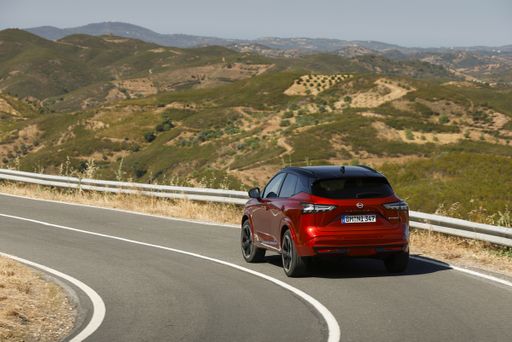
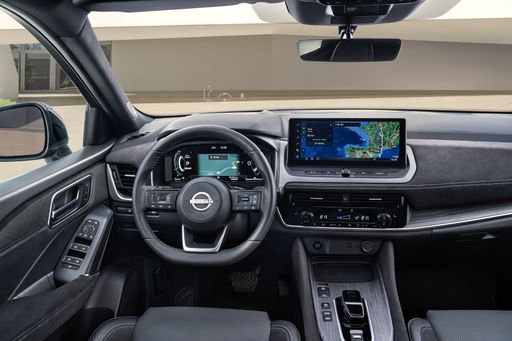
Nissan Qashqai

4.9 (3 Reviews)
rate
  • marginally lighter

Hyundai Tucson

4.6 (4 Reviews)
rate
  • considerably cheaper
  • clearly more power
  • significantly more efficient
  • only slightly quicker 0–100 km/h
  • moderately more trunk space

All details on performance, efficiency, range and trunk space can be found in the technical comparison below – including user reviews for both models.

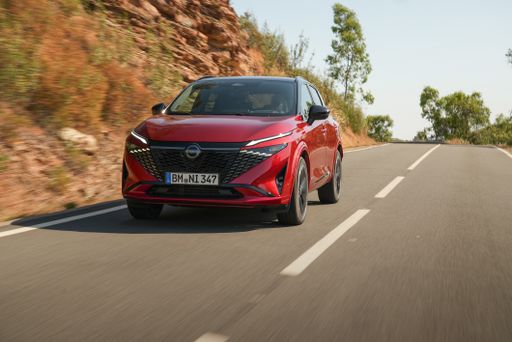
Qashqai

Hyundai Tucson vs. Nissan Qashqai: A Comprehensive Comparison

As the compact SUV segment continues to flourish in the automotive market, two models that stand out for comparison are the Hyundai Tucson and the Nissan Qashqai. Both vehicles are known for their sleek designs, modern features, and innovative technologies. In this article, we will delve into the technical aspects of each vehicle, evaluate their performance, and explore the innovations that set them apart.
Tucson

Specifications and Engine Options

The Hyundai Tucson 2024 boasts a diverse lineup of engine types including Diesel MHEV, Petrol MHEV, Petrol, Full Hybrid, and Plugin Hybrid options. The power output ranges from 136 to 252 HP, with acceleration times varying significantly based on engine choice, allowing a swift 0-100 km/h in just 7.9 seconds. On the other hand, the Nissan Qashqai also presents an array of options with a choice of Petrol MHEV and Full Hybrid engines that deliver between 140 and 190 HP, achieving a similar acceleration time of 7.9 seconds for its top variant.

Both SUVs come equipped with manual and automatic transmission systems. Hyundai offers a double-clutch automatic system, which ensures smooth gear transitions, while Nissan features a Continuously Variable Transmission (CVT) praised for enhancing fuel efficiency.

Qashqai

Dimensions and Practicality

When it comes to dimensions, the Tucson is larger, measuring 4510 mm in length, 1865 mm in width, and standing 1650 mm tall. The Qashqai, being a bit more compact at 4425 mm in length, 1835 mm in width, and 1625 mm in height, may appeal to urban drivers seeking easier maneuverability.

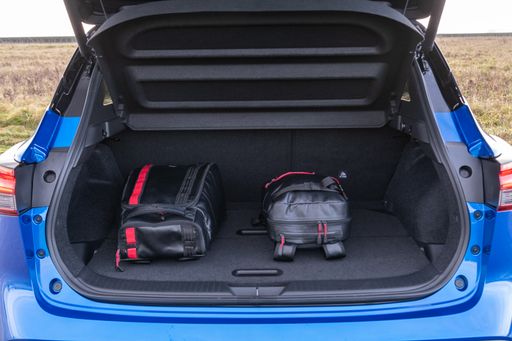
In terms of interior space, the Tucson shines with a trunk capacity ranging from 546 to 620 liters depending on the variant, compared to the Qashqai's more modest 479 to 504 liters. Both vehicles comfortably seat five passengers but the Tucson offers a slightly more spacious experience.

Tucson

Fuel Efficiency and Environmental Impact

Fuel efficiency is a cornerstone of modern vehicle design. The Tucson presents impressive figures with consumption rates between 5.1 and 6.8 L/100 km, especially with its hybrid and plug-in options. The Qashqai, meanwhile, achieves a commendable range of 5.1 to 6.8 L/100 km as well, standing out with lower CO2 emissions in some variants, with values dropping as low as 116 g/km.

Qashqai

Driving Experience and Handling

The Tucson features various drive types, including Front-Wheel Drive and All-Wheel Drive options. Its maximum torque can reach up to 367 Nm, providing enhanced power delivery especially useful in challenging driving conditions. The Qashqai follows suit with similar drive configurations, yielding a useful torque range of up to 330 Nm, translating into engaging drive dynamics and adequate performance.

Tucson

Technology and Innovations

Both the Tucson and Qashqai are equipped with state-of-the-art technology that enhances driving comfort and safety. Hyundai's Smart Sense system offers an array of advanced safety features, including collision-avoidance assist and smart cruise control, making it an attractive choice for safety-conscious buyers.

In contrast, the Nissan Qashqai boasts the ProPILOT Assist system, which provides semi-autonomous driving capabilities, making long highway cruises easier and reducing driver fatigue. This focus on driver aids and automation is indicative of Nissan's commitment to innovation.

Qashqai

Verdict: Which SUV Reigns Supreme?

Both the Hyundai Tucson and Nissan Qashqai offer compelling features and technologies tailored to the compact SUV market. While the Tucson excels in fuel efficiency, interior space, and power options, the Qashqai impresses with its advanced safety technologies and driving assist features.

Ultimately, the decision will boil down to personal preference. For those prioritizing space and a variety of powertrains, the Tucson is a strong contender, while buyers looking for tech-filled options with a nimble driving experience may find the Qashqai more to their liking. Whichever SUV you choose, both models are designed to meet the needs of today’s drivers with efficiency and style.

Here’s where it gets real: The technical differences in detail

Qashqai

Costs and Efficiency:

Looking at overall running costs, both models reveal some interesting differences in everyday economy.

Hyundai Tucson is considerably cheaper – starting at 20,900 £ , while the Nissan Qashqai costs 29,600 £ . That’s a price difference of around 8,708 £.

Fuel consumption also shows a difference: the Hyundai Tucson uses 2.7 L/100km and is significantly more efficient than the Nissan Qashqai with 4.5 L/100km. The difference is about 1.8 L/100km.

Tucson

Engine and Performance:

Under the bonnet, it becomes clear which model is tuned for sportiness and which one takes the lead when you hit the accelerator.

When it comes to engine power, the Hyundai Tucson offers clearly more power – delivering 288 HP compared to 205 HP. That’s roughly 83 HP more horsepower.

When accelerating from 0 to 100 km/h, the Hyundai Tucson is only slightly quicker – completing the sprint in 7.5 s, while the Nissan Qashqai takes 7.6 s. That’s about 0.1 s quicker.

Looking at top speed, the Nissan Qashqai is very slightly faster – reaching 206 km/h, while the Hyundai Tucson tops out at 204 km/h. The difference is around 2 km/h.

There’s also a difference in torque: the Hyundai Tucson delivers moderately more torque with 379 Nm compared to 330 Nm. That’s about 49 Nm more.

Qashqai

Space and Everyday Use:

Beyond pure performance, interior space and usability matter most in daily life. This is where you see which car is more practical and versatile.

Both vehicles offer seating for 5 people.

In terms of curb weight, Nissan Qashqai is marginally lighter – 1,420 kg compared to 1,542 kg. The difference is around 122 kg.

Looking at boot space, the Hyundai Tucson offers moderately more boot space – 620 L compared to 504 L. That’s a difference of about 116 L.

For maximum load capacity, the Hyundai Tucson offers somewhat more capacity – up to 1,799 L, about 352 L more than the Nissan Qashqai.

When it comes to payload, the Hyundai Tucson carries only slightly more – 545 kg compared to 520 kg. That’s a difference of about 25 kg.

Who wins the race in the data check?

The Hyundai Tucson is clearly superior overall in the objective data comparison.
This result only shows which model scores more points on paper – not which of the two cars feels right for you.

from £20,900
Tucson

Hyundai Tucson

  • Engine Type : Petrol, Full Hybrid, Plugin Hybrid, Diesel MHEV
  • Transmission : Manuel, Automatic
  • Drive Type : Front-Wheel Drive, All-Wheel Drive
  • Power HP : 136 - 288 HP
  • Consumption L/100km : 2.7 - 7.6 L/100km
  • Electric Range : 63 - 70 km
Nissan Qashqai
Hyundai Tucson

Costs and Consumption

View detailed analysis

Engine and Performance

View detailed analysis

Dimensions and Body

View detailed analysis

Nissan Qashqai

The Nissan Qashqai blends practical, family-friendly packaging with SUV styling that refuses to shout, making it a sensible and dependable choice for everyday life. It’s comfortable to live with, economical on the road, and neatly equipped enough to feel modern without ever feeling precious — perfect if you want crossover versatility without the drama.

details

Hyundai Tucson

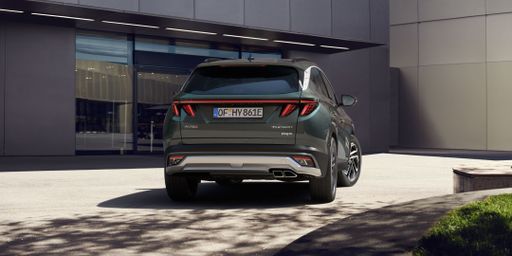
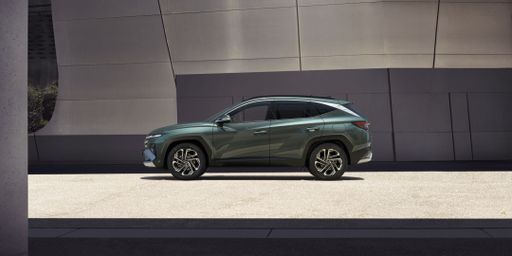
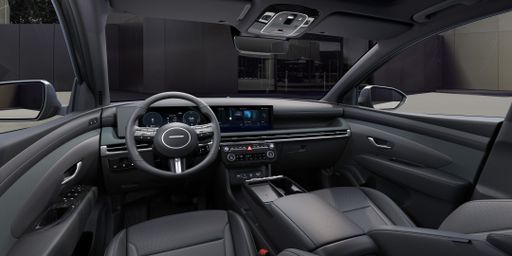
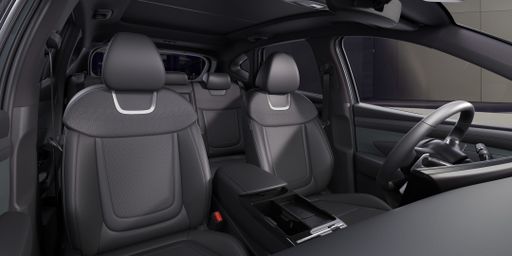
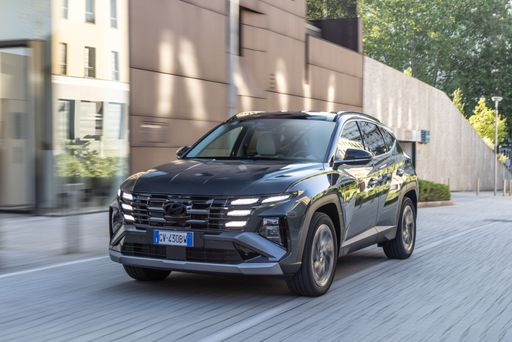
Hyundai Tucson marries bold, sculpted looks with a clever, roomy cabin that feels smarter than its price tag suggests. It's composed on the road, easy to live with day-to-day, and a sensible choice for buyers who want SUV style without the showroom theatrics.

details
Nissan Qashqai
Hyundai Tucson

Costs and Consumption

Price
29,600 - 39,900 £
Price
20,900 - 47,900 £
Consumption L/100km
4.5 - 6.8 L/100km
Consumption L/100km
2.7 - 7.6 L/100km
Consumption kWh/100km
-
Consumption kWh/100km
-
Electric Range
-
Electric Range
63 - 70 km
Battery Capacity
-
Battery Capacity
-
co2
102 - 154 g/km
co2
62 - 172 g/km
Fuel tank capacity
55 L
Fuel tank capacity
52 - 54 L

Dimensions and Body

Body Type
SUV
Body Type
SUV
Seats
5
Seats
5
Doors
5
Doors
5
Curb weight
1,420 - 1,665 kg
Curb weight
1,542 - 1,893 kg
Trunk capacity
479 - 504 L
Trunk capacity
546 - 620 L
Length
4,425 mm
Length
4,525 - 4,535 mm
Width
1,835 mm
Width
1,865 mm
Height
1,625 mm
Height
1,650 mm
Max trunk capacity
1,422 - 1,447 L
Max trunk capacity
1,795 - 1,799 L
Payload
466 - 520 kg
Payload
518 - 545 kg

Engine and Performance

Engine Type
Petrol MHEV, Full Hybrid
Engine Type
Petrol, Full Hybrid, Plugin Hybrid, Diesel MHEV
Transmission
Manuel, Automatic
Transmission
Manuel, Automatic
Transmission Detail
Manual Gearbox, CVT, Reduction Gearbox
Transmission Detail
Manual Gearbox, Dual-Clutch Automatic, Automatic Gearbox
Drive Type
Front-Wheel Drive, All-Wheel Drive
Drive Type
Front-Wheel Drive, All-Wheel Drive
Power HP
140 - 205 HP
Power HP
136 - 288 HP
Acceleration 0-100km/h
7.6 - 10.2 s
Acceleration 0-100km/h
7.5 - 11.6 s
Max Speed
170 - 206 km/h
Max Speed
196 - 204 km/h
Torque
240 - 330 Nm
Torque
250 - 379 Nm
Number of Cylinders
3 - 4
Number of Cylinders
4
Power kW
103 - 151 kW
Power kW
100 - 212 kW
Engine capacity
1,332 - 1,498 cm3
Engine capacity
1,598 cm3

General

Model Year
2,025 - 2,026
Model Year
2,025
CO2 Efficiency Class
E, C
CO2 Efficiency Class
F, D, E, B
Brand
Nissan
Brand
Hyundai
DriveDuel uses data analysis and artificial intelligence to evaluate vehicle data and create content. Content is regularly reviewed and improved. The displayed prices are estimates based on German list prices, adjusted to the respective country’s VAT. Country-specific registration taxes are not included. This information is not legally binding.