VS

Nissan Qashqai vs Kia Ceed comparison

Compare performance (205 HP vs 140 HP), boot space and price (29,600 £ vs 23,500 £ ) at a glance. Find out which car is the better choice for you – Nissan Qashqai or Kia Ceed?

Nissan Qashqai vs Kia Ceed: Key differences

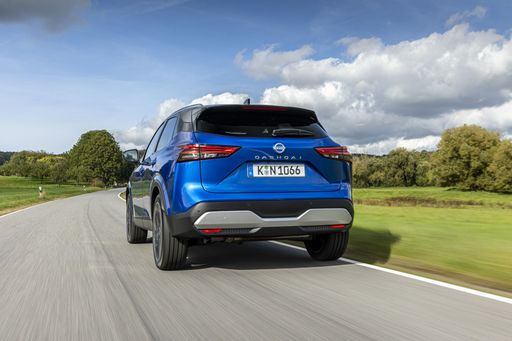
Nissan Qashqai

4.9 (3 Reviews)
rate
  • visibly more power
  • markedly more efficient
  • markedly quicker 0–100 km/h

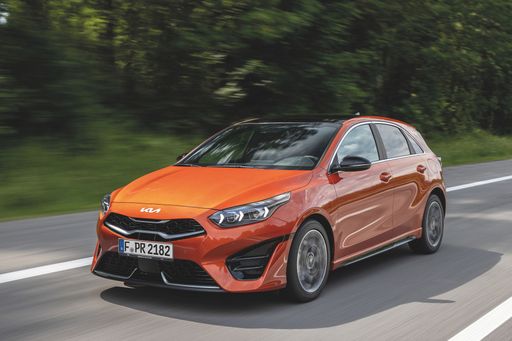
Kia Ceed

  • clearly cheaper
  • barely lighter
Qashqai

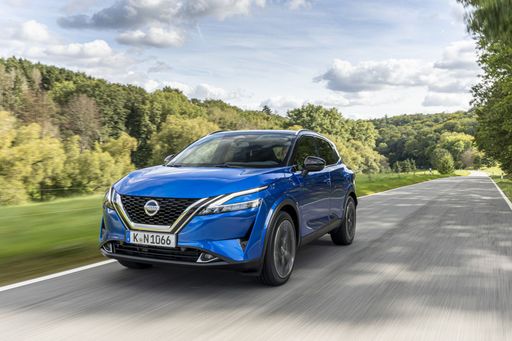
The Hatchback Versus the SUV: Kia Ceed vs. Nissan Qashqai

In the world of compact cars, the debate between the hatchback and SUV continues to puzzle many. Two formidable contenders in this space are the Kia Ceed and the Nissan Qashqai. Both vehicles have been refreshed for the 2024 model year and present a compelling case for different kinds of drivers. Let's dive into the technical specifics and innovative features that set these two vehicles apart.
Ceed

Engine and Performance

The Kia Ceed is available with several petrol mild hybrid options and pure petrol engines, delivering between 100 and 140 horsepower. It offers a variety of transmissions, including a manual gearbox and a dual-clutch automatic, all paired with front-wheel-drive. The Ceed's acceleration times range from 13.2 to 9.5 seconds, depending on the engine choice. Notably, this hatchback can reach a maximum speed of up to 197 km/h.

On the other hand, the Nissan Qashqai offers more variety in its engine options, featuring petrol mild hybrid and full hybrid variations. Its power ranges from 140 HP to an impressive 190 HP, with the ability to select either front-wheel-drive or all-wheel-drive configurations. Transmission options include manual gearboxes and CVT, allowing for smooth transitions on the road. Performance-wise, the Qashqai accelerates from 0 to 100 km/h in as quick as 7.9 seconds.

Qashqai

Fuel Efficiency and Environmental Impact

For those who are eco-conscious, both cars bring their own strengths. The Kia Ceed's consumption ranges from 6 to 6.4 liters per 100 kilometers, with CO2 emissions between 137 and 146 g/km, landing it in the E efficiency class. In contrast, the Qashqai offers slightly better fuel consumption figures, ranging from 5.1 to 6.3 liters per 100 kilometers, accompanied by CO2 emissions that vary between 116 and 154 g/km, ranging from efficiency classes D to E.

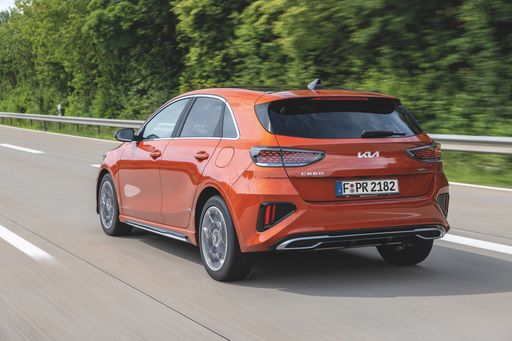
Ceed

Dimensions and Practicality

When examining trunk space and overall dimensions, preferences boil down to individual needs. The Kia Ceed offers a trunk capacity between 357 and 395 liters, a length of up to 4325 mm, and a width of 1800 mm. It's a perfect fit for city dwellers who value compact dimensions without sacrificing internal space.

Meanwhile, the Nissan Qashqai, with its SUV body type, provides a more spacious trunk at 479 to 504 liters, and its larger dimensions of 4425 mm in length and 1835 mm in width offer more room for passengers and cargo. The elevated drive height offers better visibility on the road and a commanding presence.

Qashqai

The Verdict

Both the Kia Ceed and Nissan Qashqai have a lot to offer in their respective segments. The Ceed stands out for those who prioritize a compact yet agile driving experience, especially in urban environments. On the other hand, the Qashqai appeals to those who appreciate the extra space, higher driving position, and flexibility with drive options.

Ultimately, the choice between the Kia Ceed and the Nissan Qashqai will depend on your lifestyle needs and what you value most in a vehicle. Whether you are leaning toward the nimble hatchback or the versatile SUV, both cars offer impressive technologies and innovations in their 2024 iterations.

Here’s where it gets real: The technical differences in detail

Qashqai

Costs and Efficiency:

Price and efficiency are key factors when choosing a car – and this is often where the real differences emerge.

Kia Ceed is clearly cheaper – starting at 23,500 £ , while the Nissan Qashqai costs 29,600 £ . That’s a price difference of around 6,128 £.

Fuel consumption also shows a difference: the Nissan Qashqai uses 4.5 L/100km and is markedly more efficient than the Kia Ceed with 6 L/100km. The difference is about 1.5 L/100km.

Ceed

Engine and Performance:

Power, torque and acceleration say a lot about how a car feels on the road. This is where you see which model delivers more driving dynamics.

When it comes to engine power, the Nissan Qashqai offers visibly more power – delivering 205 HP compared to 140 HP. That’s roughly 65 HP more horsepower.

When accelerating from 0 to 100 km/h, the Nissan Qashqai is markedly quicker – completing the sprint in 7.6 s, while the Kia Ceed takes 9.5 s. That’s about 1.9 s quicker.

There’s also a difference in torque: the Nissan Qashqai delivers noticeably more torque with 330 Nm compared to 253 Nm. That’s about 77 Nm more.

Qashqai

Space and Everyday Use:

Whether family car or daily driver – which one offers more room, flexibility and comfort?

Both vehicles offer seating for 5 people.

In terms of curb weight, Kia Ceed is barely lighter – 1,298 kg compared to 1,420 kg. The difference is around 122 kg.

When it comes to payload, the Nissan Qashqai carries very slightly more – 520 kg compared to 490 kg. That’s a difference of about 30 kg.

Who wins the race in the data check?

The Nissan Qashqai holds a decisive overall lead in the objective data comparison.
This result only shows which model scores more points on paper – not which of the two cars feels right for you.

from £29,600
Qashqai

Nissan Qashqai

  • Engine Type : Petrol MHEV, Full Hybrid
  • Transmission : Manuel, Automatic
  • Drive Type : Front-Wheel Drive, All-Wheel Drive
  • Power HP : 140 - 205 HP
  • Consumption L/100km : 4.5 - 6.8 L/100km
Nissan Qashqai
Kia Ceed

Costs and Consumption

View detailed analysis

Engine and Performance

View detailed analysis

Dimensions and Body

View detailed analysis

Nissan Qashqai

The Nissan Qashqai blends practical, family-friendly packaging with SUV styling that refuses to shout, making it a sensible and dependable choice for everyday life. It’s comfortable to live with, economical on the road, and neatly equipped enough to feel modern without ever feeling precious — perfect if you want crossover versatility without the drama.

details

Kia Ceed

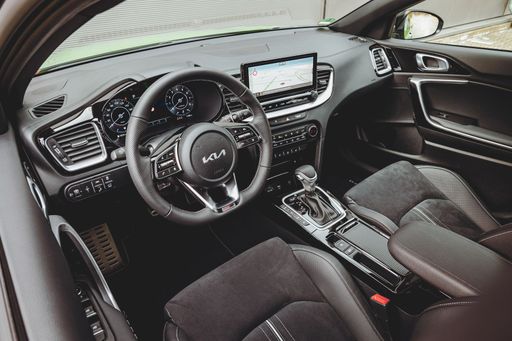
The Kia Ceed is a sensible, stylish hatchback that gives buyers more than they'd expect for the money, blending practical space with crisp, modern looks. It drives with measured confidence and comes loaded with user-friendly kit, so you can enjoy daily life behind the wheel without breaking into a sweat.

details
Nissan Qashqai
Kia Ceed

Costs and Consumption

Price
29,600 - 39,900 £
Price
23,500 - 26,300 £
Consumption L/100km
4.5 - 6.8 L/100km
Consumption L/100km
6 - 6.4 L/100km
Consumption kWh/100km
-
Consumption kWh/100km
-
Electric Range
-
Electric Range
-
Battery Capacity
-
Battery Capacity
-
co2
102 - 154 g/km
co2
137 - 146 g/km
Fuel tank capacity
55 L
Fuel tank capacity
-

Dimensions and Body

Body Type
SUV
Body Type
Hatchback
Seats
5
Seats
5
Doors
5
Doors
-
Curb weight
1,420 - 1,665 kg
Curb weight
1,298 - 1,372 kg
Trunk capacity
479 - 504 L
Trunk capacity
-
Length
4,425 mm
Length
-
Width
1,835 mm
Width
1,800 mm
Height
1,625 mm
Height
-
Max trunk capacity
1,422 - 1,447 L
Max trunk capacity
-
Payload
466 - 520 kg
Payload
478 - 490 kg

Engine and Performance

Engine Type
Petrol MHEV, Full Hybrid
Engine Type
Petrol, Petrol MHEV
Transmission
Manuel, Automatic
Transmission
Manuel, Automatic
Transmission Detail
Manual Gearbox, CVT, Reduction Gearbox
Transmission Detail
Manual Gearbox, Dual-Clutch Automatic
Drive Type
Front-Wheel Drive, All-Wheel Drive
Drive Type
Front-Wheel Drive
Power HP
140 - 205 HP
Power HP
100 - 140 HP
Acceleration 0-100km/h
7.6 - 10.2 s
Acceleration 0-100km/h
9.5 - 13.2 s
Max Speed
170 - 206 km/h
Max Speed
-
Torque
240 - 330 Nm
Torque
172 - 253 Nm
Number of Cylinders
3 - 4
Number of Cylinders
3 - 4
Power kW
103 - 151 kW
Power kW
74 - 103 kW
Engine capacity
1,332 - 1,498 cm3
Engine capacity
998 - 1,482 cm3

General

Model Year
2,025 - 2,026
Model Year
2,024
CO2 Efficiency Class
E, C
CO2 Efficiency Class
E
Brand
Nissan
Brand
Kia
DriveDuel uses data analysis and artificial intelligence to evaluate vehicle data and create content. Content is regularly reviewed and improved. The displayed prices are estimates based on German list prices, adjusted to the respective country’s VAT. Country-specific registration taxes are not included. This information is not legally binding.