VS

Nissan Qashqai vs Nissan Ariya comparison

Compare performance (205 HP vs 435 HP), boot space and price (29,600 £ vs 37,300 £ ) at a glance. Find out which car is the better choice for you – Nissan Qashqai or Nissan Ariya?

Nissan Qashqai vs Nissan Ariya: Key differences

Nissan Qashqai

4.9 (3 Reviews)
rate
  • clearly cheaper
  • visibly lighter
  • very slightly more trunk space

Nissan Ariya

5 (1 Reviews)
rate
  • significantly more power
  • significantly quicker 0–100 km/h
Qashqai

The Battle of the SUVs: Nissan Qashqai vs. Nissan Ariya

In the automotive world, the Nissan Qashqai and the Nissan Ariya stand out as titans in the SUV category, each offering its unique brand of genius. With innovative features, advanced technologies, and power-packed performance, these two vehicles provide significantly different driving experiences. Let's delve into the specifics of these two remarkable SUVs and see how they compare.

Ariya

Design and Dimensions

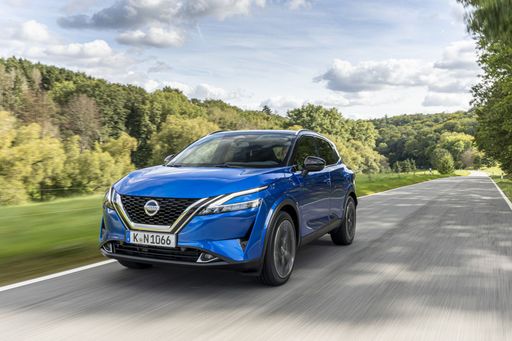
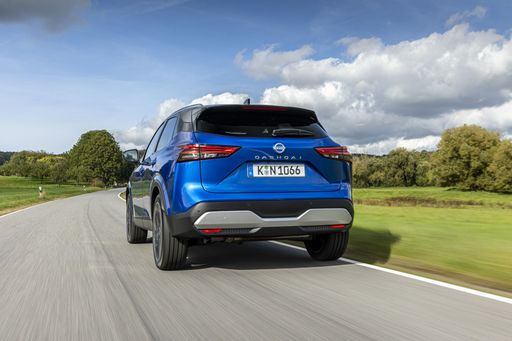
The Nissan Qashqai and the Nissan Ariya both carry the modern SUV design to new heights, yet they cater to different aesthetic sensibilities. The Qashqai, with its dimensions of 4425 mm in length, 1835 mm in width, and 1625 mm in height, embodies a compact yet robust design ideal for urban driving as well as rougher terrains.

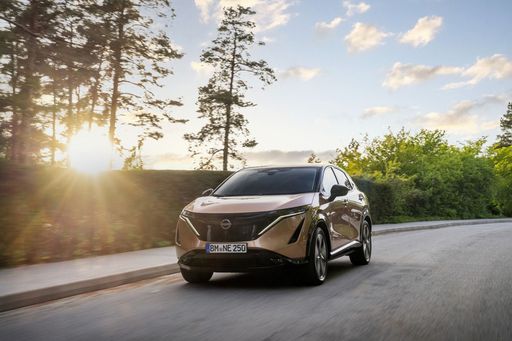
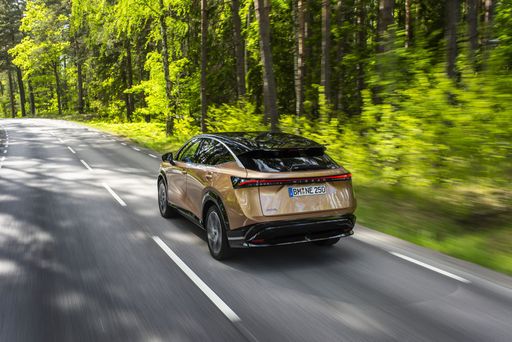
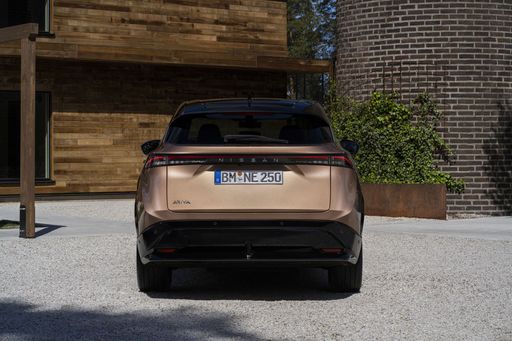
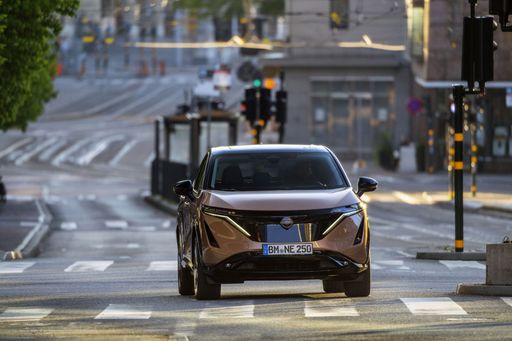
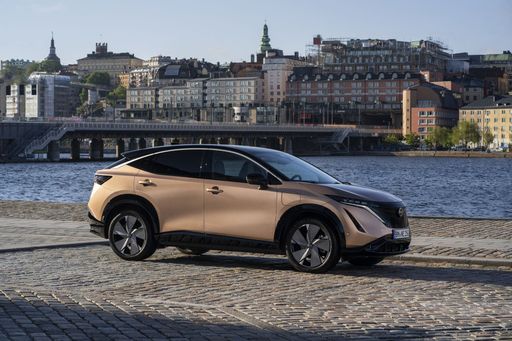
In contrast, the Ariya, slightly larger at 4595 mm in length, 1850 mm in width, and 1650 mm in height, embodies a more futuristic and sleek design. Its modern aesthetics are complemented by an all-electric powertrain, marking it as a forward-thinking vehicle for a new era of mobility.

Qashqai

Performance and Power

Under the hood, the Qashqai offers a range of engine options including petrol MHEV and full hybrid configurations. Its horsepower varies from 140 to 190 HP with torque ranges around 240 to 330 Nm and a maximum speed ranging from 170 to 206 km/h. With acceleration from 0 to 100 km/h in a range of 7.9 to 10.2 seconds, it doesn’t shy away from delivering a spirited performance.

The Ariya, on the other hand, is an all-electric marvel, offering a clean driving experience with zero emissions. Its horsepower ranges from 218 to a notable 435 HP with torque as high as 600 Nm. It achieves 0 to 100 km/h in just 5 to 7.6 seconds, affirming its position as a performance-focused electric vehicle. The Ariya’s power is distributed through an advanced automatic transmission, making for a smooth and effortless drive.

Ariya

Efficiency and Range

The Qashqai's fuel efficiency ranges from 5.1 to 6.8 L/100km depending on the engine type, combined with a CO2 efficiency class ranging from E to D. Its petrol engine variants adhere to robust fuel efficiency particularly in urban and highway conditions.

In contrast, the Ariya prides itself on its electric capabilities with a consumption range of 17.7 to 24.5 kWh/100km and an impressive electric range topping out at 531 km. With its CO2 efficiency class at an impressive A, the Ariya establishes itself as an environmentally friendly choice for the modern driver.

Qashqai

Interior and Technology

Inside both vehicles, a technological haven awaits. The Qashqai offers ample space with a trunk capacity of up to 504 L, comfortably seating five passengers, ensuring comfort is not compromised. Its suite of modern conveniences and intuitive technologies ensure a connected and enjoyable driving experience.

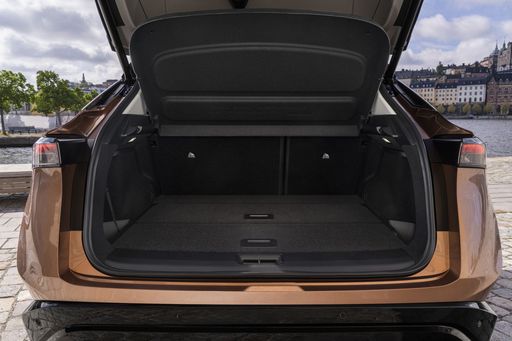
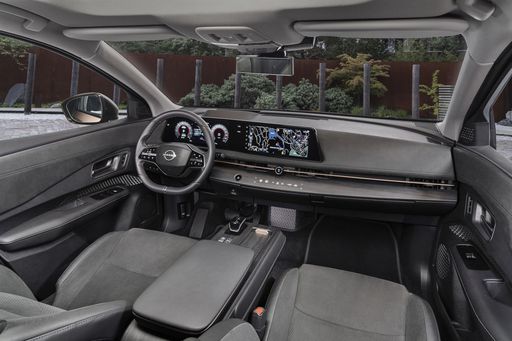
The Ariya, offering 415 to 468 L of trunk space, sets a higher bar with its EV-centric interior, offering a digital interface that seamlessly integrates the driver with the vehicle. Both cars support five passengers, prioritizing space without sacrificing style.

Ariya

Final Thoughts

Choosing between the Nissan Qashqai and the Nissan Ariya essentially boils down to preference in powertrain and design philosophy. The Qashqai, with its blend of performance and practicality, continues to attract those seeking a traditional combustion engine with the benefits of hybrid technology.

The Ariya, however, represents the future, making a solid case for those ready to embrace electric mobility with performance and style as its standout features.

In the grand comparison, both vehicles excel in their respective categories, and the final verdict is purely a matter of lifestyle and driving needs. Whether it's the Qashqai or the Ariya, Nissan ensures innovation and quality are always at the forefront.

Here’s where it gets real: The technical differences in detail

Qashqai

Costs and Efficiency:

Price and efficiency are often the first things buyers look at. Here it becomes clear which model has the long-term edge – whether at the pump, the plug, or in purchase price.

Nissan Qashqai is clearly cheaper – starting at 29,600 £ , while the Nissan Ariya costs 37,300 £ . That’s a price difference of around 7,672 £.

Ariya

Engine and Performance:

Under the bonnet, it becomes clear which model is tuned for sportiness and which one takes the lead when you hit the accelerator.

When it comes to engine power, the Nissan Ariya offers significantly more power – delivering 435 HP compared to 205 HP. That’s roughly 230 HP more horsepower.

When accelerating from 0 to 100 km/h, the Nissan Ariya is significantly quicker – completing the sprint in 5 s, while the Nissan Qashqai takes 7.6 s. That’s about 2.6 s quicker.

Looking at top speed, the Nissan Qashqai is very slightly faster – reaching 206 km/h, while the Nissan Ariya tops out at 200 km/h. The difference is around 6 km/h.

There’s also a difference in torque: the Nissan Ariya delivers clearly more torque with 600 Nm compared to 330 Nm. That’s about 270 Nm more.

Qashqai

Space and Everyday Use:

Cabin size, boot volume and payload all play a role in everyday practicality. Here, comfort and flexibility make the difference.

Both vehicles offer seating for 5 people.

In terms of curb weight, Nissan Qashqai is visibly lighter – 1,420 kg compared to 1,980 kg. The difference is around 560 kg.

Looking at boot space, the Nissan Qashqai offers very slightly more boot space – 504 L compared to 468 L. That’s a difference of about 36 L.

For maximum load capacity, the Nissan Qashqai offers only slightly more capacity – up to 1,447 L, about 97 L more than the Nissan Ariya.

When it comes to payload, the Nissan Qashqai carries somewhat more – 520 kg compared to 420 kg. That’s a difference of about 100 kg.

Who wins the race in the data check?

The Nissan Ariya is decisively ahead in the objective data comparison.
This result only shows which model scores more points on paper – not which of the two cars feels right for you.

from £37,300
Ariya

Nissan Ariya

  • Engine Type : Electric
  • Transmission : Automatic
  • Drive Type : Front-Wheel Drive, All-Wheel Drive
  • Power HP : 218 - 435 HP
  • Consumption kWh/100km : 17.7 - 24.5 kWh/100km
  • Electric Range : 402 - 531 km
Nissan Qashqai
Nissan Ariya

Costs and Consumption

View detailed analysis

Engine and Performance

View detailed analysis

Dimensions and Body

View detailed analysis

Nissan Qashqai

The Nissan Qashqai blends practical, family-friendly packaging with SUV styling that refuses to shout, making it a sensible and dependable choice for everyday life. It’s comfortable to live with, economical on the road, and neatly equipped enough to feel modern without ever feeling precious — perfect if you want crossover versatility without the drama.

details

Nissan Ariya

The Nissan Ariya wraps futuristic, sculpted styling around a calm, high-tech cabin, making the switch to electric feel surprisingly easy and grown-up. It’s a comfortable, sensible EV that favors everyday usability and clever packaging over headline-grabbing theatrics — ideal for buyers who want an elegant, low-fuss electric car without the ego.

details
Nissan Qashqai
Nissan Ariya

Costs and Consumption

Price
29,600 - 39,900 £
Price
37,300 - 54,800 £
Consumption L/100km
4.5 - 6.8 L/100km
Consumption L/100km
-
Consumption kWh/100km
-
Consumption kWh/100km
17.7 - 24.5 kWh/100km
Electric Range
-
Electric Range
402 - 531 km
Battery Capacity
-
Battery Capacity
63 - 87 kWh
co2
102 - 154 g/km
co2
0 g/km
Fuel tank capacity
55 L
Fuel tank capacity
-

Dimensions and Body

Body Type
SUV
Body Type
SUV
Seats
5
Seats
5
Doors
5
Doors
5
Curb weight
1,420 - 1,665 kg
Curb weight
1,980 - 2,277 kg
Trunk capacity
479 - 504 L
Trunk capacity
415 - 468 L
Length
4,425 mm
Length
4,595 mm
Width
1,835 mm
Width
1,850 mm
Height
1,625 mm
Height
1,650 mm
Max trunk capacity
1,422 - 1,447 L
Max trunk capacity
1,280 - 1,350 L
Payload
466 - 520 kg
Payload
363 - 420 kg

Engine and Performance

Engine Type
Petrol MHEV, Full Hybrid
Engine Type
Electric
Transmission
Manuel, Automatic
Transmission
Automatic
Transmission Detail
Manual Gearbox, CVT, Reduction Gearbox
Transmission Detail
Reduction Gearbox
Drive Type
Front-Wheel Drive, All-Wheel Drive
Drive Type
Front-Wheel Drive, All-Wheel Drive
Power HP
140 - 205 HP
Power HP
218 - 435 HP
Acceleration 0-100km/h
7.6 - 10.2 s
Acceleration 0-100km/h
5 - 7.6 s
Max Speed
170 - 206 km/h
Max Speed
160 - 200 km/h
Torque
240 - 330 Nm
Torque
300 - 600 Nm
Number of Cylinders
3 - 4
Number of Cylinders
-
Power kW
103 - 151 kW
Power kW
160 - 320 kW
Engine capacity
1,332 - 1,498 cm3
Engine capacity
-

General

Model Year
2,025 - 2,026
Model Year
2,022 - 2,025
CO2 Efficiency Class
E, C
CO2 Efficiency Class
A
Brand
Nissan
Brand
Nissan
DriveDuel uses data analysis and artificial intelligence to evaluate vehicle data and create content. Content is regularly reviewed and improved. The displayed prices are estimates based on German list prices, adjusted to the respective country’s VAT. Country-specific registration taxes are not included. This information is not legally binding.