
 Deutschland
 France
 Nederland
 Great Britain
 Sverige
 Norge
Norge Danmark
 Suomi
Suomi Italia
 Polska
 España
VS
Nissan Qashqai vs Porsche Cayenne – Which car suits you better?
Qashqai
@ Nissan Motor Corporation
Costs and Efficiency:
Price and efficiency are key factors when choosing a car – and this is often where the real differences emerge.
Nissan Qashqai has a decisively advantage in terms of price – it starts at 29600 £, while the Porsche Cayenne costs 87000 £. That’s a price difference of around 57395 £.
Fuel consumption also shows a difference: Porsche Cayenne manages with 4 L and is therefore to a small extent more efficient than the Nissan Qashqai with 4.50 L. The difference is about 0.50 L per 100 km.
Cayenne
@ Dr. Ing. h.c. F. Porsche AG
Engine and Performance:
Power, torque and acceleration say a lot about how a car feels on the road. This is where you see which model delivers more driving dynamics.
When it comes to engine power, the Porsche Cayenne has a significantly edge – offering 739 HP compared to 205 HP. That’s roughly 534 HP more horsepower.
In acceleration from 0 to 100 km/h, the Porsche Cayenne is decisively quicker – completing the sprint in 3.60 s, while the Nissan Qashqai takes 7.60 s. That’s about 4 s faster.
In terms of top speed, the Porsche Cayenne performs distinct better – reaching 305 km/h, while the Nissan Qashqai tops out at 206 km/h. The difference is around 99 km/h.
There’s also a difference in torque: Porsche Cayenne pulls convincingly stronger with 950 Nm compared to 330 Nm. That’s about 620 Nm difference.
Qashqai
@ Nissan Motor Corporation
Space and Everyday Use:
Cabin size, boot volume and payload all play a role in everyday practicality. Here, comfort and flexibility make the difference.
Both vehicles offer seating for 5 people.
In curb weight, Nissan Qashqai is convincingly lighter – 1420 kg compared to 2130 kg. The difference is around 710 kg.
In terms of boot space, the Porsche Cayenne offers noticeable more room – 772 L compared to 504 L. That’s a difference of about 268 L.
In maximum load capacity, the Porsche Cayenne performs slightly better – up to 1708 L, which is about 261 L more than the Nissan Qashqai.
When it comes to payload, Porsche Cayenne noticeable takes the win – 705 kg compared to 520 kg. That’s a difference of about 185 kg.
Who wins the race?
The Porsche Cayenne proves to be dominates this comparison and therefore becomes our DriveDuel Champion!
Porsche Cayenne is the better all-rounder in this comparison.
Nissan Qashqai
Porsche Cayenne
Costs and Consumption
View detailed analysis
View detailed analysis
Engine and Performance
View detailed analysis
View detailed analysis
Dimensions and Body
View detailed analysis
View detailed analysis
from about £87,000
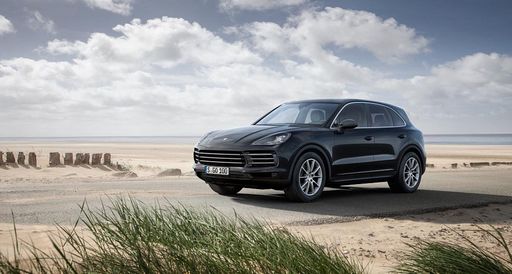 @ Dr. Ing. h.c. F. Porsche AG
Porsche Cayenne
Nissan Qashqai
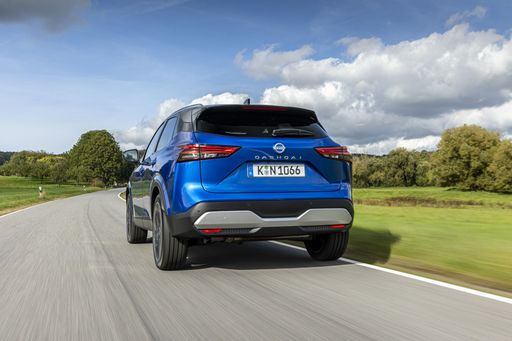
The Nissan Qashqai blends practical, family-friendly packaging with SUV styling that refuses to shout, making it a sensible and dependable choice for everyday life. It’s comfortable to live with, economical on the road, and neatly equipped enough to feel modern without ever feeling precious — perfect if you want crossover versatility without the drama.
details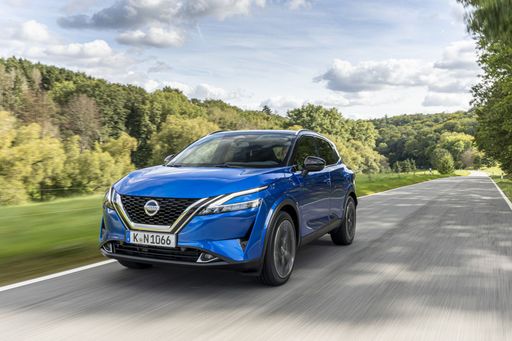 @ Nissan Motor Corporation
 @ Nissan Motor Corporation
 @ Nissan Motor Corporation
 @ Nissan Motor Corporation
 @ Nissan Motor Corporation
Porsche Cayenne
Few SUVs blend athletic poise and Teutonic precision like the Porsche Cayenne, putting genuine sports‑car feeling into a roomy, everyday package. If you want a practical family hauler that still makes you grin every time you merge, the Cayenne delivers — turning errands into an excuse for a spirited drive.
details
@ Dr. Ing. h.c. F. Porsche AG
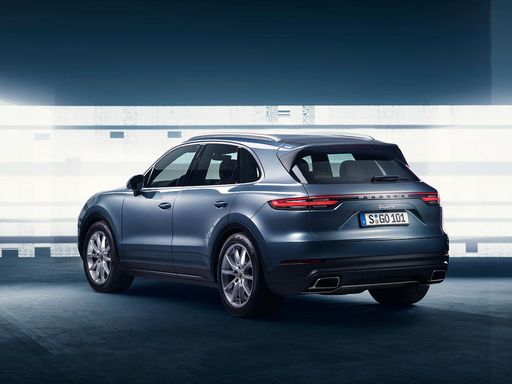 @ Dr. Ing. h.c. F. Porsche AG
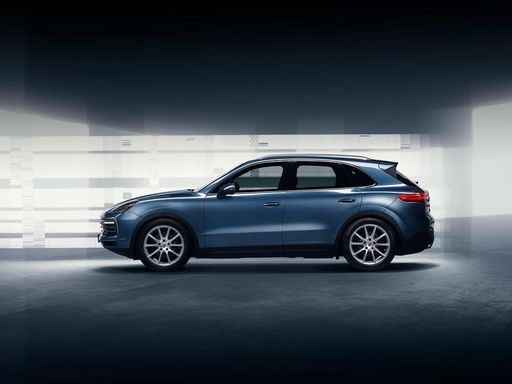 @ Dr. Ing. h.c. F. Porsche AG
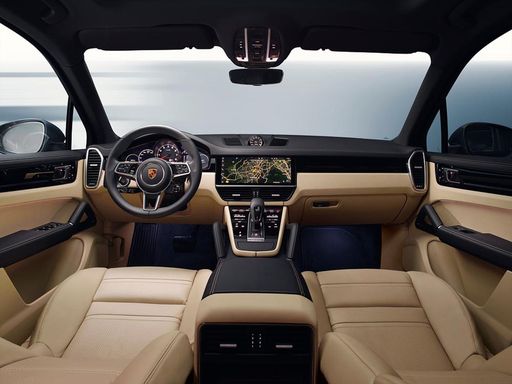 @ Dr. Ing. h.c. F. Porsche AG
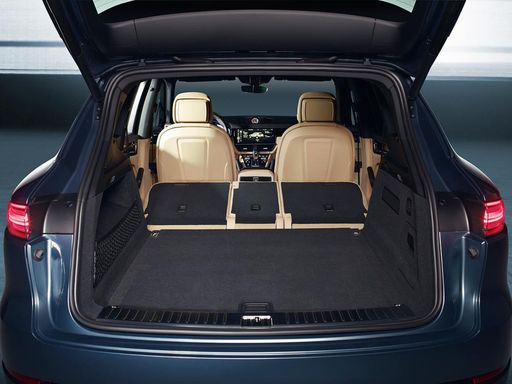 @ Dr. Ing. h.c. F. Porsche AG
Nissan Qashqai
Porsche Cayenne
|
@ Nissan Motor Corporation
|
@ Dr. Ing. h.c. F. Porsche AG
|
|
|
|
Costs and Consumption |
|
|---|---|
|
Price
29600 - 39900 £
|
Price
87000 - 186400 £
|
|
Consumption L/100km
4.5 - 6.8 L
|
Consumption L/100km
4 - 12.2 L
|
|
Consumption kWh/100km
-
|
Consumption kWh/100km
-
|
|
Electric Range
-
|
Electric Range
74 - 83 km
|
|
Battery Capacity
-
|
Battery Capacity
21.80 kWh
|
|
co2
102 - 154 g/km
|
co2
90 - 277 g/km
|
|
Fuel tank capacity
55 L
|
Fuel tank capacity
70 - 90 L
|
Dimensions and Body |
|
|---|---|
|
Body Type
SUV
|
Body Type
SUV
|
|
Seats
5
|
Seats
4 - 5
|
|
Doors
5
|
Doors
5
|
|
Curb weight
1420 - 1665 kg
|
Curb weight
2130 - 2670 kg
|
|
Trunk capacity
479 - 504 L
|
Trunk capacity
434 - 772 L
|
|
Length
4425 mm
|
Length
4930 mm
|
|
Width
1835 mm
|
Width
1983 - 1989 mm
|
|
Height
1625 mm
|
Height
1652 - 1698 mm
|
|
Max trunk capacity
1422 - 1447 L
|
Max trunk capacity
1344 - 1708 L
|
|
Payload
466 - 520 kg
|
Payload
365 - 705 kg
|
Engine and Performance |
|
|---|---|
|
Engine Type
Petrol MHEV, Full Hybrid
|
Engine Type
Petrol, Plugin Hybrid
|
|
Transmission
Manuel, Automatic
|
Transmission
Automatic
|
|
Transmission Detail
Manual Gearbox, CVT, Reduction Gearbox
|
Transmission Detail
Automatic Gearbox
|
|
Drive Type
Front-Wheel Drive, All-Wheel Drive
|
Drive Type
All-Wheel Drive
|
|
Power HP
140 - 205 HP
|
Power HP
353 - 739 HP
|
|
Acceleration 0-100km/h
7.6 - 10.2 s
|
Acceleration 0-100km/h
3.6 - 6 s
|
|
Max Speed
170 - 206 km/h
|
Max Speed
248 - 305 km/h
|
|
Torque
240 - 330 Nm
|
Torque
500 - 950 Nm
|
|
Number of Cylinders
3 - 4
|
Number of Cylinders
6 - 8
|
|
Power kW
103 - 151 kW
|
Power kW
260 - 544 kW
|
|
Engine capacity
1332 - 1498 cm3
|
Engine capacity
2995 - 3996 cm3
|
General |
|
|---|---|
|
Model Year
2025
|
Model Year
2025
|
|
CO2 Efficiency Class
E, C
|
CO2 Efficiency Class
G, B, C
|
|
Brand
Nissan
|
Brand
Porsche
|
Is the Nissan Qashqai offered with different drivetrains?
Available configurations include Front-Wheel Drive or All-Wheel Drive.
The prices and data displayed are estimates based on German list prices and may vary by country. This information is not legally binding.