VS

Nissan X-Trail vs Hyundai Santa Fe comparison

Compare performance (213 HP vs 288 HP), boot space and price (34,200 £ vs 51,700 £ ) at a glance. Find out which car is the better choice for you – Nissan X-Trail or Hyundai Santa Fe?

Nissan X-Trail vs Hyundai Santa Fe: Key differences

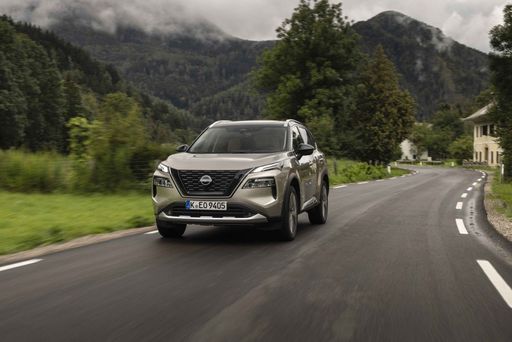
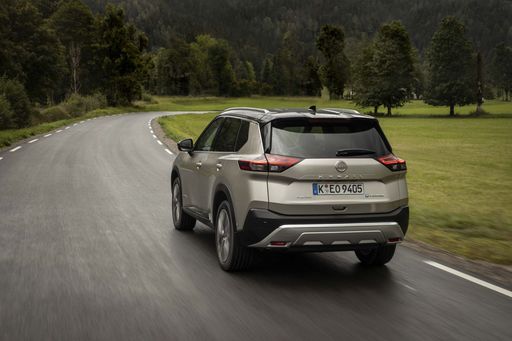
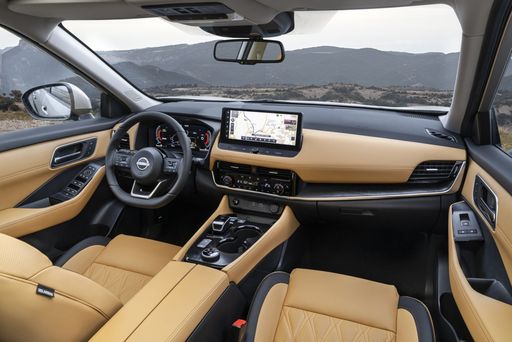
Nissan X-Trail

4.6 (5 Reviews)
rate
  • substantially cheaper
  • moderately quicker 0–100 km/h
  • a bit lighter

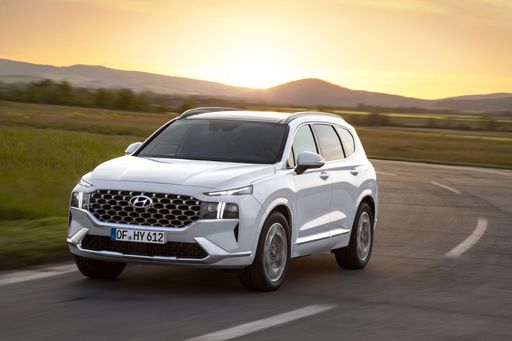
Hyundai Santa Fe

4.7 (1 Reviews)
rate
  • noticeably more power
  • clearly more efficient
  • a bit more trunk space

All details on performance, efficiency, range and trunk space can be found in the technical comparison below – including user reviews for both models.

X-Trail

Introduction: A Clash of Giants in the SUV Segment

The SUV market continues to be a battleground for automakers, with fierce competition leading to innovative designs and cutting-edge technology. This article compares two heavyweights in the segment: the Hyundai Santa Fe and the Nissan X-Trail. Both vehicles bring unique features and capabilities, making them prime candidates for any family or adventure-seeking consumer.

Santa Fe

Engine Performance and Efficiency

When it comes to powertrains, the Hyundai Santa Fe offers a versatile choice of engines, including Full Hybrid and Plug-in Hybrid options, boasting power outputs ranging from 215 to 253 HP. The Santa Fe's robust torque of 367 Nm ensures a smooth driving experience, while its automatic gearbox provides a user-friendly interface. Fuel consumption rates are competitive, ranging from 1.7 to 6.9 L/100km, making it an excellent choice for those mindful of efficiency.

The Nissan X-Trail, on the other hand, provides a selection of Petrol MHEV and Full Hybrid engines, producing between 163 to 213 HP. With torque figures peaking at 525 Nm, the X-Trail promises impressive acceleration, particularly in its top-power trim that can go from 0-100 km/h in as little as 7 seconds. Fuel consumption varies from 5.7 to 6.9 L/100km, offering decent efficiency for petrol engines. Each model comes with an automatic transmission, but the X-Trail features a continuously variable transmission (CVT), enhancing fuel economy in certain driving conditions.


X-Trail

Dimensions and Space

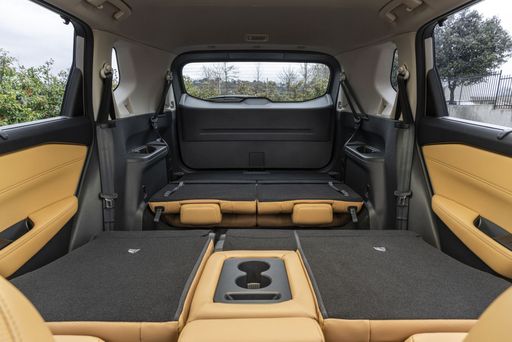
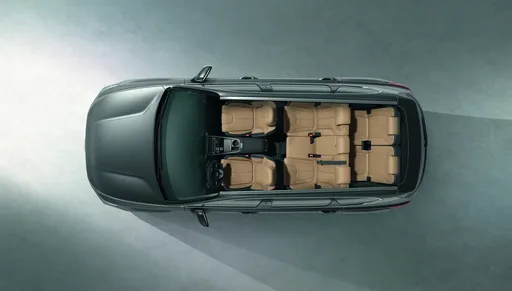
The Hyundai Santa Fe measures 4830 mm in length, 1900 mm in width, and 1720 mm in height. It can comfortably seat up to seven passengers, depending on the configuration, and offers a trunk capacity ranging from 621 to 711 liters, proving to be a spacious option for families or those needing extra cargo space.

In contrast, the Nissan X-Trail measures 4680 mm long, 1840 mm wide, and shares the same height of 1720 mm. It can seat five to seven passengers, depending on the model. While its trunk capacity offers a maximum of 585 liters, it is slightly less accommodating than the Santa Fe, but still practical for everyday use.

Santa Fe

Technological Innovations

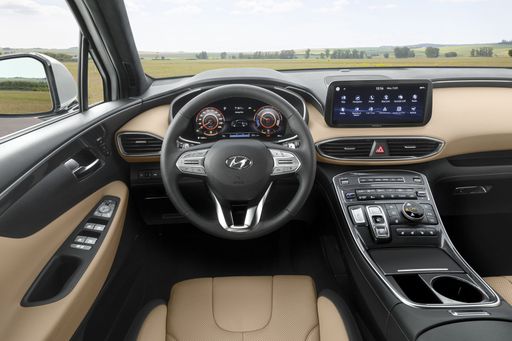
Hyundai is known for incorporating advanced technology into its vehicles, and the Santa Fe is no exception. With features like a large touchscreen infotainment system, smartphone integration, and an advanced driver assistance system, the Santa Fe ensures a modern driving experience. The inclusion of hybrid technology also showcases Hyundai's commitment to environmental responsibility.

The Nissan X-Trail also doesn’t lag behind in innovation. It incorporates a suite of technology including the Nissan ProPILOT Assist, offering semi-autonomous driving capabilities. This system not only maintains speed and distance from other vehicles but also assists with lane centering, making longer journeys more comfortable. The X-Trail’s infotainment system features seamless smartphone connectivity and a user-friendly interface, ensuring a connected experience on the road.

X-Trail

Safety Features

Safety is a crucial concern for any SUV buyer, and both the Hyundai Santa Fe and Nissan X-Trail come equipped with a comprehensive set of safety features. The Santa Fe includes advanced systems such as forward collision-avoidance assist, lane-keeping assist, and a rear-view camera. Additionally, it has performed well in crash tests, further solidifying its reputation for safety.

The Nissan X-Trail brings its own safety innovations, including automatic emergency braking, advanced airbag systems, and a rear cross-traffic alert. Its build quality and crash test ratings position it as a reliable option for families seeking peace of mind on the road.

Santa Fe

Conclusion: Which SUV Reigns Supreme?

In the face-off between the Hyundai Santa Fe and Nissan X-Trail, each contender has its strengths. The Santa Fe shines with its extensive hybrid options, spacious interior, and premium technology offerings. Meanwhile, the X-Trail impresses with its strong performance metrics, semi-autonomous features, and overall efficiency. Ultimately, the choice between these two outstanding SUVs will depend on personal preferences regarding performance, space, and technology. Regardless of the choice, both vehicles contribute significantly to the competitive SUV landscape.

Here’s where it gets real: The technical differences in detail

X-Trail

Costs and Efficiency:

Looking at overall running costs, both models reveal some interesting differences in everyday economy.

Nissan X-Trail is substantially cheaper – starting at 34,200 £ , while the Hyundai Santa Fe costs 51,700 £ . That’s a price difference of around 17,571 £.

Fuel consumption also shows a difference: the Hyundai Santa Fe uses 3.8 L/100km and is clearly more efficient than the Nissan X-Trail with 5.7 L/100km. The difference is about 1.9 L/100km.

Santa Fe

Engine and Performance:

Under the bonnet, it becomes clear which model is tuned for sportiness and which one takes the lead when you hit the accelerator.

When it comes to engine power, the Hyundai Santa Fe offers noticeably more power – delivering 288 HP compared to 213 HP. That’s roughly 75 HP more horsepower.

When accelerating from 0 to 100 km/h, the Nissan X-Trail is moderately quicker – completing the sprint in 7 s, while the Hyundai Santa Fe takes 8 s. That’s about 1 s quicker.

There’s also a difference in torque: the Nissan X-Trail delivers noticeably more torque with 525 Nm compared to 380 Nm. That’s about 145 Nm more.

X-Trail

Space and Everyday Use:

Whether family car or daily driver – which one offers more room, flexibility and comfort?

Both vehicles offer seating for 7 people.

In terms of curb weight, Nissan X-Trail is a bit lighter – 1,668 kg compared to 1,920 kg. The difference is around 252 kg.

Looking at boot space, the Hyundai Santa Fe offers a bit more boot space – 704 L compared to 585 L. That’s a difference of about 119 L.

When it comes to payload, the Hyundai Santa Fe carries a bit more – 665 kg compared to 574 kg. That’s a difference of about 91 kg.

Who wins the race in the data check?

The Hyundai Santa Fe holds a decisive overall lead in the objective data comparison.
This result only shows which model scores more points on paper – not which of the two cars feels right for you.

from £51,700
Santa Fe

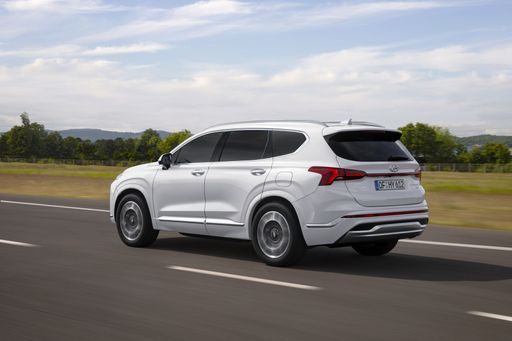
Hyundai Santa Fe

  • Engine Type : Full Hybrid, Plugin Hybrid
  • Transmission : Automatic
  • Drive Type : Front-Wheel Drive, All-Wheel Drive
  • Power HP : 239 - 288 HP
  • Consumption L/100km : 3.8 - 7.2 L/100km
  • Electric Range : 54 km
Nissan X-Trail
Hyundai Santa Fe

Costs and Consumption

View detailed analysis

Engine and Performance

View detailed analysis

Dimensions and Body

View detailed analysis

Nissan X-Trail

The Nissan X-Trail is a roomy, no-nonsense family SUV that mixes sensible practicality with a quietly modern look, making it an easy choice for busy lives and weekend escapes. It drives with calm confidence, delivers a comfortable ride and sensible tech, and won’t demand drama while doing the everyday heavy lifting.

details

Hyundai Santa Fe

The Hyundai Santa Fe blends practical family friendliness with a hint of premium style, offering roomy, sensible packaging wrapped in modern, confident design. Inside it serves up comfortable seats, straightforward tech and a calm, composed ride that makes daily drives feel a little more grown up — a solid all‑rounder that doesn’t try to be flashy.

details
Nissan X-Trail
Hyundai Santa Fe

Costs and Consumption

Price
34,200 - 50,500 £
Price
51,700 - 58,600 £
Consumption L/100km
5.7 - 6.9 L/100km
Consumption L/100km
3.8 - 7.2 L/100km
Consumption kWh/100km
-
Consumption kWh/100km
-
Electric Range
-
Electric Range
54 km
Battery Capacity
-
Battery Capacity
-
co2
131 - 161 g/km
co2
90 - 162 g/km
Fuel tank capacity
-
Fuel tank capacity
-

Dimensions and Body

Body Type
SUV
Body Type
SUV
Seats
5 - 7
Seats
5 - 7
Doors
-
Doors
-
Curb weight
1,668 - 1,961 kg
Curb weight
1,920 - 2,165 kg
Trunk capacity
177 - 585 L
Trunk capacity
621 - 704 L
Length
-
Length
-
Width
1,840 mm
Width
1,900 mm
Height
-
Height
-
Max trunk capacity
-
Max trunk capacity
-
Payload
432 - 574 kg
Payload
560 - 665 kg

Engine and Performance

Engine Type
Petrol MHEV, Full Hybrid
Engine Type
Full Hybrid, Plugin Hybrid
Transmission
Automatic
Transmission
Automatic
Transmission Detail
CVT, Reduction Gearbox
Transmission Detail
Automatic Gearbox
Drive Type
Front-Wheel Drive, All-Wheel Drive
Drive Type
Front-Wheel Drive, All-Wheel Drive
Power HP
163 - 213 HP
Power HP
239 - 288 HP
Acceleration 0-100km/h
7 - 9.6 s
Acceleration 0-100km/h
8 - 9.2 s
Max Speed
-
Max Speed
-
Torque
300 - 525 Nm
Torque
380 Nm
Number of Cylinders
3
Number of Cylinders
4
Power kW
120 - 157 kW
Power kW
176 - 212 kW
Engine capacity
1,497 cm3
Engine capacity
1,598 cm3

General

Model Year
2,025
Model Year
2,025
CO2 Efficiency Class
F, D, E
CO2 Efficiency Class
E, F, B
Brand
Nissan
Brand
Hyundai
DriveDuel uses data analysis and artificial intelligence to evaluate vehicle data and create content. Content is regularly reviewed and improved. The displayed prices are estimates based on German list prices, adjusted to the respective country’s VAT. Country-specific registration taxes are not included. This information is not legally binding.