VS

Vauxhall Combo Cargo vs Renault Kangoo - Differences and prices compared

Compare performance (136 HP vs 130 HP), boot space and price (22400 £ vs 25700 £ ) at a glance. Find out which car is the better choice for you – Vauxhall Combo Cargo or Renault Kangoo?

Kangoo

Opel Combo Cargo vs Renault Kangoo: A Comprehensive Comparison

In the competitive world of commercial vehicles, the Opel Combo Cargo and Renault Kangoo stand out as versatile solutions for businesses in need of reliable transport. With each offering distinctive characteristics and innovative features, we delve into a comprehensive comparison to help potential buyers make an informed decision.
Kangoo

Body Type and Dimensions

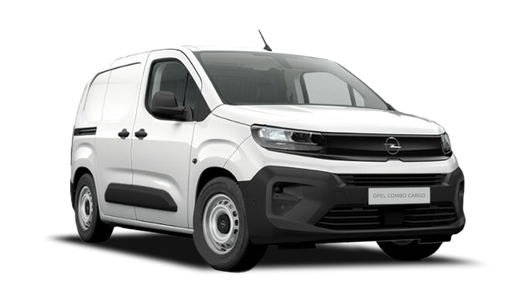
The Opel Combo Cargo is designed as a robust cargo van, primarily catering to professionals requiring a spacious and utilitarian vehicle. With an impressive length of up to 4753 mm, a width of 1848 mm, and a height between 1820 mm to 1825 mm, it provides substantial interior space for cargo.

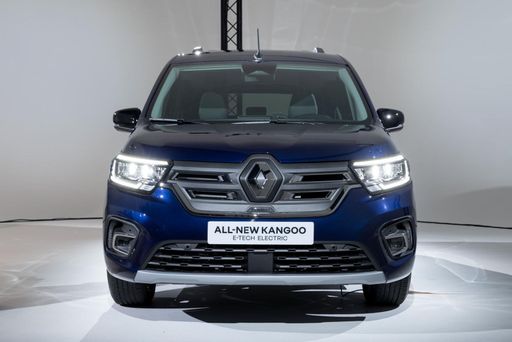
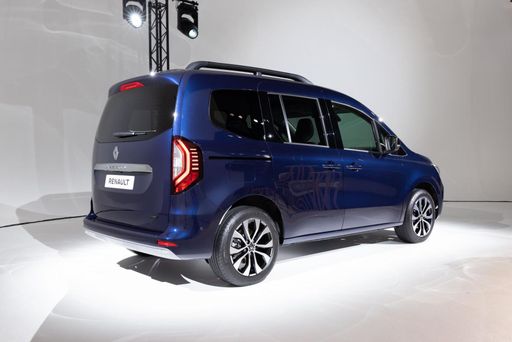
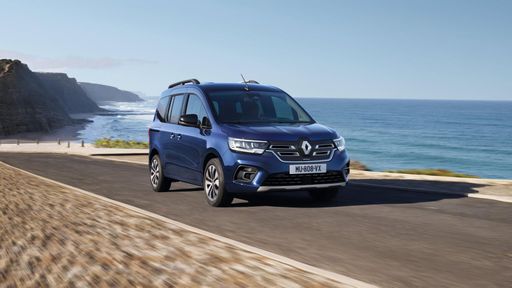
On the other hand, the Renault Kangoo takes the form of a high-roof wagon, measuring up to 4911 mm in length and 1860-1919 mm in width. The height ranges from 1838 mm to 1869 mm, providing an airy feel and practical headroom for passengers or goods.

Kangoo

Engine & Performance

Both vehicles offer a range of engine options. The Opel Combo Cargo comes with diesel, petrol, and electric variants, boasting power outputs from 102 to 136 HP. The maximum torque ranges from 205 to 300 Nm, thereby delivering commendable performance on both urban roads and motorways. In terms of fuel efficiency, it offers a consumption figure of around 5.4 to 6.7 L/100 km, making it a cost-effective choice for businesses.

In contrast, the Renault Kangoo offers power outputs from 95 to 130 HP with a torque range from 200 to 270 Nm. Fuel consumption figures slightly vary, ranging from 5.2 to 7.1 L/100 km, demonstrating efficiency that meets the demands of most commercial users.

Kangoo

Transmission & Drive Type

Both the Combo Cargo and Kangoo utilize front-wheel drive systems, facilitating improved handling and traction, especially when laden. The Opel Combo Cargo provides options for manual and automatic transmissions, including reduction gearboxes for enhanced control under heavy loads. The Renault Kangoo, similarly, offers manual and dual-clutch automatic gearboxes, providing smooth transitions and responsive driving experiences.

Kangoo

Interior & Cargo Space

When it comes to interior configurations, the Opel Combo Cargo accommodates up to six passengers with strategically placed storage solutions, ensuring practicality while maintaining comfort. Its impressive payload capacity ranges from 536 to 916 kg, making it ideal for transporting commercial goods.

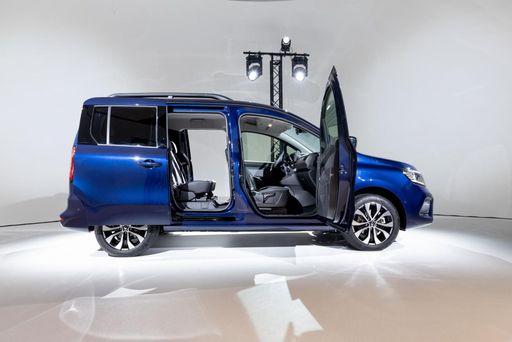
The Renault Kangoo, however, is designed for versatility with options for up to seven seats. The trunk capacity varies significantly, from 500 to 950 litres, depending on the configuration. This adaptability makes it perfect not only for businesses but also for family outings.

Kangoo

Innovative Features

Both models are equipped with state-of-the-art technology. The Opel Combo Cargo often features advanced driver assistance systems, including lane departure warnings and automatic emergency braking, enhancing safety for the driver and surrounding vehicles.

Likewise, the Renault Kangoo showcases innovative technologies, from its intuitive infotainment system to various connectivity features. The Kangoo also offers a unique multi-position roof rack, accommodating various load types and enhancing utility.

Electric Variants

With the rise of environmental awareness in transportation, both models offer electric alternatives. The Opel Combo Cargo's electric variant boasts an impressive range of up to 336 km on a single charge, with energy consumption between 18.6 to 19.2 kWh/100 km. In contrast, the Kangoo’s electric version provides a slightly lower range of 278 km but still serves well for urban applications, consuming about 20.2 kWh/100 km.

Conclusion: Which One to Choose?

Choosing between the Opel Combo Cargo and Renault Kangoo ultimately depends on specific business needs. If you require higher payload capacity and commendable fuel efficiency, the Combo Cargo may be the answer. However, if versatility and innovative features are at the forefront of your requirements, the Kangoo could be a better fit.

Both vehicles represent significant advancements in the commercial vehicle segment, ensuring that businesses can operate efficiently while adapting to modern demands and challenges.

Vauxhall Combo Cargo

Renault Kangoo

Here’s where it gets real: The technical differences in detail

Costs and Efficiency:

Price and efficiency are often the first things buyers look at. Here it becomes clear which model has the long-term edge – whether at the pump, the plug, or in purchase price.

Vauxhall Combo Cargo has a slightly advantage in terms of price – it starts at 22400 £ , while the Renault Kangoo costs 25700 £ . That’s a price difference of around 3274 £.

Both cars consume an average of 5.20 L per 100 km – no difference here.

In terms of energy consumption, the advantage goes to the Vauxhall Combo Cargo: with 17.40 kWh per 100 km, it’s slightly more efficient than the Renault Kangoo with 20.20 kWh. That’s a difference of about 2.80 kWh.

As for electric range, the Vauxhall Combo Cargo performs a bit better – achieving up to 354 km, about 69 km more than the Renault Kangoo.

Engine and Performance:

Power, torque and acceleration say a lot about how a car feels on the road. This is where you see which model delivers more driving dynamics.

When it comes to engine power, the Vauxhall Combo Cargo has a minimal edge – offering 136 HP compared to 130 HP. That’s roughly 6 HP more horsepower.

In acceleration from 0 to 100 km/h, the Vauxhall Combo Cargo is slight quicker – completing the sprint in 11.20 s, while the Renault Kangoo takes 11.60 s. That’s about 0.40 s faster.

In terms of top speed, the Vauxhall Combo Cargo performs noticeable better – reaching 183 km/h, while the Renault Kangoo tops out at 135 km/h. The difference is around 48 km/h.

There’s also a difference in torque: Vauxhall Combo Cargo pulls barely noticeable stronger with 300 Nm compared to 270 Nm. That’s about 30 Nm difference.

Space and Everyday Use:

Beyond pure performance, interior space and usability matter most in daily life. This is where you see which car is more practical and versatile.

Seats: Renault Kangoo offers somewhat more seating capacity – 7 vs 6.

In curb weight, Vauxhall Combo Cargo is somewhat lighter – 1329 kg compared to 1489 kg. The difference is around 160 kg.

In maximum load capacity, the Vauxhall Combo Cargo performs noticeable better – up to 3900 L, which is about 850 L more than the Renault Kangoo.

When it comes to payload, Vauxhall Combo Cargo clearly perceptible takes the win – 991 kg compared to 610 kg. That’s a difference of about 381 kg.

Who wins the race in the data check?

The Vauxhall Combo Cargo holds a decisive overall lead in the objective data comparison.
This result only shows which model scores more points on paper – not which of the two cars feels right for you.

Vauxhall Combo Cargo
Renault Kangoo

Costs and Consumption

View detailed analysis

Engine and Performance

View detailed analysis

Dimensions and Body

View detailed analysis
from about £22,400
default

Vauxhall Combo Cargo

  • Engine Type : Diesel, Petrol, Electric
  • Transmission : Manuel, Automatic
  • Drive Type : Front-Wheel Drive
  • Power HP : 102 - 136 HP
  • Consumption L/100km : 5.2 - 6.3 L
  • Consumption kWh/100km : 17.40 kWh
  • Electric Range : 354 km

Vauxhall Combo Cargo

The Opel Combo Cargo is a pragmatic workhorse that pairs sensible practicality with surprisingly car-like manners, making it a smart choice for small businesses and weekend DIYers. With clever storage, easy access and a calm cabin that keeps the focus on the job, it turns daily deliveries and errands into something almost enjoyable.

details

Renault Kangoo

The Renault Kangoo is the pragmatic chameleon of small vans, marrying van-like practicality with carlike comfort and a cheerful, friendly face that suits both family runs and workday hauls. It's sensible, versatile and annoyingly useful — easy to live with, cheap to run and clever where it counts, so you get more space and fewer compromises than the price suggests.

details
Vauxhall Combo Cargo
Renault Kangoo

Costs and Consumption

Price
22400 - 34700 £
Price
25700 - 36200 £
Consumption L/100km
5.2 - 6.3 L
Consumption L/100km
5.2 - 7.4 L
Consumption kWh/100km
17.40 kWh
Consumption kWh/100km
20.2 - 21.5 kWh
Electric Range
354 km
Electric Range
278 - 285 km
Battery Capacity
-
Battery Capacity
-
co2
0 - 143 g/km
co2
0 - 168 g/km
Fuel tank capacity
53 - 61 L
Fuel tank capacity
-

Dimensions and Body

Body Type
Cargo Van
Body Type
High Roof Estate
Seats
2 - 6
Seats
5 - 7
Doors
4 - 5
Doors
5
Curb weight
1329 - 1813 kg
Curb weight
1489 - 2041 kg
Trunk capacity
-
Trunk capacity
500 - 950 L
Length
4401 - 4751 mm
Length
4486 - 4911 mm
Width
1848 mm
Width
1860 - 1919 mm
Height
1820 - 1825 mm
Height
1838 - 1869 mm
Max trunk capacity
3300 - 3900 L
Max trunk capacity
2500 - 3050 L
Payload
611 - 991 kg
Payload
459 - 610 kg

Engine and Performance

Engine Type
Diesel, Petrol, Electric
Engine Type
Electric, Petrol, Diesel
Transmission
Manuel, Automatic
Transmission
Automatic, Manuel
Transmission Detail
Manual Gearbox, Automatic Gearbox, Reduction Gearbox
Transmission Detail
Reduction Gearbox, Manual Gearbox, Dual-Clutch Automatic
Drive Type
Front-Wheel Drive
Drive Type
Front-Wheel Drive
Power HP
102 - 136 HP
Power HP
95 - 130 HP
Acceleration 0-100km/h
11.20 s
Acceleration 0-100km/h
11.6 - 16.7 s
Max Speed
135 - 183 km/h
Max Speed
130 - 135 km/h
Torque
205 - 300 Nm
Torque
240 - 270 Nm
Number of Cylinders
3 - 4
Number of Cylinders
4
Power kW
75 - 100 kW
Power kW
70 - 96 kW
Engine capacity
1199 - 1499 cm3
Engine capacity
1332 - 1461 cm3

General

Model Year
2024
Model Year
2022 - 2025
CO2 Efficiency Class
E, A
CO2 Efficiency Class
A, F, E
Brand
Vauxhall
Brand
Renault
What drivetrain options does the Vauxhall Combo Cargo have?

The Vauxhall Combo Cargo is offered with Front-Wheel Drive.

The prices shown are estimates based on German list prices, adjusted for local VAT. Local registration taxes (e.g. NoVA, BPM or CO2 malus) are not included. This information is not legally binding.