VS

Vauxhall Corsa vs Hyundai Bayon comparison

Compare performance (156 HP vs 90 HP), boot space and price (19,600 £ vs 20,100 £ ) at a glance. Find out which car is the better choice for you – Vauxhall Corsa or Hyundai Bayon?

Vauxhall Corsa vs Hyundai Bayon: Key differences

Vauxhall Corsa

  • only slightly cheaper
  • significantly more power
  • markedly more efficient
  • substantially quicker 0–100 km/h
details

Hyundai Bayon

4.4 (2 Reviews)
rate
  • markedly more trunk space
details

All details on performance, efficiency, range and trunk space can be found in the technical comparison below – including user reviews for both models.

By Achim Sedelmaier

Corsa

Hyundai Bayon vs Vauxhall Corsa: A Compact Car Face-Off

In the ever-evolving landscape of compact vehicles, two noteworthy contenders have surfaced that merge style, efficiency, and technology. The 2024 Hyundai Bayon and the Vauxhall Corsa are two distinct choices for automotive enthusiasts seeking practicality married with modern innovation. Let’s delve into a detailed comparison of these cars, exploring their technical specifications and standout features.
Bayon

Body Type and Design

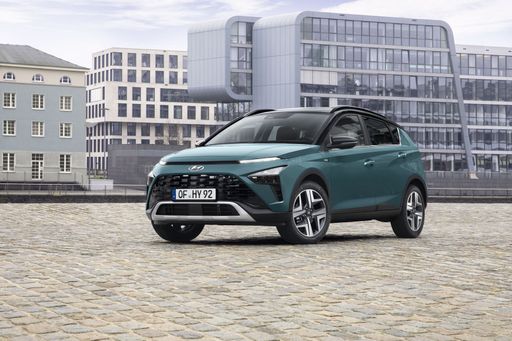
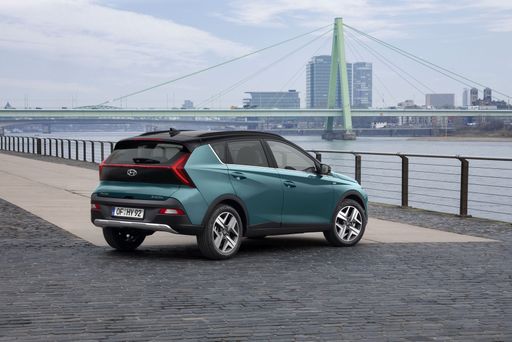
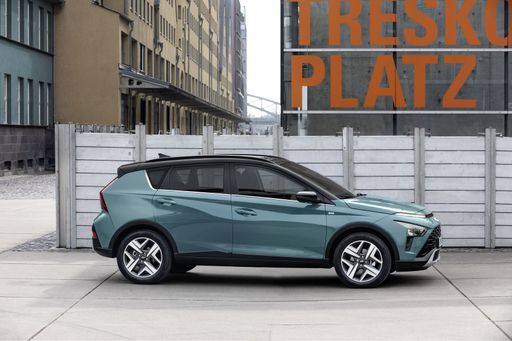
The Hyundai Bayon, introduced as an SUV, is designed with urban driving in mind. Its body type promises a higher driving position and increased road visibility, aligning with the growing SUV trend. Measuring 4180mm in length, it offers a sleek appearance with a solid structure and spaciousness that can adeptly handle family duties or adventures.

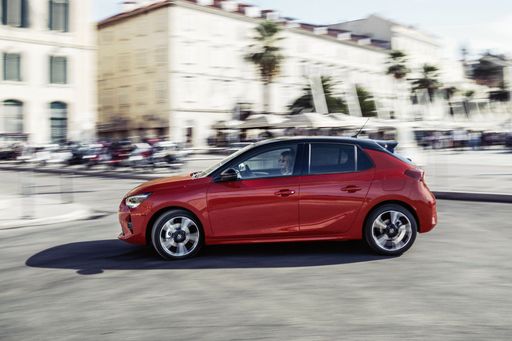
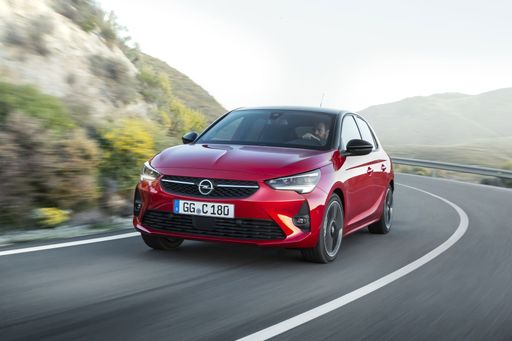
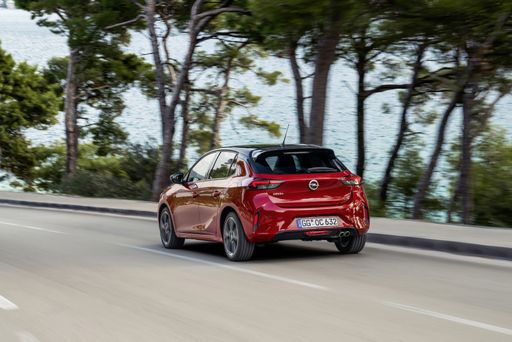
Contrastingly, the Vauxhall Corsa is a compact hatchback, emphasizing an agile and stylish profile optimized for city navigation. Stretching 4061mm in length, the Corsa is streamlined for maneuverability, making it an all-rounder for urban commuting while maintaining stylish aesthetics.

Corsa

Engine and Performance

The Bayon is equipped with a 998cm3 petrol engine, delivering 100 HP and torque options of 172 or 200 Nm. Depending on the gearbox, the Bayon achieves 0-100 km/h in 11.3 to 12.4 seconds. With its dual transmission options – a manual gearbox and a sophisticated dual-clutch automatic – the Bayon caters to diverse driving preferences and promises a smooth front-wheel drive experience.

On the other side, the Vauxhall Corsa brings a broader spectrum of powertrains, including petrol engines ranging up to 156 HP and even an electric variant offering up to 136 HP. The compact yet potent 1199cm3 petrol engine with turbocharging shines in urban contexts. For electric seekers, a notable electric range of up to 405 km affirms Vauxhall's commitment to sustainability.

Bayon

Fuel Efficiency and Emissions

With a combined consumption of 5.4 L/100km, the Bayon's green credentials suit environmentally-conscious drivers. The emission ratings, reaching up to 122 g/km, place it in the CO2 efficiency class D.

The Vauxhall Corsa offers broader emission ratings, from an eco-class A for electric versions to class C for mid-range models. With petrol variants achieving consumptions as efficient as 4.5 L/100km, the Corsa provides a more diverse ecological portfolio, including options for zero-emission driving.

Corsa

Interior and Space

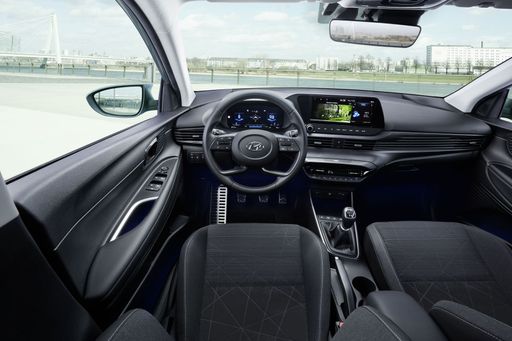
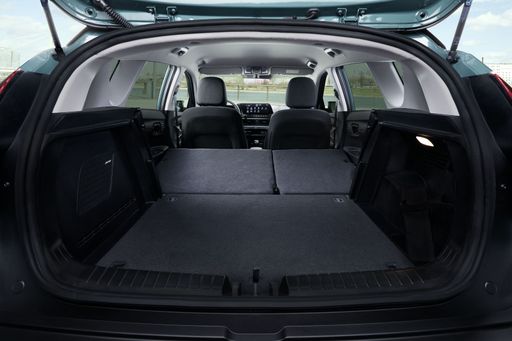
Inside, both cars cleverly utilize space despite their compact dimensions, accommodating five passengers comfortably. The Hyundai Bayon stands out with a generous trunk capacity of 411 liters, impressive for an SUV this size, allowing ample room for weekend getaways or grocery runs.

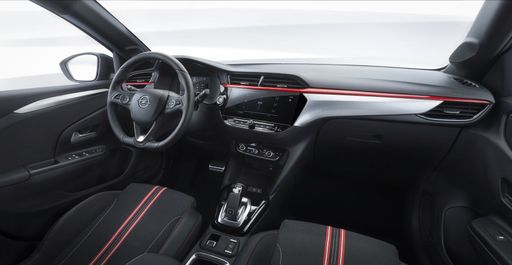
The Vauxhall Corsa offers trunk capacities ranging up to 309 liters; its innovative design optimizes interior space without compromising passenger comfort. For additional utility, the advantage in terms of cargo flexibility is notable in the Corsa's electric and hybrid variants.

Bayon

Conclusion

In this face-off, the Hyundai Bayon and Vauxhall Corsa cater to diverse driving needs. The Bayon brings the SUV distinction with stalwart character, practicality, and comfort. Meanwhile, the Corsa shines with a comprehensive lineup, including sustainable options and versatility topped with urban joviality. Both models demonstrate innovativeness and efficiency, leaving the final choice dependent on personal preferences regarding driving style and environmental impact. Whether it's the Bayon's robustness or the Corsa's broad adaptability, each offers a unique take on compact automotive excellence.

Here’s where it gets real: The technical differences in detail

Corsa

Costs and Efficiency:

When it comes to price and running costs, the biggest differences usually appear. This is often where you see which car fits your budget better in the long run.

Vauxhall Corsa is only slightly cheaper – starting at 19,600 £ , while the Hyundai Bayon costs 20,100 £ . That’s a price difference of around 437 £.

Fuel consumption also shows a difference: the Vauxhall Corsa uses 4.5 L/100km and is markedly more efficient than the Hyundai Bayon with 5.8 L/100km. The difference is about 1.3 L/100km.

Bayon

Engine and Performance:

Power, torque and acceleration are the classic benchmarks for car enthusiasts – and here, some clear differences start to show.

When it comes to engine power, the Vauxhall Corsa offers significantly more power – delivering 156 HP compared to 90 HP. That’s roughly 66 HP more horsepower.

When accelerating from 0 to 100 km/h, the Vauxhall Corsa is substantially quicker – completing the sprint in 7.9 s, while the Hyundai Bayon takes 11.9 s. That’s about 4 s quicker.

There’s also a difference in torque: the Vauxhall Corsa delivers clearly more torque with 260 Nm compared to 172 Nm. That’s about 88 Nm more.

Corsa

Space and Everyday Use:

Whether family car or daily driver – which one offers more room, flexibility and comfort?

Both vehicles offer seating for 5 people.

Both models weigh roughly the same – around 1,175 kg.

Looking at boot space, the Hyundai Bayon offers markedly more boot space – 411 L compared to 309 L. That’s a difference of about 102 L.

When it comes to payload, the Hyundai Bayon carries marginally more – 460 kg compared to 445 kg. That’s a difference of about 15 kg.

Who wins the race in the data check?

The Vauxhall Corsa is far ahead overall in the objective data comparison.
This result only shows which model scores more points on paper – not which of the two cars feels right for you.

from £19,600
Corsa

Vauxhall Corsa

  • Engine Type : Electric, Petrol MHEV, Petrol
  • Transmission : Automatic, Manuel
  • Drive Type : Front-Wheel Drive
  • Power HP : 100 - 156 HP
  • Consumption L/100km : 4.5 - 5.2 L/100km
  • Consumption kWh/100km : 14.2 - 15.7 kWh/100km
  • Electric Range : 357 - 429 km
Vauxhall Corsa
Hyundai Bayon

Costs and Consumption

View detailed analysis

Engine and Performance

View detailed analysis

Dimensions and Body

View detailed analysis

Vauxhall Corsa

The Opel Corsa is a tidy little package that blends cheeky styling with sensible practicality, perfect for city streets and weekend escapes alike. It’s easy to live with, economical to run and just lively enough to make daily driving a bit more fun.

details

Hyundai Bayon

The Hyundai Bayon slips neatly between city runabout and small SUV, offering surprising practicality and a fresh, confident design that stands out in urban traffic. It's an easy buy for shoppers who want smart packaging, tidy handling and a dash of personality without fuss — a sensible little crossover that makes everyday driving a bit more enjoyable.

details
Vauxhall Corsa
Hyundai Bayon

Costs and Consumption

Price
19,600 - 30,600 £
Price
20,100 - 25,800 £
Consumption L/100km
4.5 - 5.2 L/100km
Consumption L/100km
5.8 L/100km
Consumption kWh/100km
14.2 - 15.7 kWh/100km
Consumption kWh/100km
-
Electric Range
357 - 429 km
Electric Range
-
Battery Capacity
-
Battery Capacity
-
co2
0 - 116 g/km
co2
130 - 132 g/km
Fuel tank capacity
-
Fuel tank capacity
-

Dimensions and Body

Body Type
Hatchback
Body Type
SUV
Seats
5
Seats
5
Doors
-
Doors
-
Curb weight
1,175 - 1,544 kg
Curb weight
1,175 - 1,200 kg
Trunk capacity
267 - 309 L
Trunk capacity
411 L
Length
-
Length
-
Width
1,765 mm
Width
1,775 mm
Height
-
Height
-
Max trunk capacity
-
Max trunk capacity
-
Payload
376 - 445 kg
Payload
450 - 460 kg

Engine and Performance

Engine Type
Electric, Petrol MHEV, Petrol
Engine Type
Petrol
Transmission
Automatic, Manuel
Transmission
Manuel, Automatic
Transmission Detail
Reduction Gearbox, Dual-Clutch Automatic, Manual Gearbox
Transmission Detail
Manual Gearbox, Dual-Clutch Automatic
Drive Type
Front-Wheel Drive
Drive Type
Front-Wheel Drive
Power HP
100 - 156 HP
Power HP
90 HP
Acceleration 0-100km/h
7.9 - 9.9 s
Acceleration 0-100km/h
11.9 - 13.3 s
Max Speed
-
Max Speed
-
Torque
205 - 260 Nm
Torque
172 Nm
Number of Cylinders
3
Number of Cylinders
3
Power kW
74 - 115 kW
Power kW
66 kW
Engine capacity
1,199 cm3
Engine capacity
998 cm3

General

Model Year
2,024 - 2,025
Model Year
2025
CO2 Efficiency Class
A, C, D
CO2 Efficiency Class
D
Brand
Vauxhall
Brand
Hyundai
DriveDuel uses data analysis and artificial intelligence to evaluate vehicle data and create content. Content is regularly reviewed and improved. The displayed prices are estimates based on German list prices, adjusted to the respective country’s VAT. Country-specific registration taxes are not included. This information is not legally binding.