VS

Vauxhall Corsa vs Hyundai i10 comparison

Compare performance (156 HP vs 90 HP), boot space and price (19,600 £ vs 14,600 £ ) at a glance. Find out which car is the better choice for you – Vauxhall Corsa or Hyundai i10?

Vauxhall Corsa vs Hyundai i10: Key differences

Vauxhall Corsa

  • clearly more power
  • very slightly more efficient
  • clearly quicker 0–100 km/h
  • a bit more trunk space
details

Hyundai i10

5 (1 Reviews)
rate
  • noticeably cheaper
  • slightly lighter
details

All details on performance, efficiency, range and trunk space can be found in the technical comparison below – including user reviews for both models.

By Achim Sedelmaier

Corsa

Compact Hatchbacks Face-Off: Hyundai i10 vs. Vauxhall Corsa

In the ever-evolving automotive landscape, compact hatchbacks continue to win drivers over with their practicality, efficiency, and agility. Two prominent models worth a closer look are the Hyundai i10 and the Vauxhall Corsa. While both serve as excellent choices for urban commuting and first-time car owners, they bring different strengths to the table. Let’s dive into the technical details and innovations of these two popular hatchbacks.

i10

Under the Hood: Power and Performance

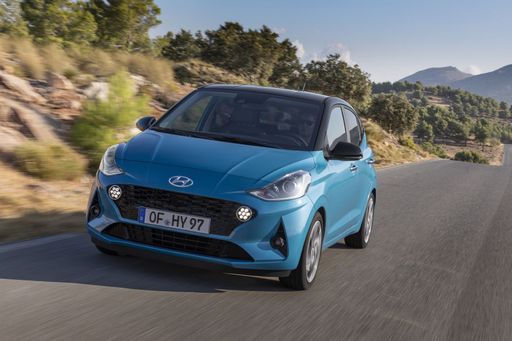
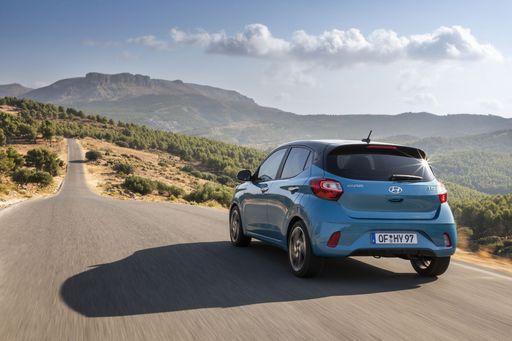
The Hyundai i10, a reliable choice in the compact segment, is available with petrol engines offering power outputs ranging from 63 to 90 HP. Depending on your preference for efficiency or a bit of extra punch, the i10 has various engine configurations, with acceleration from 0 to 100 km/h ranging between 11.4 and 18.4 seconds. Its top speed ranges from 143 to 175 km/h, proving it is no slouch within city limits. Additionally, the most potent version boasts an impressive torque of 172 Nm.

The Vauxhall Corsa steps into the competition with a variety of power options, including petrol, mild hybrid electric vehicle (MHEV), and full electric versions. The petrol engines produce between 100 and 130 HP, while the electric variants stretch to 136 and 156 HP. The Corsa's acceleration is more spirited, with the petrol models accelerating from 0 to 100 km/h in just 7.9 to 10.8 seconds and can reach top speeds up to 210 km/h. Torque levels also impress with a max of 260 Nm.

Corsa

Fuel Efficiency and Environmental Impact

For the eco-conscious driver, the i10 offers decent fuel consumption figures ranging from 4.9 to 5.4 L/100 km and CO2 emissions from 111 to 123 g/km. Meanwhile, the Corsa provides a broader spectrum of fuel and energy consumption. The petrol variant ranges from 4.5 to 5.7 L/100 km, while the electric versions offer an electric range of up to 405 km at consumption rates as low as 14.2 kWh/100 km. Importantly, the electric Corsa reduces its carbon footprint significantly with zero emissions.

i10

Design and Practicality

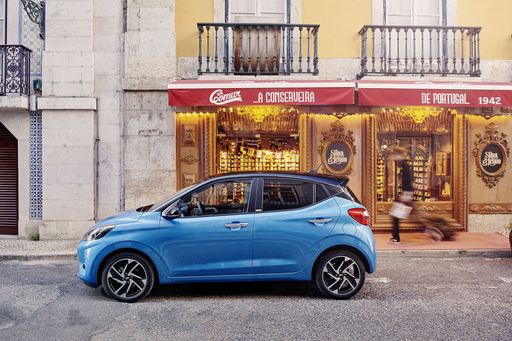
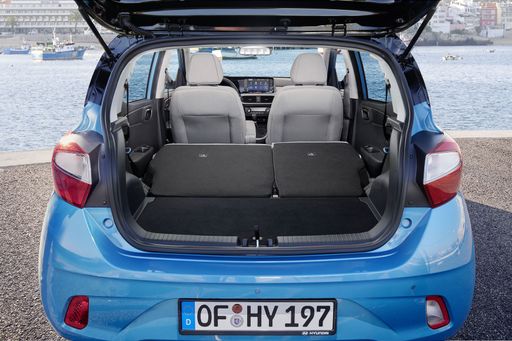
Both hatchbacks stay true to the design ethos of compact cars – maximizing space while keeping proportions city-friendly. The Hyundai i10 presents itself with a length of about 3670 mm and a width of 1680 mm. It comfortably seats four to five passengers and offers a trunk capacity of 252 liters, focusing on maneuverability and user-friendly urban navigation.

Conversely, the Vauxhall Corsa stands a bit taller, measuring 4061 mm in length and 1765 mm in width. It also seats five, but it trumps the i10 in storage with a trunk capacity of up to 309 liters, making it a more versatile option for those who need extra cargo space.

Corsa

Innovations and Features

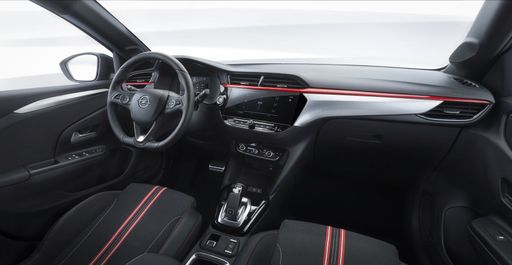
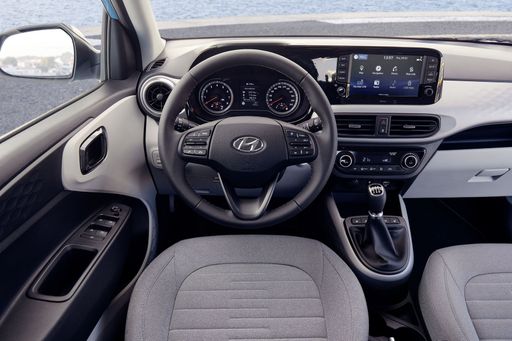
The Hyundai i10 shines with its emphasis on practicality and economy, offering basic but satisfactory tech. Meanwhile, the Corsa brings an assortment of technological advancements, particularly for those opting for electric or MHEV versions. These include advanced driver-assist features and a refined infotainment system, catering to those who yearn for modern connectivity and driving aids.

i10

Which Hatchback Fits Your Lifestyle?

In conclusion, both the Hyundai i10 and Vauxhall Corsa offer commendable access to the compact car market. The i10 leans towards affordability and efficiency, ideal for city dwellers or first-time buyers. On the other hand, the Vauxhall Corsa, with its range of powertrains and tech-savvy features, appeals to those seeking versatility and cutting-edge driving technology. Whichever you choose, both are exceptional companions for the dynamic compact car enthusiast.

Here’s where it gets real: The technical differences in detail

Corsa

Costs and Efficiency:

Looking at overall running costs, both models reveal some interesting differences in everyday economy.

Hyundai i10 is noticeably cheaper – starting at 14,600 £ , while the Vauxhall Corsa costs 19,600 £ . That’s a price difference of around 5,058 £.

Fuel consumption also shows a difference: the Vauxhall Corsa uses 4.5 L/100km and is very slightly more efficient than the Hyundai i10 with 4.9 L/100km. The difference is about 0.4 L/100km.

i10

Engine and Performance:

Power, torque and acceleration say a lot about how a car feels on the road. This is where you see which model delivers more driving dynamics.

When it comes to engine power, the Vauxhall Corsa offers clearly more power – delivering 156 HP compared to 90 HP. That’s roughly 66 HP more horsepower.

When accelerating from 0 to 100 km/h, the Vauxhall Corsa is clearly quicker – completing the sprint in 7.9 s, while the Hyundai i10 takes 11.4 s. That’s about 3.5 s quicker.

There’s also a difference in torque: the Vauxhall Corsa delivers clearly more torque with 260 Nm compared to 172 Nm. That’s about 88 Nm more.

Corsa

Space and Everyday Use:

Beyond pure performance, interior space and usability matter most in daily life. This is where you see which car is more practical and versatile.

Both vehicles offer seating for 5 people.

In terms of curb weight, Hyundai i10 is slightly lighter – 996 kg compared to 1,175 kg. The difference is around 179 kg.

Looking at boot space, the Vauxhall Corsa offers a bit more boot space – 309 L compared to 252 L. That’s a difference of about 57 L.

When it comes to payload, the Vauxhall Corsa carries barely more – 445 kg compared to 423 kg. That’s a difference of about 22 kg.

Who wins the race in the data check?

The Vauxhall Corsa is far ahead overall in the objective data comparison.
This result only shows which model scores more points on paper – not which of the two cars feels right for you.

from £19,600
Corsa

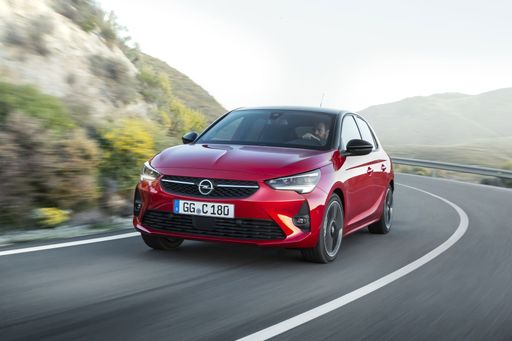
Vauxhall Corsa

  • Engine Type : Electric, Petrol MHEV, Petrol
  • Transmission : Automatic, Manuel
  • Drive Type : Front-Wheel Drive
  • Power HP : 100 - 156 HP
  • Consumption L/100km : 4.5 - 5.2 L/100km
  • Consumption kWh/100km : 14.2 - 15.7 kWh/100km
  • Electric Range : 357 - 429 km
Vauxhall Corsa
Hyundai i10

Costs and Consumption

View detailed analysis

Engine and Performance

View detailed analysis

Dimensions and Body

View detailed analysis

Vauxhall Corsa

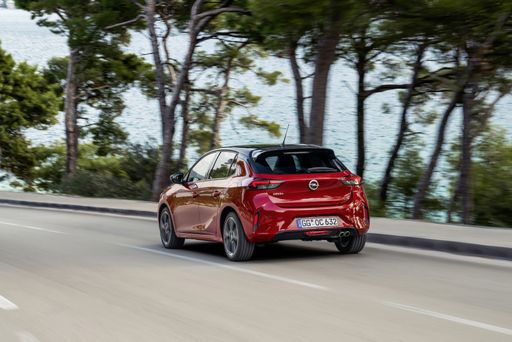
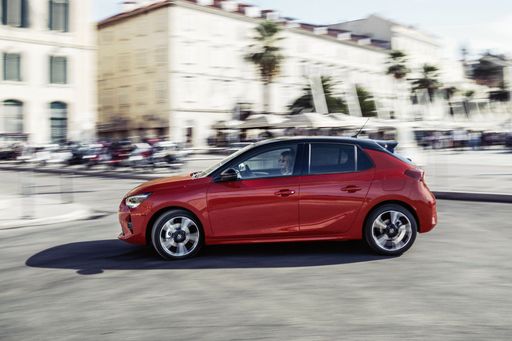
The Opel Corsa is a tidy little package that blends cheeky styling with sensible practicality, perfect for city streets and weekend escapes alike. It’s easy to live with, economical to run and just lively enough to make daily driving a bit more fun.

details

Hyundai i10

The Hyundai i10 is a cheeky city car that squeezes big-car confidence into a pocket-friendly package, carving through tight streets with surprising composure and sensible practicality. For buyers after low fuss, sensible equipment and wallet-friendly running costs, it's a smart, no-nonsense pick that makes sense whether you're a first-time driver or need a reliable second car.

details
Vauxhall Corsa
Hyundai i10

Costs and Consumption

Price
19,600 - 30,600 £
Price
14,600 - 19,000 £
Consumption L/100km
4.5 - 5.2 L/100km
Consumption L/100km
4.9 - 5.5 L/100km
Consumption kWh/100km
14.2 - 15.7 kWh/100km
Consumption kWh/100km
-
Electric Range
357 - 429 km
Electric Range
-
Battery Capacity
-
Battery Capacity
-
co2
0 - 116 g/km
co2
110 - 124 g/km
Fuel tank capacity
-
Fuel tank capacity
36 L

Dimensions and Body

Body Type
Hatchback
Body Type
Hatchback
Seats
5
Seats
4 - 5
Doors
-
Doors
5
Curb weight
1,175 - 1,544 kg
Curb weight
996 - 1,099 kg
Trunk capacity
267 - 309 L
Trunk capacity
252 L
Length
-
Length
3,670 - 3,675 mm
Width
1,765 mm
Width
1,680 mm
Height
-
Height
1,480 - 1,483 mm
Max trunk capacity
-
Max trunk capacity
1,050 L
Payload
376 - 445 kg
Payload
344 - 423 kg

Engine and Performance

Engine Type
Electric, Petrol MHEV, Petrol
Engine Type
Petrol
Transmission
Automatic, Manuel
Transmission
Manuel, Automatic
Transmission Detail
Reduction Gearbox, Dual-Clutch Automatic, Manual Gearbox
Transmission Detail
Manual Gearbox, Automated Manual
Drive Type
Front-Wheel Drive
Drive Type
Front-Wheel Drive
Power HP
100 - 156 HP
Power HP
63 - 90 HP
Acceleration 0-100km/h
7.9 - 9.9 s
Acceleration 0-100km/h
11.4 - 18.4 s
Max Speed
-
Max Speed
143 - 175 km/h
Torque
205 - 260 Nm
Torque
93 - 172 Nm
Number of Cylinders
3
Number of Cylinders
3 - 4
Power kW
74 - 115 kW
Power kW
46 - 66 kW
Engine capacity
1,199 cm3
Engine capacity
998 - 1,197 cm3

General

Model Year
2,024 - 2,025
Model Year
2024
CO2 Efficiency Class
A, C, D
CO2 Efficiency Class
C, D
Brand
Vauxhall
Brand
Hyundai
DriveDuel uses data analysis and artificial intelligence to evaluate vehicle data and create content. Content is regularly reviewed and improved. The displayed prices are estimates based on German list prices, adjusted to the respective country’s VAT. Country-specific registration taxes are not included. This information is not legally binding.