VS

Vauxhall Grandland vs Nissan Qashqai comparison

Compare performance (325 HP vs 205 HP), boot space and price (32,600 £ vs 29,600 £ ) at a glance. Find out which car is the better choice for you – Vauxhall Grandland or Nissan Qashqai?

Vauxhall Grandland vs Nissan Qashqai: Key differences

Vauxhall Grandland

5 (1 Reviews)
rate
  • markedly more power
  • considerably more efficient
  • noticeably quicker 0–100 km/h
  • marginally more trunk space

Nissan Qashqai

4.9 (3 Reviews)
rate
  • only slightly cheaper
  • moderately lighter

All details on performance, efficiency, range and trunk space can be found in the technical comparison below – including user reviews for both models.

Grandland

Two crossovers, one decision: Nissan Qashqai vs Opel Grandland

Nissan Qashqai and Opel Grandland go head-to-head in this compact SUV comparison to help buyers cut through marketing and spot real differences. This Nissan Qashqai VS Opel Grandland showdown focuses on how each car behaves in everyday life rather than just on paper. We’ll steer through perceived comfort, urban agility, cabin feel and family usability so you can match tone to need. If you’re weighing compact crossover options, this is the side-by-side that highlights what each model actually brings to the driveway.
Qashqai

Character clash: understatement versus presence

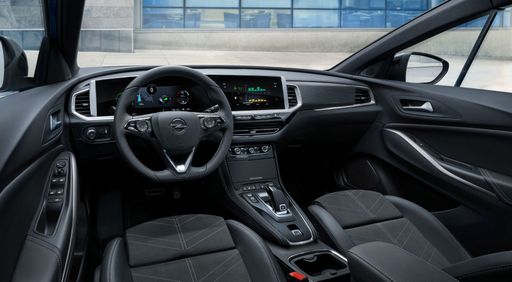
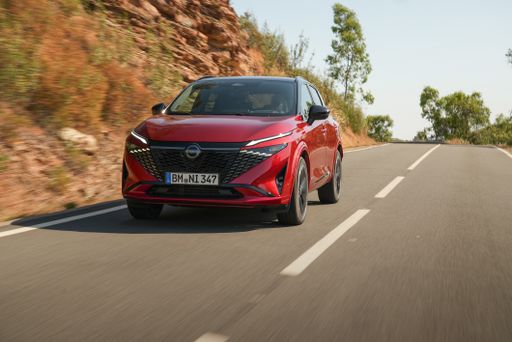
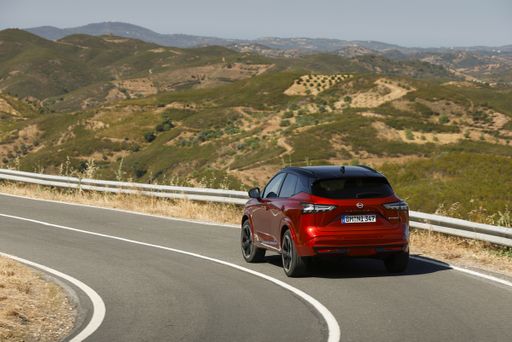
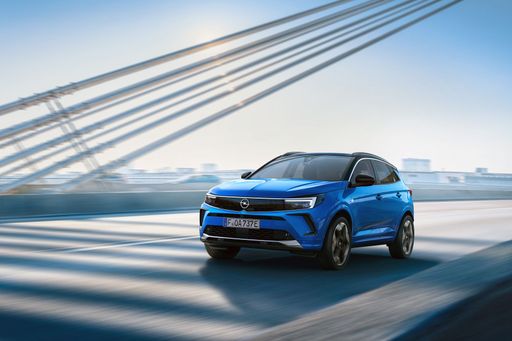
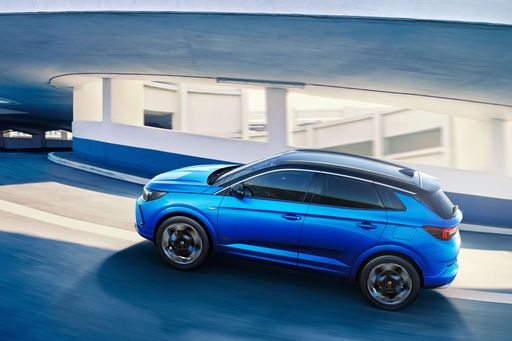
The Nissan Qashqai leans into a tidy, understated persona while the Opel Grandland wears a more assertive, planted look. Qashqai’s character reads practical and composed; Grandland wants you to notice its proportions and cabin design. On the road the Qashqai feels discreet and urbane, whereas the Grandland delivers a fuller, slightly more confident presence. Choose the tone you want to drive, because both make different statements without shouting.

Grandland

Everyday realities: city nimbleness or roomy versatility?

For tight urban routines the Nissan Qashqai feels lighter and easier to manoeuvre, making traffic and parking less of a chore. The Opel Grandland plays better as a flexible family machine with a roomier feel and more luggage space for weekends away. Small households or commuters will appreciate the Qashqai’s compact footprint, while families and frequent long-distance drivers will like the Grandland’s practicality. Think about how often you haul people and gear — that’s where the everyday winner reveals itself for you.

Qashqai

What the car says about you

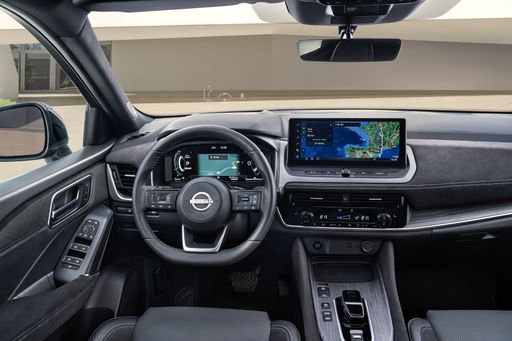
Picking between the Nissan Qashqai and the Opel Grandland is as much about image as it is about function. The Qashqai suggests someone who values sensible choices, understated style and fuss-free ownership, while the Grandland signals a desire for a bit more presence, comfort and perceived substance. If you want something that quietly fits into an organised life, the Qashqai speaks that language; if you prefer a car that feels a touch more confident and accommodating, the Grandland answers that brief. Both offer modern SUV cues, but they dress that brief differently for different personalities.

Grandland

Who ends up in the Qashqai?

The Nissan Qashqai suits buyers who prioritise efficient ownership, everyday usability and easy city driving — think commuters, small families and anyone who values low-hassle practicality. It’s an appealing choice for those who want a comfortable, predictable daily companion that keeps running costs and complexity in check. The Qashqai’s cabin and driving manners are aimed at comfort and convenience rather than theatrical performance. If you prize sensible decisions and compact agility, this is where you start your shortlist.

Qashqai

Who ends up in the Grandland?

The Opel Grandland will attract buyers who want a stronger road presence, more interior flexibility and a bit more comfort for longer journeys. It’s the pick for families who regularly carry luggage or for drivers who enjoy a more assertive feel and a roomier cabin, and it presents as a slightly more substantial choice than the Nissan Qashqai. If visual weight and versatility matter to you, the Grandland makes a persuasive case. Scroll down to the technical breakdown to see where the measurable differences live and which details will tip the balance for your specific needs.

Here’s where it gets real: The technical differences in detail

Grandland

Costs and Efficiency:

Price and efficiency are key factors when choosing a car – and this is often where the real differences emerge.

Nissan Qashqai is only slightly cheaper – starting at 29,600 £ , while the Vauxhall Grandland costs 32,600 £ . That’s a price difference of around 2,957 £.

Fuel consumption also shows a difference: the Vauxhall Grandland uses 2.6 L/100km and is considerably more efficient than the Nissan Qashqai with 4.5 L/100km. The difference is about 1.9 L/100km.

Qashqai

Engine and Performance:

Power, torque and acceleration are the classic benchmarks for car enthusiasts – and here, some clear differences start to show.

When it comes to engine power, the Vauxhall Grandland offers markedly more power – delivering 325 HP compared to 205 HP. That’s roughly 120 HP more horsepower.

When accelerating from 0 to 100 km/h, the Vauxhall Grandland is noticeably quicker – completing the sprint in 6.1 s, while the Nissan Qashqai takes 7.6 s. That’s about 1.5 s quicker.

Looking at top speed, the Nissan Qashqai is barely faster – reaching 206 km/h, while the Vauxhall Grandland tops out at 202 km/h. The difference is around 4 km/h.

There’s also a difference in torque: the Vauxhall Grandland delivers noticeably more torque with 509 Nm compared to 330 Nm. That’s about 179 Nm more.

Grandland

Space and Everyday Use:

Whether family car or daily driver – which one offers more room, flexibility and comfort?

Both vehicles offer seating for 5 people.

In terms of curb weight, Nissan Qashqai is moderately lighter – 1,420 kg compared to 1,675 kg. The difference is around 255 kg.

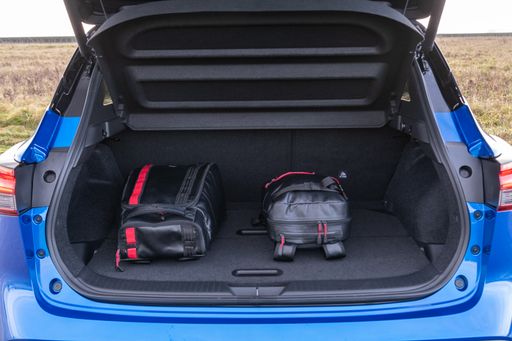
Looking at boot space, the Vauxhall Grandland offers marginally more boot space – 550 L compared to 504 L. That’s a difference of about 46 L.

For maximum load capacity, the Vauxhall Grandland offers a bit more capacity – up to 1,645 L, about 198 L more than the Nissan Qashqai.

When it comes to payload, the Nissan Qashqai carries barely more – 520 kg compared to 495 kg. That’s a difference of about 25 kg.

Who wins the race in the data check?

The Vauxhall Grandland holds a decisive overall lead in the objective data comparison.
This result only shows which model scores more points on paper – not which of the two cars feels right for you.

from £32,600
Grandland

Vauxhall Grandland

  • Engine Type : Electric, Petrol MHEV, Plugin Hybrid
  • Transmission : Automatic
  • Drive Type : Front-Wheel Drive, All-Wheel Drive
  • Power HP : 145 - 325 HP
  • Consumption L/100km : 2.6 - 5.6 L/100km
  • Consumption kWh/100km : 17.8 - 18.6 kWh/100km
  • Electric Range : 82 - 694 km
Vauxhall Grandland
Nissan Qashqai

Costs and Consumption

View detailed analysis

Engine and Performance

View detailed analysis

Dimensions and Body

View detailed analysis

Vauxhall Grandland

The Opel Grandland feels like a sensible, well-rounded SUV — neat styling, a spacious cabin and a composed ride that turns daily driving into a quietly pleasant experience. It’s a smart choice for buyers who want modern tech, good economy and a dash of German practicality without shouting for attention.

details

Nissan Qashqai

The Nissan Qashqai blends practical, family-friendly packaging with SUV styling that refuses to shout, making it a sensible and dependable choice for everyday life. It’s comfortable to live with, economical on the road, and neatly equipped enough to feel modern without ever feeling precious — perfect if you want crossover versatility without the drama.

details
Vauxhall Grandland
Nissan Qashqai

Costs and Consumption

Price
32,600 - 51,400 £
Price
29,600 - 39,900 £
Consumption L/100km
2.6 - 5.6 L/100km
Consumption L/100km
4.5 - 6.8 L/100km
Consumption kWh/100km
17.8 - 18.6 kWh/100km
Consumption kWh/100km
-
Electric Range
82 - 694 km
Electric Range
-
Battery Capacity
-
Battery Capacity
-
co2
0 - 126 g/km
co2
102 - 154 g/km
Fuel tank capacity
55 L
Fuel tank capacity
55 L

Dimensions and Body

Body Type
SUV
Body Type
SUV
Seats
5
Seats
5
Doors
5
Doors
5
Curb weight
1,675 - 2,325 kg
Curb weight
1,420 - 1,665 kg
Trunk capacity
485 - 550 L
Trunk capacity
479 - 504 L
Length
4,650 mm
Length
4,425 mm
Width
1,905 mm
Width
1,835 mm
Height
1,665 mm
Height
1,625 mm
Max trunk capacity
1,580 - 1,645 L
Max trunk capacity
1,422 - 1,447 L
Payload
425 - 495 kg
Payload
466 - 520 kg

Engine and Performance

Engine Type
Electric, Petrol MHEV, Plugin Hybrid
Engine Type
Petrol MHEV, Full Hybrid
Transmission
Automatic
Transmission
Manuel, Automatic
Transmission Detail
Reduction Gearbox, Dual-Clutch Automatic
Transmission Detail
Manual Gearbox, CVT, Reduction Gearbox
Drive Type
Front-Wheel Drive, All-Wheel Drive
Drive Type
Front-Wheel Drive, All-Wheel Drive
Power HP
145 - 325 HP
Power HP
140 - 205 HP
Acceleration 0-100km/h
6.1 - 10.2 s
Acceleration 0-100km/h
7.6 - 10.2 s
Max Speed
170 - 202 km/h
Max Speed
170 - 206 km/h
Torque
230 - 509 Nm
Torque
240 - 330 Nm
Number of Cylinders
3 - 4
Number of Cylinders
3 - 4
Power kW
107 - 239 kW
Power kW
103 - 151 kW
Engine capacity
1,199 - 1,598 cm3
Engine capacity
1,332 - 1,498 cm3

General

Model Year
2,024 - 2,025
Model Year
2,025 - 2,026
CO2 Efficiency Class
A, D, B
CO2 Efficiency Class
E, C
Brand
Vauxhall
Brand
Nissan
DriveDuel uses data analysis and artificial intelligence to evaluate vehicle data and create content. Content is regularly reviewed and improved. The displayed prices are estimates based on German list prices, adjusted to the respective country’s VAT. Country-specific registration taxes are not included. This information is not legally binding.