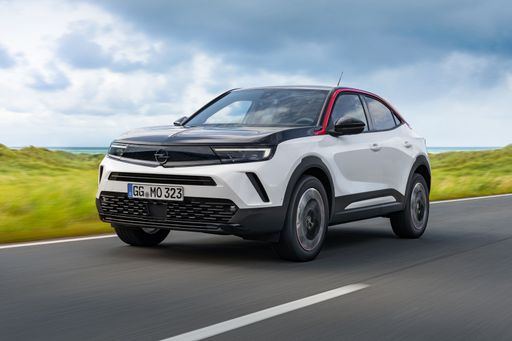
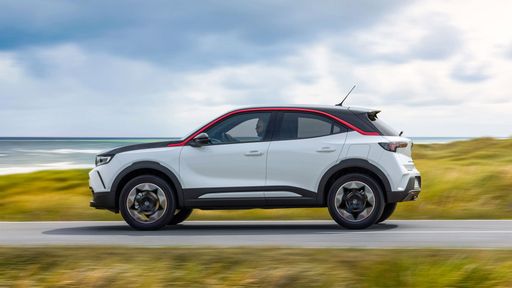
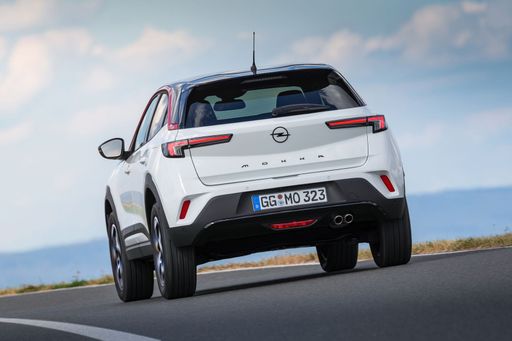
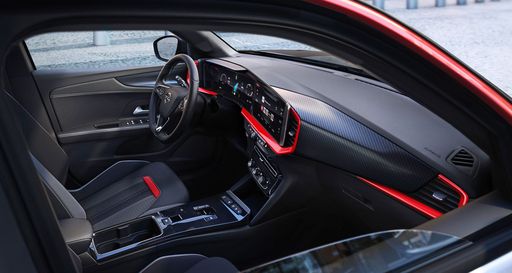
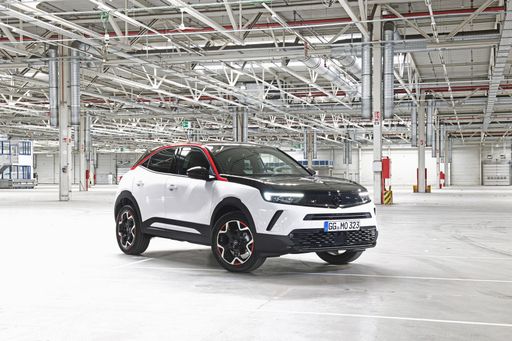
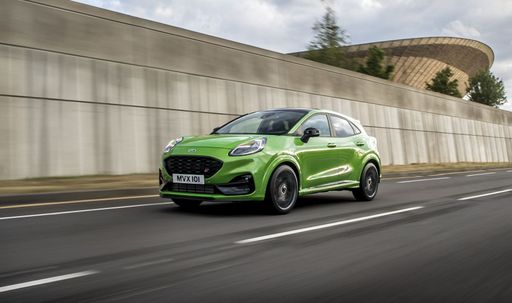
Compare performance (281 HP vs 168 HP), boot space and price (23000 £ vs 24800 £) at a glance. Find out which car is the better choice for you – Vauxhall Mokka or Ford Puma?
When it comes to price and running costs, the biggest differences usually appear. This is often where you see which car fits your budget better in the long run.
Vauxhall Mokka has a slight advantage in terms of price – it starts at 23000 £, while the Ford Puma costs 24800 £. That’s a price difference of around 1723 £.
Fuel consumption also shows a difference: Vauxhall Mokka manages with 4.90 L and is therefore somewhat more efficient than the Ford Puma with 5.40 L. The difference is about 0.50 L per 100 km.
In terms of energy consumption, the advantage goes to the Ford Puma: with 13.10 kWh per 100 km, it’s slightly more efficient than the Vauxhall Mokka with 15.40 kWh. That’s a difference of about 2.30 kWh.
As for range, the Vauxhall Mokka performs minimal better – achieving up to 403 km, about 27 km more than the Ford Puma.
Power, torque and acceleration say a lot about how a car feels on the road. This is where you see which model delivers more driving dynamics.
When it comes to engine power, the Vauxhall Mokka has a decisively edge – offering 281 HP compared to 168 HP. That’s roughly 113 HP more horsepower.
In acceleration from 0 to 100 km/h, the Vauxhall Mokka is evident quicker – completing the sprint in 5.90 s, while the Ford Puma takes 7.40 s. That’s about 1.50 s faster.
In terms of top speed, the Ford Puma performs hardly perceptible better – reaching 210 km/h, while the Vauxhall Mokka tops out at 209 km/h. The difference is around 1 km/h.
There’s also a difference in torque: Vauxhall Mokka pulls a bit stronger with 345 Nm compared to 290 Nm. That’s about 55 Nm difference.
Cabin size, boot volume and payload all play a role in everyday practicality. Here, comfort and flexibility make the difference.
Both vehicles offer seating for 5 people.
In curb weight, Vauxhall Mokka is barely noticeable lighter – 1294 kg compared to 1316 kg. The difference is around 22 kg.
In terms of boot space, the Ford Puma offers noticeable more room – 523 L compared to 350 L. That’s a difference of about 173 L.
In maximum load capacity, the Ford Puma performs to a small extent better – up to 1283 L, which is about 178 L more than the Vauxhall Mokka.
When it comes to payload, Ford Puma slightly takes the win – 469 kg compared to 400 kg. That’s a difference of about 69 kg.
Overall, the Vauxhall Mokka shows itself to be outperforms in nearly all aspects and secures the title of DriveDuel Champion.
It convinces with the more balanced overall package and proves to be the more versatile choice for everyday use.
The Opel Mokka cuts a smart, modern silhouette that feels right at home in the city while still turning heads on the open road. It's a practical, easy-to-live-with crossover that blends comfy driving manners with enough flair and tech to keep daily commutes interesting — and it won’t make you regret trading up.
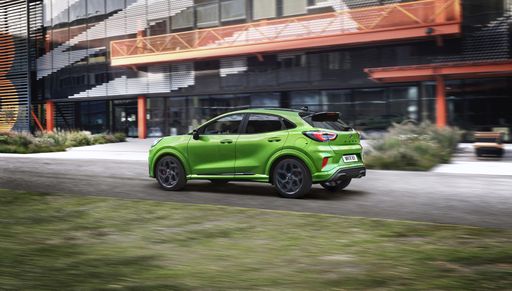
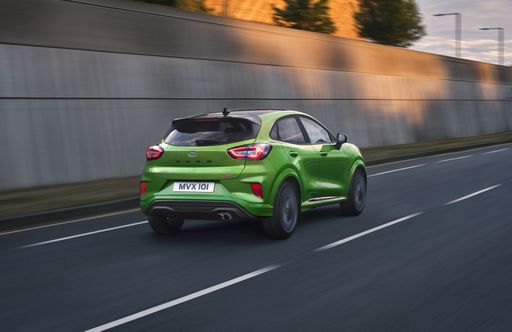
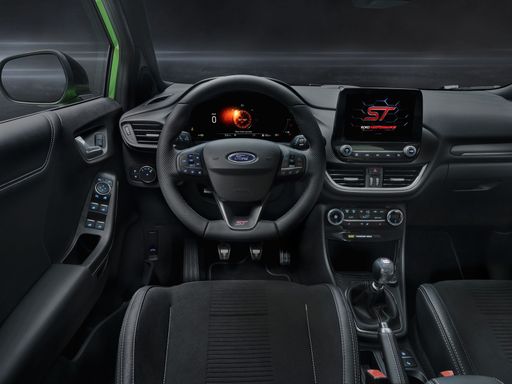
detailsThe Ford Puma is a cheeky compact crossover that blends sporty styling with city-friendly practicality, giving drivers a surprisingly fun and composed ride. With clever storage tricks and a lively personality, it’s a smart pick for buyers who want enjoyment without fuss.
detailsCosts and Consumption |
|
|---|---|
|
Price
23000 - 40500 £
|
Price
24800 - 36300 £
|
|
Consumption L/100km
4.9 - 5.7 L
|
Consumption L/100km
5.4 - 5.9 L
|
|
Consumption kWh/100km
15.4 - 18.5 kWh
|
Consumption kWh/100km
13.1 - 13.9 kWh
|
|
Electric Range
336 - 403 km
|
Electric Range
361 - 376 km
|
|
Battery Capacity
51 kWh
|
Battery Capacity
43 kWh
|
|
co2
0 - 129 g/km
|
co2
0 - 135 g/km
|
|
Fuel tank capacity
44 L
|
Fuel tank capacity
42 L
|
Dimensions and Body |
|
|---|---|
|
Body Type
SUV
|
Body Type
SUV
|
|
Seats
5
|
Seats
5
|
|
Doors
5
|
Doors
5
|
|
Curb weight
1294 - 1672 kg
|
Curb weight
1316 - 1563 kg
|
|
Trunk capacity
310 - 350 L
|
Trunk capacity
456 - 523 L
|
|
Length
4150 mm
|
Length
4186 - 4226 mm
|
|
Width
1787 mm
|
Width
1805 mm
|
|
Height
1506 - 1535 mm
|
Height
1550 - 1555 mm
|
|
Max trunk capacity
1060 - 1105 L
|
Max trunk capacity
1216 - 1283 L
|
|
Payload
388 - 400 kg
|
Payload
367 - 469 kg
|
Engine and Performance |
|
|---|---|
|
Engine Type
Electric, Petrol MHEV, Petrol
|
Engine Type
Electric, Petrol MHEV
|
|
Transmission
Automatic, Manuel
|
Transmission
Automatic, Manuel
|
|
Transmission Detail
Reduction Gearbox, Dual-Clutch Automatic, Manual Gearbox
|
Transmission Detail
Reduction Gearbox, Manual Gearbox, Dual-Clutch Automatic
|
|
Drive Type
Front-Wheel Drive
|
Drive Type
Front-Wheel Drive
|
|
Power HP
136 - 281 HP
|
Power HP
125 - 168 HP
|
|
Acceleration 0-100km/h
5.9 - 9 s
|
Acceleration 0-100km/h
7.4 - 9.8 s
|
|
Max Speed
150 - 209 km/h
|
Max Speed
160 - 210 km/h
|
|
Torque
230 - 345 Nm
|
Torque
170 - 290 Nm
|
|
Number of Cylinders
3
|
Number of Cylinders
3
|
|
Power kW
100 - 207 kW
|
Power kW
92 - 124 kW
|
|
Engine capacity
1199 cm3
|
Engine capacity
999 cm3
|
General |
|
|---|---|
|
Model Year
2024 - 2025
|
Model Year
2025
|
|
CO2 Efficiency Class
A, C, D
|
CO2 Efficiency Class
A, D
|
|
Brand
Vauxhall
|
Brand
Ford
|
The Vauxhall Mokka is offered with Front-Wheel Drive.
The prices and data displayed are estimates based on German list prices and may vary by country. This information is not legally binding.