VS

Peugeot 2008 vs Fiat 600 comparison

Compare performance (156 HP vs 156 HP), boot space and price (24,800 £ vs 21,000 £ ) at a glance. Find out which car is the better choice for you – Peugeot 2008 or Fiat 600?

Peugeot 2008 vs Fiat 600: Key differences

Peugeot 2008

5 (1 Reviews)
rate
  • marginally quicker 0–100 km/h
  • only slightly lighter
  • a bit more trunk space
details

Fiat 600

4.8 (3 Reviews)
rate
  • moderately cheaper
  • very slightly more efficient
  • barely more efficient
  • barely more electric range
details

All details on performance, efficiency, range and trunk space can be found in the technical comparison below – including user reviews for both models.

By Achim Sedelmaier

2008

Fiat 600 VS Peugeot 2008 — quick take

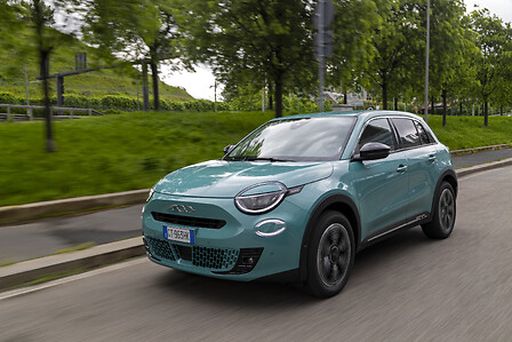
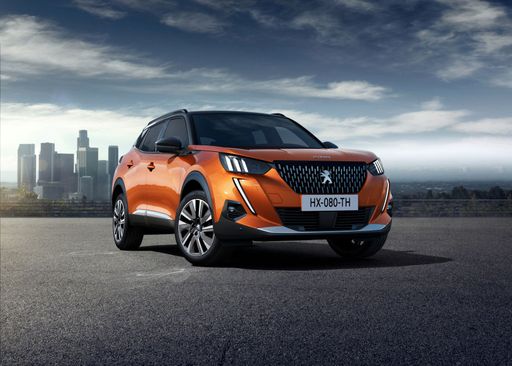
Fiat 600 VS Peugeot 2008 brings together two B‑sized crossovers with very different priorities: the Fiat 600 trades bold city charm and pared‑back practicality for lower cost, while the Peugeot 2008 leans on perceived quality and long‑distance composure. The Fiat 600 feels like a friendly urban companion — compact, easy to park and designed to be fuss‑free — whereas the Peugeot 2008 reads as a more grown‑up choice with a roomier trunk and a quieter demeanor at speed. Both offer hybrid and electric options, but their real-world strengths diverge once you move beyond short hops. Read on to see which car fits a city stylist, a small family, or someone who spends more miles on the motorway.
600

Character and driving feel

The Fiat 600 arrives with an easygoing, almost playful personality: very light steering, good forward visibility and a relaxed suspension that makes urban driving effortless. In contrast, the Peugeot 2008 presents itself as steadier and more composed, so it feels like a calmer companion on long A‑road and motorway sections. Neither car is a driver’s sports machine, but where the Fiat prioritizes agility and a friendly city rhythm, the Peugeot prioritizes highway composure and a sense of plantedness. That trade‑off means buyers who enjoy tight turns and frequent parking will prefer the Fiat 600, while those who want confidence at speed and less fuss on long runs will lean toward the Peugeot 2008.

2008

Comfort and long‑distance behavior

On short trips the Fiat 600 rewards with a quiet, almost cocooned feel in electric mode and a supple ride in town, but at sustained motorway speeds wind and tyre noise become more intrusive and electric range can limit uninterrupted travel. The Peugeot 2008 is the more accomplished touring car of the two, with a suspension and cabin tuning that smooth motorway miles and keep interior noise at bay. The Fiat’s hybrid powertrain can feel a bit hesitant or vibey during stop‑and‑go transitions, while Peugeot’s setups typically feel more refined on the move. If you regularly do long commutes or weekend highway runs, the Peugeot 2008 is the safer bet for comfort; if most journeys are urban or short‑haul, the Fiat 600’s city comfort and responsiveness will satisfy more.

600

Practicality and everyday usability

Practical differences are where the Peugeot 2008 clearly pulls ahead for families and luggage‑heavy users: its boot is more generous and laid out in a more usable way, and the two‑stage load floor adds real everyday flexibility. The Fiat 600 keeps things sensible with a configurable floor and a slightly better curb footprint for tight parking, and its hybrid variant gives buyers an uncomplicated option without needing to charge every day. Rear legroom is the Fiat’s weak spot — adults in the back will feel the difference — while the Peugeot’s rear space and cargo thinking make it the more pragmatic daily driver. So for grocery runs, pram or bulky weekend bags the Peugeot 2008 is the more practical pick, but for city dwellers who prize maneuverability and easier kerbside parking the Fiat 600 wins on convenience.

2008

Cabin feel, controls and perceived quality

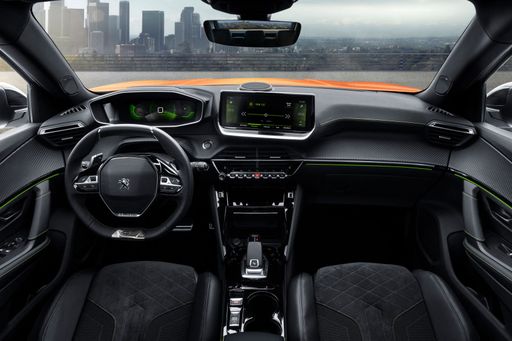
The Peugeot 2008 establishes a stronger premium vibe inside: materials and visual design lift the cabin above the segment average and make time in the car feel more expensive. The Fiat 600 trades some of that material quality for charm and simplicity, with a layout that leans on physical buttons and intuitive controls that are easier to use on the move. Peugeot’s modern interface and the small steering wheel of the i‑Cockpit create a striking cabin but can be polarising — some drivers find sightlines or touchscreen climate controls awkward. In short, choose the Peugeot 2008 if perceived quality and a refined interior matter; choose the Fiat 600 if you prefer tactile controls and a straightforward, cheerful cabin.

Who should buy which car — buyer fit and next steps

For city‑centric buyers and style‑minded commuters the Fiat 600 is the natural fit: lower entry cost, easier parking, and a personality that suits short trips and urban living. The Peugeot 2008 suits buyers who need more luggage space, a quieter motorway companion and a cabin that reads more premium day‑to‑day; it’s the better all‑rounder for mixed urban and longer journeys. Both cars have hybrid and electric flavors, so your choice should hinge on where you drive most and whether trunk space or perceived quality outweighs urban agility. With those trade‑offs in mind, the technical comparison that follows will spell out the drivetrain, range and space differences to help you make a final decision.

Here’s where it gets real: The technical differences in detail

2008

Costs and Efficiency:

Price and efficiency are key factors when choosing a car – and this is often where the real differences emerge.

Fiat 600 is moderately cheaper – starting at 21,000 £ , while the Peugeot 2008 costs 24,800 £ . That’s a price difference of around 3,771 £.

Fuel consumption also shows a difference: the Fiat 600 uses 4.8 L/100km and is very slightly more efficient than the Peugeot 2008 with 4.9 L/100km. The difference is about 0.1 L/100km.

In terms of energy consumption, the Fiat 600 is barely more efficient: consuming 15.1 kWh/100km compared to 15.3 kWh/100km for the Peugeot 2008. That’s a difference of about 0.2 kWh/100km.

As for electric range, the Fiat 600 offers barely more range – reaching up to 409 km, about 4 km more than the Peugeot 2008.

600

Engine and Performance:

Under the bonnet, it becomes clear which model is tuned for sportiness and which one takes the lead when you hit the accelerator.

Both models deliver identical power – 156 HP each.

When accelerating from 0 to 100 km/h, the Peugeot 2008 is marginally quicker – completing the sprint in 8.3 s, while the Fiat 600 takes 8.5 s. That’s about 0.2 s quicker.

There’s also a difference in torque: the Peugeot 2008 delivers barely more torque with 270 Nm compared to 260 Nm. That’s about 10 Nm more.

2008

Space and Everyday Use:

Cabin size, boot volume and payload all play a role in everyday practicality. Here, comfort and flexibility make the difference.

Both vehicles offer seating for 5 people.

In terms of curb weight, Peugeot 2008 is only slightly lighter – 1,263 kg compared to 1,265 kg. The difference is around 2 kg.

Looking at boot space, the Peugeot 2008 offers a bit more boot space – 434 L compared to 385 L. That’s a difference of about 49 L.

When it comes to payload, the Fiat 600 carries moderately more – 517 kg compared to 447 kg. That’s a difference of about 70 kg.

Who wins the race in the data check?

The Fiat 600 has only a minor advantage in the objective data comparison.
This result only shows which model scores more points on paper – not which of the two cars feels right for you.

from £21,000
600

Fiat 600

  • Engine Type Petrol MHEV, Electric, Petrol
  • Transmission Automatic, Manuel
  • Drive Type Front-Wheel Drive
  • Power HP 100 - 156 HP
  • Consumption L/100km 4.8 - 5.7 L/100km
  • Consumption kWh/100km 15.1 kWh/100km
  • Electric Range 409 km
Peugeot 2008
Fiat 600

Costs and Consumption

View detailed analysis

Engine and Performance

View detailed analysis

Dimensions and Body

View detailed analysis

Peugeot 2008

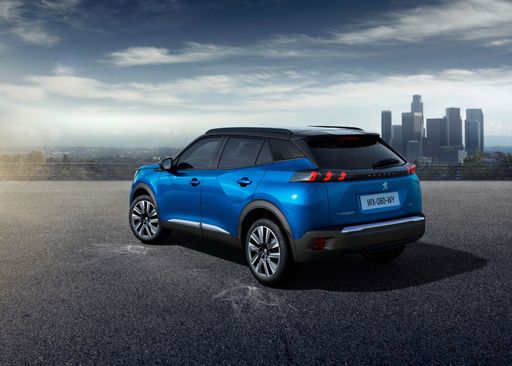
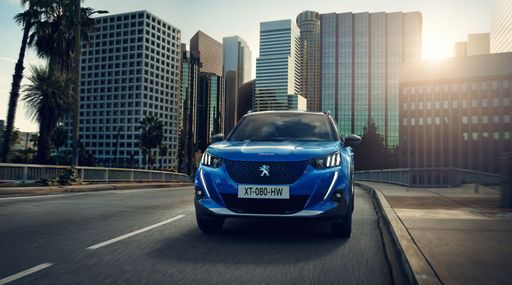
The Peugeot 2008 is a compact crossover that blends sharp French styling with a practical, high-riding layout, giving it more presence and versatility than a typical small hatchback. Inside it offers a clever, user-friendly cabin with sensible storage and modern infotainment, while a composed ride and efficient powertrains make it well suited to both city errands and longer journeys.

details

Fiat 600

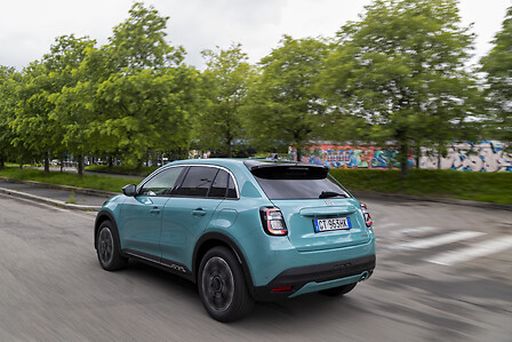
The Fiat 600 is small, cheeky and utterly charming, a pocket-sized Italian that packs more personality than its size suggests. Ideal for city buyers who want fuss-free motoring with a playful driving character, it puts smiles ahead of spreadsheets.

details
Peugeot 2008
Fiat 600

Costs and Consumption

Price
24,800 - 40,400 £
Price
21,000 - 31,300 £
Consumption L/100km
4.9 - 5.7 L/100km
Consumption L/100km
4.8 - 5.7 L/100km
Consumption kWh/100km
15.3 kWh/100km
Consumption kWh/100km
15.1 kWh/100km
Electric Range
405 km
Electric Range
409 km
Battery Capacity
-
Battery Capacity
-
co2
0 - 129 g/km
co2
0 - 129 g/km
Fuel tank capacity
-
Fuel tank capacity
-

Dimensions and Body

Body Type
SUV
Body Type
SUV
Seats
5
Seats
5
Doors
-
Doors
-
Curb weight
1,263 - 1,623 kg
Curb weight
1,265 - 1,595 kg
Trunk capacity
434 L
Trunk capacity
360 - 385 L
Length
-
Length
-
Width
1,770 mm
Width
1,779 mm
Height
-
Height
-
Max trunk capacity
-
Max trunk capacity
-
Payload
407 - 447 kg
Payload
427 - 517 kg

Engine and Performance

Engine Type
Petrol MHEV, Electric, Petrol
Engine Type
Petrol MHEV, Electric, Petrol
Transmission
Automatic, Manuel
Transmission
Automatic, Manuel
Transmission Detail
Dual-Clutch Automatic, Reduction Gearbox, Manual Gearbox
Transmission Detail
Dual-Clutch Automatic, Reduction Gearbox, Manual Gearbox
Drive Type
Front-Wheel Drive
Drive Type
Front-Wheel Drive
Power HP
101 - 156 HP
Power HP
100 - 156 HP
Acceleration 0-100km/h
8.3 - 10.9 s
Acceleration 0-100km/h
8.5 - 10.6 s
Max Speed
-
Max Speed
-
Torque
205 - 270 Nm
Torque
205 - 260 Nm
Number of Cylinders
3
Number of Cylinders
3
Power kW
74 - 115 kW
Power kW
74 - 115 kW
Engine capacity
1,199 cm3
Engine capacity
1,199 cm3

General

Model Year
2,025 - 2,026
Model Year
2,025 - 2,026
CO2 Efficiency Class
C, A, D
CO2 Efficiency Class
C, A, D
Brand
Peugeot
Brand
Fiat
DriveDuel uses data analysis and artificial intelligence to evaluate vehicle data and create content. Content is regularly reviewed and improved. The displayed prices are estimates based on German list prices, adjusted to the respective country’s VAT. Country-specific registration taxes are not included. This information is not legally binding.