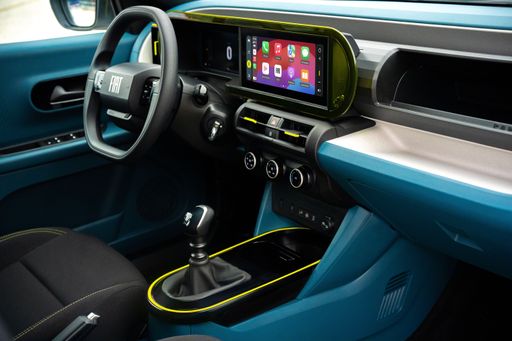
VS

Peugeot 2008 vs Fiat Grande Panda comparison

Compare performance (156 HP vs 113 HP), boot space and price (24,800 £ vs 16,300 £ ) at a glance. Find out which car is the better choice for you – Peugeot 2008 or Fiat Grande Panda?

Peugeot 2008 vs Fiat Grande Panda: Key differences

Peugeot 2008

5 (1 Reviews)
rate
  • markedly more power
  • marginally more efficient
  • marginally more efficient
  • markedly more electric range
  • clearly quicker 0–100 km/h
  • barely lighter
  • only slightly more trunk space
details

Fiat Grande Panda

3.8 (1 Reviews)
rate
  • considerably cheaper
details

By Achim Sedelmaier

2008

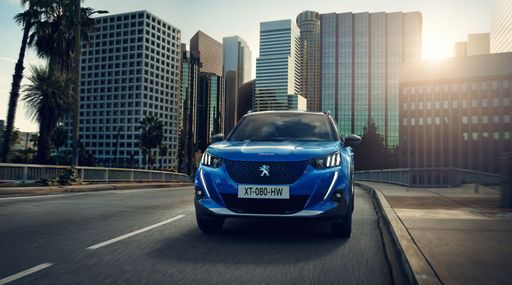
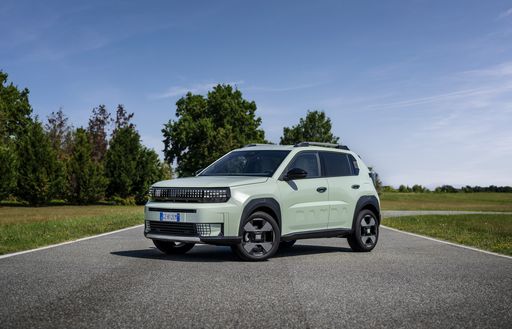
When it comes to compact SUVs, the Peugeot 2008 and the Fiat Grande Panda offer buyers two distinct options packed with innovations and modern technical solutions. Both cars cater to a market that demands performance, efficiency, and practicality, but they achieve these goals via different philosophies and designs. In this article, we delve into the details of both vehicles to make an informed comparison.
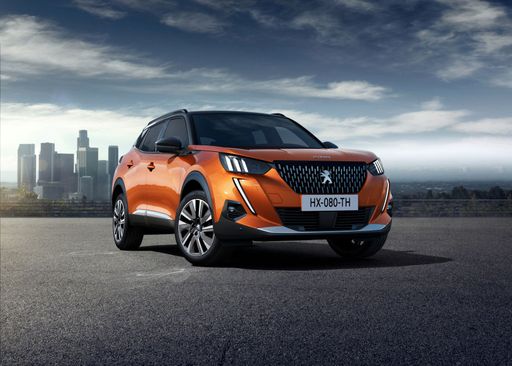
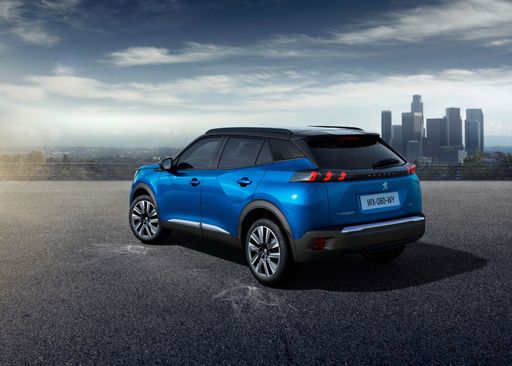
Grande Panda

Engine Options and Performance

The Peugeot 2008 comes with a diverse range of engine options, boasting petrol MHEV, conventional petrol, and electric models. The petrol engines deliver power options ranging from 101 HP to an impressive 156 HP. Notably, the hybrid version achieves a remarkable fuel consumption of 5 L/100km and an electric range of up to 406 km with its 51 kWh battery package.

On the other hand, the Fiat Grande Panda focuses on practicality with its petrol MHEV and electric engine types, generating power outputs of 101 HP and a slightly less powerful electric variant of 113 HP. Although it falls short compared to the Peugeot 2008 in terms of power, the Grande Panda boasts a commendable 5.4 L/100 km fuel efficiency and an electric range of up to 320 km with a 43.8 kWh battery.

2008

Transmission and Drive Configuration

Both models feature front-wheel drive configurations, making them suitable for urban and occasional light off-road driving. The Peugeot 2008 is available with both automatic Dual-Clutch and manual gearboxes, providing options for different driving preferences. In contrast, the Fiat Grande Panda is fitted with an automatic gearbox, streamlining the driving experience, particularly in congested traffic.

Grande Panda

Acceleration and Speed

Performance enthusiasts will appreciate the Peugeot 2008, which accelerates from 0 to 100 km/h in a swift 8.3 seconds for its top-performing model. The Grande Panda, however, takes a more leisurely approach, achieving the same speed in 10 seconds for the petrol version and up to 11.5 seconds for its electric variant. Additionally, the 2008 also boasts a top speed of 206 km/h compared to the Grande Panda's maximum speed of 160 km/h.

2008

Dimensions and Cargo Capacity

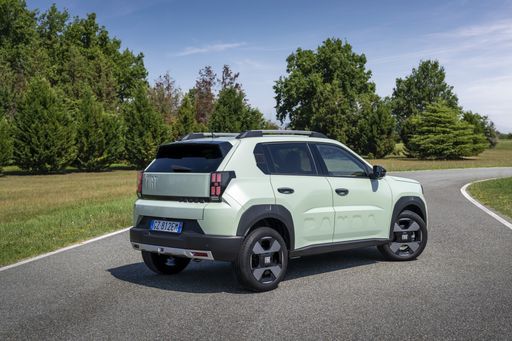
Space is a crucial factor for buyers in the compact SUV segment, and here the Peugeot 2008 has the upper hand with generous dimensions. The 2008 measures 4304 mm in length and offers a trunk capacity of 434 liters, which is ideal for both daily grocery hauls and weekend getaways. In comparison, the Fiat Grande Panda, measuring 3999 mm long, provides a smaller trunk capacity ranging from 361 to 412 liters, which might impact practicality for those looking for space.

Grande Panda

Interior and Technology Innovations

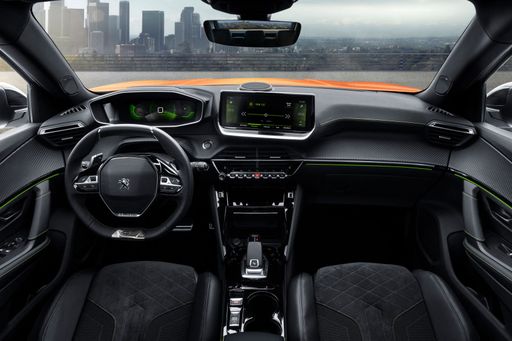
Both vehicles aim to create a comfortable driving environment, but the Peugeot 2008 stands out in terms of technology. It features intuitive infotainment systems with large touchscreen displays and connectivity options such as Apple CarPlay and Android Auto. Additionally, it includes various driving aids and safety innovations, positioning it well for tech-savvy consumers.

While the Fiat Grande Panda does not fall short regarding basic comfort and features, it may not offer the same high-tech allure as the Peugeot. Nevertheless, it provides a straightforward and user-friendly interface that appeals to those who prefer simplicity over complexity.

2008

Environmental Impact and Efficiency

Both models come with eco-friendly options, but their environmental ratings differ. The Peugeot 2008 boasts a mix of CO2 efficiency classes, with its electric variant achieving zero emissions. Meanwhile, the Fiat Grande Panda also offers eco-friendly engine choices and is classified under CO2 efficiency class A for its electric model, making it a viable option for environmentally conscious consumers.

Conclusion: Which One is Right for You?

In summary, both the Peugeot 2008 and the Fiat Grande Panda cater to different segments of the compact SUV market. If you prioritize performance, modern technology, and spaciousness, the 2008 is the clear winner. However, if you favor simplicity and practicality, especially with agility in urban scenarios, the Grande Panda presents a compelling case. Ultimately, the choice boils down to your personal preferences and needs, making either vehicle a worthy contender.

Here’s where it gets real: The technical differences in detail

2008

Costs and Efficiency:

Price and efficiency are key factors when choosing a car – and this is often where the real differences emerge.

Fiat Grande Panda is considerably cheaper – starting at 16,300 £ , while the Peugeot 2008 costs 24,800 £ . That’s a price difference of around 8,485 £.

Fuel consumption also shows a difference: the Peugeot 2008 uses 4.9 L/100km and is marginally more efficient than the Fiat Grande Panda with 5.1 L/100km. The difference is about 0.2 L/100km.

In terms of energy consumption, the Peugeot 2008 is marginally more efficient: consuming 15.3 kWh/100km compared to 16.8 kWh/100km for the Fiat Grande Panda. That’s a difference of about 1.5 kWh/100km.

As for electric range, the Peugeot 2008 offers markedly more range – reaching up to 405 km, about 85 km more than the Fiat Grande Panda.

Grande Panda

Engine and Performance:

Power, torque and acceleration are the classic benchmarks for car enthusiasts – and here, some clear differences start to show.

When it comes to engine power, the Peugeot 2008 offers markedly more power – delivering 156 HP compared to 113 HP. That’s roughly 43 HP more horsepower.

When accelerating from 0 to 100 km/h, the Peugeot 2008 is clearly quicker – completing the sprint in 8.3 s, while the Fiat Grande Panda takes 11.2 s. That’s about 2.9 s quicker.

There’s also a difference in torque: the Peugeot 2008 delivers clearly more torque with 270 Nm compared to 205 Nm. That’s about 65 Nm more.

2008

Space and Everyday Use:

Beyond pure performance, interior space and usability matter most in daily life. This is where you see which car is more practical and versatile.

Both vehicles offer seating for 5 people.

In terms of curb weight, Peugeot 2008 is barely lighter – 1,263 kg compared to 1,295 kg. The difference is around 32 kg.

Looking at boot space, the Peugeot 2008 offers only slightly more boot space – 434 L compared to 412 L. That’s a difference of about 22 L.

When it comes to payload, the Fiat Grande Panda carries marginally more – 453 kg compared to 447 kg. That’s a difference of about 6 kg.

Who wins the race in the data check?

The Peugeot 2008 is clearly superior overall in the objective data comparison.
This result only shows which model scores more points on paper – not which of the two cars feels right for you.

from £24,800
2008

Peugeot 2008

  • Engine Type Petrol MHEV, Electric, Petrol
  • Transmission Automatic, Manuel
  • Drive Type Front-Wheel Drive
  • Power HP 101 - 156 HP
  • Consumption L/100km 4.9 - 5.7 L/100km
  • Consumption kWh/100km 15.3 kWh/100km
  • Electric Range 405 km
Peugeot 2008
Fiat Grande Panda

Costs and Consumption

View detailed analysis

Engine and Performance

View detailed analysis

Dimensions and Body

View detailed analysis

Peugeot 2008

The Peugeot 2008 is a compact crossover that blends sharp French styling with a practical, high-riding layout, giving it more presence and versatility than a typical small hatchback. Inside it offers a clever, user-friendly cabin with sensible storage and modern infotainment, while a composed ride and efficient powertrains make it well suited to both city errands and longer journeys.

details

Fiat Grande Panda

The Grande Panda is a delightful blend of practicality and charm, making it a popular choice for urban dwellers and families alike. With its compact design, the car navigates city streets effortlessly while providing ample interior space for passengers and cargo. Its quirky styling and user-friendly features make the Grande Panda not just a mode of transport, but a fun driving experience.

details
Peugeot 2008
Fiat Grande Panda

Costs and Consumption

Price
24,800 - 40,400 £
Price
16,300 - 25,700 £
Consumption L/100km
4.9 - 5.7 L/100km
Consumption L/100km
5.1 - 5.7 L/100km
Consumption kWh/100km
15.3 kWh/100km
Consumption kWh/100km
16.8 kWh/100km
Electric Range
405 km
Electric Range
320 km
Battery Capacity
-
Battery Capacity
-
co2
0 - 129 g/km
co2
0 - 131 g/km
Fuel tank capacity
-
Fuel tank capacity
-

Dimensions and Body

Body Type
SUV
Body Type
SUV
Seats
5
Seats
5
Doors
-
Doors
-
Curb weight
1,263 - 1,623 kg
Curb weight
1,295 - 1,554 kg
Trunk capacity
434 L
Trunk capacity
361 - 412 L
Length
-
Length
-
Width
1,770 mm
Width
1,763 mm
Height
-
Height
-
Max trunk capacity
-
Max trunk capacity
-
Payload
407 - 447 kg
Payload
353 - 453 kg

Engine and Performance

Engine Type
Petrol MHEV, Electric, Petrol
Engine Type
Electric, Petrol MHEV, Petrol
Transmission
Automatic, Manuel
Transmission
Automatic, Manuel
Transmission Detail
Dual-Clutch Automatic, Reduction Gearbox, Manual Gearbox
Transmission Detail
Reduction Gearbox, Dual-Clutch Automatic, Manual Gearbox
Drive Type
Front-Wheel Drive
Drive Type
Front-Wheel Drive
Power HP
101 - 156 HP
Power HP
100 - 113 HP
Acceleration 0-100km/h
8.3 - 10.9 s
Acceleration 0-100km/h
11.2 - 11.5 s
Max Speed
-
Max Speed
-
Torque
205 - 270 Nm
Torque
122 - 205 Nm
Number of Cylinders
3
Number of Cylinders
3
Power kW
74 - 115 kW
Power kW
74 - 83 kW
Engine capacity
1,199 cm3
Engine capacity
1,199 cm3

General

Model Year
2,025 - 2,026
Model Year
2025
CO2 Efficiency Class
C, A, D
CO2 Efficiency Class
A, D
Brand
Peugeot
Brand
Fiat
DriveDuel uses data analysis and artificial intelligence to evaluate vehicle data and create content. Content is regularly reviewed and improved. The displayed prices are estimates based on German list prices, adjusted to the respective country’s VAT. Country-specific registration taxes are not included. This information is not legally binding.