VS

Peugeot 3008 vs Dacia Duster comparison

Compare performance (325 HP vs 158 HP), boot space and price (36,500 £ vs 16,300 £ ) at a glance. Find out which car is the better choice for you – Peugeot 3008 or Dacia Duster?

Peugeot 3008 vs Dacia Duster: Key differences

Peugeot 3008

3.5 (6 Reviews)
rate
  • significantly more power
  • significantly more efficient
  • considerably quicker 0–100 km/h
  • marginally more trunk space
details

Dacia Duster

5 (2 Reviews)
rate
  • significantly cheaper
  • moderately lighter
details

All details on performance, efficiency, range and trunk space can be found in the technical comparison below – including user reviews for both models.

By Achim Sedelmaier

3008

The automotive market is constantly evolving, with a growing emphasis on efficiency, technology, and user experience. Among the contenders in the SUV segment, the Dacia Duster and the Peugeot 3008 stand out as appealing options. Each vehicle caters to distinct preferences and needs, making a comparison vital for potential buyers. In this article, we explore the technical aspects, innovations, and overall value each model brings to the table.
Duster

Design and Dimensions

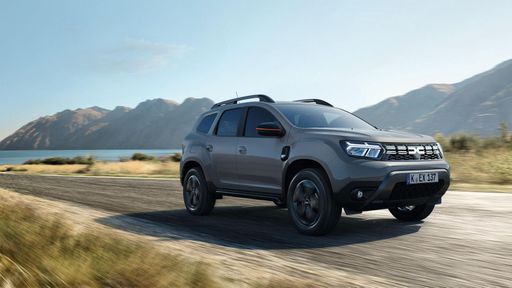
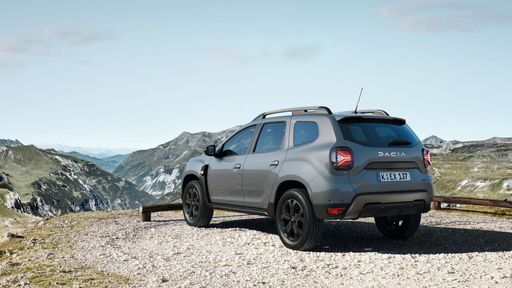
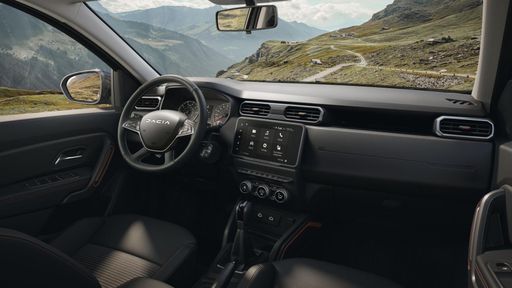
The Dacia Duster, known for its rugged and practical design, measures 4343 mm in length, 1813 mm in width, and stands 1656 mm high. This SUV showcases a robust aesthetic combined with functional elements, making it an ideal vehicle for both urban and off-road adventures.

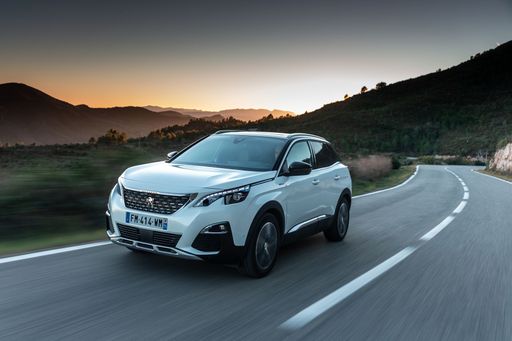
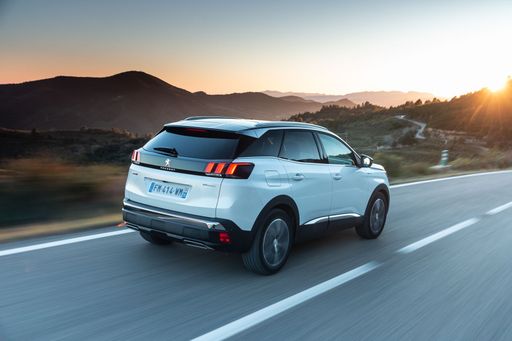
On the other hand, the Peugeot 3008 embodies a more modern and sleek design philosophy. It is slightly longer at 4542 mm, wider at 1895 mm, and higher at 1641 mm. The 3008's contemporary styling, combined with its aggressive stance, gives it a premium feel that appeals to drivers seeking sophistication.

3008

Engine Options and Performance

Starting with the Dacia Duster, the 2024 model offers a range of engine types including LPG, full hybrid, and petrol MHEV. The power output varies from 91 HP to 140 HP, coupled with a selection of either manual or automatic transmission. The Duster's fuel economy ranges from 5 L/100km to 8.1 L/100km, allowing for efficient driving in various conditions. Acceleration from 0-100 km/h can be as quick as 9.9 seconds, showcasing impressive responsiveness for an SUV of its size.

The Peugeot 3008 presents an array of advanced engine configurations, including petrol MHEV, plug-in hybrid, and fully electric variants. With a maximum power output of 231 HP, the 3008 excels in performance with 0-100 km/h acceleration times as low as 8.4 seconds. The fuel consumption is competitive, with some models achieving as little as 0.9 L/100km in electric range usage. The extensive electric range of up to 698 km makes it an attractive option for eco-conscious consumers.

Duster

Innovation and Technology

In terms of innovations, the Dacia Duster prioritizes practicality, offering functional features without overwhelming complexity. It boasts a 50-liter fuel tank capacity and generous trunk space ranging between 430 to 517 liters, making it a suitable choice for families or outdoor activities.

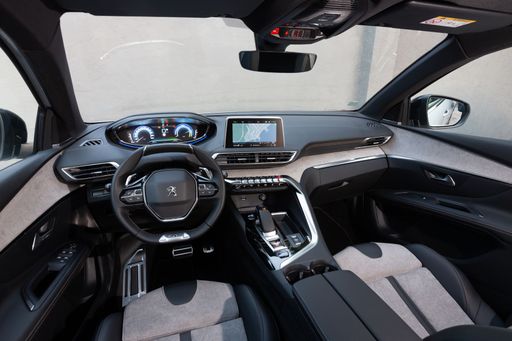
Conversely, the Peugeot 3008 integrates advanced technology into its design. The dual-clutch automatic transmission enhances driving dynamics while the plugin hybrid options offer versatile energy solutions. The 3008 also showcases an impressive range of safety features and an 8.0-inch touchscreen interface, perfect for tech-savvy drivers.

3008

Interior Comfort and Space

Both vehicles offer a comfortable seating arrangement for five passengers. The Dacia Duster is known for its spacious interior and user-friendly layout. The materials may lean towards the utilitarian, but it doesn’t compromise on comfort for everyday use.

In contrast, the Peugeot 3008 elevates the driving experience with high-quality interior materials and ergonomic design. It features a more refined cabin atmosphere, complemented by ambient lighting and customizable digital displays. The trunk capacity of 520 liters further complements its spaciousness, making it a practical choice for longer travels.

Duster

Final Thoughts: Which SUV Reigns Supreme?

When comparing the Dacia Duster and the Peugeot 3008, it’s essential to consider what you prioritize in a vehicle. The Duster appeals to buyers looking for a straightforward, rugged SUV that offers great value for money, alongside efficient engine options.

However, the Peugeot 3008 stands out for its sophisticated design, impressive technology integrations, and a diverse range of powertrains, particularly suited for eco-conscious drivers who value performance and style. Ultimately, both vehicles have their strengths, catering to different consumers in the competitive SUV market.

Here’s where it gets real: The technical differences in detail

3008

Costs and Efficiency:

Looking at overall running costs, both models reveal some interesting differences in everyday economy.

Dacia Duster is significantly cheaper – starting at 16,300 £ , while the Peugeot 3008 costs 36,500 £ . That’s a price difference of around 20,237 £.

Fuel consumption also shows a difference: the Peugeot 3008 uses 2.4 L/100km and is significantly more efficient than the Dacia Duster with 4.7 L/100km. The difference is about 2.3 L/100km.

Duster

Engine and Performance:

Under the bonnet, it becomes clear which model is tuned for sportiness and which one takes the lead when you hit the accelerator.

When it comes to engine power, the Peugeot 3008 offers significantly more power – delivering 325 HP compared to 158 HP. That’s roughly 167 HP more horsepower.

When accelerating from 0 to 100 km/h, the Peugeot 3008 is considerably quicker – completing the sprint in 6 s, while the Dacia Duster takes 9.4 s. That’s about 3.4 s quicker.

There’s also a difference in torque: the Peugeot 3008 delivers clearly more torque with 511 Nm compared to 230 Nm. That’s about 281 Nm more.

3008

Space and Everyday Use:

Beyond pure performance, interior space and usability matter most in daily life. This is where you see which car is more practical and versatile.

Both vehicles offer seating for 5 people.

In terms of curb weight, Dacia Duster is moderately lighter – 1,377 kg compared to 1,648 kg. The difference is around 271 kg.

Looking at boot space, the Peugeot 3008 offers marginally more boot space – 520 L compared to 517 L. That’s a difference of about 3 L.

When it comes to payload, the Peugeot 3008 carries only slightly more – 467 kg compared to 453 kg. That’s a difference of about 14 kg.

Who wins the race in the data check?

The Peugeot 3008 is far ahead overall in the objective data comparison.
This result only shows which model scores more points on paper – not which of the two cars feels right for you.

from £36,500
3008

Peugeot 3008

  • Engine Type : Electric, Petrol MHEV, Plugin Hybrid
  • Transmission : Automatic
  • Drive Type : Front-Wheel Drive, All-Wheel Drive
  • Power HP : 145 - 325 HP
  • Consumption L/100km : 2.4 - 5.3 L/100km
  • Consumption kWh/100km : 16.9 - 17.4 kWh/100km
  • Electric Range : 81 - 698 km
Peugeot 3008
Dacia Duster

Costs and Consumption

View detailed analysis

Engine and Performance

View detailed analysis

Dimensions and Body

View detailed analysis

Peugeot 3008

The Peugeot 3008 blends bold French styling with a surprisingly grown-up interior that makes even dull commutes feel a little bit special. Practical enough for family life yet lively to drive, it’s a clever all‑rounder that stands out from the crossover crowd without shouting for attention.

details

Dacia Duster

The Dacia Duster is a no-nonsense compact SUV that delivers rugged practicality and surprisingly comfortable everyday driving without fuss. It might not win any beauty contests, but its honest design, easy-to-live-with cabin and tough attitude make it a smart pick for buyers who want reliable transport without luxury frills.

details
Peugeot 3008
Dacia Duster

Costs and Consumption

Price
36,500 - 52,200 £
Price
16,300 - 24,900 £
Consumption L/100km
2.4 - 5.3 L/100km
Consumption L/100km
4.7 - 7.6 L/100km
Consumption kWh/100km
16.9 - 17.4 kWh/100km
Consumption kWh/100km
-
Electric Range
81 - 698 km
Electric Range
-
Battery Capacity
-
Battery Capacity
-
co2
0 - 121 g/km
co2
107 - 140 g/km
Fuel tank capacity
-
Fuel tank capacity
-

Dimensions and Body

Body Type
SUV
Body Type
SUV
Seats
5
Seats
5
Doors
-
Doors
-
Curb weight
1,648 - 2,266 kg
Curb weight
1,377 - 1,559 kg
Trunk capacity
470 - 520 L
Trunk capacity
348 - 517 L
Length
-
Length
-
Width
1,895 mm
Width
1,813 mm
Height
-
Height
-
Max trunk capacity
-
Max trunk capacity
-
Payload
432 - 467 kg
Payload
402 - 453 kg

Engine and Performance

Engine Type
Electric, Petrol MHEV, Plugin Hybrid
Engine Type
Petrol MHEV, Full Hybrid, LPG
Transmission
Automatic
Transmission
Manuel, Automatic
Transmission Detail
Reduction Gearbox, Dual-Clutch Automatic
Transmission Detail
Manual Gearbox, Automated Manual, Dual-Clutch Automatic
Drive Type
Front-Wheel Drive, All-Wheel Drive
Drive Type
Front-Wheel Drive, All-Wheel Drive
Power HP
145 - 325 HP
Power HP
115 - 158 HP
Acceleration 0-100km/h
6 - 10.2 s
Acceleration 0-100km/h
9.4 - 11.7 s
Max Speed
-
Max Speed
-
Torque
230 - 511 Nm
Torque
190 - 230 Nm
Number of Cylinders
3 - 4
Number of Cylinders
3 - 4
Power kW
107 - 239 kW
Power kW
84 - 116 kW
Engine capacity
1,199 - 1,598 cm3
Engine capacity
1,199 - 1,789 cm3

General

Model Year
2,024 - 2,026
Model Year
2,025 - 2,026
CO2 Efficiency Class
A, D, B
CO2 Efficiency Class
D, C
Brand
Peugeot
Brand
Dacia
DriveDuel uses data analysis and artificial intelligence to evaluate vehicle data and create content. Content is regularly reviewed and improved. The displayed prices are estimates based on German list prices, adjusted to the respective country’s VAT. Country-specific registration taxes are not included. This information is not legally binding.