VS

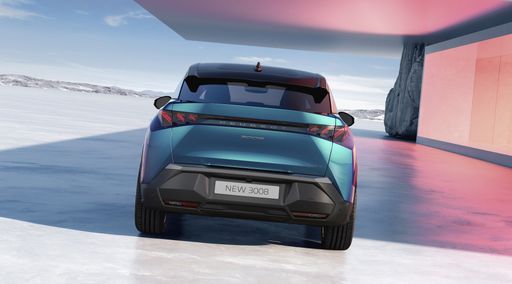
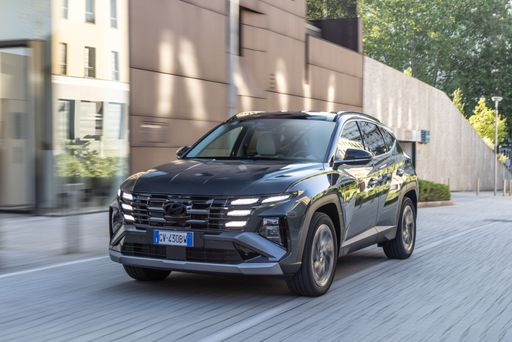
Peugeot 3008 vs Hyundai Tucson comparison

Compare performance (325 HP vs 288 HP), boot space and price (35,100 £ vs 20,900 £ ) at a glance. Find out which car is the better choice for you – Peugeot 3008 or Hyundai Tucson?

Peugeot 3008 vs Hyundai Tucson: Key differences

Peugeot 3008

3.4 (4 Reviews)
rate
  • moderately more power
  • somewhat more efficient
  • significantly more electric range
  • visibly quicker 0–100 km/h

Hyundai Tucson

4.6 (4 Reviews)
rate
  • substantially cheaper
  • only slightly lighter
  • moderately more trunk space

All details on performance, efficiency, range and trunk space can be found in the technical comparison below – including user reviews for both models.

3008

Hyundai Tucson vs Peugeot 3008: A Comprehensive Comparison

The compact SUV segment has become increasingly competitive, with models like the Hyundai Tucson and Peugeot 3008 leading the charge. Both vehicles are known for their innovative designs, tech capabilities, and array of engine options. As we delve into their technical aspects, we will examine how these two SUVs stack up against each other in various categories.

Tucson

Engine Options and Performance

The Hyundai Tucson offers a versatile range of engine types including Diesel MHEV, Petrol MHEV, Petrol, Full Hybrid, and Plugin Hybrid, with power outputs ranging from 136 HP to a robust 252 HP. This allows for a variety of driving experiences suited for urban and rural environments alike. The Tucson's peak torque reaches up to 367 Nm, enabling quick acceleration and a sporty feel.

On the other hand, the Peugeot 3008 provides a selection of Petrol MHEV, Plugin Hybrid, and Electric powertrains, delivering between 136 HP and 231 HP. Notably, the 3008 has an electric range of up to 698 km, proving its prowess in eco-friendliness, especially for those considering a hybrid option.

3008

Transmission and Driving Experience

The Tucson's automatic options include both traditional automatic and dual-clutch transmissions, providing smooth shifts and a responsive driving experience. You can also opt for a manual gearbox, appealing to purists who enjoy a more engaging drive.

Conversely, the 3008’s automatic transmission features advanced reduction gearboxes that enhance the driving dynamics. With front-wheel drive as its main configuration, the 3008 is designed for effortless handling and comfort, perfect for city commuting.

Tucson

Fuel Efficiency and Environmental Impact

Fuel efficiency is a critical consideration for many buyers. The Tucson’s consumption ranges from 5.1 to 6.8 L/100 km, depending on the engine variant, making it a reasonably efficient choice within its class. Its CO2 emissions vary, with the cleanest versions emitting as low as 126 g/km.

The Peugeot 3008 has its strengths here too, with the plugin hybrid variant offering an astonishing 0.9 L/100 km fuel consumption. Its CO2 emissions are equally impressive, with models emitting just 19 g/km. This makes the 3008 an attractive option for environmentally-conscious buyers.

3008

Interior Space and Technology

Inside, both SUVs boast modern, tech-savvy interiors. The Tucson features a trunk capacity of up to 620 liters, providing ample space for family trips or cargo. Standard seating for five ensures comfortable accommodation for passengers, further enhanced by high-quality materials and finishes.

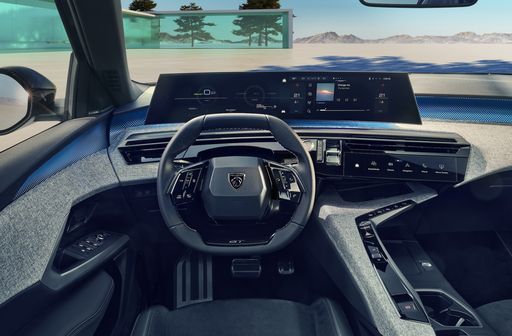
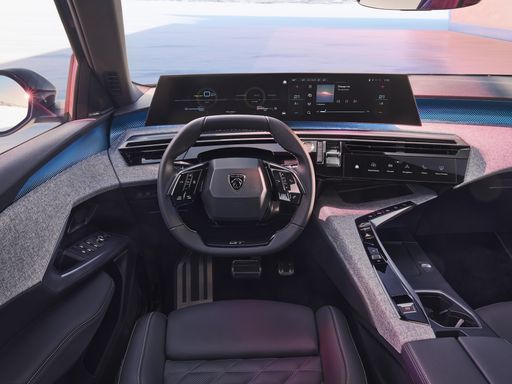
The Peugeot 3008, although slightly smaller in trunk capacity at 520 liters, compensates with its cutting-edge i-Cockpit system that offers an intuitive interface and advanced connectivity options. With its stylish design and high-end technology, it appeals to the tech-savvy consumers who appreciate form and function.

Tucson

Safety Features and Ratings

Safety cannot be overlooked when comparing these SUVs. The Hyundai Tucson is equipped with a suite of advanced safety features such as autonomous emergency braking, lane keeping assist, and blind-spot monitoring, enhancing the overall driving experience and safety levels.

Similarly, the Peugeot 3008 also prioritizes safety with features like active safety brake, distance alert, and advanced traction control systems. Both vehicles have garnered high safety ratings in crash tests, attesting to their reliable construction and safety technology.

3008

Conclusion: Which SUV Reigns Supreme?

Ultimately, the choice between the Hyundai Tucson and Peugeot 3008 boils down to user preference. The Tucson excels in engine diversity, cargo space, and solid performance, while the 3008 stands out with its electrification options, exceptional fuel efficiency, and advanced interior technology. Both SUVs cater to the modern driver, ensuring that any choice will satisfy your needs in the compact SUV segment.

Here’s where it gets real: The technical differences in detail

3008

Costs and Efficiency:

When it comes to price and running costs, the biggest differences usually appear. This is often where you see which car fits your budget better in the long run.

Hyundai Tucson is substantially cheaper – starting at 20,900 £ , while the Peugeot 3008 costs 35,100 £ . That’s a price difference of around 14,245 £.

Fuel consumption also shows a difference: the Peugeot 3008 uses 2.4 L/100km and is somewhat more efficient than the Hyundai Tucson with 2.7 L/100km. The difference is about 0.3 L/100km.

As for electric range, the Peugeot 3008 offers significantly more range – reaching up to 698 km, about 628 km more than the Hyundai Tucson.

Tucson

Engine and Performance:

Under the bonnet, it becomes clear which model is tuned for sportiness and which one takes the lead when you hit the accelerator.

When it comes to engine power, the Peugeot 3008 offers moderately more power – delivering 325 HP compared to 288 HP. That’s roughly 37 HP more horsepower.

When accelerating from 0 to 100 km/h, the Peugeot 3008 is visibly quicker – completing the sprint in 6 s, while the Hyundai Tucson takes 7.5 s. That’s about 1.5 s quicker.

Looking at top speed, the Hyundai Tucson is barely faster – reaching 204 km/h, while the Peugeot 3008 tops out at 201 km/h. The difference is around 3 km/h.

There’s also a difference in torque: the Peugeot 3008 delivers visibly more torque with 511 Nm compared to 379 Nm. That’s about 132 Nm more.

3008

Space and Everyday Use:

Whether family car or daily driver – which one offers more room, flexibility and comfort?

Both vehicles offer seating for 5 people.

In terms of curb weight, Hyundai Tucson is only slightly lighter – 1,542 kg compared to 1,648 kg. The difference is around 106 kg.

Looking at boot space, the Hyundai Tucson offers moderately more boot space – 620 L compared to 520 L. That’s a difference of about 100 L.

For maximum load capacity, the Hyundai Tucson offers somewhat more capacity – up to 1,799 L, about 319 L more than the Peugeot 3008.

When it comes to payload, the Hyundai Tucson carries slightly more – 545 kg compared to 467 kg. That’s a difference of about 78 kg.

Who wins the race in the data check?

The Peugeot 3008 holds a decisive overall lead in the objective data comparison.
This result only shows which model scores more points on paper – not which of the two cars feels right for you.

from £35,100
3008

Peugeot 3008

  • Engine Type : Electric, Petrol MHEV, Plugin Hybrid
  • Transmission : Automatic
  • Drive Type : Front-Wheel Drive, All-Wheel Drive
  • Power HP : 145 - 325 HP
  • Consumption L/100km : 2.4 - 5.4 L/100km
  • Consumption kWh/100km : 16.9 - 17.6 kWh/100km
  • Electric Range : 81 - 698 km
Peugeot 3008
Hyundai Tucson

Costs and Consumption

View detailed analysis

Engine and Performance

View detailed analysis

Dimensions and Body

View detailed analysis

Peugeot 3008

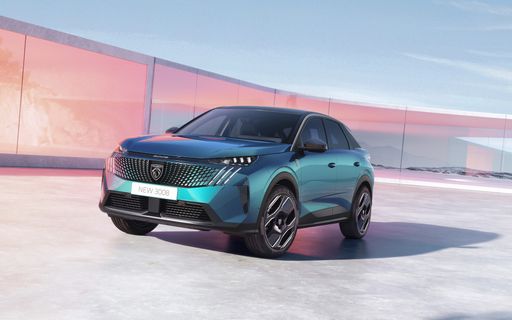
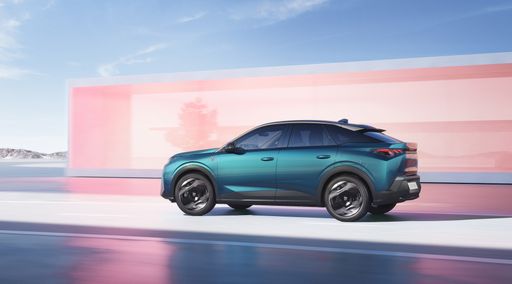
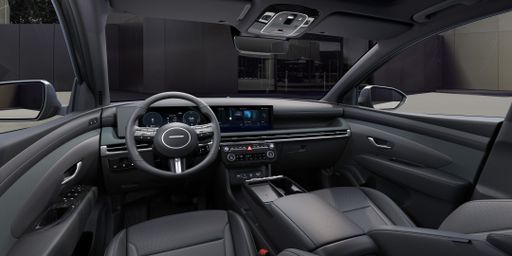
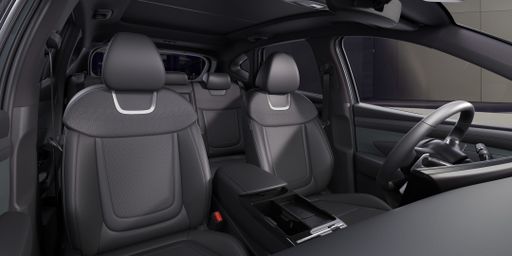
The Peugeot 3008 blends bold French styling with a surprisingly grown-up interior that makes even dull commutes feel a little bit special. Practical enough for family life yet lively to drive, it’s a clever all‑rounder that stands out from the crossover crowd without shouting for attention.

details

Hyundai Tucson

Hyundai Tucson marries bold, sculpted looks with a clever, roomy cabin that feels smarter than its price tag suggests. It's composed on the road, easy to live with day-to-day, and a sensible choice for buyers who want SUV style without the showroom theatrics.

details
Peugeot 3008
Hyundai Tucson

Costs and Consumption

Price
35,100 - 52,000 £
Price
20,900 - 47,900 £
Consumption L/100km
2.4 - 5.4 L/100km
Consumption L/100km
2.7 - 7.6 L/100km
Consumption kWh/100km
16.9 - 17.6 kWh/100km
Consumption kWh/100km
-
Electric Range
81 - 698 km
Electric Range
63 - 70 km
Battery Capacity
0.4 - 96.9 kWh
Battery Capacity
-
co2
0 - 121 g/km
co2
62 - 172 g/km
Fuel tank capacity
55 L
Fuel tank capacity
52 - 54 L

Dimensions and Body

Body Type
SUV
Body Type
SUV
Seats
5
Seats
5
Doors
5
Doors
5
Curb weight
1,648 - 2,266 kg
Curb weight
1,542 - 1,893 kg
Trunk capacity
470 - 520 L
Trunk capacity
546 - 620 L
Length
4,542 mm
Length
4,525 - 4,535 mm
Width
1,895 mm
Width
1,865 mm
Height
1,641 mm
Height
1,650 mm
Max trunk capacity
1,430 - 1,480 L
Max trunk capacity
1,795 - 1,799 L
Payload
432 - 467 kg
Payload
518 - 545 kg

Engine and Performance

Engine Type
Electric, Petrol MHEV, Plugin Hybrid
Engine Type
Petrol, Full Hybrid, Plugin Hybrid, Diesel MHEV
Transmission
Automatic
Transmission
Manuel, Automatic
Transmission Detail
Reduction Gearbox, Dual-Clutch Automatic
Transmission Detail
Manual Gearbox, Dual-Clutch Automatic, Automatic Gearbox
Drive Type
Front-Wheel Drive, All-Wheel Drive
Drive Type
Front-Wheel Drive, All-Wheel Drive
Power HP
145 - 325 HP
Power HP
136 - 288 HP
Acceleration 0-100km/h
6 - 10.2 s
Acceleration 0-100km/h
7.5 - 11.6 s
Max Speed
170 - 201 km/h
Max Speed
196 - 204 km/h
Torque
230 - 511 Nm
Torque
250 - 379 Nm
Number of Cylinders
3 - 4
Number of Cylinders
4
Power kW
107 - 239 kW
Power kW
100 - 212 kW
Engine capacity
1,199 - 1,598 cm3
Engine capacity
1,598 cm3

General

Model Year
2,024 - 2,026
Model Year
2,025
CO2 Efficiency Class
A, D, B
CO2 Efficiency Class
F, D, E, B
Brand
Peugeot
Brand
Hyundai
DriveDuel uses data analysis and artificial intelligence to evaluate vehicle data and create content. Content is regularly reviewed and improved. The displayed prices are estimates based on German list prices, adjusted to the respective country’s VAT. Country-specific registration taxes are not included. This information is not legally binding.