VS

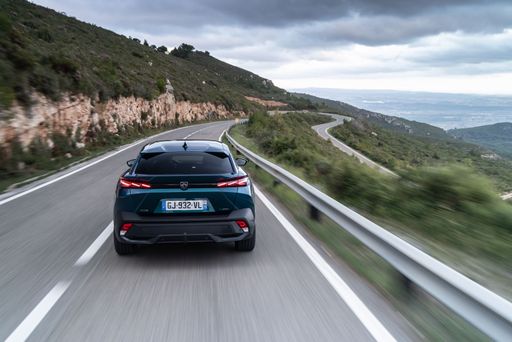
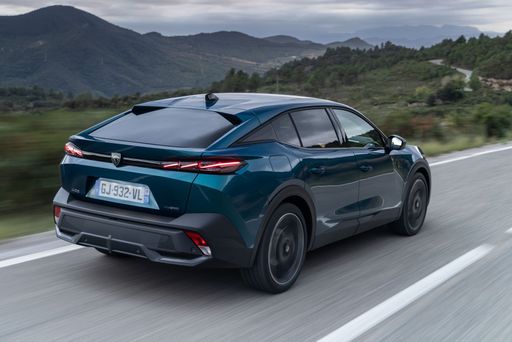
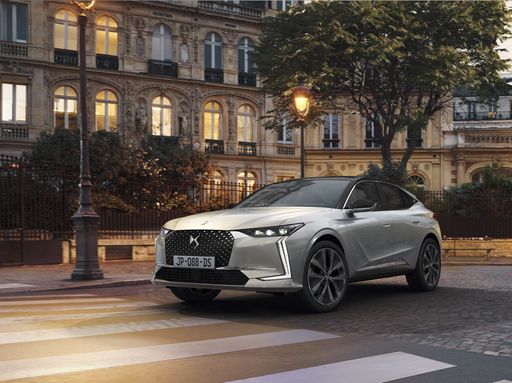
Peugeot 408 vs DS Automobiles DS 4 comparison

Compare performance (225 HP vs 130 HP), boot space and price (35,100 £ vs 34,000 £ ) at a glance. Find out which car is the better choice for you – Peugeot 408 or DS Automobiles DS 4?

Peugeot 408 vs DS Automobiles DS 4: Key differences

Peugeot 408

4.9 (1 Reviews)
rate
  • clearly more power
  • significantly more efficient
  • clearly quicker 0–100 km/h
  • marginally lighter
  • a bit more trunk space
details

DS Automobiles DS 4

  • very slightly cheaper
details

All details on performance, efficiency, range and trunk space can be found in the technical comparison below – including user reviews for both models.

By Achim Sedelmaier

408

DS Automobiles DS 4 vs Peugeot 408: A Comprehensive Comparison

The automotive market is constantly evolving, with manufacturers striving to deliver vehicles that blend technology, performance, and style. Among the noteworthy competitors in the compact segment are the DS Automobiles DS 4 and the Peugeot 408. While they share a corporate lineage, their individual characteristics set them apart. In this article, we delve into their engineering, performance, and innovation to see how they stack up against each other.
DS 4

Design and Dimensions

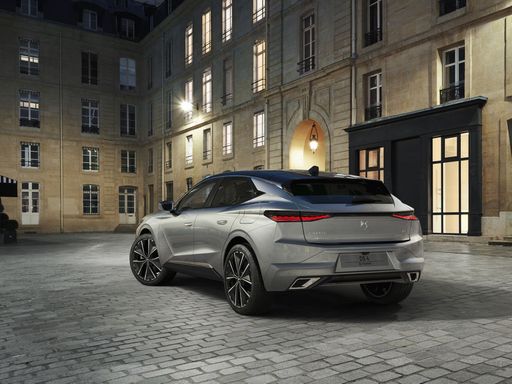
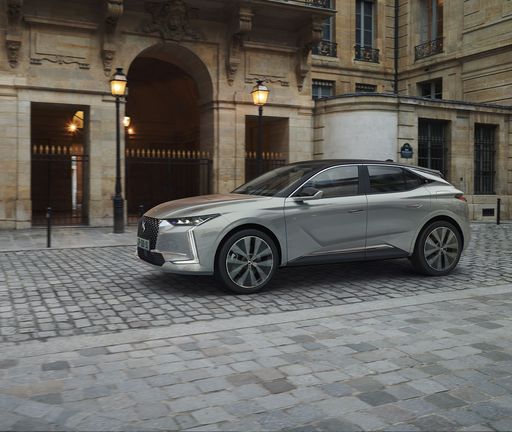
First impressions matter, and the exterior design of both models reflects distinct philosophies. The DS 4, with its hatchback form, exudes elegance and sophistication, measuring 4400mm in length, 1830mm in width, and 1470mm in height. Its aesthetic is complemented by a sleek profile and distinctive grille, making it a standout on the road.

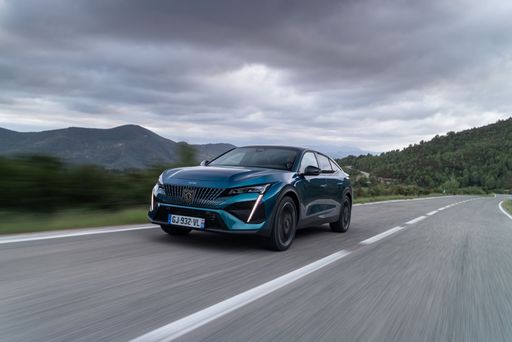
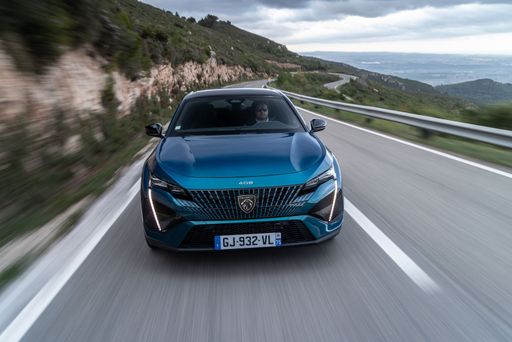
On the other hand, the Peugeot 408 presents a more robust SUV shape. Slightly longer at 4687mm, wider at 1848mm, and taller at 1478mm, the 408 offers a commanding presence, echoing the modern utility of an SUV. Both designs are appealing but cater to different consumer preferences—subtle luxury versus bold practicality.

408

Powertrains and Performance

When it comes to the heart of these vehicles, the engine options vary significantly. The DS 4 offers a range that includes Diesel, Petrol MHEV, Petrol, and Plugin Hybrid variants, with power outputs ranging from 130 to 224 HP. Its efficient consumption rates are particularly notable, with the most economical version achieving just 1.4 L/100km.

Conversely, the Peugeot 408 also has a diverse engine lineup, featuring Petrol MHEV, Plugin Hybrid, and Electric options, producing between 136 and 225 HP. The performance is impressive, particularly with the Plugin Hybrid versions, which can accelerate from 0 to 100km/h in as little as 7.2 seconds. The fuel efficiency is similar, with the best version also offering low consumption figures.

DS 4

Technological Innovations

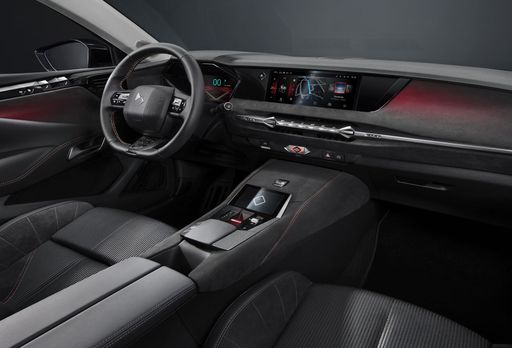
In today's automotive world, technology plays a crucial role in enhancing driving experiences. The DS 4 is equipped with state-of-the-art features like a high-resolution digital cockpit, advanced driver aids, and even options like night vision. Furthermore, the popular DS Automobiles' "DS Connected Services" allows seamless connectivity and navigation integration.

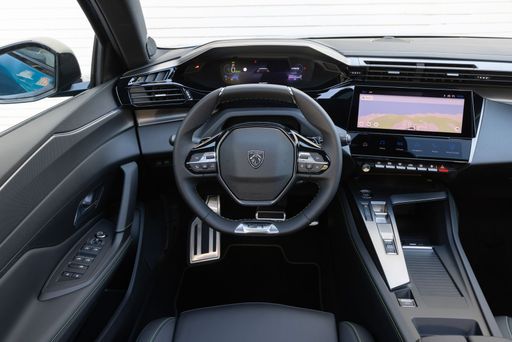
Peugeot does not fall short in terms of technology either. The 408 integrates the latest infotainment system, complete with a touchscreen interface and voice recognition. Additionally, it includes advanced safety features such as lane-keeping assist and adaptive cruise control, ensuring that drivers feel both safe and connected.

408

Efficiency and Eco-Friendliness

Both vehicles are designed with efficiency in mind. The DS 4, particularly in its hybrid version, can achieve an electric range of 62km, paired with a battery capacity of 10 kWh, making it a suitable choice for city dwellers who value electric commuting. In contrast, the Peugeot 408 outshines slightly with an electric range of 63km and a larger battery capacity of 11.3 kWh, promoting greater eco-friendliness for urban journeys.

Moreover, both models boast commendable CO2 emissions ratings, with the DS 4 emitting as low as 32g/km in hybrid variants, while the Peugeot 408 reaches as low as 31g/km. This competitive edge engages environmentally conscious buyers looking for greener alternatives.

DS 4

Space and Comfort

Interior comfort is another critical arena where these two contenders can be compared. The DS 4 comes with a trunk capacity of 430 liters, providing ample storage for everyday needs. Additionally, its interior is designed to offer luxury touches, making use of high-quality materials that enhance the overall experience for passengers.

Meanwhile, the Peugeot 408 takes the lead with a more spacious trunk, offering up to 536 liters of capacity, ideal for families or those needing extra cargo space. Both vehicles comfortably seat five, ensuring that passengers enjoy a pleasant ride, though the Peugeot's configuration leans towards practicality.

408

Conclusion: Which Should You Choose?

The choice between the DS Automobiles DS 4 and the Peugeot 408 ultimately boils down to personal preference. If you lean towards luxury and refined elegance in a compact hatchback, the DS 4 is an excellent option, showcasing innovation and performance. However, if you require versatility and space in a modern SUV package, the Peugeot 408 stands out with its capabilities and technological advancements.

Both vehicles present compelling arguments for potential buyers, making the selection process an exciting journey in the ever-competitive automotive landscape.

Here’s where it gets real: The technical differences in detail

408

Costs and Efficiency:

Price and efficiency are key factors when choosing a car – and this is often where the real differences emerge.

DS Automobiles DS 4 is very slightly cheaper – starting at 34,000 £ , while the Peugeot 408 costs 35,100 £ . That’s a price difference of around 1,140 £.

Fuel consumption also shows a difference: the Peugeot 408 uses 2.7 L/100km and is significantly more efficient than the DS Automobiles DS 4 with 5.2 L/100km. The difference is about 2.5 L/100km.

DS 4

Engine and Performance:

Power, torque and acceleration are the classic benchmarks for car enthusiasts – and here, some clear differences start to show.

When it comes to engine power, the Peugeot 408 offers clearly more power – delivering 225 HP compared to 130 HP. That’s roughly 95 HP more horsepower.

When accelerating from 0 to 100 km/h, the Peugeot 408 is clearly quicker – completing the sprint in 7.2 s, while the DS Automobiles DS 4 takes 10.9 s. That’s about 3.7 s quicker.

Looking at top speed, the Peugeot 408 is a bit faster – reaching 233 km/h, while the DS Automobiles DS 4 tops out at 203 km/h. The difference is around 30 km/h.

There’s also a difference in torque: the Peugeot 408 delivers moderately more torque with 360 Nm compared to 300 Nm. That’s about 60 Nm more.

408

Space and Everyday Use:

Beyond pure performance, interior space and usability matter most in daily life. This is where you see which car is more practical and versatile.

Both vehicles offer seating for 5 people.

In terms of curb weight, Peugeot 408 is marginally lighter – 1,544 kg compared to 1,558 kg. The difference is around 14 kg.

Looking at boot space, the Peugeot 408 offers a bit more boot space – 536 L compared to 430 L. That’s a difference of about 106 L.

For maximum load capacity, the Peugeot 408 offers markedly more capacity – up to 1,583 L, about 343 L more than the DS Automobiles DS 4.

When it comes to payload, the Peugeot 408 carries marginally more – 456 kg compared to 442 kg. That’s a difference of about 14 kg.

Who wins the race in the data check?

The Peugeot 408 is far ahead overall in the objective data comparison.
This result only shows which model scores more points on paper – not which of the two cars feels right for you.

from £35,100
408

Peugeot 408

  • Engine Type : Electric, Petrol MHEV, Plugin Hybrid
  • Transmission : Automatic
  • Drive Type : Front-Wheel Drive
  • Power HP : 145 - 225 HP
  • Consumption L/100km : 2.7 - 5.1 L/100km
  • Consumption kWh/100km : 14.8 kWh/100km
  • Electric Range : 79 - 455 km
Peugeot 408
DS Automobiles DS 4

Costs and Consumption

View detailed analysis

Engine and Performance

View detailed analysis

Dimensions and Body

View detailed analysis

Peugeot 408

The Peugeot 408 blends a coupe-like roofline with practical sensibility, delivering striking looks and a surprisingly airy, premium-feeling cabin. On the road it prefers comfort and poise over manic thrills, making it a smart, stylish choice for buyers who want something a bit different from the usual family hatchback.

details

DS Automobiles DS 4

The DS 4 is a striking compact that wears couture-inspired styling like a tailored suit, and its cabin feels more boutique hotel than ordinary hatchback with premium materials and clever detailing. On the road it mixes poise with comfort, rewarding drivers who want a refined, characterful alternative to the usual suspects — and enjoy the odd admiring glance at the lights.

details
Peugeot 408
DS Automobiles DS 4

Costs and Consumption

Price
35,100 - 48,000 £
Price
34,000 - 41,700 £
Consumption L/100km
2.7 - 5.1 L/100km
Consumption L/100km
5.2 L/100km
Consumption kWh/100km
14.8 kWh/100km
Consumption kWh/100km
-
Electric Range
79 - 455 km
Electric Range
-
Battery Capacity
58.2 kWh
Battery Capacity
-
co2
0 - 114 g/km
co2
137 g/km
Fuel tank capacity
42 - 52 L
Fuel tank capacity
53 L

Dimensions and Body

Body Type
SUV
Body Type
Hatchback
Seats
5
Seats
5
Doors
5
Doors
5
Curb weight
1,544 - 1,879 kg
Curb weight
1,558 kg
Trunk capacity
471 - 536 L
Trunk capacity
430 L
Length
4,687 mm
Length
4,400 mm
Width
1,848 mm
Width
1,830 mm
Height
1,478 mm
Height
1,470 mm
Max trunk capacity
1,528 - 1,583 L
Max trunk capacity
1,240 L
Payload
371 - 456 kg
Payload
442 kg

Engine and Performance

Engine Type
Electric, Petrol MHEV, Plugin Hybrid
Engine Type
Diesel
Transmission
Automatic
Transmission
Automatic
Transmission Detail
Reduction Gearbox, Dual-Clutch Automatic
Transmission Detail
Automatic Gearbox
Drive Type
Front-Wheel Drive
Drive Type
Front-Wheel Drive
Power HP
145 - 225 HP
Power HP
130 HP
Acceleration 0-100km/h
7.2 - 9.4 s
Acceleration 0-100km/h
10.9 s
Max Speed
160 - 233 km/h
Max Speed
203 km/h
Torque
230 - 360 Nm
Torque
300 Nm
Number of Cylinders
4
Number of Cylinders
4
Power kW
107 - 165 kW
Power kW
96 kW
Engine capacity
1,199 - 1,598 cm3
Engine capacity
1,499 cm3

General

Model Year
2,024 - 2,025
Model Year
2,024 - 2,025
CO2 Efficiency Class
A, C, B
CO2 Efficiency Class
E
Brand
Peugeot
Brand
DS Automobiles
DriveDuel uses data analysis and artificial intelligence to evaluate vehicle data and create content. Content is regularly reviewed and improved. The displayed prices are estimates based on German list prices, adjusted to the respective country’s VAT. Country-specific registration taxes are not included. This information is not legally binding.