
 Deutschland
 France
 Nederland
 Great Britain
 Sverige
 Danmark
 Suomi
Suomi Italia
 Polska
 España
VS
Peugeot 408 vs Skoda Fabia comparison
Compare performance (225 HP vs 177 HP), boot space and price (35,100 £ vs 17,300 £ ) at a glance. Find out which car is the better choice for you – Peugeot 408 or Skoda Fabia?
408
Costs and Efficiency:
Looking at overall running costs, both models reveal some interesting differences in everyday economy.
Skoda Fabia is significantly cheaper – starting at 17,300 £ , while the Peugeot 408 costs 35,100 £ . That’s a price difference of around 17,812 £.
Fuel consumption also shows a difference: the Peugeot 408 uses 2.7 L/100km and is significantly more efficient than the Skoda Fabia with 4.9 L/100km. The difference is about 2.2 L/100km.
Fabia
Engine and Performance:
Under the bonnet, it becomes clear which model is tuned for sportiness and which one takes the lead when you hit the accelerator.
When it comes to engine power, the Peugeot 408 offers clearly more power – delivering 225 HP compared to 177 HP. That’s roughly 48 HP more horsepower.
When accelerating from 0 to 100 km/h, the Peugeot 408 is only slightly quicker – completing the sprint in 7.2 s, while the Skoda Fabia takes 7.4 s. That’s about 0.2 s quicker.
Looking at top speed, the Peugeot 408 is barely faster – reaching 233 km/h, while the Skoda Fabia tops out at 228 km/h. The difference is around 5 km/h.
There’s also a difference in torque: the Peugeot 408 delivers markedly more torque with 360 Nm compared to 250 Nm. That’s about 110 Nm more.
408
Space and Everyday Use:
Beyond pure performance, interior space and usability matter most in daily life. This is where you see which car is more practical and versatile.
Both vehicles offer seating for 5 people.
In terms of curb weight, Skoda Fabia is visibly lighter – 1,143 kg compared to 1,544 kg. The difference is around 401 kg.
Looking at boot space, the Peugeot 408 offers visibly more boot space – 536 L compared to 380 L. That’s a difference of about 156 L.
For maximum load capacity, the Peugeot 408 offers markedly more capacity – up to 1,583 L, about 393 L more than the Skoda Fabia.
When it comes to payload, the Peugeot 408 carries barely more – 456 kg compared to 437 kg. That’s a difference of about 19 kg.
Who wins the race in the data check?
The Peugeot 408 is decisively ahead in the objective data comparison.
This result only shows which model scores more points on paper – not which of the two cars feels right for you.
from £35,100
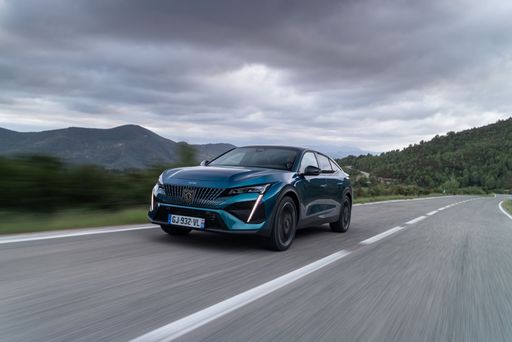
Peugeot 408
Peugeot 408
Skoda Fabia
Costs and Consumption
View detailed analysis
View detailed analysis
Engine and Performance
View detailed analysis
View detailed analysis
Dimensions and Body
View detailed analysis
View detailed analysis
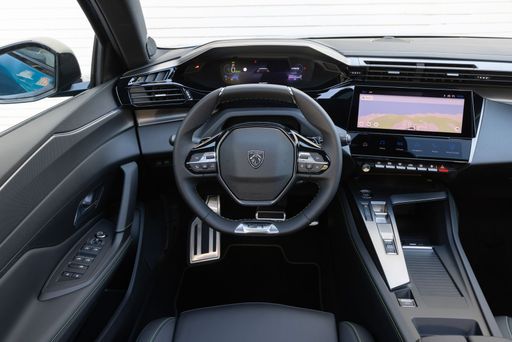
Peugeot 408
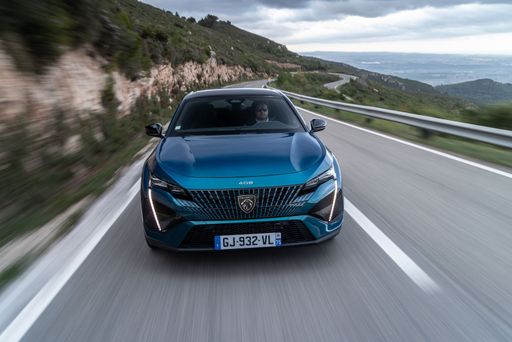
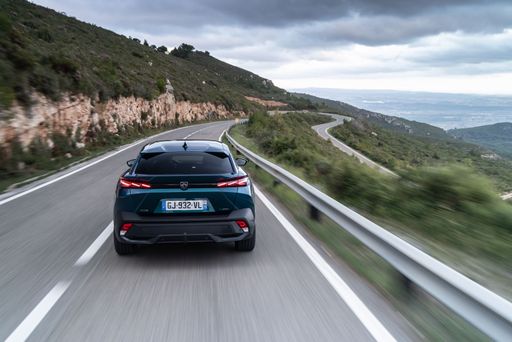
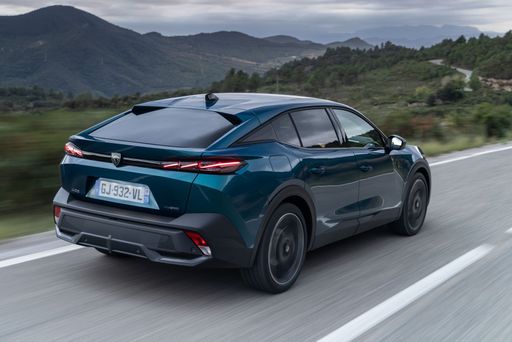
The Peugeot 408 blends a coupe-like roofline with practical sensibility, delivering striking looks and a surprisingly airy, premium-feeling cabin. On the road it prefers comfort and poise over manic thrills, making it a smart, stylish choice for buyers who want something a bit different from the usual family hatchback.
details
Skoda Fabia
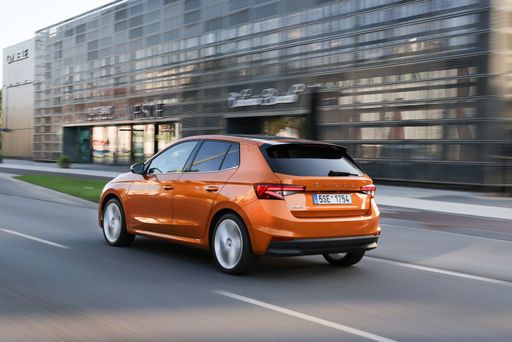
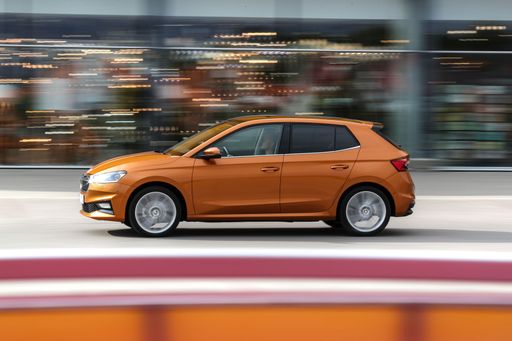
The Skoda Fabia is a clever, no-nonsense small car that turns everyday chores into a breeze thanks to smart packaging and a surprisingly roomy cabin. It won’t set your pulses racing, but it’s a consistently sensible choice — reliable, easy to live with and blessed with a few neat tricks that make city life less faff.
details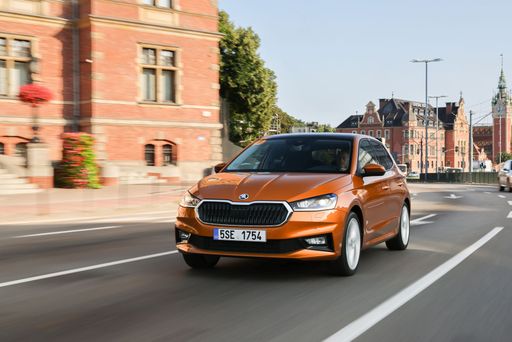

Peugeot 408
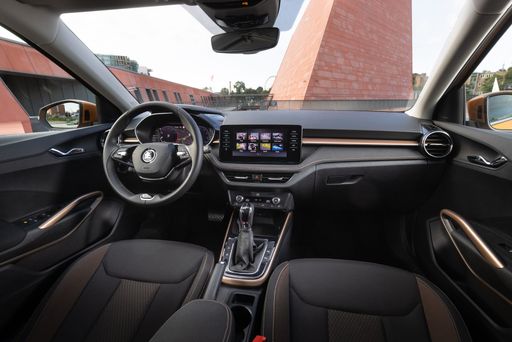
Skoda Fabia
Costs and Consumption |
|
|---|---|
|
Price
35,100 - 48,000 £
|
Price
17,300 - 30,500 £
|
|
Consumption L/100km
2.7 - 5.1 L/100km
|
Consumption L/100km
4.9 - 5.6 L/100km
|
|
Consumption kWh/100km
14.8 kWh/100km
|
Consumption kWh/100km
-
|
|
Electric Range
79 - 455 km
|
Electric Range
-
|
|
Battery Capacity
58.2 kWh
|
Battery Capacity
-
|
|
co2
0 - 114 g/km
|
co2
112 - 126 g/km
|
|
Fuel tank capacity
42 - 52 L
|
Fuel tank capacity
40 L
|
Dimensions and Body |
|
|---|---|
|
Body Type
SUV
|
Body Type
Hatchback
|
|
Seats
5
|
Seats
5
|
|
Doors
5
|
Doors
5
|
|
Curb weight
1,544 - 1,879 kg
|
Curb weight
1,143 - 1,278 kg
|
|
Trunk capacity
471 - 536 L
|
Trunk capacity
380 L
|
|
Length
4,687 mm
|
Length
4,108 - 4,137 mm
|
|
Width
1,848 mm
|
Width
1,780 mm
|
|
Height
1,478 mm
|
Height
1,458 - 1,459 mm
|
|
Max trunk capacity
1,528 - 1,583 L
|
Max trunk capacity
1,190 L
|
|
Payload
371 - 456 kg
|
Payload
402 - 437 kg
|
Engine and Performance |
|
|---|---|
|
Engine Type
Electric, Petrol MHEV, Plugin Hybrid
|
Engine Type
Petrol
|
|
Transmission
Automatic
|
Transmission
Manuel, Automatic
|
|
Transmission Detail
Reduction Gearbox, Dual-Clutch Automatic
|
Transmission Detail
Manual Gearbox, Dual-Clutch Automatic
|
|
Drive Type
Front-Wheel Drive
|
Drive Type
Front-Wheel Drive
|
|
Power HP
145 - 225 HP
|
Power HP
80 - 177 HP
|
|
Acceleration 0-100km/h
7.2 - 9.4 s
|
Acceleration 0-100km/h
7.4 - 15.7 s
|
|
Max Speed
160 - 233 km/h
|
Max Speed
175 - 228 km/h
|
|
Torque
230 - 360 Nm
|
Torque
93 - 250 Nm
|
|
Number of Cylinders
4
|
Number of Cylinders
3 - 4
|
|
Power kW
107 - 165 kW
|
Power kW
59 - 130 kW
|
|
Engine capacity
1,199 - 1,598 cm3
|
Engine capacity
999 - 1,498 cm3
|
General |
|
|---|---|
|
Model Year
2,024 - 2,025
|
Model Year
2,025
|
|
CO2 Efficiency Class
A, C, B
|
CO2 Efficiency Class
D, C
|
|
Brand
Peugeot
|
Brand
Skoda
|
DriveDuel uses data analysis and artificial intelligence to evaluate vehicle data and create content. Content is regularly reviewed and improved.
The displayed prices are estimates based on German list prices, adjusted to the respective country’s VAT. Country-specific registration taxes are not included. This information is not legally binding.