VS

Peugeot 5008 vs BYD Tang comparison

Compare performance (325 HP vs 517 HP), boot space and price (37,600 £ vs 64,300 £ ) at a glance. Find out which car is the better choice for you – Peugeot 5008 or BYD Tang?

Peugeot 5008 vs BYD Tang: Key differences

Peugeot 5008

4.7 (1 Reviews)
rate
  • clearly cheaper
  • visibly more efficient
  • noticeably more electric range
  • substantially lighter
  • markedly more trunk space

BYD Tang

  • markedly more power
  • markedly quicker 0–100 km/h

All details on performance, efficiency, range and trunk space can be found in the technical comparison below – including user reviews for both models.

5008

BYD Tang vs. Peugeot 5008: The Electrifying SUV Showdown

The SUV market is witnessing a dynamic transformation with the advent of electric and hybrid vehicles. In this competitive segment, the BYD Tang and Peugeot 5008 stand out as leading examples of innovation and engineering excellence. Both vehicles offer unique propositions for buyers, blending cutting-edge technology with practical features. Let's dive into the intricate details and compare these two automotive stars.
Tang

Design and Dimensions

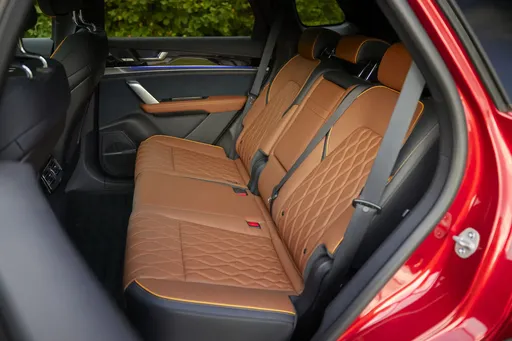
The BYD Tang is a commanding presence on the road with its distinctive styling and dimensions. Stretching 4,970 mm in length, 1,955 mm in width, and 1,745 mm in height, this SUV makes a bold statement. Its larger-than-life proportions are complemented by a spacious interior that's designed to accommodate seven passengers comfortably.

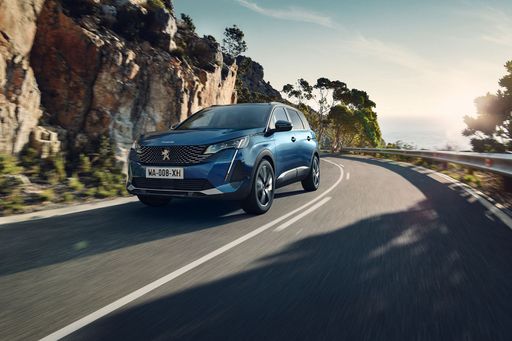
On the other hand, the Peugeot 5008 offers a sleek and refined design while being slightly more compact. Measuring 4,791 mm in length, 1,895 mm in width, and 1,694 mm in height, it balances elegance and functionality. The Peugeot's interior also seats seven, catering to families and group outings with ease.

5008

Powertrain and Performance

The BYD Tang is an all-electric marvel, powered by a potent engine delivering 517 HP (380 kW). It boasts an impressive torque of 680 Nm, allowing it to accelerate from 0-100 km/h in just 4.9 seconds. With an electric range of 530 km, it combines efficiency and performance, making it suitable for both city rides and adventurous road trips.

In contrast, the Peugeot 5008 offers multiple powertrain options, including petrol mild hybrid (MHEV), plug-in hybrid, and electric variants. The power output ranges from 136 HP to 231 HP, with various torque options to suit different driving styles. The electric variant has an impressive range of up to 664 km, depending on the model configuration. Its flexible engine lineup ensures that drivers can find a 5008 model that perfectly matches their driving needs.

Tang

Technology and Innovations

Tang's technological offerings include an all-wheel-drive system and a reduction gearbox, ensuring smooth and responsive driving dynamics. The SUV's zero-emissions nature (0 g/km CO2) earns it an enviable CO2 efficiency class of 'A', contributing to a sustainable driving experience. The 24 kWh/100km consumption underline its efficiency in energy utilization.

The Peugeot 5008 is no slouch in tech either, equipped with a dual-clutch automatic transmission and a range of CO2 efficiency classes from 'D' to 'A'. It delivers versatile driving modes tailored for maximum efficiency or performance when needed, keeping the urban commuter and long-distance traveler equally satisfied.

5008

Interior Space and Practicality

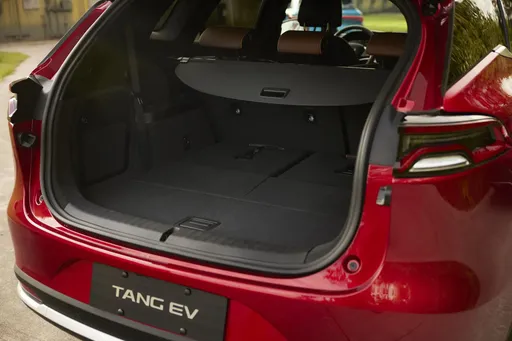
Both vehicles accommodate seven passengers, perfect for families or individuals who enjoy group adventures. However, when it comes to trunk capacity, the Peugeot 5008 offers a significant advantage with 748 liters, against the Tang’s 235 liters. This makes the 5008 particularly appealing for those who require ample storage space for gear and luggage.

The BYD Tang provides a futuristic and plush interior setup, focusing on passenger comfort and technology-laden dashboards to enhance usability and connectivity during travel.

Tang

Conclusion

The choice between the BYD Tang and the Peugeot 5008 ultimately depends on individual preferences and needs. For those who prioritize electrifying performance and cutting-edge electric vehicle technology, the BYD Tang stands out as a leader. However, for buyers seeking versatility in power options, greater trunk space, and a well-rounded family SUV, the Peugeot 5008 is a compelling contender. Each vehicle brings unique attributes to the table, underscoring the evolving landscape of the automotive industry.

Here’s where it gets real: The technical differences in detail

5008

Costs and Efficiency:

Price and efficiency are often the first things buyers look at. Here it becomes clear which model has the long-term edge – whether at the pump, the plug, or in purchase price.

Peugeot 5008 is clearly cheaper – starting at 37,600 £ , while the BYD Tang costs 64,300 £ . That’s a price difference of around 26,691 £.

In terms of energy consumption, the Peugeot 5008 is visibly more efficient: consuming 17.8 kWh/100km compared to 24 kWh/100km for the BYD Tang. That’s a difference of about 6.2 kWh/100km.

As for electric range, the Peugeot 5008 offers noticeably more range – reaching up to 669 km, about 139 km more than the BYD Tang.

Tang

Engine and Performance:

Power, torque and acceleration say a lot about how a car feels on the road. This is where you see which model delivers more driving dynamics.

When it comes to engine power, the BYD Tang offers markedly more power – delivering 517 HP compared to 325 HP. That’s roughly 192 HP more horsepower.

When accelerating from 0 to 100 km/h, the BYD Tang is markedly quicker – completing the sprint in 4.9 s, while the Peugeot 5008 takes 6.5 s. That’s about 1.6 s quicker.

Looking at top speed, the Peugeot 5008 is very slightly faster – reaching 198 km/h, while the BYD Tang tops out at 190 km/h. The difference is around 8 km/h.

There’s also a difference in torque: the BYD Tang delivers markedly more torque with 680 Nm compared to 511 Nm. That’s about 169 Nm more.

5008

Space and Everyday Use:

Cabin size, boot volume and payload all play a role in everyday practicality. Here, comfort and flexibility make the difference.

Both vehicles offer seating for 7 people.

In terms of curb weight, Peugeot 5008 is substantially lighter – 1,700 kg compared to 2,630 kg. The difference is around 930 kg.

Looking at boot space, the Peugeot 5008 offers markedly more boot space – 348 L compared to 235 L. That’s a difference of about 113 L.

For maximum load capacity, the Peugeot 5008 offers markedly more capacity – up to 2,232 L, about 577 L more than the BYD Tang.

When it comes to payload, the Peugeot 5008 carries slightly more – 640 kg compared to 575 kg. That’s a difference of about 65 kg.

Who wins the race in the data check?

The Peugeot 5008 is decisively ahead in the objective data comparison.
This result only shows which model scores more points on paper – not which of the two cars feels right for you.

from £37,600
5008

Peugeot 5008

  • Engine Type : Electric, Petrol MHEV, Plugin Hybrid
  • Transmission : Automatic
  • Drive Type : Front-Wheel Drive, All-Wheel Drive
  • Power HP : 145 - 325 HP
  • Consumption L/100km : 2.7 - 5.6 L/100km
  • Consumption kWh/100km : 17.8 - 18.6 kWh/100km
  • Electric Range : 78 - 669 km
Peugeot 5008
BYD Tang

Costs and Consumption

View detailed analysis

Engine and Performance

View detailed analysis

Dimensions and Body

View detailed analysis

Peugeot 5008

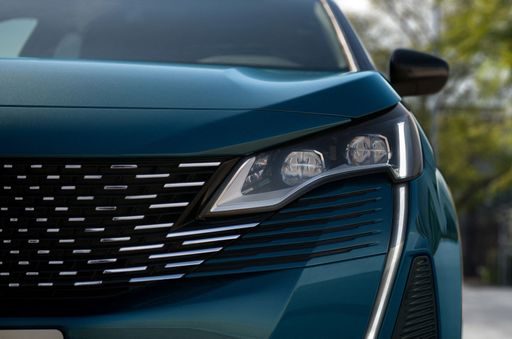
The Peugeot 5008 blends Peugeot's sharp design with the space and versatility families actually need, wrapping clever packaging and a premium-feeling cabin in a crisp, SUV-like silhouette. It drives with more poise than you'd expect from a people carrier, serves up practical touches and flexible seating for everyday chaos, and still looks good when parked outside the school gates.

details

BYD Tang

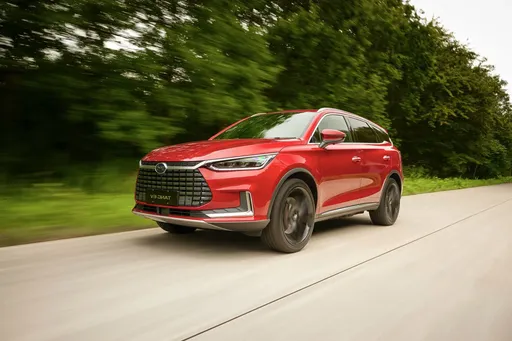
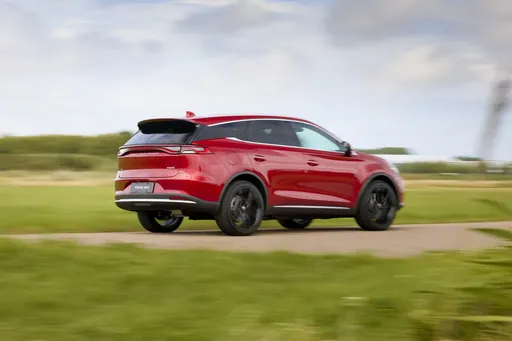
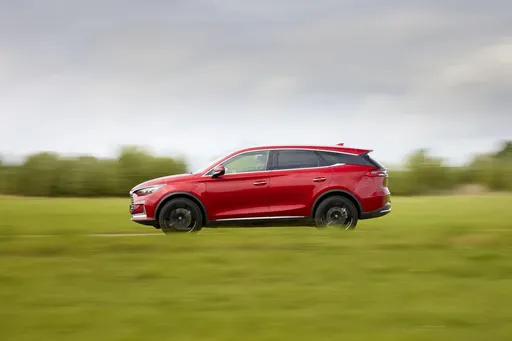
The BYD Tang is a bold, tech-loaded SUV that blends striking design with roomy practicality, making it equally at home on the school run and the open road. Packed with clever tech and a powertrain that mixes efficiency with eager performance, it’s a smart, value-focused pick for buyers who want electric-age comfort without the premium-brand fuss.

details
Peugeot 5008
BYD Tang

Costs and Consumption

Price
37,600 - 54,200 £
Price
64,300 £
Consumption L/100km
2.7 - 5.6 L/100km
Consumption L/100km
-
Consumption kWh/100km
17.8 - 18.6 kWh/100km
Consumption kWh/100km
24 kWh/100km
Electric Range
78 - 669 km
Electric Range
530 km
Battery Capacity
0.4 - 96.9 kWh
Battery Capacity
-
co2
0 - 127 g/km
co2
0 g/km
Fuel tank capacity
55 L
Fuel tank capacity
-

Dimensions and Body

Body Type
SUV
Body Type
SUV
Seats
7
Seats
7
Doors
5
Doors
5
Curb weight
1,700 - 2,344 kg
Curb weight
2,630 kg
Trunk capacity
294 - 348 L
Trunk capacity
235 L
Length
4,791 mm
Length
4,970 mm
Width
1,895 mm
Width
1,955 mm
Height
1,694 mm
Height
1,745 mm
Max trunk capacity
2,178 - 2,232 L
Max trunk capacity
1,655 L
Payload
596 - 640 kg
Payload
575 kg

Engine and Performance

Engine Type
Electric, Petrol MHEV, Plugin Hybrid
Engine Type
Electric
Transmission
Automatic
Transmission
Automatic
Transmission Detail
Reduction Gearbox, Dual-Clutch Automatic
Transmission Detail
Reduction Gearbox
Drive Type
Front-Wheel Drive, All-Wheel Drive
Drive Type
All-Wheel Drive
Power HP
145 - 325 HP
Power HP
517 HP
Acceleration 0-100km/h
6.5 - 10.2 s
Acceleration 0-100km/h
4.9 s
Max Speed
170 - 198 km/h
Max Speed
190 km/h
Torque
230 - 511 Nm
Torque
680 Nm
Number of Cylinders
3 - 4
Number of Cylinders
-
Power kW
107 - 239 kW
Power kW
380 kW
Engine capacity
1,199 - 1,598 cm3
Engine capacity
-

General

Model Year
2,024 - 2,026
Model Year
2,024
CO2 Efficiency Class
A, D, B
CO2 Efficiency Class
A
Brand
Peugeot
Brand
BYD
DriveDuel uses data analysis and artificial intelligence to evaluate vehicle data and create content. Content is regularly reviewed and improved. The displayed prices are estimates based on German list prices, adjusted to the respective country’s VAT. Country-specific registration taxes are not included. This information is not legally binding.