
 Deutschland
 France
 Nederland
 Great Britain
 Sverige
 Danmark
 Suomi
Suomi Italia
 Polska
 España
VS
Peugeot 5008 vs SsangYong Korando comparison
Compare performance (325 HP vs 190 HP), boot space and price (37600 £ vs 27000 £ ) at a glance. Find out which car is the better choice for you – Peugeot 5008 or SsangYong Korando?
5008
Costs and Efficiency:
Price and efficiency are often the first things buyers look at. Here it becomes clear which model has the long-term edge – whether at the pump, the plug, or in purchase price.
SsangYong Korando has a clearly perceptible advantage in terms of price – it starts at 27000 £ , while the Peugeot 5008 costs 37600 £ . That’s a price difference of around 10603 £.
Fuel consumption also shows a difference: Peugeot 5008 manages with 2.70 L and is therefore convincingly more efficient than the SsangYong Korando with 7.50 L. The difference is about 4.80 L per 100 km.
In terms of energy consumption, the advantage goes to the SsangYong Korando: with 16.80 kWh per 100 km, it’s slight more efficient than the Peugeot 5008 with 17.80 kWh. That’s a difference of about 1 kWh.
As for electric range, the Peugeot 5008 performs convincingly better – achieving up to 669 km, about 330 km more than the SsangYong Korando.
Korando
Engine and Performance:
Under the bonnet, it becomes clear which model is tuned for sportiness and which one takes the lead when you hit the accelerator.
When it comes to engine power, the Peugeot 5008 has a convincingly edge – offering 325 HP compared to 190 HP. That’s roughly 135 HP more horsepower.
In acceleration from 0 to 100 km/h, the Peugeot 5008 is clearly perceptible quicker – completing the sprint in 6.50 s, while the SsangYong Korando takes 8.40 s. That’s about 1.90 s faster.
In terms of top speed, the Peugeot 5008 performs hardly perceptible better – reaching 198 km/h, while the SsangYong Korando tops out at 191 km/h. The difference is around 7 km/h.
There’s also a difference in torque: Peugeot 5008 pulls clearly perceptible stronger with 511 Nm compared to 360 Nm. That’s about 151 Nm difference.
5008
Space and Everyday Use:
Beyond pure performance, interior space and usability matter most in daily life. This is where you see which car is more practical and versatile.
Seats: Peugeot 5008 offers noticeable more seating capacity – 7 vs 5.
In curb weight, SsangYong Korando is somewhat lighter – 1517 kg compared to 1700 kg. The difference is around 183 kg.
In terms of boot space, the SsangYong Korando offers evident more room – 551 L compared to 348 L. That’s a difference of about 203 L.
In maximum load capacity, the Peugeot 5008 performs significantly better – up to 2232 L, which is about 984 L more than the SsangYong Korando.
When it comes to payload, Peugeot 5008 clearly perceptible takes the win – 640 kg compared to 463 kg. That’s a difference of about 177 kg.
Who wins the race in the data check?
The Peugeot 5008 holds a decisive overall lead in the objective data comparison.
This result only shows which model scores more points on paper – not which of the two cars feels right for you.
Peugeot 5008
SsangYong Korando
Costs and Consumption
View detailed analysis
View detailed analysis
Engine and Performance
View detailed analysis
View detailed analysis
Dimensions and Body
View detailed analysis
View detailed analysis
from about £37,600
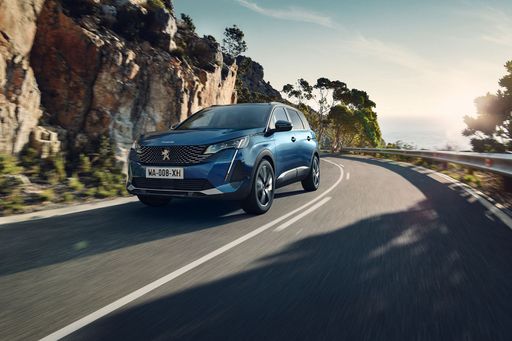
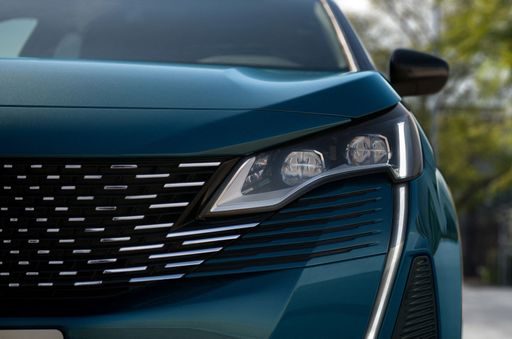
Peugeot 5008
Peugeot 5008
4.7 (1 Reviews)
The Peugeot 5008 blends Peugeot's sharp design with the space and versatility families actually need, wrapping clever packaging and a premium-feeling cabin in a crisp, SUV-like silhouette. It drives with more poise than you'd expect from a people carrier, serves up practical touches and flexible seating for everyday chaos, and still looks good when parked outside the school gates.
details


SsangYong Korando
4.4 (1 Reviews)
The SsangYong Korando pairs bold, modern styling with a surprisingly roomy and practical cabin, so it looks confident at the lights and handles the daily grind without fuss. It swaps flashy badges for honest value, offering a composed ride, useful equipment and wallet-friendly running that make it an appealing pick for buyers who'd rather spend on weekends than on extravagant finance packages.
details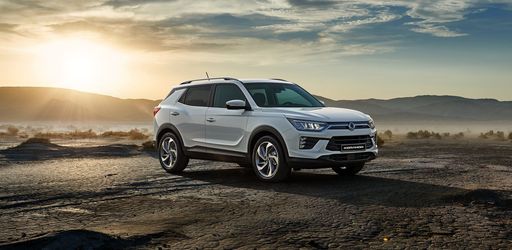
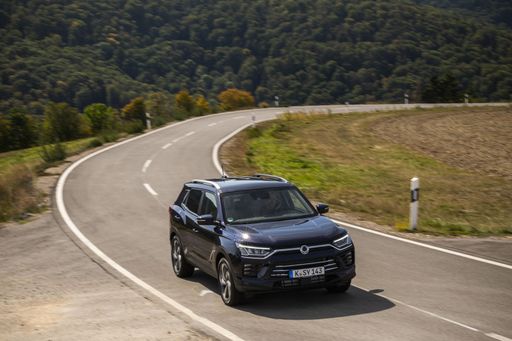
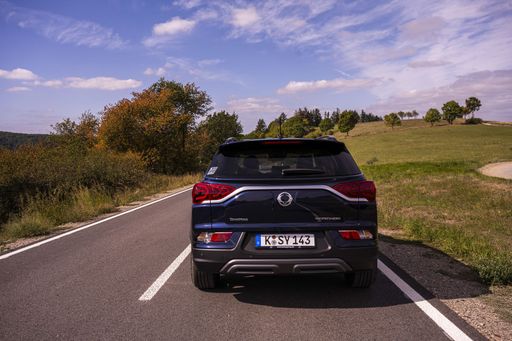
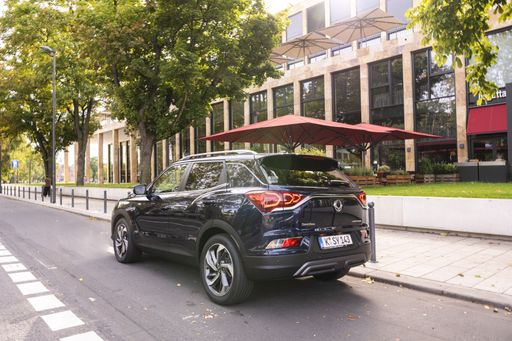
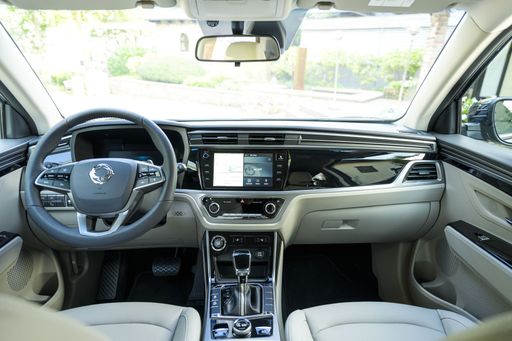
Peugeot 5008
SsangYong Korando
Costs and Consumption |
|
|---|---|
|
Price
37600 - 54200 £
|
Price
27000 - 42000 £
|
|
Consumption L/100km
2.7 - 5.6 L
|
Consumption L/100km
7.5 - 8.6 L
|
|
Consumption kWh/100km
17.8 - 18.6 kWh
|
Consumption kWh/100km
16.80 kWh
|
|
Electric Range
78 - 669 km
|
Electric Range
339 km
|
|
Battery Capacity
0.4 - 96.9 kWh
|
Battery Capacity
-
|
|
co2
0 - 127 g/km
|
co2
0 - 197 g/km
|
|
Fuel tank capacity
55 L
|
Fuel tank capacity
50 L
|
Dimensions and Body |
|
|---|---|
|
Body Type
SUV
|
Body Type
SUV
|
|
Seats
7
|
Seats
5
|
|
Doors
5
|
Doors
5
|
|
Curb weight
1700 - 2344 kg
|
Curb weight
1517 - 1840 kg
|
|
Trunk capacity
294 - 348 L
|
Trunk capacity
551 L
|
|
Length
4791 mm
|
Length
4450 - 4465 mm
|
|
Width
1895 mm
|
Width
1870 mm
|
|
Height
1694 mm
|
Height
1620 - 1645 mm
|
|
Max trunk capacity
2178 - 2232 L
|
Max trunk capacity
1248 L
|
|
Payload
596 - 640 kg
|
Payload
410 - 463 kg
|
Engine and Performance |
|
|---|---|
|
Engine Type
Electric, Petrol MHEV, Plugin Hybrid
|
Engine Type
Petrol, Electric
|
|
Transmission
Automatic
|
Transmission
Manuel, Automatic
|
|
Transmission Detail
Reduction Gearbox, Dual-Clutch Automatic
|
Transmission Detail
Manual Gearbox, Automatic Gearbox, Reduction Gearbox
|
|
Drive Type
Front-Wheel Drive, All-Wheel Drive
|
Drive Type
Front-Wheel Drive, All-Wheel Drive
|
|
Power HP
145 - 325 HP
|
Power HP
163 - 190 HP
|
|
Acceleration 0-100km/h
6.5 - 10.2 s
|
Acceleration 0-100km/h
8.40 s
|
|
Max Speed
170 - 198 km/h
|
Max Speed
156 - 191 km/h
|
|
Torque
230 - 511 Nm
|
Torque
260 - 360 Nm
|
|
Number of Cylinders
3 - 4
|
Number of Cylinders
4
|
|
Power kW
107 - 239 kW
|
Power kW
120 - 140 kW
|
|
Engine capacity
1199 - 1598 cm3
|
Engine capacity
1497 cm3
|
General |
|
|---|---|
|
Model Year
2024 - 2026
|
Model Year
2021 - 2023
|
|
CO2 Efficiency Class
A, D, B
|
CO2 Efficiency Class
F, G, A
|
|
Brand
Peugeot
|
Brand
SsangYong
|
Is the Peugeot 5008 offered with different drivetrains?
Available configurations include Front-Wheel Drive or All-Wheel Drive.
The prices shown are estimates based on German list prices, adjusted for local VAT. Local registration taxes (e.g. NoVA, BPM or CO2 malus) are not included. This information is not legally binding.