VS

Peugeot 508 SW vs VW Passat comparison

Compare performance (360 HP vs 272 HP), boot space and price (45,600 £ vs 36,500 £ ) at a glance. Find out which car is the better choice for you – Peugeot 508 SW or VW Passat?

Peugeot 508 SW vs VW Passat: Key differences

Peugeot 508 SW

4.7 (1 Reviews)
rate
  • noticeably more power
  • a bit quicker 0–100 km/h

VW Passat

5 (3 Reviews)
rate
  • markedly cheaper
  • considerably more efficient
  • significantly more electric range
  • a bit lighter
  • noticeably more trunk space

All details on performance, efficiency, range and trunk space can be found in the technical comparison below – including user reviews for both models.

By Achim Sedelmaier

508 SW

Wagon Wonders: Peugeot 508 SW vs. VW Passat

As lifestyle and practicality merge in the automotive world, wagons like the Peugeot 508 SW and VW Passat are at the forefront of this transformation. These vehicles offer space, efficiency, and the promise of cutting-edge technology, catering to families, commuters, and adventure enthusiasts alike. We dive into the nuts and bolts of what makes these two contenders stand out in the wagon segment.
Passat

Design and Dimensions

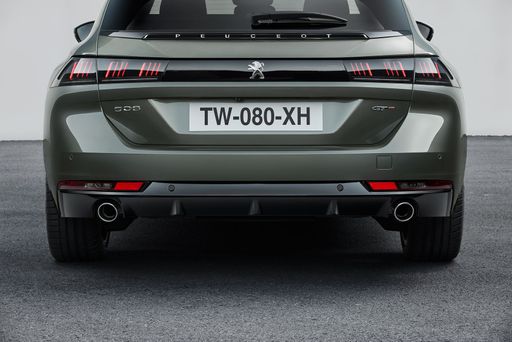
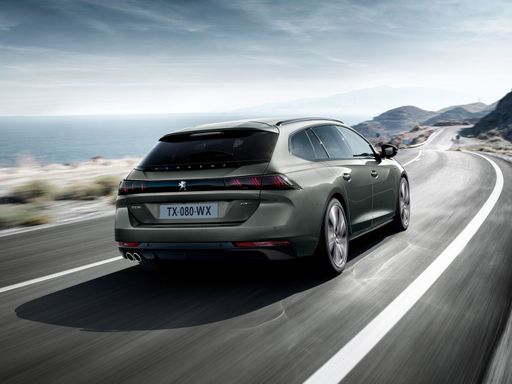
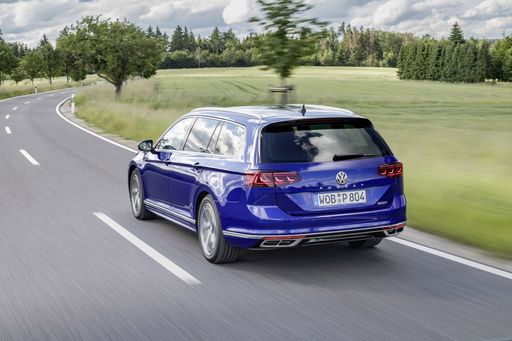
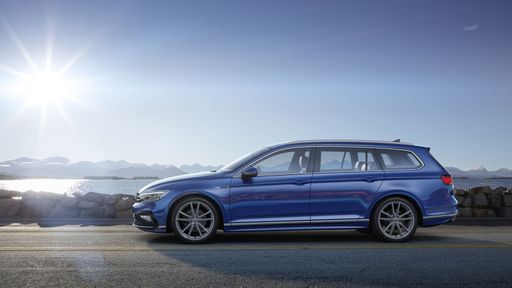
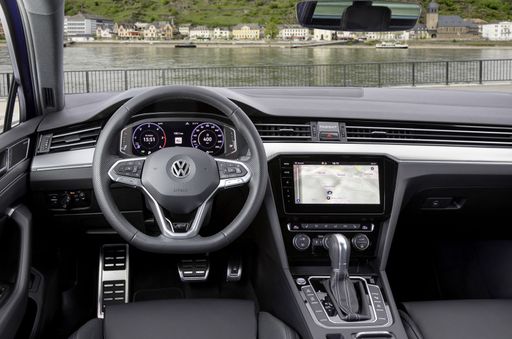
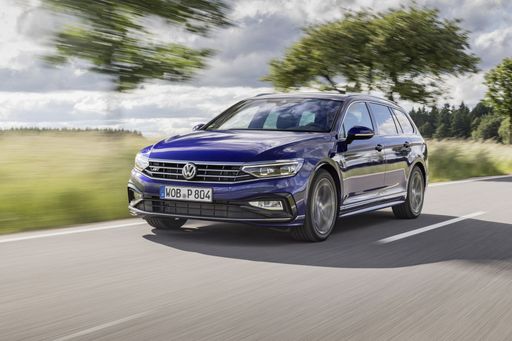
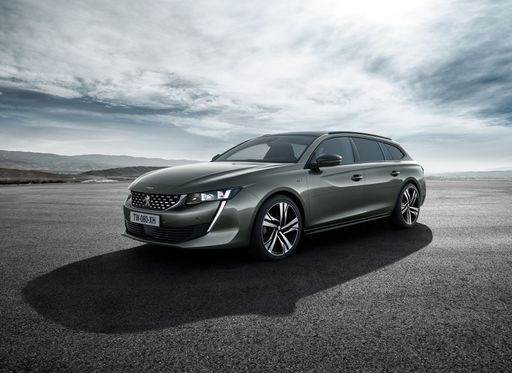
The Peugeot 508 SW is a striking presence with its dynamic silhouette and sleek design. Measuring 4,778 mm in length, 1,859 mm in width, and standing at 1,420 mm tall, it balances style with functionality. On the other hand, the VW Passat extends further at 4,917 mm in length and stands taller at 1,521 mm, offering a significant road presence. With a width of 1,849 mm, it ensures a robust yet elegant profile.

508 SW

Under the Hood

The Peugeot 508 SW comes with a choice of plugin hybrid powertrains, offering impressive performance with power outputs of 180, 225, and 360 HP. Coupled with an automatic gearbox and options for front-wheel and all-wheel drive, it caters to both efficiency seekers and performance enthusiasts.

The VW Passat brings versatility with a broader range of engine options from plugin hybrids to petrol and diesel variants. With power outputs from 122 to 272 HP, VW provides a wider selection for varying performance needs. Its standout plugin hybrid offers an electric range up to 126 km, powered by a 19.7 kWh battery, catering to eco-conscious drivers.

Passat

Performance Parameters

The Peugeot 508 SW achieves a top speed of up to 250 km/h, with an impressive acceleration from 0-100 km/h in as fast as 5.2 seconds, depending on the variant chosen. Its torque reaches a substantial 520 Nm, ensuring a robust driving experience.

The Passat, with top speeds matching that of the Peugeot at 250 km/h in its higher trims, accelerates from 0-100 km/h in a swift 5.8 seconds in its more powerful configurations. With torque up to 400 Nm, it seamlessly combines power with poise.

508 SW

Efficiency and Economy

For those prioritizing eco-friendliness, both wagons offer compelling plugin hybrid options. The 508 SW manages a fuel consumption of 1.4 to 2 L/100 km and a CO2 emission as low as 33 g/km. Meanwhile, the Passat plugin hybrid triumphs in efficiency with an astounding consumption rate of 0.4 L/100 km and CO2 emissions starting at just 8 g/km, a testament to its advanced engineering.

Passat

Interior and Cargo

Both cars are designed to accommodate five passengers with generous space. The Peugeot boasts a trunk capacity of 530 L, balancing passenger comfort with cargo needs, although this is slightly less than the Passat's adaptable 690 L capacity, making the VW a practical choice for bulkier loads.

Conclusion

The Peugeot 508 SW and VW Passat each shine in their domains, with the Peugeot emphasizing design flair and dynamic performance, while the Passat impresses with its extensive range and efficiency. Choosing between these two will depend on whether your priorities lean more towards stylistic innovation or the pragmatic assurance of variety and eco-friendliness.

Both vehicles, grounded in the wagon tradition, are paving their paths towards the future of automotive efficiency and luxury.

Here’s where it gets real: The technical differences in detail

508 SW

Costs and Efficiency:

Price and efficiency are key factors when choosing a car – and this is often where the real differences emerge.

VW Passat is markedly cheaper – starting at 36,500 £ , while the Peugeot 508 SW costs 45,600 £ . That’s a price difference of around 9,138 £.

Fuel consumption also shows a difference: the VW Passat uses 1.2 L/100km and is considerably more efficient than the Peugeot 508 SW with 1.7 L/100km. The difference is about 0.5 L/100km.

As for electric range, the VW Passat offers significantly more range – reaching up to 135 km, about 83 km more than the Peugeot 508 SW.

Passat

Engine and Performance:

Under the bonnet, it becomes clear which model is tuned for sportiness and which one takes the lead when you hit the accelerator.

When it comes to engine power, the Peugeot 508 SW offers noticeably more power – delivering 360 HP compared to 272 HP. That’s roughly 88 HP more horsepower.

When accelerating from 0 to 100 km/h, the Peugeot 508 SW is a bit quicker – completing the sprint in 5.2 s, while the VW Passat takes 5.8 s. That’s about 0.6 s quicker.

There’s no difference in top speed – both reach 250 km/h.

There’s also a difference in torque: the Peugeot 508 SW delivers noticeably more torque with 520 Nm compared to 400 Nm. That’s about 120 Nm more.

508 SW

Space and Everyday Use:

Beyond pure performance, interior space and usability matter most in daily life. This is where you see which car is more practical and versatile.

Both vehicles offer seating for 5 people.

In terms of curb weight, VW Passat is a bit lighter – 1,573 kg compared to 1,846 kg. The difference is around 273 kg.

Looking at boot space, the VW Passat offers noticeably more boot space – 690 L compared to 530 L. That’s a difference of about 160 L.

For maximum load capacity, the Peugeot 508 SW offers very slightly more capacity – up to 1,780 L, about 10 L more than the VW Passat.

When it comes to payload, the VW Passat carries clearly more – 577 kg compared to 454 kg. That’s a difference of about 123 kg.

Who wins the race in the data check?

The VW Passat stands well ahead of its rival in the objective data comparison.
This result only shows which model scores more points on paper – not which of the two cars feels right for you.

from £36,500
Passat

VW Passat

  • Engine Type : Petrol, Petrol MHEV, Diesel, Plugin Hybrid
  • Transmission : Automatic
  • Drive Type : All-Wheel Drive, Front-Wheel Drive
  • Power HP : 122 - 272 HP
  • Consumption L/100km : 1.2 - 8 L/100km
  • Electric Range : 124 - 135 km
Peugeot 508 SW
VW Passat

Costs and Consumption

View detailed analysis

Engine and Performance

View detailed analysis

Dimensions and Body

View detailed analysis

Peugeot 508 SW

The Peugeot 508 SW dresses up as a sleek estate, blending Parisian flair with usable loadspace so you don't have to choose between style and weekend practicality. Inside it's a driver-focused cabin with quality materials and clever packaging that makes it a sensible, slightly mischievous choice for buyers who want an executive feel without the buttoned-up seriousness.

details

VW Passat

The VW Passat is the grown-up family car that gets the basics absolutely right — roomy, comfortable and built to handle weekday commutes and weekend getaways without fuss. It won't set your pulse racing, but its calm composure and sensible packaging make it boring in the best possible way: a dependable, no‑drama choice for buyers who value practicality over flash.

details
Peugeot 508 SW
VW Passat

Costs and Consumption

Price
45,600 - 61,800 £
Price
36,500 - 58,500 £
Consumption L/100km
1.7 - 2 L/100km
Consumption L/100km
1.2 - 8 L/100km
Consumption kWh/100km
-
Consumption kWh/100km
-
Electric Range
46 - 52 km
Electric Range
124 - 135 km
Battery Capacity
-
Battery Capacity
19.7 kWh
co2
38 - 45 g/km
co2
28 - 181 g/km
Fuel tank capacity
43 L
Fuel tank capacity
45 - 66 L

Dimensions and Body

Body Type
Estate
Body Type
Estate
Seats
5
Seats
5
Doors
5
Doors
5
Curb weight
1,846 - 1,967 kg
Curb weight
1,573 - 1,858 kg
Trunk capacity
530 L
Trunk capacity
510 - 690 L
Length
4,778 mm
Length
4,917 mm
Width
1,859 mm
Width
1,849 mm
Height
1,420 mm
Height
1,521 mm
Max trunk capacity
1,780 L
Max trunk capacity
1,770 L
Payload
373 - 454 kg
Payload
501 - 577 kg

Engine and Performance

Engine Type
Plugin Hybrid
Engine Type
Petrol, Petrol MHEV, Diesel, Plugin Hybrid
Transmission
Automatic
Transmission
Automatic
Transmission Detail
Automatic Gearbox
Transmission Detail
Dual-Clutch Automatic
Drive Type
Front-Wheel Drive, All-Wheel Drive
Drive Type
All-Wheel Drive, Front-Wheel Drive
Power HP
180 - 360 HP
Power HP
122 - 272 HP
Acceleration 0-100km/h
5.2 - 8.3 s
Acceleration 0-100km/h
5.8 - 10.7 s
Max Speed
230 - 250 km/h
Max Speed
220 - 250 km/h
Torque
360 - 520 Nm
Torque
250 - 400 Nm
Number of Cylinders
4
Number of Cylinders
4
Power kW
133 - 265 kW
Power kW
90 - 200 kW
Engine capacity
1,598 cm3
Engine capacity
1,498 - 1,984 cm3

General

Model Year
2,024
Model Year
2,024 - 2,025
CO2 Efficiency Class
B
CO2 Efficiency Class
G, D, E, B
Brand
Peugeot
Brand
VW
DriveDuel uses data analysis and artificial intelligence to evaluate vehicle data and create content. Content is regularly reviewed and improved. The displayed prices are estimates based on German list prices, adjusted to the respective country’s VAT. Country-specific registration taxes are not included. This information is not legally binding.