VS

Peugeot 508 vs Hyundai Tucson comparison

Compare performance (360 HP vs 288 HP), boot space and price (44,600 £ vs 31,300 £ ) at a glance. Find out which car is the better choice for you – Peugeot 508 or Hyundai Tucson?

Peugeot 508 vs Hyundai Tucson: Key differences

Peugeot 508

4.9 (2 Reviews)
rate
  • a bit more power
  • significantly more efficient
  • clearly quicker 0–100 km/h
details

Hyundai Tucson

4.8 (6 Reviews)
rate
  • considerably cheaper
  • noticeably more electric range
  • slightly lighter
  • markedly more trunk space
details

All details on performance, efficiency, range and trunk space can be found in the technical comparison below – including user reviews for both models.

By Achim Sedelmaier

508

A Tale of Two Models: Hyundai Tucson vs. Peugeot 508

In the ever-evolving automotive market, two distinct models, the Hyundai Tucson and the Peugeot 508, are vying for attention in their respective segments. Each offers a blend of performance, technology, and design, catering to different consumer preferences. This comparison highlights the technical aspects and innovations that set these vehicles apart.
Tucson

Body Type: SUV vs. Hatchback

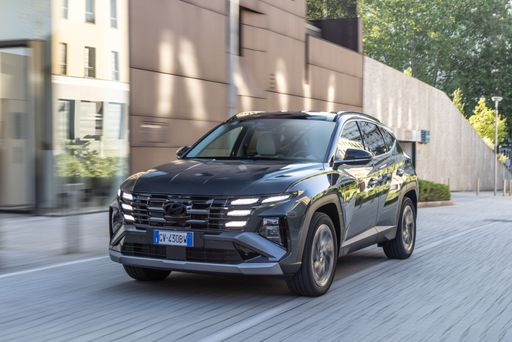
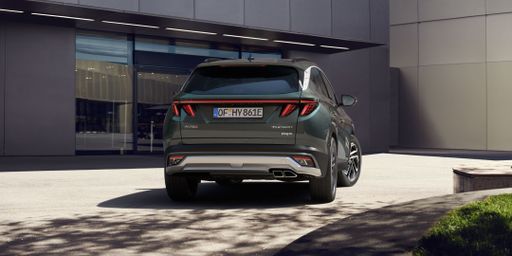
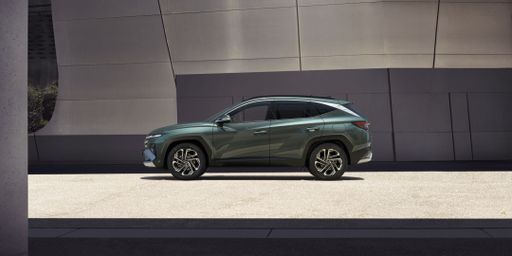
The Hyundai Tucson is classified as an SUV, boasting a more robust and versatile design that appeals to drivers seeking space and off-road capability. With five doors and ample trunk space ranging between 546 to 620 liters, it is perfect for families or adventurous souls who require extra room.

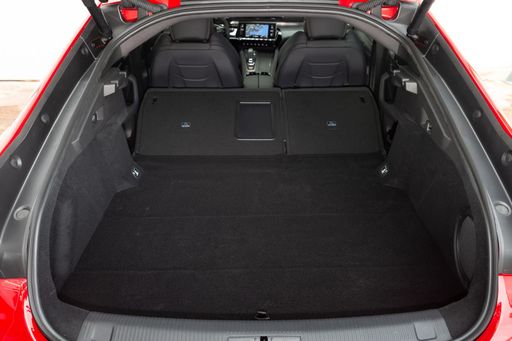
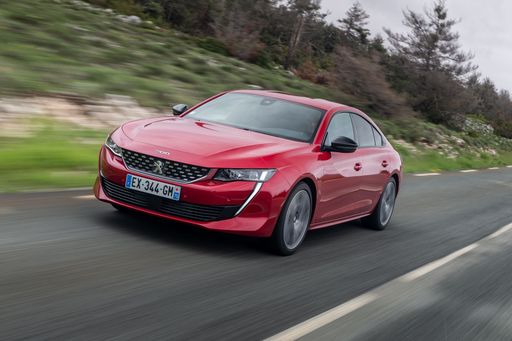
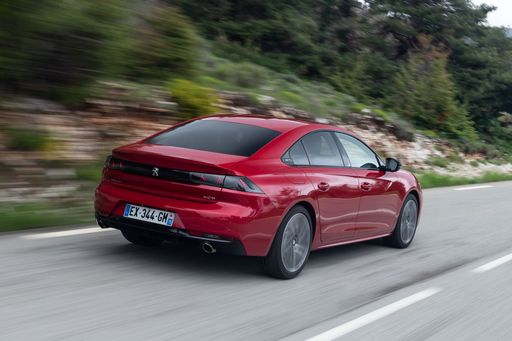
In contrast, the Peugeot 508 is a sleek hatchback that emphasizes style and driving dynamics. Its sporty silhouette complements practical features, including a trunk capacity of 487 liters, making it suitable for urban dwellers who appreciate elegant design and efficient use of space.

508

Engine Types and Performance

When it comes to engine options, the Tucson provides a variety of choices ranging from Diesel MHEV to Plugin Hybrids, with power outputs between 136 and 252 HP. This ensures that buyers can select an engine that fits their lifestyle, whether they prioritize performance or fuel efficiency.

The Peugeot 508, on the other hand, primarily features Plugin Hybrid engines, with power variations between 180 and 360 HP. This model excels in terms of performance, offering acceleration from 0-100 km/h in just 5.2 seconds for the top-spec variant, showcasing its sporty capabilities.

Tucson

Fuel Efficiency and Co2 Emissions

The Tucson stands out with its economical fuel consumption, ranging from 1.0 to 6.8 L/100 km depending on the engine type. With CO2 emissions as low as 126 g/km, it appeals to environmentally conscious consumers.

Conversely, the 508 boasts some astounding figures regarding fuel efficiency and emissions, with consumption as low as 1.3 L/100 km and CO2 emissions at just 30 g/km for its Plugin Hybrid models. This combination of performance and ecological responsibility makes the 508 an attractive option for those looking to minimize their carbon footprint.

508

Transmission and Driving Dynamics

The Tucson offers versatility in transmission options, with choices between manual and automatic gearboxes, including a dual-clutch automatic system. It caters to diverse driver preferences, whether they enjoy the full control of manual shifting or the convenience of an automatic transmission.

The Peugeot 508 exclusively features an automatic gearbox, ensuring smooth transitions and an agile driving experience. The driving dynamics are enhanced by its lightweight design and sport-tuned suspension, which provides a connection to the road that many driving enthusiasts seek.

Tucson

Innovations and Tech Features

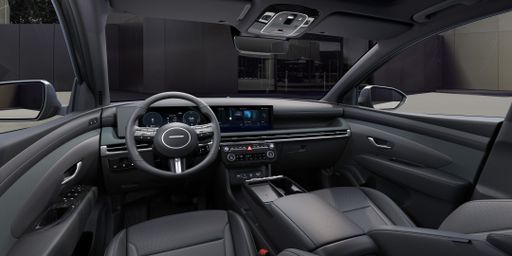
Hyundai has equipped the Tucson with a variety of modern technological innovations, including advanced driver-assistance systems, a premium infotainment interface, and connectivity features that enhance both safety and convenience on the road.

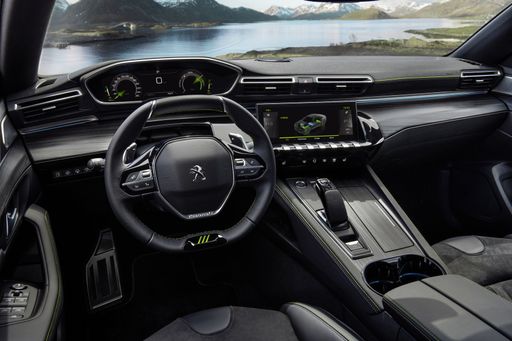
Meanwhile, the Peugeot 508 features an impressive array of technological advancements, including a state-of-the-art infotainment system, advanced safety features, and innovative driving aids. Its digital cockpit is not only stylish but also enhances driver engagement and ease of use.

508

Conclusion: Which Should You Choose?

Choosing between the Hyundai Tucson and the Peugeot 508 ultimately depends on personal preference and lifestyle needs. The Tucson shines as a practical SUV suited for families and adventures, while the Peugeot 508 embodies sporty elegance perfect for those who desire style and performance.

As both brands continue to innovate and evolve, consumers can be assured that they hold powerful contenders in their hands, promising reliability, technology, and performance that cater to a variety of driving experiences.

Here’s where it gets real: The technical differences in detail

508

Costs and Efficiency:

When it comes to price and running costs, the biggest differences usually appear. This is often where you see which car fits your budget better in the long run.

Hyundai Tucson is considerably cheaper – starting at 31,300 £ , while the Peugeot 508 costs 44,600 £ . That’s a price difference of around 13,294 £.

Fuel consumption also shows a difference: the Peugeot 508 uses 1.6 L/100km and is significantly more efficient than the Hyundai Tucson with 2.7 L/100km. The difference is about 1.1 L/100km.

As for electric range, the Hyundai Tucson offers noticeably more range – reaching up to 70 km, about 15 km more than the Peugeot 508.

Tucson

Engine and Performance:

Power, torque and acceleration are the classic benchmarks for car enthusiasts – and here, some clear differences start to show.

When it comes to engine power, the Peugeot 508 offers a bit more power – delivering 360 HP compared to 288 HP. That’s roughly 72 HP more horsepower.

When accelerating from 0 to 100 km/h, the Peugeot 508 is clearly quicker – completing the sprint in 5.2 s, while the Hyundai Tucson takes 7.5 s. That’s about 2.3 s quicker.

There’s also a difference in torque: the Peugeot 508 delivers clearly more torque with 520 Nm compared to 379 Nm. That’s about 141 Nm more.

508

Space and Everyday Use:

Whether family car or daily driver – which one offers more room, flexibility and comfort?

Both vehicles offer seating for 5 people.

In terms of curb weight, Hyundai Tucson is slightly lighter – 1,542 kg compared to 1,811 kg. The difference is around 269 kg.

Looking at boot space, the Hyundai Tucson offers markedly more boot space – 620 L compared to 487 L. That’s a difference of about 133 L.

When it comes to payload, the Hyundai Tucson carries slightly more – 545 kg compared to 469 kg. That’s a difference of about 76 kg.

Who wins the race in the data check?

The Peugeot 508 is decisively ahead in the objective data comparison.
This result only shows which model scores more points on paper – not which of the two cars feels right for you.

from £44,600
508

Peugeot 508

  • Engine Type Plugin Hybrid
  • Transmission Automatic
  • Drive Type Front-Wheel Drive, All-Wheel Drive
  • Power HP 180 - 360 HP
  • Consumption L/100km 1.6 - 2 L/100km
  • Electric Range 46 - 55 km
Peugeot 508
Hyundai Tucson

Costs and Consumption

View detailed analysis

Engine and Performance

View detailed analysis

Dimensions and Body

View detailed analysis

Peugeot 508

The Peugeot 508 turns heads with a low-slung, almost coupe-like silhouette and a cabin that feels grown-up and surprisingly premium for the money. On the road it balances comfort and poise with a playful edge, making it a convincing choice for buyers who want something stylish and sensible without shouting for attention.

details

Hyundai Tucson

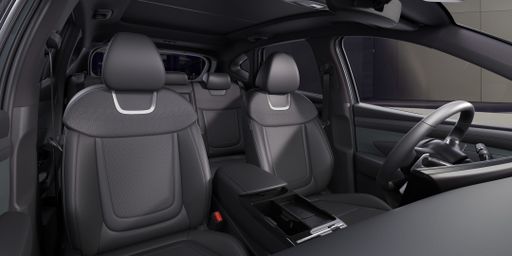
The Hyundai Tucson is a well-rounded compact SUV that blends modern styling with a comfortable, thoughtfully laid-out interior, making it appealing for daily driving and family use. It delivers a calm ride, a generous level of equipment for the price, and sensible practicality, so it's a smart choice if you want a straightforward, dependable crossover without fuss.

details
Peugeot 508
Hyundai Tucson

Costs and Consumption

Price
44,600 - 60,800 £
Price
31,300 - 48,800 £
Consumption L/100km
1.6 - 2 L/100km
Consumption L/100km
2.7 - 7.6 L/100km
Consumption kWh/100km
-
Consumption kWh/100km
-
Electric Range
46 - 55 km
Electric Range
63 - 70 km
Battery Capacity
-
Battery Capacity
-
co2
36 - 45 g/km
co2
62 - 172 g/km
Fuel tank capacity
43 L
Fuel tank capacity
-

Dimensions and Body

Body Type
Hatchback
Body Type
SUV
Seats
5
Seats
5
Doors
5
Doors
-
Curb weight
1,811 - 1,941 kg
Curb weight
1,542 - 1,893 kg
Trunk capacity
487 L
Trunk capacity
546 - 620 L
Length
4,750 mm
Length
-
Width
1,859 mm
Width
1,865 mm
Height
1,403 mm
Height
-
Max trunk capacity
1,537 L
Max trunk capacity
-
Payload
379 - 469 kg
Payload
518 - 545 kg

Engine and Performance

Engine Type
Plugin Hybrid
Engine Type
Petrol, Full Hybrid, Plugin Hybrid, Diesel MHEV
Transmission
Automatic
Transmission
Manuel, Automatic
Transmission Detail
Automatic Gearbox
Transmission Detail
Manual Gearbox, Dual-Clutch Automatic, Automatic Gearbox
Drive Type
Front-Wheel Drive, All-Wheel Drive
Drive Type
Front-Wheel Drive, All-Wheel Drive
Power HP
180 - 360 HP
Power HP
136 - 288 HP
Acceleration 0-100km/h
5.2 - 8.2 s
Acceleration 0-100km/h
7.5 - 11.6 s
Max Speed
230 - 250 km/h
Max Speed
-
Torque
360 - 520 Nm
Torque
250 - 379 Nm
Number of Cylinders
4
Number of Cylinders
4
Power kW
133 - 265 kW
Power kW
100 - 212 kW
Engine capacity
1,598 cm3
Engine capacity
1,598 cm3

General

Model Year
2024
Model Year
2025
CO2 Efficiency Class
B
CO2 Efficiency Class
F, D, E, B
Brand
Peugeot
Brand
Hyundai
DriveDuel uses data analysis and artificial intelligence to evaluate vehicle data and create content. Content is regularly reviewed and improved. The displayed prices are estimates based on German list prices, adjusted to the respective country’s VAT. Country-specific registration taxes are not included. This information is not legally binding.