
VS

Peugeot Boxer vs Citroen Jumper comparison

Compare performance (279 HP vs 279 HP), boot space and price (35,500 £ vs 55,100 £ ) at a glance. Find out which car is the better choice for you – Peugeot Boxer or Citroen Jumper?

Peugeot Boxer vs Citroen Jumper: Key differences

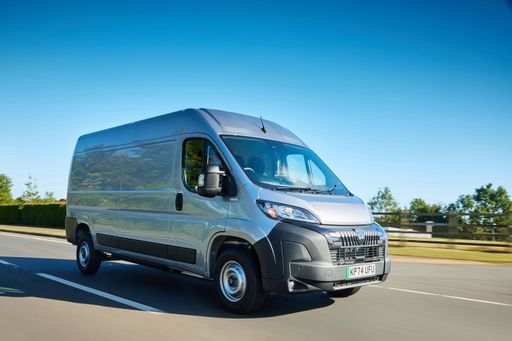
Peugeot Boxer

  • considerably cheaper
  • noticeably lighter

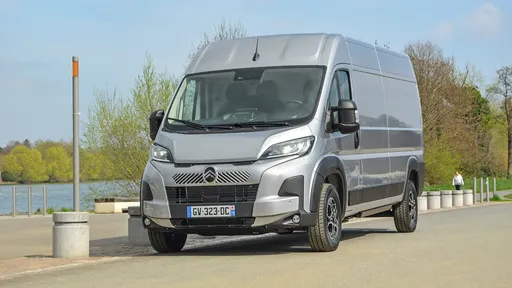
Citroen Jumper

Boxer

The Battle of the Cargo Vans: Citroën Jumper vs Peugeot Boxer

In the world of cargo vans, few names stand as strongly as the Citroën Jumper and the Peugeot Boxer. Both revered for their robust build and operational flexibility, these vans are favorites among businesses and fleet managers alike. But how do they compare when stacked against each other on features and performance? Let’s delve into the details.
Jumper

Design and Dimensions: Room for Cargo

The Citroën Jumper and the Peugeot Boxer share remarkably similar dimensions, a testament to their shared lineage under the Stellantis umbrella. Both models offer cargo-friendly lengths ranging from 5,413 mm to 6,363 mm. With a standard width of 2,050 mm, they promise ample space for your cargo needs. Height options vary, with figures going from around 2,254 mm up to 2,850 mm, depending on the configuration. These dimensions are designed to optimize load capacity without compromising maneuverability.

Engine Variants and Performance

At the heart of any vehicle lies its powertrain, and here both models offer a robust selection. The Citroën Jumper offers engines that range from efficient diesel to progressive electric. Diesel variant options span 120 to 180 HP, while the electric motor promises 270 HP with a remarkable 424 km range, backed by a high-capacity 97.8 kWh battery. Transmission choices include manual, automatic, and reduction gearbox options, catering to a diverse set of driver preferences.

The Peugeot Boxer mirrors these offerings closely with diesel engines providing between 120 HP and 180 HP, and an electric option boasting up to 279 HP. Electric range and battery specs align with the Jumper, further solidifying their equal footing in the electrification trend. Transmission types mirror Citroën’s, ensuring that the Boxer also meets the demands of various driving conditions.

Efficiency and Emissions

Fuel efficiency is crucial for cargo vans, especially for long-distance transport. The Citroën Jumper's diesel engines exhibit consumption levels between 7.5 to 9 L/100km. The electrified variant consumes approximately 26.2 kWh/100km. With CO2 emissions as low as 0 g/km for electric models, it's engineered for eco-conscious operations.

Meanwhile, the Peugeot Boxer presents similar efficiency. Diesel consumption rates range from 7.6 to 9 L/100km, and electric efficiency matches the Jumper at 26.2 kWh/100km. Emission figures for the Boxer's electric variant confidently rest at 0 g/km, with diesel emissions varying but striving for lower environmental impact.

Payload and Practicality

When it comes to payload, both vans demonstrate impressive capabilities. The Jumper supports a payload capacity of up to 2,020 kg, accommodating a variety of transport needs efficiently. Similarly, the Boxer boasts a comparable payload range, catering to even the most demanding transportation tasks.

Both models come equipped with three seats and four doors as standard, ensuring practical access and driver comfort. Front-wheel drive systems add to their agility, especially in urban settings.

Final Thoughts

The Citroën Jumper and Peugeot Boxer, while sharing many similarities, each offer unique strengths suited to different operational needs. Whether prioritizing advanced eco-friendly tech with extended range capabilities or seeking the trustworthy performance of diesel engines, both models have something worthy of consideration. Fleet operators and business owners alike will find plenty to admire and appreciate in these trustworthy cargo vans.

Here’s where it gets real: The technical differences in detail

Boxer

Costs and Efficiency:

Price and efficiency are key factors when choosing a car – and this is often where the real differences emerge.

Peugeot Boxer is considerably cheaper – starting at 35,500 £ , while the Citroen Jumper costs 55,100 £ . That’s a price difference of around 19,533 £.

When it comes to electricity consumption, both models perform equally – each averaging 26.2 kWh/100km.

The electric range is almost identical – both manage about 424 km on a single charge.

Jumper

Engine and Performance:

Power, torque and acceleration are the classic benchmarks for car enthusiasts – and here, some clear differences start to show.

Both models deliver identical power – 279 HP each.

There’s also a difference in torque: the Peugeot Boxer delivers marginally more torque with 450 Nm compared to 410 Nm. That’s about 40 Nm more.

Space and Everyday Use:

Cabin size, boot volume and payload all play a role in everyday practicality. Here, comfort and flexibility make the difference.

Seats: Peugeot Boxer offers more seats – 7 vs 3.

In terms of curb weight, Peugeot Boxer is noticeably lighter – 2,075 kg compared to 2,865 kg. The difference is around 790 kg.

When it comes to payload, the Peugeot Boxer carries clearly more – 2,080 kg compared to 1,385 kg. That’s a difference of about 695 kg.

Who wins the race in the data check?

The Peugeot Boxer stands well ahead of its rival in the objective data comparison.
This result only shows which model scores more points on paper – not which of the two cars feels right for you.

from £35,500
Boxer

Peugeot Boxer

  • Engine Type : Diesel, Electric
  • Transmission : Manuel, Automatic
  • Drive Type : Front-Wheel Drive
  • Power HP : 120 - 279 HP
  • Consumption L/100km : 7.5 - 9 L/100km
  • Consumption kWh/100km : 26.2 kWh/100km
  • Electric Range : 424 km
Peugeot Boxer
Citroen Jumper

Costs and Consumption

View detailed analysis

Engine and Performance

View detailed analysis

Dimensions and Body

View detailed analysis

Peugeot Boxer

The Peugeot Boxer wears its workmanlike practicality with a surprising amount of style, offering an interior that’s easy to live with for tradespeople and small businesses. It’s a sensible, no-nonsense choice if you need reliable load space and low running costs, with clever details that make daily life easier and an exterior that won’t embarrass when you arrive on site.

details

Citroen Jumper

The Citroen Jumper is a no-nonsense workhorse that swaps flash for sheer practicality, with a spacious load area and composed, user-friendly driving manners that make busy workdays easier. It won’t win any beauty contests, but its sensible packaging, comfortable cab and wallet-friendly running make it a compelling choice for tradespeople and small businesses.

details
Peugeot Boxer
Citroen Jumper

Costs and Consumption

Price
35,500 - 57,800 £
Price
55,100 - 57,800 £
Consumption L/100km
7.5 - 9 L/100km
Consumption L/100km
-
Consumption kWh/100km
26.2 kWh/100km
Consumption kWh/100km
26.2 kWh/100km
Electric Range
424 km
Electric Range
424 km
Battery Capacity
-
Battery Capacity
97.8 kWh
co2
0 - 233 g/km
co2
0 g/km
Fuel tank capacity
-
Fuel tank capacity
-

Dimensions and Body

Body Type
Cargo Van
Body Type
Cargo Van
Seats
3 - 7
Seats
3
Doors
-
Doors
4
Curb weight
2,075 - 2,940 kg
Curb weight
2,865 - 2,940 kg
Trunk capacity
-
Trunk capacity
-
Length
-
Length
5,998 - 6,363 mm
Width
2,050 mm
Width
2,050 mm
Height
-
Height
2,612 - 2,850 mm
Max trunk capacity
-
Max trunk capacity
13,000 - 17,000 L
Payload
560 - 2,080 kg
Payload
560 - 1,385 kg

Engine and Performance

Engine Type
Diesel, Electric
Engine Type
Electric
Transmission
Manuel, Automatic
Transmission
Automatic
Transmission Detail
Manual Gearbox, Automatic Gearbox, Reduction Gearbox
Transmission Detail
Reduction Gearbox
Drive Type
Front-Wheel Drive
Drive Type
Front-Wheel Drive
Power HP
120 - 279 HP
Power HP
279 HP
Acceleration 0-100km/h
-
Acceleration 0-100km/h
-
Max Speed
-
Max Speed
90 - 130 km/h
Torque
320 - 450 Nm
Torque
410 Nm
Number of Cylinders
4
Number of Cylinders
-
Power kW
88 - 205 kW
Power kW
205 kW
Engine capacity
2,184 cm3
Engine capacity
-

General

Model Year
2,024 - 2,025
Model Year
2,024
CO2 Efficiency Class
G, A
CO2 Efficiency Class
A
Brand
Peugeot
Brand
Citroen
DriveDuel uses data analysis and artificial intelligence to evaluate vehicle data and create content. Content is regularly reviewed and improved. The displayed prices are estimates based on German list prices, adjusted to the respective country’s VAT. Country-specific registration taxes are not included. This information is not legally binding.








