
VS

Peugeot Boxer vs Renault Master Bus comparison

Compare performance (279 HP vs 180 HP), boot space and price (35,500 £ vs 36,600 £ ) at a glance. Find out which car is the better choice for you – Peugeot Boxer or Renault Master Bus?

Peugeot Boxer vs Renault Master Bus: Key differences

Peugeot Boxer

  • barely cheaper
  • visibly more power
  • a bit more efficient
  • very slightly lighter
details

Renault Master Bus

details

By Achim Sedelmaier

Boxer

A Clash of Titans: Peugeot Boxer vs. Renault Master Bus

In the vibrant world of commercial vehicles, the demand for versatile and efficient transportation solutions continues to rise. Two major players in this field are the Peugeot Boxer and the Renault Master Bus, each offering unique features tailored for different needs. Here, we delve deep into their technical aspects and innovations to decipher which model suits businesses the best.
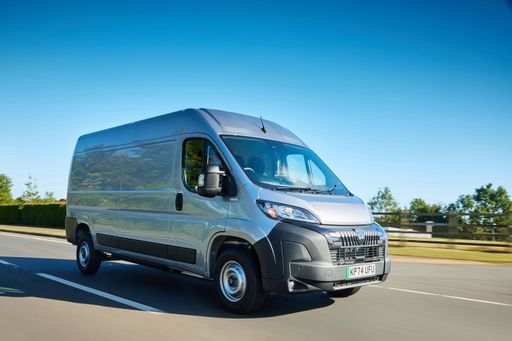
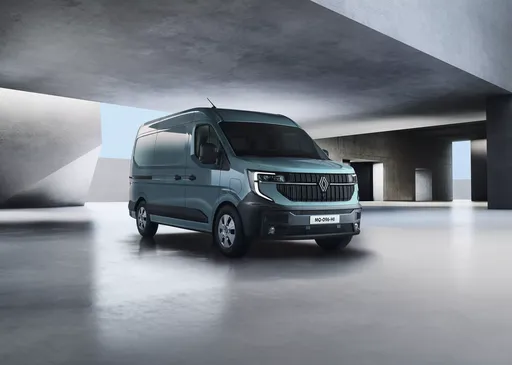
Master Bus

Engine and Performance

The Peugeot Boxer is a versatile workhorse, offering both diesel and electric engine variants. With power ranging between 120 HP to a robust 279 HP, it caters to diverse commercial requirements. Diesel engines ensure durability and efficiency, while the electric option aligns with eco-friendly trends; the Boxer electric delivers an impressive range of up to 424 kilometers on a full charge thanks to its 97.8 kWh battery.

On the other hand, the Renault Master Bus strictly adheres to diesel engines, with outputs ranging from 135 HP to 180 HP. Known for its reliability, Renault's engine design is implemented to maximize power without compromising fuel efficiency, showcasing a power range extending to 165 km/h as its maximum speed.

Fuel Efficiency and Environmental Impact

For businesses worried about fuel costs, the Peugeot Boxer offers a competitive advantage with its consumption figures starting from 7.5 L/100km for its diesel version. Its electric variant supports a consumption rate between 26.2 to 36.2 kWh/100km, providing an eco-friendlier transport solution with no tailpipe emissions.

The Renault Master Bus, while diesel-exclusive, exhibits moderate fuel consumption between 8.7 to 10.7 L/100km. However, it compensates with a larger 105-liter fuel tank, promising fewer fill-ups and extended journeys. Nevertheless, its CO2 efficiency is rated at Class G, suggesting a heavier environmental footprint compared to its electric competitor.

Space, Capacity, and Versatility

The Peugeot Boxer offers flexibility in dimensions, with lengths varying from 4963 mm to 6363 mm, supporting a payload capacity from 560 kg up to 2020 kg. It's designed to be a multi-utility vehicle with adjustable layouts to suit transporting cargo or people efficiently.

Conversely, the Renault Master Bus caters primarily to passenger movement, with seating for 6 or 9 passengers. Its payload handles up to 1254 kg, underlining its strength in transporting both passengers and cargo. It presents a durable build with a length of 5075 mm to 5575 mm, yet slightly wider and taller than the Boxer, it’s crafted to maximize internal space usage, ideal for a minibus format.

Interior and Comfort

The Peugeot Boxer ensures a comfortable ride with careful attention to interior ergonomics. With seating for three—a classic approach for cargo vans—it supports business needs with robust construction and simple usability.

Renault's Master Bus impresses with a higher seating capability, accommodating up to nine passengers. This makes it ideal for small group transportation, where passenger comfort and space are top priorities. The additional seating naturally shifts its focus from cargo-centric needs to a more passenger-oriented design.

Final Thoughts

Both the Peugeot Boxer and the Renault Master Bus shine in their respective domains. The Boxer is the ideal choice for companies seeking a flexible and environmentally conscious vehicle, primarily if cargo is the primary consideration. In contrast, the Master Bus specializes in passenger transport with a clear emphasis on durability and usability for group transit.

Your specific needs and focus—be it environmental impact, seating capacity, or cargo flexibility—will ultimately guide your choice between these two stalwarts of commercial transportation.

Here’s where it gets real: The technical differences in detail

Boxer

Costs and Efficiency:

When it comes to price and running costs, the biggest differences usually appear. This is often where you see which car fits your budget better in the long run.

Peugeot Boxer is barely cheaper – starting at 35,500 £ , while the Renault Master Bus costs 36,600 £ . That’s a price difference of around 1,040 £.

Fuel consumption also shows a difference: the Peugeot Boxer uses 7.5 L/100km and is a bit more efficient than the Renault Master Bus with 8.7 L/100km. The difference is about 1.2 L/100km.

Master Bus

Engine and Performance:

Under the bonnet, it becomes clear which model is tuned for sportiness and which one takes the lead when you hit the accelerator.

When it comes to engine power, the Peugeot Boxer offers visibly more power – delivering 279 HP compared to 180 HP. That’s roughly 99 HP more horsepower.

There’s also a difference in torque: the Peugeot Boxer delivers slightly more torque with 450 Nm compared to 400 Nm. That’s about 50 Nm more.

Space and Everyday Use:

Cabin size, boot volume and payload all play a role in everyday practicality. Here, comfort and flexibility make the difference.

Seats: Renault Master Bus offers more seats – 9 vs 7.

In terms of curb weight, Peugeot Boxer is very slightly lighter – 2,075 kg compared to 2,189 kg. The difference is around 114 kg.

When it comes to payload, the Peugeot Boxer carries markedly more – 2,080 kg compared to 1,254 kg. That’s a difference of about 826 kg.

Who wins the race in the data check?

The Peugeot Boxer is decisively ahead in the objective data comparison.
This result only shows which model scores more points on paper – not which of the two cars feels right for you.

from £35,500
Boxer

Peugeot Boxer

  • Engine Type : Diesel, Electric
  • Transmission : Manuel, Automatic
  • Drive Type : Front-Wheel Drive
  • Power HP : 120 - 279 HP
  • Consumption L/100km : 7.5 - 9 L/100km
  • Consumption kWh/100km : 26.2 kWh/100km
  • Electric Range : 424 km
Peugeot Boxer
Renault Master Bus

Costs and Consumption

View detailed analysis

Engine and Performance

View detailed analysis

Dimensions and Body

View detailed analysis

Peugeot Boxer

The Peugeot Boxer wears its workmanlike practicality with a surprising amount of style, offering an interior that’s easy to live with for tradespeople and small businesses. It’s a sensible, no-nonsense choice if you need reliable load space and low running costs, with clever details that make daily life easier and an exterior that won’t embarrass when you arrive on site.

details

Renault Master Bus

The Renault Master Bus is a no-nonsense people carrier that trades flash for practicality, offering generous space for passengers and luggage with a sensible, robust feel. It’s a smart pick for buyers who want comfort and reliability over glamour — think dependable transport with a dash of French charm and a wry smile.

details
Peugeot Boxer
Renault Master Bus

Costs and Consumption

Price
35,500 - 57,800 £
Price
36,600 - 43,200 £
Consumption L/100km
7.5 - 9 L/100km
Consumption L/100km
8.7 - 10.7 L/100km
Consumption kWh/100km
26.2 kWh/100km
Consumption kWh/100km
-
Electric Range
424 km
Electric Range
-
Battery Capacity
-
Battery Capacity
-
co2
0 - 233 g/km
co2
227 - 280 g/km
Fuel tank capacity
-
Fuel tank capacity
105 L

Dimensions and Body

Body Type
Cargo Van
Body Type
Bus
Seats
3 - 7
Seats
6 - 9
Doors
-
Doors
4
Curb weight
2,075 - 2,940 kg
Curb weight
2,189 - 2,361 kg
Trunk capacity
-
Trunk capacity
-
Length
-
Length
5,075 - 5,575 mm
Width
2,050 mm
Width
2,070 mm
Height
-
Height
2,290 - 2,486 mm
Max trunk capacity
-
Max trunk capacity
2,840 - 4,840 L
Payload
560 - 2,080 kg
Payload
939 - 1,254 kg

Engine and Performance

Engine Type
Diesel, Electric
Engine Type
Diesel
Transmission
Manuel, Automatic
Transmission
Manuel, Automatic
Transmission Detail
Manual Gearbox, Automatic Gearbox, Reduction Gearbox
Transmission Detail
Manual Gearbox, Automated Manual
Drive Type
Front-Wheel Drive
Drive Type
Front-Wheel Drive
Power HP
120 - 279 HP
Power HP
135 - 180 HP
Acceleration 0-100km/h
-
Acceleration 0-100km/h
-
Max Speed
-
Max Speed
150 - 165 km/h
Torque
320 - 450 Nm
Torque
360 - 400 Nm
Number of Cylinders
4
Number of Cylinders
4
Power kW
88 - 205 kW
Power kW
99 - 132 kW
Engine capacity
2,184 cm3
Engine capacity
2,299 cm3

General

Model Year
2,024 - 2,025
Model Year
2023
CO2 Efficiency Class
G, A
CO2 Efficiency Class
G
Brand
Peugeot
Brand
Renault
DriveDuel uses data analysis and artificial intelligence to evaluate vehicle data and create content. Content is regularly reviewed and improved. The displayed prices are estimates based on German list prices, adjusted to the respective country’s VAT. Country-specific registration taxes are not included. This information is not legally binding.








