VS

Renault Austral vs Nissan Qashqai comparison

Compare performance (200 HP vs 205 HP), boot space and price (29,900 £ vs 29,600 £ ) at a glance. Find out which car is the better choice for you – Renault Austral or Nissan Qashqai?

Renault Austral vs Nissan Qashqai: Key differences

Renault Austral

4.9 (4 Reviews)
rate
  • marginally more trunk space

Nissan Qashqai

4.9 (3 Reviews)
rate
  • marginally cheaper
  • only slightly more power
  • only slightly more efficient
  • slightly quicker 0–100 km/h
  • very slightly lighter
Austral

Street Swagger vs Sculpted Poise

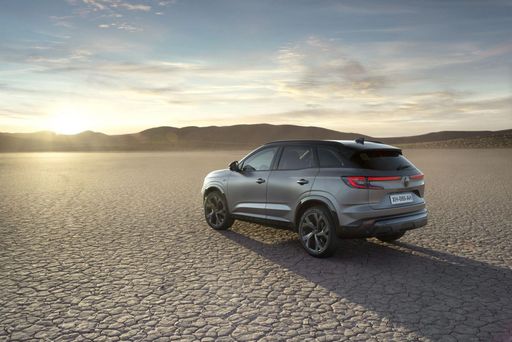
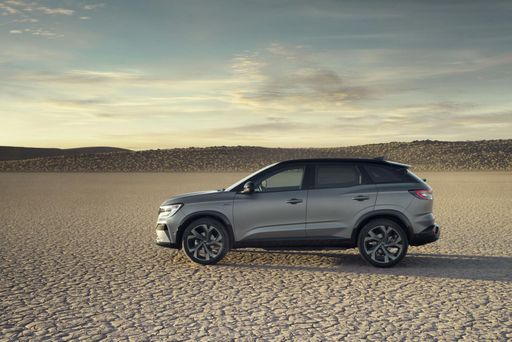
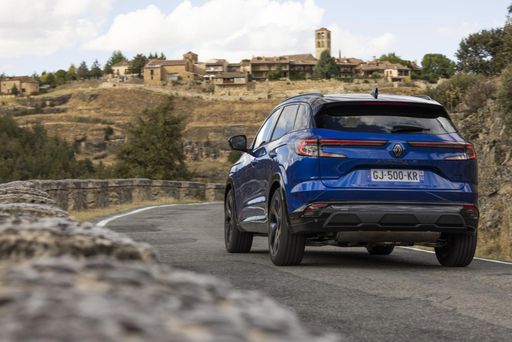
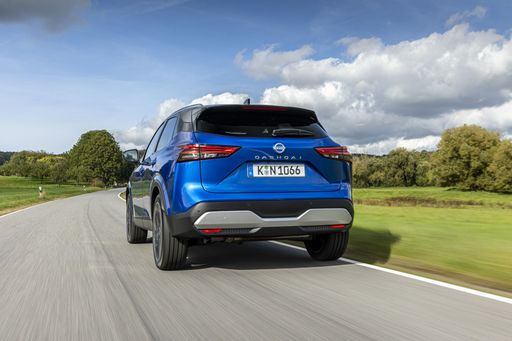
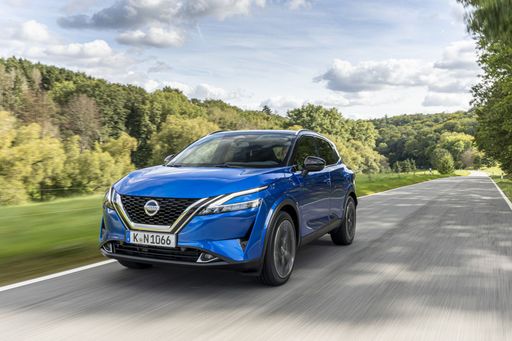
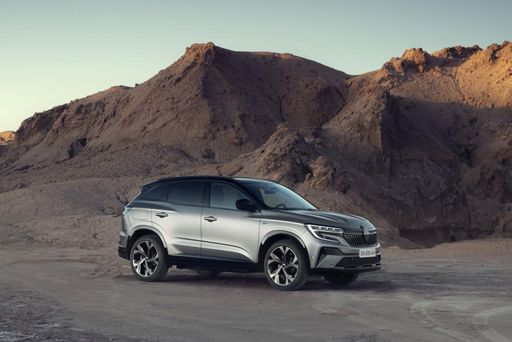
The Nissan presents itself with familiar, composed lines that signal sensible style rather than showmanship, while the Renault arrives with a more sculpted, fashion-conscious stance that grabs attention at junctions and parking lots. Materials and trim choices reinforce those first impressions: one leans toward practical confidence, the other toward tactile sophistication. Both look ready for daily life, but they wear their personalities differently on the curb. Depending on whether you want to blend in or stand out, the choice becomes as much about image as it is about utility.
Qashqai

How They Feel on the Move

Behind the wheel the Nissan feels balanced and alert, rewarding quick direction changes with predictable composure and a reassuring chassis attitude. The Renault prefers to smooth the road, isolating occupants from chatter and prioritizing a composed, relaxed cruise over outright eagerness. Neither is harsh, but their moods diverge: one is more driver-focused, the other more passenger-coddling. That difference shapes how they make everyday journeys feel, from tight urban lanes to open country roads.

Austral

Cabin Comfort and Everyday Use

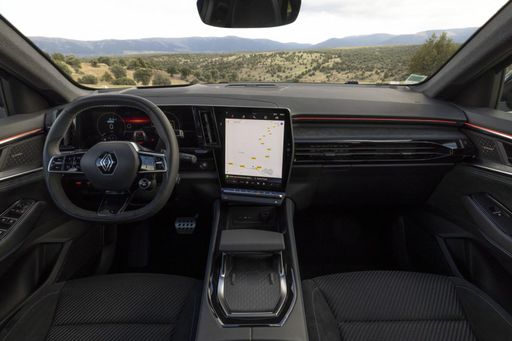
Step inside the Renault and you notice softer textures and a design that aims to feel a touch more premium, with supportive seats that invite longer trips without complaint. The Nissan’s interior is clean, user-friendly and engineered for straightforward ergonomics, so drivers who crave easy reach and logical controls will be happy. Both cabins are comfortable, but their atmospheres are distinct — one cocoon-like and refined, the other pragmatic and dependable. For daily commuting and weekend runs alike, comfort is delivered in two appealing, but different, ways.

Qashqai

Screens, Switches and Real-World Tech

Tech-wise the Renault leans into modern digital flair, with richer graphical presentation that can feel luxurious but occasionally demands more attention to operate. The Nissan counters with a simpler, more button-forward approach that keeps primary functions within easy reach and reduces fiddling while on the move. Connectivity and voice features are competent in both, but the overall user-friendliness tips in favour of the layout that lets you keep your eyes on the road. If you prefer tactile certainty, one car will feel more straightforward; if you enjoy a slick digital ambience, the other will satisfy.

Austral

Family Life and Weekend Practicality

Both cars are carved for mixed duties: school runs, grocery hauls and escape-to-the-country weekends, but they package those abilities differently. The Renault’s cabin flexibility and thoughtful storage details feel aimed at family comfort and longer trips, while the Nissan prioritises straightforward usability and clever everyday touches that make life easier in tight urban scenarios. Access and child-seat installation are well considered in either car, with practicality rarely compromised. Choosing between them comes down to whether you prefer a little extra room and refinement or a highly usable and logical layout.

Qashqai

Running Sense and Ownership Feel

When it comes to daily economics and ownership temperament, both models were engineered with sensible users in mind and neither will surprise at the pump if driven with common sense. The Nissan gives an impression of being slightly more economy-minded in routine town driving, whereas the Renault rewards steady cruising and feels more about refinement than frugality. Servicing and insurance considerations are part of the picture, but both sit comfortably within pragmatic ownership expectations. Long-term, the deciding factors will be personal priorities: marginal economy or marginal refinement.

Austral

Who Should Drive Which?

If your days are a tight loop of urban commuting and quick errands, the Nissan’s straightforward ergonomics and eager on-road demeanour make it an attractive companion. If image, interior ambience and relaxed highway miles matter more, the Renault’s sculpted looks and cosseting ride will appeal to style-conscious buyers and long-distance cruisers. Families will find either car capable, but the nuance of how each car carries people and luggage will guide practical choice more than headline features. Ultimately, the best pick is the one that matches your daily rhythm and aesthetic taste rather than a spec sheet.

Qashqai

Turn the Key and Decide

Both cars bring strong arguments to the table: one offers pragmatic charm and an engaging everyday package, the other leans into presence and passenger comfort with a refined touch. Your preference will come down to whether you prioritise tactile simplicity or interior polish, and how often you trade urban agility for long-distance serenity. Take them both for a proper, extended test drive to see which personality fits your life, because impressions on a short spin can be misleading. Keep reading — the DriveDuel Champion will be revealed afterwards.

Here’s where it gets real: The technical differences in detail

Austral

Costs and Efficiency:

Price and efficiency are often the first things buyers look at. Here it becomes clear which model has the long-term edge – whether at the pump, the plug, or in purchase price.

Nissan Qashqai is marginally cheaper – starting at 29,600 £ , while the Renault Austral costs 29,900 £ . That’s a price difference of around 309 £.

Fuel consumption also shows a difference: the Nissan Qashqai uses 4.5 L/100km and is only slightly more efficient than the Renault Austral with 4.8 L/100km. The difference is about 0.3 L/100km.

Qashqai

Engine and Performance:

Power, torque and acceleration are the classic benchmarks for car enthusiasts – and here, some clear differences start to show.

When it comes to engine power, the Nissan Qashqai offers only slightly more power – delivering 205 HP compared to 200 HP. That’s roughly 5 HP more horsepower.

When accelerating from 0 to 100 km/h, the Nissan Qashqai is slightly quicker – completing the sprint in 7.6 s, while the Renault Austral takes 8.4 s. That’s about 0.8 s quicker.

Looking at top speed, the Nissan Qashqai is a bit faster – reaching 206 km/h, while the Renault Austral tops out at 180 km/h. The difference is around 26 km/h.

There’s also a difference in torque: the Nissan Qashqai delivers somewhat more torque with 330 Nm compared to 270 Nm. That’s about 60 Nm more.

Austral

Space and Everyday Use:

Beyond pure performance, interior space and usability matter most in daily life. This is where you see which car is more practical and versatile.

Both vehicles offer seating for 5 people.

In terms of curb weight, Nissan Qashqai is very slightly lighter – 1,420 kg compared to 1,548 kg. The difference is around 128 kg.

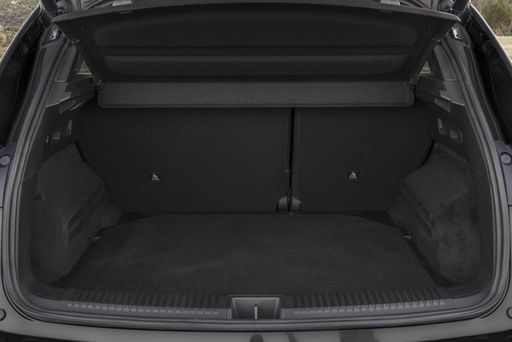
Looking at boot space, the Renault Austral offers marginally more boot space – 527 L compared to 504 L. That’s a difference of about 23 L.

For maximum load capacity, the Renault Austral offers slightly more capacity – up to 1,736 L, about 289 L more than the Nissan Qashqai.

When it comes to payload, the Nissan Qashqai carries very slightly more – 520 kg compared to 477 kg. That’s a difference of about 43 kg.

Who wins the race in the data check?

The Nissan Qashqai stands well ahead of its rival in the objective data comparison.
This result only shows which model scores more points on paper – not which of the two cars feels right for you.

from £29,600
Qashqai

Nissan Qashqai

  • Engine Type : Petrol MHEV, Full Hybrid
  • Transmission : Manuel, Automatic
  • Drive Type : Front-Wheel Drive, All-Wheel Drive
  • Power HP : 140 - 205 HP
  • Consumption L/100km : 4.5 - 6.8 L/100km
Renault Austral
Nissan Qashqai

Costs and Consumption

View detailed analysis

Engine and Performance

View detailed analysis

Dimensions and Body

View detailed analysis

Renault Austral

The Renault Austral dresses the family SUV in elegant modern looks and a surprisingly grown-up cabin that feels thoughtful and livable. It balances comfort and clever technology with a relaxed road presence—an appealing choice for buyers who want style and everyday sense without fuss.

details

Nissan Qashqai

The Nissan Qashqai blends practical, family-friendly packaging with SUV styling that refuses to shout, making it a sensible and dependable choice for everyday life. It’s comfortable to live with, economical on the road, and neatly equipped enough to feel modern without ever feeling precious — perfect if you want crossover versatility without the drama.

details
Renault Austral
Nissan Qashqai

Costs and Consumption

Price
29,900 - 37,800 £
Price
29,600 - 39,900 £
Consumption L/100km
4.8 - 6.4 L/100km
Consumption L/100km
4.5 - 6.8 L/100km
Consumption kWh/100km
-
Consumption kWh/100km
-
Electric Range
-
Electric Range
-
Battery Capacity
-
Battery Capacity
-
co2
109 - 145 g/km
co2
102 - 154 g/km
Fuel tank capacity
55 L
Fuel tank capacity
55 L

Dimensions and Body

Body Type
SUV
Body Type
SUV
Seats
5
Seats
5
Doors
5
Doors
5
Curb weight
1,548 - 1,613 kg
Curb weight
1,420 - 1,665 kg
Trunk capacity
527 L
Trunk capacity
479 - 504 L
Length
4,533 mm
Length
4,425 mm
Width
1,825 mm
Width
1,835 mm
Height
1,645 mm
Height
1,625 mm
Max trunk capacity
1,736 L
Max trunk capacity
1,422 - 1,447 L
Payload
455 - 477 kg
Payload
466 - 520 kg

Engine and Performance

Engine Type
Full Hybrid, Petrol MHEV
Engine Type
Petrol MHEV, Full Hybrid
Transmission
Automatic
Transmission
Manuel, Automatic
Transmission Detail
Automatic Gearbox, CVT
Transmission Detail
Manual Gearbox, CVT, Reduction Gearbox
Drive Type
Front-Wheel Drive
Drive Type
Front-Wheel Drive, All-Wheel Drive
Power HP
148 - 200 HP
Power HP
140 - 205 HP
Acceleration 0-100km/h
8.4 - 9.9 s
Acceleration 0-100km/h
7.6 - 10.2 s
Max Speed
180 km/h
Max Speed
170 - 206 km/h
Torque
270 Nm
Torque
240 - 330 Nm
Number of Cylinders
3 - 4
Number of Cylinders
3 - 4
Power kW
109 - 147 kW
Power kW
103 - 151 kW
Engine capacity
1,199 - 1,332 cm3
Engine capacity
1,332 - 1,498 cm3

General

Model Year
2,025
Model Year
2,025 - 2,026
CO2 Efficiency Class
C, E
CO2 Efficiency Class
E, C
Brand
Renault
Brand
Nissan
DriveDuel uses data analysis and artificial intelligence to evaluate vehicle data and create content. Content is regularly reviewed and improved. The displayed prices are estimates based on German list prices, adjusted to the respective country’s VAT. Country-specific registration taxes are not included. This information is not legally binding.