VS

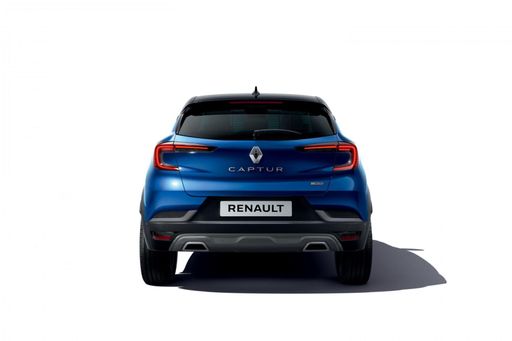
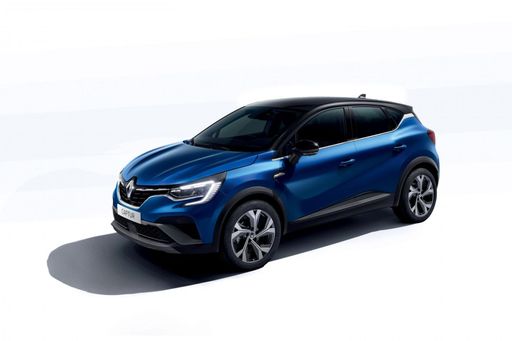
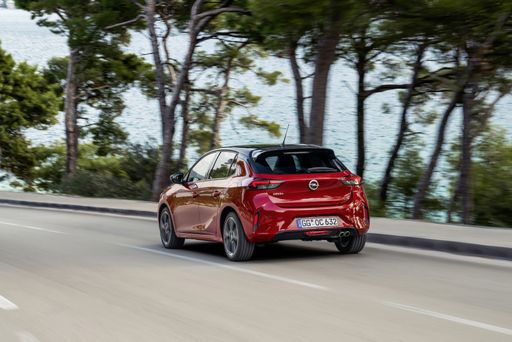
Renault Captur vs Vauxhall Corsa comparison

Compare performance (158 HP vs 156 HP), boot space and price (21,400 £ vs 19,600 £ ) at a glance. Find out which car is the better choice for you – Renault Captur or Vauxhall Corsa?

Renault Captur vs Vauxhall Corsa: Key differences

Renault Captur

4.8 (7 Reviews)
rate
  • marginally more power
  • only slightly more efficient
  • noticeably more trunk space
details

Vauxhall Corsa

  • very slightly cheaper
  • somewhat quicker 0–100 km/h
  • moderately lighter
details

All details on performance, efficiency, range and trunk space can be found in the technical comparison below – including user reviews for both models.

By Achim Sedelmaier

Captur

Quick take: Vauxhall Corsa VS Renault Captur

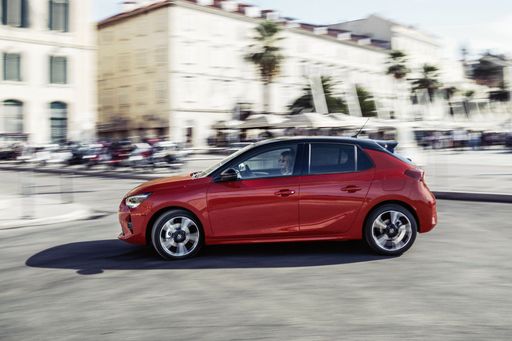
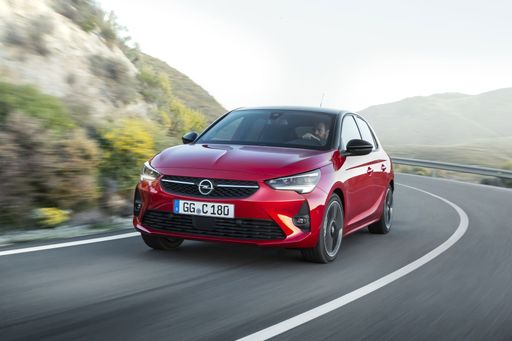
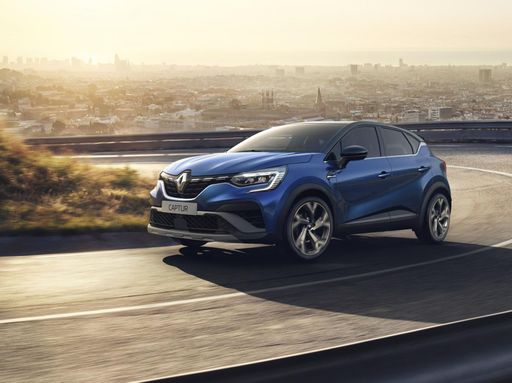
Vauxhall Corsa VS Renault Captur sets a compact city hatch against a small, comfort‑focused crossover and the everyday differences matter more than headline specs. The Vauxhall Corsa feels like a true urban companion: tight turning, direct steering and a livelier, more controlled chassis that makes parking and short trips effortless. The Renault Captur answers with a taller stance, more interior flexibility and a calmer, quieter highway demeanour that suits people who spend time on motorways or need modular space. This comparison will focus on how those character differences play out in cabin comfort, practicality and daily usability rather than raw numbers.
Corsa

Character and driving feel

The Vauxhall Corsa leans toward a taut, engaged personality — it steers precisely and rewards confident corrections, so it feels agile through city streets and country twisties alike. The Renault Captur trades that sharpness for composure: steering and throttle are tuned for smoothness, delivering a relaxed, less demanding experience but also less driver involvement. On long runs the Captur’s calmer demeanor and quieter cabin mask fatigue better, while the Corsa’s firmer ride and crisper responses keep you more connected to the road at the cost of transmitting more bumps and tyre noise. Choosing between them is a question of whether you prefer a lively, hands‑on small car or a sedate, settled small SUV.

Captur

Comfort and cabin feel

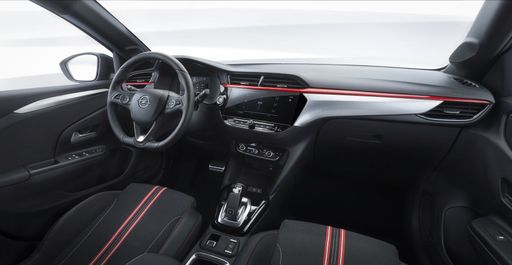
In the Vauxhall Corsa the front seats are genuinely comfortable for longer drives, but the cabin overall is compact and uses a fair amount of hard plastics that remind you it’s a city‑centric car. The Renault Captur surrounds occupants with a roomier layout, a higher seating position and generally more pleasant upper‑cabin materials, giving a stronger impression of refinement. Rear seat occupants feel the difference most: the Corsa’s back row is tight for adults, whereas the Captur’s sliding bench and better headroom make it far more family‑friendly. Both have compromises — the Captur can still feel constrained in luggage ergonomics and the Corsa’s perceived quality is more utilitarian — but they deliver distinct comfort atmospheres.

Corsa

Usability and practicality in everyday life

The Vauxhall Corsa’s compact footprint is its practical virtue: easy to park, light on fuel in town and effortless to manoeuvre in tight spaces, but its boot and rear space limit weekend cargo or family travel. The Renault Captur counterbalances that with a flexible load floor and a movable rear seat that turn a tricky grocery run into a genuinely versatile load bay, though a higher boot lip and thick C‑pillars can make loading and rear visibility fiddlier. For families who need to stow prams, sports kit or sliding child seats, the Captur’s flexibility wins hands down; for lone commuters or apartment dwellers who value minimal hassle, the Corsa’s simplicity and smaller stance are more convenient. Long motorway trips expose the same trade‑off: the Captur is the quieter, less tiring carriage, while the Corsa is fuss‑free and economical on shorter runs.

Captur

Technology, controls and daily ergonomics

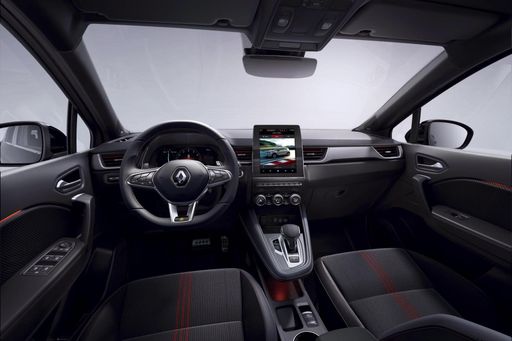
The Vauxhall Corsa’s recent update focused on making controls intuitive — physical climate switches and a responsive infotainment layout keep everyday tasks simple and distraction‑free. The Renault Captur takes a different route with a Google‑based infotainment environment and a large centre screen that integrates maps and voice assistance more deeply, which feels modern but sacrifices some tactile convenience like big rotary controls. Driver aids and connectivity tilt in Captur’s favour with generous standard equipment and over‑the‑air polish, yet the Corsa’s straightforward ergonomics often prove faster to operate without hunting through menus. In short, tech lovers who prioritise smartphone integration will prefer the Captur, while drivers who want unambiguous controls for daily routines will appreciate the Corsa.

Corsa

Buyer fit: who should pick which car

If your life is dominated by narrow streets, tight parking and short commutes, the Vauxhall Corsa suits you: economical, easy to place and pleasantly direct to drive. If you need a small family car that swallows varying loads, soothes motorway miles and offers a more premium cabin feel, the Renault Captur is the more practical, comfort‑oriented choice. Budget and priorities decide the trade‑off — the Corsa favours low running fuss and urban agility, the Captur favours interior space, quietness and tech‑led convenience. The technical comparison that follows will expose the measurable trade‑offs behind these everyday impressions so you can match them to your priorities.

Here’s where it gets real: The technical differences in detail

Captur

Costs and Efficiency:

When it comes to price and running costs, the biggest differences usually appear. This is often where you see which car fits your budget better in the long run.

Vauxhall Corsa is very slightly cheaper – starting at 19,600 £ , while the Renault Captur costs 21,400 £ . That’s a price difference of around 1,765 £.

Fuel consumption also shows a difference: the Renault Captur uses 4.4 L/100km and is only slightly more efficient than the Vauxhall Corsa with 4.5 L/100km. The difference is about 0.1 L/100km.

Corsa

Engine and Performance:

Under the bonnet, it becomes clear which model is tuned for sportiness and which one takes the lead when you hit the accelerator.

When it comes to engine power, the Renault Captur offers marginally more power – delivering 158 HP compared to 156 HP. That’s roughly 2 HP more horsepower.

When accelerating from 0 to 100 km/h, the Vauxhall Corsa is somewhat quicker – completing the sprint in 7.9 s, while the Renault Captur takes 8.9 s. That’s about 1 s quicker.

There’s also a difference in torque: the Renault Captur delivers marginally more torque with 265 Nm compared to 260 Nm. That’s about 5 Nm more.

Captur

Space and Everyday Use:

Cabin size, boot volume and payload all play a role in everyday practicality. Here, comfort and flexibility make the difference.

Both vehicles offer seating for 5 people.

In terms of curb weight, Vauxhall Corsa is moderately lighter – 1,175 kg compared to 1,323 kg. The difference is around 148 kg.

Looking at boot space, the Renault Captur offers noticeably more boot space – 422 L compared to 309 L. That’s a difference of about 113 L.

When it comes to payload, the Renault Captur carries only slightly more – 453 kg compared to 445 kg. That’s a difference of about 8 kg.

Who wins the race in the data check?

The Vauxhall Corsa stands out in the key areas in the objective data comparison.
This result only shows which model scores more points on paper – not which of the two cars feels right for you.

from £19,600
Corsa

Vauxhall Corsa

  • Engine Type Electric, Petrol MHEV, Petrol
  • Transmission Automatic, Manuel
  • Drive Type Front-Wheel Drive
  • Power HP 100 - 156 HP
  • Consumption L/100km 4.5 - 5.1 L/100km
  • Consumption kWh/100km 14.2 - 15.7 kWh/100km
  • Electric Range 357 - 429 km
Renault Captur
Vauxhall Corsa

Costs and Consumption

View detailed analysis

Engine and Performance

View detailed analysis

Dimensions and Body

View detailed analysis

Renault Captur

The Renault Captur is a stylish and practical compact crossover that combines a high seating position and easy manoeuvrability with a comfortable, well‑equipped cabin. Its flexible interior layout and modern infotainment make it a sensible, polished choice for city drivers and small families.

details

Vauxhall Corsa

The Opel Corsa is a tidy little package that blends cheeky styling with sensible practicality, perfect for city streets and weekend escapes alike. It’s easy to live with, economical to run and just lively enough to make daily driving a bit more fun.

details
Renault Captur
Vauxhall Corsa

Costs and Consumption

Price
21,400 - 28,600 £
Price
19,600 - 30,600 £
Consumption L/100km
4.4 - 6 L/100km
Consumption L/100km
4.5 - 5.1 L/100km
Consumption kWh/100km
-
Consumption kWh/100km
14.2 - 15.7 kWh/100km
Electric Range
-
Electric Range
357 - 429 km
Battery Capacity
-
Battery Capacity
-
co2
100 - 137 g/km
co2
0 - 116 g/km
Fuel tank capacity
-
Fuel tank capacity
-

Dimensions and Body

Body Type
SUV
Body Type
Hatchback
Seats
5
Seats
5
Doors
-
Doors
-
Curb weight
1,323 - 1,441 kg
Curb weight
1,175 - 1,544 kg
Trunk capacity
326 - 422 L
Trunk capacity
267 - 309 L
Length
-
Length
-
Width
1,797 mm
Width
1,765 mm
Height
-
Height
-
Max trunk capacity
-
Max trunk capacity
-
Payload
447 - 453 kg
Payload
376 - 445 kg

Engine and Performance

Engine Type
Full Hybrid, Petrol, Petrol MHEV
Engine Type
Electric, Petrol MHEV, Petrol
Transmission
Automatic, Manuel
Transmission
Automatic, Manuel
Transmission Detail
Automatic Gearbox, Manual Gearbox, Dual-Clutch Automatic
Transmission Detail
Reduction Gearbox, Dual-Clutch Automatic, Manual Gearbox
Drive Type
Front-Wheel Drive
Drive Type
Front-Wheel Drive
Power HP
115 - 158 HP
Power HP
100 - 156 HP
Acceleration 0-100km/h
8.9 - 12.3 s
Acceleration 0-100km/h
7.9 - 9.9 s
Max Speed
-
Max Speed
-
Torque
160 - 265 Nm
Torque
205 - 260 Nm
Number of Cylinders
3 - 4
Number of Cylinders
3
Power kW
84 - 116 kW
Power kW
74 - 115 kW
Engine capacity
1,199 - 1,789 cm3
Engine capacity
1,199 cm3

General

Model Year
2025
Model Year
2,024 - 2,025
CO2 Efficiency Class
C, D, E
CO2 Efficiency Class
A, C, D
Brand
Renault
Brand
Vauxhall
DriveDuel uses data analysis and artificial intelligence to evaluate vehicle data and create content. Content is regularly reviewed and improved. The displayed prices are estimates based on German list prices, adjusted to the respective country’s VAT. Country-specific registration taxes are not included. This information is not legally binding.