VS

Renault Clio vs Citroen C4 comparison

Compare performance (158 HP vs 156 HP), boot space and price (17,100 £ vs 20,600 £ ) at a glance. Find out which car is the better choice for you – Renault Clio or Citroen C4?

Renault Clio vs Citroen C4: Key differences

Renault Clio

4.7 (1 Reviews)
rate
  • noticeably cheaper
  • very slightly more power
  • slightly more efficient
  • somewhat lighter

Citroen C4

4.7 (3 Reviews)
rate
  • marginally quicker 0–100 km/h
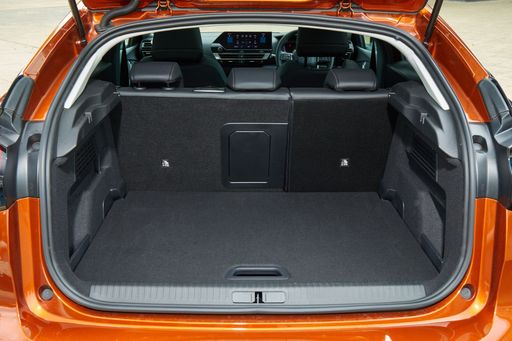
  • markedly more trunk space

All details on performance, efficiency, range and trunk space can be found in the technical comparison below – including user reviews for both models.

Clio

Modern French Flair: Citroën C4 vs. Renault Clio

The automotive industry is no stranger to innovation and competition. In this article, we pit two giants of French engineering against each other: the Citroën C4 and the Renault Clio. Both cars bring their unique charm and practicality to the table, but which one truly stands out? Let's delve into the technical aspects and innovations to find out.
C4

Design and Build

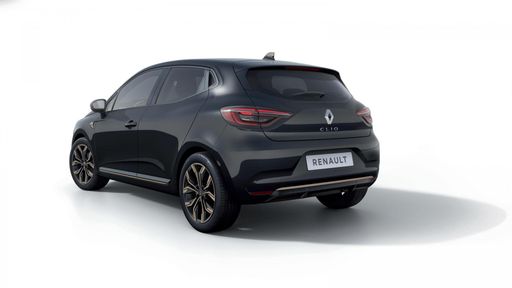
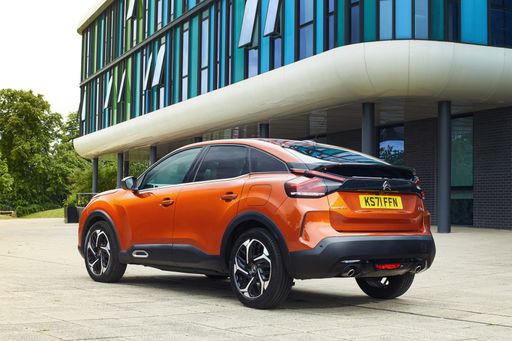
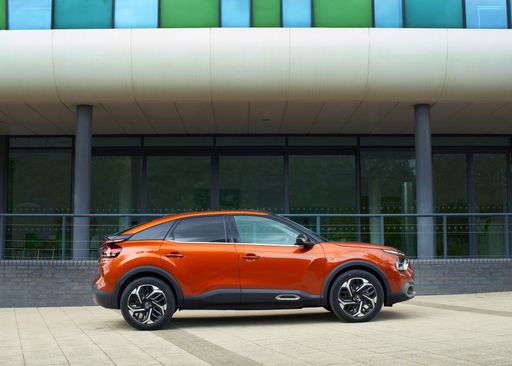
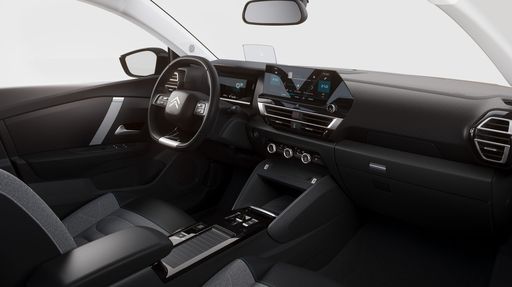
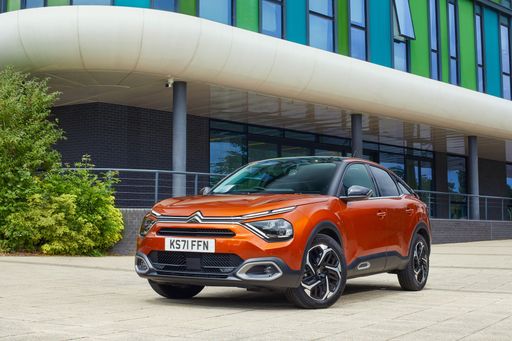
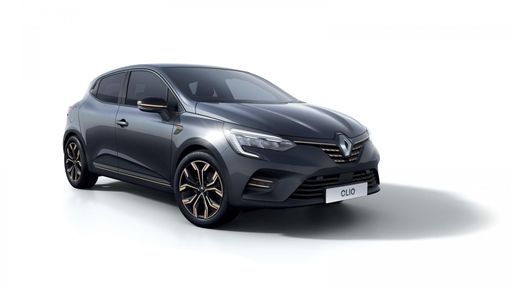
The Citroën C4 offers an SUV body style, blending the robustness of an SUV with modern aesthetics. Its design is bold and assertive, with dimensions measuring a length of 4,350 mm, a width of 1,800 mm, and a height of 1,525 mm. The Renault Clio, meanwhile, sports a sleek hatchback design, measuring 4,053 mm in length, 1,798 mm in width, and 1,440 mm in height. The Clio's compact structure makes it ideal for urban settings, while the C4 is tailored for those seeking extra space and stability on the road.

Clio

Engine and Performance

Under the hood, the Citroën C4 offers a diverse range of engines: from petrol mild hybrid to fully electric, catering to varying preferences and needs. It boasts power outputs between 101 to 156 HP and offers a maximum torque of up to 270 Nm. The Renault Clio, on the other hand, provides petrol, full hybrid, and LPG options, with power ranging from 67 to 143 HP. The Clio's maximum torque peaks at 205 Nm, making the C4 the slightly more powerful contender.

C4

Transmission and Drive

Both the C4 and the Clio feature front-wheel-drive systems, ensuring efficient power delivery on the road. The Citroën C4 comes with automatic transmissions, including dual-clutch and reduction gear options, catering to drivers who prioritize ease and comfort. In contrast, the Clio provides both automatic and manual gearbox options, offering more flexibility for those who enjoy a traditional driving experience.

Clio

Fuel Efficiency and Range

Efficiency is key in today's automotive world. The Citroën C4 excels with fuel consumption figures as low as 4.7 L/100km for its petrol variants and impressive electric consumption figures ranging from 14.5 to 15.3 kWh/100km. It offers an electric range of up to 427 km, ensuring longer trips with fewer stops. The Renault Clio rivals this with its hybrid model consuming just 4.3 L/100km. It caters well to those focused on fuel economy without going fully electric.

C4

Practicality and Comfort

Both vehicles accommodate five passengers comfortably, emphasizing utility and passenger satisfaction. The Citroën C4 provides a generous trunk capacity of up to 510 liters, appealing to those with substantial cargo needs. Conversely, the Renault Clio offers 391 liters of trunk space, which suffices for daily errands and leisure trips. The C4's larger dimensions translate into more cargo space, but the Clio's compact size is advantageous for maneuvering and parking in tight urban spaces.

Verdict: Choosing the Right Fit

The choice between the Citroën C4 and Renault Clio ultimately depends on individual preferences and lifestyle needs. The Citroën C4 shines for those who desire an SUV experience with a touch of modern electric innovation. Its size and payload capacity make it suitable for adventurous road trips or family use. On the other hand, the Renault Clio appeals to the urban driver, offering agility and efficiency, especially in hybrid form. Its refined design and smart fuel economy make it a top contender for city dwellers.

In conclusion, both French icons bring their respective strengths to the fore. Whether you’re driven by efficiency, style, or practicality, there's something to love in each. As always, the best choice is one that aligns with your driving preferences and lifestyle.

Here’s where it gets real: The technical differences in detail

Clio

Costs and Efficiency:

When it comes to price and running costs, the biggest differences usually appear. This is often where you see which car fits your budget better in the long run.

Renault Clio is noticeably cheaper – starting at 17,100 £ , while the Citroen C4 costs 20,600 £ . That’s a price difference of around 3,505 £.

Fuel consumption also shows a difference: the Renault Clio uses 4.1 L/100km and is slightly more efficient than the Citroen C4 with 4.7 L/100km. The difference is about 0.6 L/100km.

C4

Engine and Performance:

Power, torque and acceleration say a lot about how a car feels on the road. This is where you see which model delivers more driving dynamics.

When it comes to engine power, the Renault Clio offers very slightly more power – delivering 158 HP compared to 156 HP. That’s roughly 2 HP more horsepower.

When accelerating from 0 to 100 km/h, the Citroen C4 is marginally quicker – completing the sprint in 8 s, while the Renault Clio takes 8.3 s. That’s about 0.3 s quicker.

Looking at top speed, the Renault Clio is slightly faster – reaching 180 km/h, while the Citroen C4 tops out at 150 km/h. The difference is around 30 km/h.

There’s also a difference in torque: the Citroen C4 delivers clearly more torque with 270 Nm compared to 190 Nm. That’s about 80 Nm more.

Clio

Space and Everyday Use:

Cabin size, boot volume and payload all play a role in everyday practicality. Here, comfort and flexibility make the difference.

Both vehicles offer seating for 5 people.

In terms of curb weight, Renault Clio is somewhat lighter – 1,202 kg compared to 1,403 kg. The difference is around 201 kg.

Looking at boot space, the Citroen C4 offers markedly more boot space – 510 L compared to 327 L. That’s a difference of about 183 L.

For maximum load capacity, the Citroen C4 offers moderately more capacity – up to 1,360 L, about 184 L more than the Renault Clio.

When it comes to payload, the Renault Clio carries somewhat more – 463 kg compared to 406 kg. That’s a difference of about 57 kg.

Who wins the race in the data check?

The Citroen C4 holds a solid overall lead in the objective data comparison.
This result only shows which model scores more points on paper – not which of the two cars feels right for you.

from £20,600
C4

Citroen C4

  • Engine Type : Electric, Petrol MHEV
  • Transmission : Automatic
  • Drive Type : Front-Wheel Drive
  • Power HP : 110 - 156 HP
  • Consumption L/100km : 4.7 - 4.8 L/100km
  • Consumption kWh/100km : 14.5 - 15.3 kWh/100km
  • Electric Range : 354 - 427 km
Renault Clio
Citroen C4

Costs and Consumption

View detailed analysis

Engine and Performance

View detailed analysis

Dimensions and Body

View detailed analysis

Renault Clio

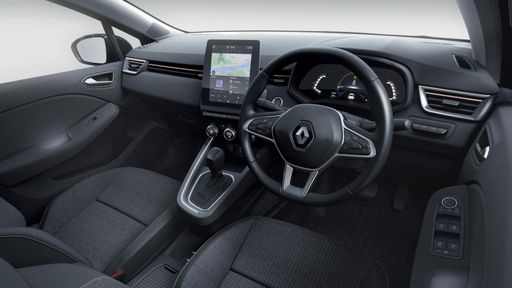
The Clio punches above its weight with chic French styling and a surprisingly grown-up cabin that makes city driving feel effortlessly stylish. It's an easy-to-live-with choice that keeps ownership simple and even manages to put a grin on your face when the traffic gets dull.

details

Citroen C4

Citroën C4 wears its French eccentricity with confidence, pairing bold, sculpted styling with a supremely comfortable ride that turns mundane commutes into a gentler affair. If you value relaxed comfort, clever practicality and a car with personality rather than pretence, the C4 is a charming, sensible choice — and it won't make you miss the usual hot‑hatch theatrics.

details
Renault Clio
Citroen C4

Costs and Consumption

Price
17,100 - 23,700 £
Price
20,600 - 32,200 £
Consumption L/100km
4.1 - 5.1 L/100km
Consumption L/100km
4.7 - 4.8 L/100km
Consumption kWh/100km
-
Consumption kWh/100km
14.5 - 15.3 kWh/100km
Electric Range
-
Electric Range
354 - 427 km
Battery Capacity
-
Battery Capacity
46 - 51 kWh
co2
92 - 115 g/km
co2
0 - 108 g/km
Fuel tank capacity
39 - 42 L
Fuel tank capacity
-

Dimensions and Body

Body Type
Hatchback
Body Type
SUV
Seats
5
Seats
5
Doors
5
Doors
4 - 5
Curb weight
1,202 - 1,316 kg
Curb weight
1,403 - 1,659 kg
Trunk capacity
301 - 327 L
Trunk capacity
380 - 510 L
Length
4,116 mm
Length
4,350 - 4,580 mm
Width
1,768 mm
Width
1,800 - 1,834 mm
Height
1,451 mm
Height
1,520 - 1,525 mm
Max trunk capacity
1,094 - 1,176 L
Max trunk capacity
1,250 - 1,360 L
Payload
453 - 463 kg
Payload
379 - 406 kg

Engine and Performance

Engine Type
Petrol, Full Hybrid
Engine Type
Electric, Petrol MHEV
Transmission
Manuel, Automatic
Transmission
Automatic
Transmission Detail
Manual Gearbox, Dual-Clutch Automatic, Automatic Gearbox
Transmission Detail
Reduction Gearbox, Dual-Clutch Automatic
Drive Type
Front-Wheel Drive
Drive Type
Front-Wheel Drive
Power HP
115 - 158 HP
Power HP
110 - 156 HP
Acceleration 0-100km/h
8.3 - 10.1 s
Acceleration 0-100km/h
8 - 10.8 s
Max Speed
180 km/h
Max Speed
150 km/h
Torque
190 Nm
Torque
205 - 270 Nm
Number of Cylinders
3 - 4
Number of Cylinders
3
Power kW
84 - 116 kW
Power kW
81 - 115 kW
Engine capacity
1,199 - 1,789 cm3
Engine capacity
1,199 cm3

General

Model Year
2,026
Model Year
2,025 - 2,026
CO2 Efficiency Class
C, B
CO2 Efficiency Class
A, C
Brand
Renault
Brand
Citroen
DriveDuel uses data analysis and artificial intelligence to evaluate vehicle data and create content. Content is regularly reviewed and improved. The displayed prices are estimates based on German list prices, adjusted to the respective country’s VAT. Country-specific registration taxes are not included. This information is not legally binding.