VS

Renault Clio vs Kia Picanto comparison

Compare performance (158 HP vs 68 HP), boot space and price (17,100 £ vs 15,100 £ ) at a glance. Find out which car is the better choice for you – Renault Clio or Kia Picanto?

Renault Clio vs Kia Picanto: Key differences

Renault Clio

4.4 (2 Reviews)
rate
  • clearly more power
  • clearly more efficient
  • significantly quicker 0–100 km/h
  • markedly more trunk space
details

Kia Picanto

4.4 (4 Reviews)
rate
  • a bit cheaper
  • barely lighter
details

All details on performance, efficiency, range and trunk space can be found in the technical comparison below – including user reviews for both models.

By Achim Sedelmaier

Clio

Head-to-head snapshot: Kia Picanto VS Renault Clio

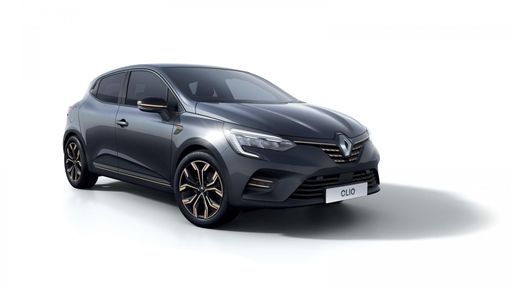
Kia Picanto VS Renault Clio is the kind of matchup that separates true city specialists from more all‑round small cars. The Kia Picanto arrives with a very clear brief: maximum manoeuvrability, low running costs and straightforward equipment for urban life. The Renault Clio answers with a more mature personality — stronger propulsion options, quieter cruising and a tech‑forward cabin that aims at daily efficiency. Choosing between them is less about spec sheets and more about whether your typical day is a tight downtown loop or longer commutes and family duties.
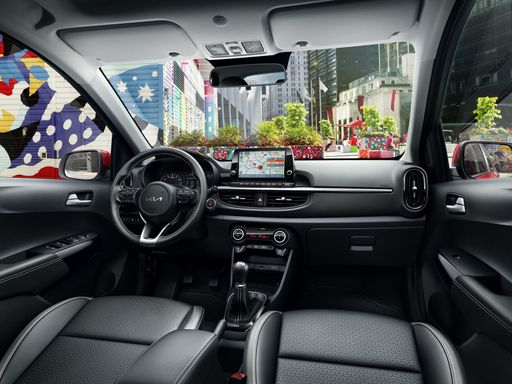
Picanto

Driving character and usability

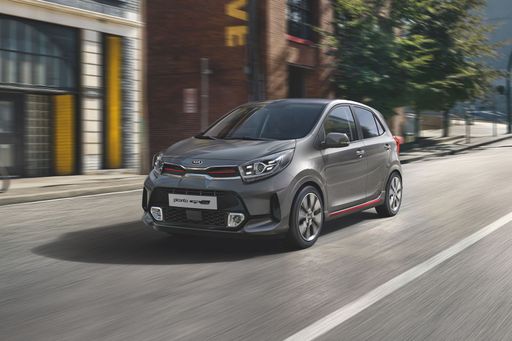
The Kia Picanto feels light, eager and easy to place in traffic, which makes it a pleasure for tight parking and short hops; its small dimensions and direct steering reward confident city driving. The Renault Clio, by contrast, feels more composed on open roads and offers a sense of strength when you need it — overtakes are relaxed and highway runs are less fatiguing. That makes the Picanto the pick when agility and ease of parking are daily priorities, while the Clio suits drivers who want calmer, more assured behavior beyond town limits. Each car exposes its limits in different ways: the Picanto shows its small‑car bark on longer runs, the Clio betrays its efficiency focus under sporty demands.

Clio

Comfort and long‑distance behavior

On longer journeys the Renault Clio’s quieter cabin and more forgiving suspension give it the clear edge for mile‑eating and highway cruising, making it a better companion for commuters and weekend trips. The Kia Picanto can feel upright and vocal once speeds rise, which makes long motorway stints more tiring and louder than in the Clio. If you expect regular two‑hour runs the Clio’s seating and noise insulation will feel noticeably more mature; if most of your driving is urban the Picanto’s compactness and simpler setup will likely be perceived as more practical. Both are small cars, but how that smallness is managed differs: Picanto embraces urban compactness, Clio smooths it into comfortable everyday travel.

Picanto

Cabin feel, controls and perceived quality

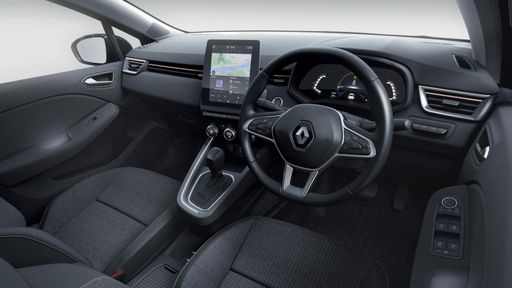
The Kia Picanto trades flair for clarity: switchgear is tactile, menus are straightforward and the interior prioritises usability over luxury — it feels honest and easy to live with. The Renault Clio pushes a more modern, techy image with its Google‑based infotainment and sleeker layout, which makes the cabin feel up‑to‑date even if mid trims still show substantial hard plastics. Picanto buyers will appreciate immediate ergonomics and long warranty peace of mind, while Clio buyers get a more premium impression when they step up trim levels and use the infotainment every day. In short, the Picanto is functional and fuss‑free; the Clio aims to impress with technology and a quieter atmosphere.

Clio

Practicality for families and daily tasks

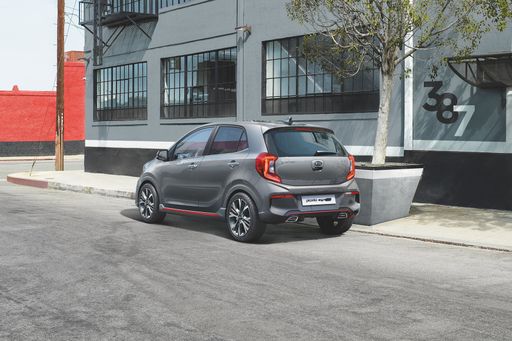
If your life revolves around shopping runs and tight city streets the Kia Picanto’s surprisingly usable boot and tiny footprint make it an efficient everyday tool, though rear space is genuinely limited for adults. The Renault Clio delivers a more flexible load area in its conventional petrol guise and better family features like more mounting points and adult‑tolerable front seats, but the hybrid variants compromise some cargo practicality. Families who routinely carry child seats, weekend luggage or taller passengers will find the Clio’s package closer to a small family car, while single drivers, couples and urban dwellers will value the Picanto’s space economy and lower purchase cost. Both require compromises — rear passengers trade comfort for footprint in both cars — but those trade‑offs land differently depending on cargo and passenger priorities.

Picanto

Which buyer fits which car — trades and next steps

Think of the Kia Picanto as the pragmatic city specialist: lowest hassle for parking, simple controls, a reassuring warranty and lower entry cost, ideal for first cars, dense urban use and light weekend duties. The Renault Clio is for buyers who want small‑car economy fused with more usable range, quieter long‑distance manners and modern infotainment — better for commuters, small families and tech‑minded drivers. Your decision should hinge on typical driving patterns: choose the Picanto if city life dominates and cost matters; choose the Clio if comfort on longer trips, lower real‑world fuel use and a more evolved cabin are priorities. With those buyer fits clear, the next section drills into the technical differences so you can match engines, transmissions and equipment to the lifestyle each car promises.

Here’s where it gets real: The technical differences in detail

Clio

Costs and Efficiency:

Price and efficiency are key factors when choosing a car – and this is often where the real differences emerge.

Kia Picanto is a bit cheaper – starting at 15,100 £ , while the Renault Clio costs 17,100 £ . That’s a price difference of around 1,980 £.

Fuel consumption also shows a difference: the Renault Clio uses 4.1 L/100km and is clearly more efficient than the Kia Picanto with 5.5 L/100km. The difference is about 1.4 L/100km.

Picanto

Engine and Performance:

Power, torque and acceleration say a lot about how a car feels on the road. This is where you see which model delivers more driving dynamics.

When it comes to engine power, the Renault Clio offers clearly more power – delivering 158 HP compared to 68 HP. That’s roughly 90 HP more horsepower.

When accelerating from 0 to 100 km/h, the Renault Clio is significantly quicker – completing the sprint in 8.3 s, while the Kia Picanto takes 14.6 s. That’s about 6.3 s quicker.

There’s also a difference in torque: the Renault Clio delivers substantially more torque with 190 Nm compared to 96 Nm. That’s about 94 Nm more.

Clio

Space and Everyday Use:

Beyond pure performance, interior space and usability matter most in daily life. This is where you see which car is more practical and versatile.

Both vehicles offer seating for 5 people.

In terms of curb weight, Kia Picanto is barely lighter – 1,124 kg compared to 1,202 kg. The difference is around 78 kg.

Looking at boot space, the Renault Clio offers markedly more boot space – 327 L compared to 255 L. That’s a difference of about 72 L.

When it comes to payload, the Renault Clio carries clearly more – 463 kg compared to 332 kg. That’s a difference of about 131 kg.

Who wins the race in the data check?

The Renault Clio holds a decisive overall lead in the objective data comparison.
This result only shows which model scores more points on paper – not which of the two cars feels right for you.

from £17,100
Clio

Renault Clio

  • Engine Type Petrol, Full Hybrid
  • Transmission Manuel, Automatic
  • Drive Type Front-Wheel Drive
  • Power HP 115 - 158 HP
  • Consumption L/100km 4.1 - 5.2 L/100km
Renault Clio
Kia Picanto

Costs and Consumption

View detailed analysis

Engine and Performance

View detailed analysis

Dimensions and Body

View detailed analysis

Renault Clio

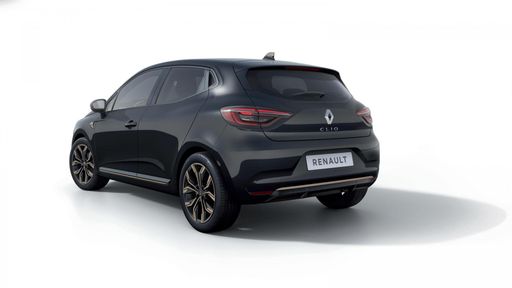
The Renault Clio is a smartly styled and practical compact hatch that feels at home in city traffic while offering a surprisingly refined ride. It pairs user-friendly tech and a comfortable interior with a reputation for being economical and easy to live with.

details

Kia Picanto

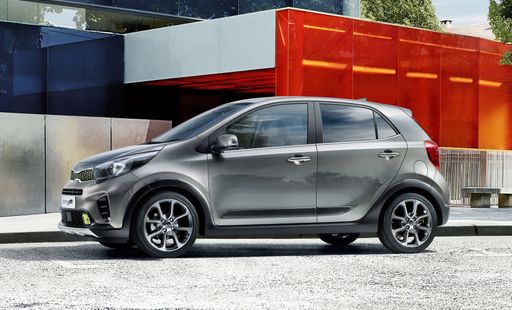
Kia Picanto is a cheeky city hatch that squeezes surprising style, practicality and a smile-inducing drive into a pocket-friendly package. It’s ideal for urban buyers who want fuss-free running, effortless parking and a car that punches above its class without pretending to be anything it’s not.

details
Renault Clio
Kia Picanto

Costs and Consumption

Price
17,100 - 23,700 £
Price
15,100 - 19,500 £
Consumption L/100km
4.1 - 5.2 L/100km
Consumption L/100km
5.5 - 5.9 L/100km
Consumption kWh/100km
-
Consumption kWh/100km
-
Electric Range
-
Electric Range
-
Battery Capacity
-
Battery Capacity
-
co2
92 - 118 g/km
co2
126 - 134 g/km
Fuel tank capacity
-
Fuel tank capacity
-

Dimensions and Body

Body Type
Hatchback
Body Type
Hatchback
Seats
5
Seats
4 - 5
Doors
-
Doors
-
Curb weight
1,202 - 1,316 kg
Curb weight
1,124 - 1,131 kg
Trunk capacity
301 - 327 L
Trunk capacity
255 L
Length
-
Length
-
Width
1,768 mm
Width
1,595 mm
Height
-
Height
-
Max trunk capacity
-
Max trunk capacity
-
Payload
453 - 463 kg
Payload
253 - 332 kg

Engine and Performance

Engine Type
Petrol, Full Hybrid
Engine Type
Petrol
Transmission
Manuel, Automatic
Transmission
Manuel, Automatic
Transmission Detail
Manual Gearbox, Dual-Clutch Automatic, Automatic Gearbox
Transmission Detail
Manual Gearbox, Automated Manual
Drive Type
Front-Wheel Drive
Drive Type
Front-Wheel Drive
Power HP
115 - 158 HP
Power HP
68 HP
Acceleration 0-100km/h
8.3 - 10.3 s
Acceleration 0-100km/h
14.6 - 17.2 s
Max Speed
-
Max Speed
-
Torque
190 Nm
Torque
96 Nm
Number of Cylinders
3 - 4
Number of Cylinders
3
Power kW
84 - 116 kW
Power kW
50 kW
Engine capacity
1,199 - 1,789 cm3
Engine capacity
998 cm3

General

Model Year
2026
Model Year
2025
CO2 Efficiency Class
C, D, B
CO2 Efficiency Class
D
Brand
Renault
Brand
Kia
DriveDuel uses data analysis and artificial intelligence to evaluate vehicle data and create content. Content is regularly reviewed and improved. The displayed prices are estimates based on German list prices, adjusted to the respective country’s VAT. Country-specific registration taxes are not included. This information is not legally binding.