VS

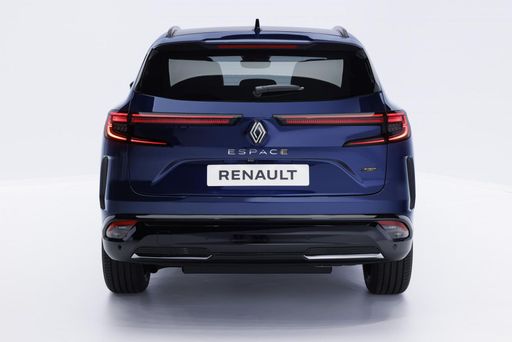
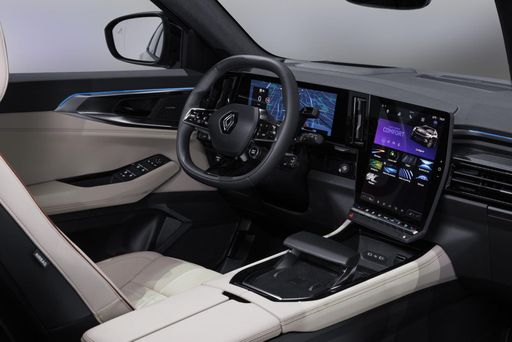
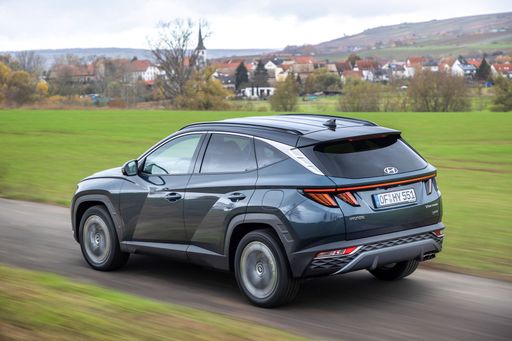
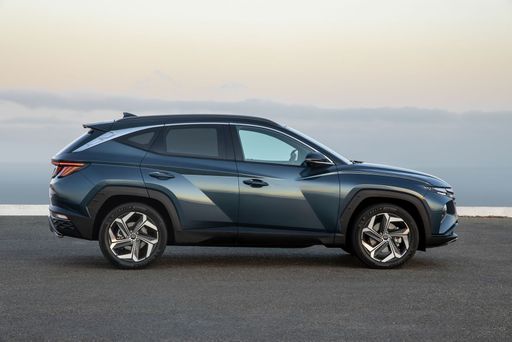
Renault Espace vs Hyundai Tucson comparison

Compare performance (200 HP vs 288 HP), boot space and price (37,500 £ vs 20,900 £ ) at a glance. Find out which car is the better choice for you – Renault Espace or Hyundai Tucson?

Renault Espace vs Hyundai Tucson: Key differences

Renault Espace

4.5 (2 Reviews)
rate
  • moderately more trunk space

Hyundai Tucson

4.6 (4 Reviews)
rate
  • substantially cheaper
  • clearly more power
  • considerably more efficient
  • moderately quicker 0–100 km/h
  • only slightly lighter

All details on performance, efficiency, range and trunk space can be found in the technical comparison below – including user reviews for both models.

Espace

In the competitive world of SUVs, two notable contenders have emerged: the Hyundai Tucson and the Renault Espace. Both models embody innovation and advanced technology but cater to slightly different markets. Here, we compare these two appealing vehicles, assessing their technical specifications, innovations, and overall appeal.
Tucson

Design and Dimensions

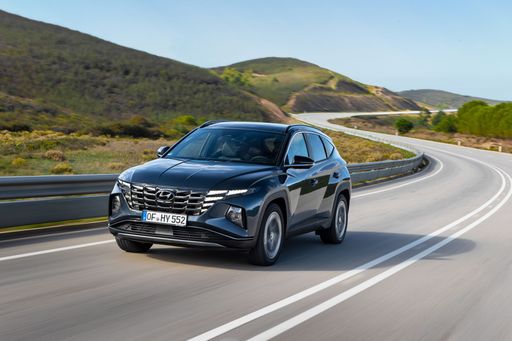
The Hyundai Tucson boasts a stylish and bold exterior, characteristic of the brand’s modern design language. Measuring 4,510 mm in length, 1,865 mm in width, and 1,650 mm in height, it presents a confident stance on the road.

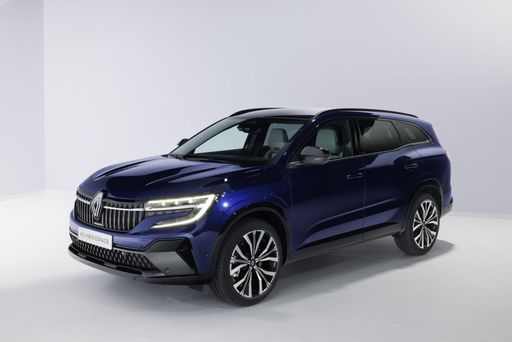
In contrast, the Renault Espace is longer at 4,722 mm but narrower at 1,843 mm and shorter at 1,645 mm in height. The Espace’s design emphasizes practicality, especially for families, with an option for 7 seats, while the Tucson primarily offers a 5-seater configuration.

Espace

Powertrains and Performance

Under the hood, the Hyundai Tucson offers a diverse range of engine options, including Diesel MHEV, Petrol MHEV, Petrol, Full Hybrid, and Plugin Hybrid. With power outputs ranging from 136 HP to 252 HP, Tucson ensures versatility to meet various driving needs. Notably, the Tucson accelerates from 0 to 100 km/h in as little as 7.9 seconds, showcasing its sporty credentials when outfitted with the right engine.

On the other hand, the Renault Espace comes equipped with a single Full Hybrid engine producing 200 HP. It accelerates from 0 to 100 km/h in 8.8 seconds, which, while slightly slower than the Tucson’s top performing engine, still provides a brisk driving experience. Both SUVs promise efficient fuel consumption, with the Tucson ranging between 5.1 to 6.8 L/100 km and the Espace impressively achieving just 4.7 L/100 km.

Tucson

Transmission and Drive

The Tucson offers flexibility with both manual and automatic transmission options, featuring a Dual-Clutch Automatic system for a seamless driving experience. Consumers can also choose between Front-Wheel Drive and All-Wheel Drive configurations, making it adaptable for different terrains.

Conversely, the Renault Espace simplifies options with its automatic gearbox and Front-Wheel Drive setup. This straightforward choice ensures ease of handling, especially for urban environments, although it may lack the off-road capability found in the Tucson’s All-Wheel Drive variant.

Espace

Interior and Technology

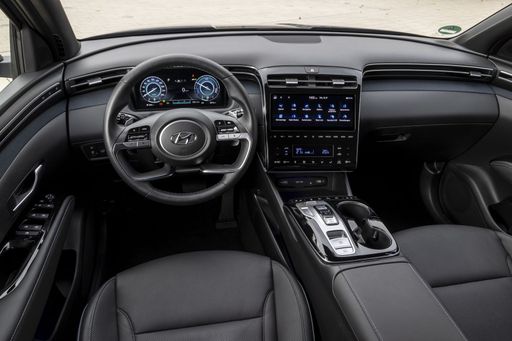
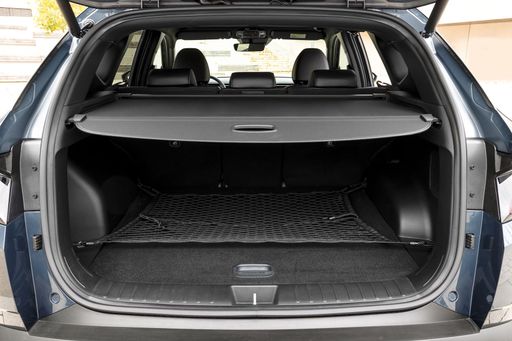
Hyundai Tucson continues to impress with its tech-savvy interior, designed around driver comfort and connectivity. The SUV features a spacious trunk capacity ranging up to 620 L and comes equipped with the latest infotainment system, which incorporates smartphone integration, navigation, and wireless charging.

The Renault Espace, while slightly behind in trunk capacity at 581 L, shines in its versatile seating arrangements. With its seven-seat configuration, the interior can be adapted to suit passenger or cargo demands. Technological advancements, including an intuitive media system, enhance the driving experience, making it family-friendly.

Tucson

Efficiency and Environmental Impact

When considering environmental responsibility, both vehicles stand out. The Hyundai Tucson presents CO2 emissions ranging from 126 to 153 g/km depending on the variant, with an efficient fuel consumption profile. The Espace takes the lead regarding eco-friendliness, offering lower CO2 emissions of just 107 g/km, aligning with the growing demand for sustainable vehicles.

Espace

Conclusion

The comparison between the Hyundai Tucson and Renault Espace is a testament to the strengths found within modern SUVs. Tucson excels in performance, drivetrain options, and superior acceleration, while the Espace prioritizes sustainability and versatility with its family-friendly features. Ultimately, the choice between the two will largely depend on individual needs—whether one prefers sporty performance or the practicality of space and efficiency.

Here’s where it gets real: The technical differences in detail

Espace

Costs and Efficiency:

Price and efficiency are often the first things buyers look at. Here it becomes clear which model has the long-term edge – whether at the pump, the plug, or in purchase price.

Hyundai Tucson is substantially cheaper – starting at 20,900 £ , while the Renault Espace costs 37,500 £ . That’s a price difference of around 16,645 £.

Fuel consumption also shows a difference: the Hyundai Tucson uses 2.7 L/100km and is considerably more efficient than the Renault Espace with 4.9 L/100km. The difference is about 2.2 L/100km.

Tucson

Engine and Performance:

Power, torque and acceleration are the classic benchmarks for car enthusiasts – and here, some clear differences start to show.

When it comes to engine power, the Hyundai Tucson offers clearly more power – delivering 288 HP compared to 200 HP. That’s roughly 88 HP more horsepower.

When accelerating from 0 to 100 km/h, the Hyundai Tucson is moderately quicker – completing the sprint in 7.5 s, while the Renault Espace takes 8.8 s. That’s about 1.3 s quicker.

Looking at top speed, the Hyundai Tucson is somewhat faster – reaching 204 km/h, while the Renault Espace tops out at 174 km/h. The difference is around 30 km/h.

Espace

Space and Everyday Use:

Whether family car or daily driver – which one offers more room, flexibility and comfort?

Seats: Renault Espace offers more seats – 7 vs 5.

In terms of curb weight, Hyundai Tucson is only slightly lighter – 1,542 kg compared to 1,673 kg. The difference is around 131 kg.

Looking at boot space, the Renault Espace offers moderately more boot space – 692 L compared to 620 L. That’s a difference of about 72 L.

For maximum load capacity, the Renault Espace offers a bit more capacity – up to 2,224 L, about 425 L more than the Hyundai Tucson.

When it comes to payload, the Renault Espace carries marginally more – 581 kg compared to 545 kg. That’s a difference of about 36 kg.

Who wins the race in the data check?

The Hyundai Tucson stands well ahead of its rival in the objective data comparison.
This result only shows which model scores more points on paper – not which of the two cars feels right for you.

from £20,900
Tucson

Hyundai Tucson

  • Engine Type : Petrol, Full Hybrid, Plugin Hybrid, Diesel MHEV
  • Transmission : Manuel, Automatic
  • Drive Type : Front-Wheel Drive, All-Wheel Drive
  • Power HP : 136 - 288 HP
  • Consumption L/100km : 2.7 - 7.6 L/100km
  • Electric Range : 63 - 70 km
Renault Espace
Hyundai Tucson

Costs and Consumption

View detailed analysis

Engine and Performance

View detailed analysis

Dimensions and Body

View detailed analysis

Renault Espace

The Renault Espace is the sort of roomy, clever family cruiser that makes long journeys feel effortless, its interior prioritising comfort and practical thinking without drifting into blandness. It won't pretend to be a sports car, but its composed ride, smart packaging and a whisper of French flair make it a sensible and subtly stylish choice for buyers who value space and versatility.

details

Hyundai Tucson

Hyundai Tucson marries bold, sculpted looks with a clever, roomy cabin that feels smarter than its price tag suggests. It's composed on the road, easy to live with day-to-day, and a sensible choice for buyers who want SUV style without the showroom theatrics.

details
Renault Espace
Hyundai Tucson

Costs and Consumption

Price
37,500 - 41,400 £
Price
20,900 - 47,900 £
Consumption L/100km
4.9 L/100km
Consumption L/100km
2.7 - 7.6 L/100km
Consumption kWh/100km
-
Consumption kWh/100km
-
Electric Range
-
Electric Range
63 - 70 km
Battery Capacity
-
Battery Capacity
-
co2
110 g/km
co2
62 - 172 g/km
Fuel tank capacity
55 L
Fuel tank capacity
52 - 54 L

Dimensions and Body

Body Type
SUV
Body Type
SUV
Seats
5 - 7
Seats
5
Doors
5
Doors
5
Curb weight
1,673 - 1,783 kg
Curb weight
1,542 - 1,893 kg
Trunk capacity
212 - 692 L
Trunk capacity
546 - 620 L
Length
4,746 mm
Length
4,525 - 4,535 mm
Width
1,830 mm
Width
1,865 mm
Height
1,645 mm
Height
1,650 mm
Max trunk capacity
2,054 - 2,224 L
Max trunk capacity
1,795 - 1,799 L
Payload
404 - 581 kg
Payload
518 - 545 kg

Engine and Performance

Engine Type
Full Hybrid
Engine Type
Petrol, Full Hybrid, Plugin Hybrid, Diesel MHEV
Transmission
Automatic
Transmission
Manuel, Automatic
Transmission Detail
Automatic Gearbox
Transmission Detail
Manual Gearbox, Dual-Clutch Automatic, Automatic Gearbox
Drive Type
Front-Wheel Drive
Drive Type
Front-Wheel Drive, All-Wheel Drive
Power HP
200 HP
Power HP
136 - 288 HP
Acceleration 0-100km/h
8.8 s
Acceleration 0-100km/h
7.5 - 11.6 s
Max Speed
174 km/h
Max Speed
196 - 204 km/h
Torque
-
Torque
250 - 379 Nm
Number of Cylinders
3
Number of Cylinders
4
Power kW
147 kW
Power kW
100 - 212 kW
Engine capacity
1,199 cm3
Engine capacity
1,598 cm3

General

Model Year
2,025
Model Year
2,025
CO2 Efficiency Class
C
CO2 Efficiency Class
F, D, E, B
Brand
Renault
Brand
Hyundai
DriveDuel uses data analysis and artificial intelligence to evaluate vehicle data and create content. Content is regularly reviewed and improved. The displayed prices are estimates based on German list prices, adjusted to the respective country’s VAT. Country-specific registration taxes are not included. This information is not legally binding.