VS

Renault Kangoo vs Dacia Jogger comparison

Compare performance (130 HP vs 158 HP), boot space and price (25,700 £ vs 15,400 £ ) at a glance. Find out which car is the better choice for you – Renault Kangoo or Dacia Jogger?

Renault Kangoo vs Dacia Jogger: Key differences

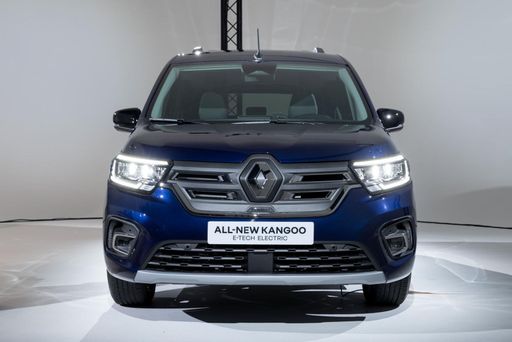
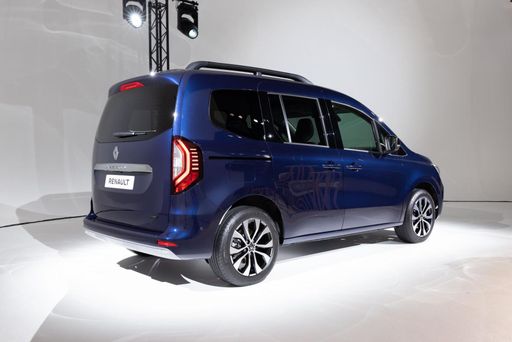
Renault Kangoo

5 (1 Reviews)
rate
  • visibly more trunk space

Dacia Jogger

4.6 (1 Reviews)
rate
  • considerably cheaper
  • somewhat more power
  • a bit more efficient
  • visibly quicker 0–100 km/h
  • somewhat lighter

All details on performance, efficiency, range and trunk space can be found in the technical comparison below – including user reviews for both models.

Kangoo

The automotive market is increasingly competitive, especially in the segment that caters to families and multipurpose needs. Two vehicles that have caught the attention of potential buyers are the Dacia Jogger and the Renault Kangoo. Both models come from the same parent brand and share a commitment to providing practical solutions, but they cater to slightly different audiences and embody distinct philosophies in design and technology. In this article, we will dive into a comparison of these two versatile vehicles, examining their technical specifications, innovations, and overall value for consumers.
Jogger

Design and Practicality

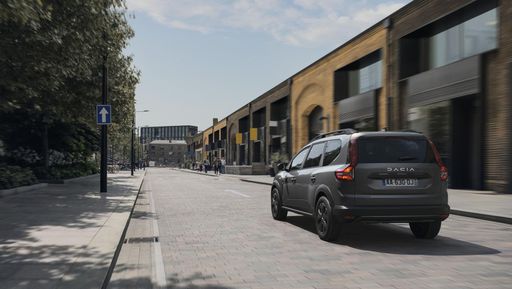
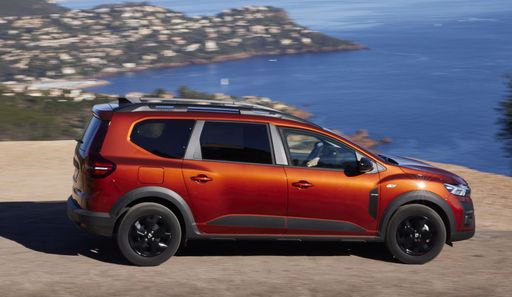
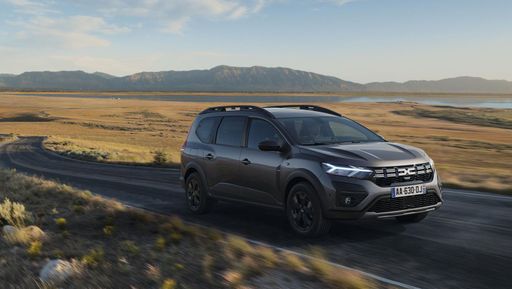
When it comes to design, the Dacia Jogger offers a modern MPV aesthetic with a rugged edge. With a length of 4547 mm, a width of 1784 mm, and a height of 1674 mm, the Jogger is designed to accommodate families with either five or seven seats. The vehicle’s trunk capacity of 607 liters is impressive, making it suitable for both daily errands and longer trips.

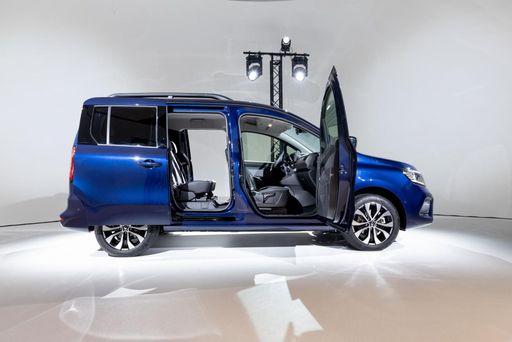
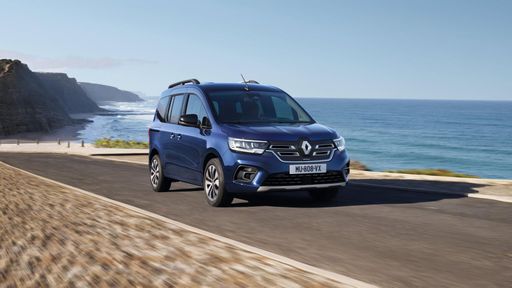
The Renault Kangoo, while traditionally known for its utilitarian design, has evolved significantly in its latest iterations. Although specific data on dimensions and capacity is currently unavailable, the Kangoo often emphasizes its practical features, such as sliding doors for easier access in tight spaces and modular cargo options to maximize interior versatility.

Kangoo

Engine Options and Performance

The Dacia Jogger boasts a range of engine options that cater to diverse consumer preferences. It offers a selection of petrol, LPG, and full hybrid engines with power outputs ranging from 91 HP to 140 HP. The full hybrid variant emphasizes fuel efficiency, achieving consumption figures as low as 4.7 liters per 100 km, appealing to environmentally conscious buyers.

In terms of torque, the Jogger delivers between 170 Nm to 200 Nm, depending on the chosen variant, ensuring a comfortable driving experience regardless of load. With a top speed reaching up to 174 km/h and an acceleration from 0 to 100 km/h in as little as 9.8 seconds, the Jogger provides a dynamic driving experience, combining performance with practicality.

Jogger

Transmission and Drive Type

The Jogger offers both automatic and manual transmission options, allowing drivers to select their preferred driving experience. As a front-wheel-drive vehicle, it provides ample grip and stability, particularly under varying weather conditions. This is an advantageous feature for families who prioritize safety and comfort during their journeys.

Kangoo

Technological Innovations

Renault has equipped the Kangoo with various technological advancements, focusing on user convenience and safety. Although specific features for the most recent model year are not detailed, innovations typically include advanced driver assistance systems, an intuitive infotainment suite, and smart cargo management tools that make loading and unloading easier.

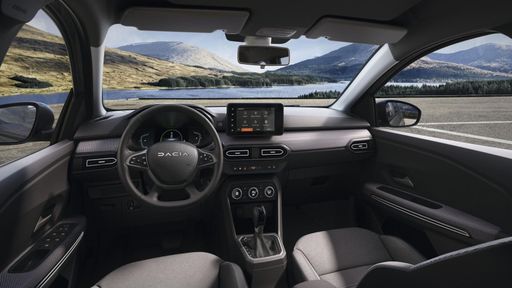
The Dacia Jogger, on the other hand, leans into practicality with features like a modular interior that adapts to different passenger and cargo needs. The option for a hybrid engine showcases Dacia's commitment to sustainability, providing a cleaner, more efficient driving option for eco-minded consumers.

Jogger

Value for Money

One of the strongest selling points for both the Dacia Jogger and the Renault Kangoo is their value-for-money proposition. Dacia has a well-established reputation for offering no-nonsense vehicles at affordable prices, and the Jogger is no exception. With competitive pricing for a family-oriented vehicle packed with features, it stands out in a crowded marketplace.

The Renault Kangoo, traditionally focused on the commercial sector, remains an excellent investment for families seeking practicality, especially over long distances or for transporting goods. Its proven reliability and efficiency make it a worthy contender in this comparison.

Kangoo

Conclusion

Ultimately, the choice between the Dacia Jogger and the Renault Kangoo boils down to specific needs and preferences. The Jogger appeals to families looking for a stylish, modern MPV with flexible seating and cargo options, while the Kangoo remains a loyal companion for those needing a rugged, straightforward vehicle with practicality at its core. Both models offer unique advantages and will undoubtedly cater to the diverse requirements of today’s drivers.

Here’s where it gets real: The technical differences in detail

Kangoo

Costs and Efficiency:

Price and efficiency are key factors when choosing a car – and this is often where the real differences emerge.

Dacia Jogger is considerably cheaper – starting at 15,400 £ , while the Renault Kangoo costs 25,700 £ . That’s a price difference of around 10,294 £.

Fuel consumption also shows a difference: the Dacia Jogger uses 4.5 L/100km and is a bit more efficient than the Renault Kangoo with 5.2 L/100km. The difference is about 0.7 L/100km.

Jogger

Engine and Performance:

Under the bonnet, it becomes clear which model is tuned for sportiness and which one takes the lead when you hit the accelerator.

When it comes to engine power, the Dacia Jogger offers somewhat more power – delivering 158 HP compared to 130 HP. That’s roughly 28 HP more horsepower.

When accelerating from 0 to 100 km/h, the Dacia Jogger is visibly quicker – completing the sprint in 8.9 s, while the Renault Kangoo takes 11.6 s. That’s about 2.7 s quicker.

There’s also a difference in torque: the Renault Kangoo delivers noticeably more torque with 270 Nm compared to 200 Nm. That’s about 70 Nm more.

Kangoo

Space and Everyday Use:

Whether family car or daily driver – which one offers more room, flexibility and comfort?

Both vehicles offer seating for 7 people.

In terms of curb weight, Dacia Jogger is somewhat lighter – 1,268 kg compared to 1,489 kg. The difference is around 221 kg.

Looking at boot space, the Renault Kangoo offers visibly more boot space – 950 L compared to 607 L. That’s a difference of about 343 L.

When it comes to payload, the Renault Kangoo carries very slightly more – 610 kg compared to 559 kg. That’s a difference of about 51 kg.

Who wins the race in the data check?

The Dacia Jogger has only a minor advantage in the objective data comparison.
This result only shows which model scores more points on paper – not which of the two cars feels right for you.

from £15,400
Jogger

Dacia Jogger

  • Engine Type : Petrol, Full Hybrid, LPG
  • Transmission : Manuel, Automatic
  • Drive Type : Front-Wheel Drive
  • Power HP : 110 - 158 HP
  • Consumption L/100km : 4.5 - 7.6 L/100km
Renault Kangoo
Dacia Jogger

Costs and Consumption

View detailed analysis

Engine and Performance

View detailed analysis

Dimensions and Body

View detailed analysis

Renault Kangoo

The Renault Kangoo is the pragmatic chameleon of small vans, marrying van-like practicality with carlike comfort and a cheerful, friendly face that suits both family runs and workday hauls. It's sensible, versatile and annoyingly useful — easy to live with, cheap to run and clever where it counts, so you get more space and fewer compromises than the price suggests.

details

Dacia Jogger

The Dacia Jogger is a no-nonsense family mover that stretches the idea of value with cavernous practicality and flexible space, perfect for buyers who need a sensible, everyday Swiss Army knife on wheels. It doesn’t try to be glamorous — instead it wins hearts with cheerful thrift, durable materials and honest engineering, giving you useful transport without the pretence.

details
Renault Kangoo
Dacia Jogger

Costs and Consumption

Price
25,700 - 36,200 £
Price
15,400 - 23,500 £
Consumption L/100km
5.2 - 7.4 L/100km
Consumption L/100km
4.5 - 7.6 L/100km
Consumption kWh/100km
20.2 - 21.5 kWh/100km
Consumption kWh/100km
-
Electric Range
278 - 285 km
Electric Range
-
Battery Capacity
-
Battery Capacity
-
co2
0 - 168 g/km
co2
103 - 138 g/km
Fuel tank capacity
-
Fuel tank capacity
-

Dimensions and Body

Body Type
High Roof Estate
Body Type
MPV
Seats
5 - 7
Seats
5 - 7
Doors
5
Doors
-
Curb weight
1,489 - 2,041 kg
Curb weight
1,268 - 1,463 kg
Trunk capacity
500 - 950 L
Trunk capacity
160 - 607 L
Length
4,486 - 4,911 mm
Length
-
Width
1,860 - 1,919 mm
Width
1,784 mm
Height
1,838 - 1,869 mm
Height
-
Max trunk capacity
2,500 - 3,050 L
Max trunk capacity
-
Payload
459 - 610 kg
Payload
384 - 559 kg

Engine and Performance

Engine Type
Electric, Petrol, Diesel
Engine Type
Petrol, Full Hybrid, LPG
Transmission
Automatic, Manuel
Transmission
Manuel, Automatic
Transmission Detail
Reduction Gearbox, Manual Gearbox, Dual-Clutch Automatic
Transmission Detail
Manual Gearbox, Automatic Gearbox, Dual-Clutch Automatic
Drive Type
Front-Wheel Drive
Drive Type
Front-Wheel Drive
Power HP
95 - 130 HP
Power HP
110 - 158 HP
Acceleration 0-100km/h
11.6 - 16.7 s
Acceleration 0-100km/h
8.9 - 12 s
Max Speed
130 - 135 km/h
Max Speed
-
Torque
240 - 270 Nm
Torque
190 - 200 Nm
Number of Cylinders
4
Number of Cylinders
3 - 4
Power kW
70 - 96 kW
Power kW
81 - 116 kW
Engine capacity
1,332 - 1,461 cm3
Engine capacity
999 - 1,789 cm3

General

Model Year
2,022 - 2,025
Model Year
2,025
CO2 Efficiency Class
A, F, E
CO2 Efficiency Class
D, E, C
Brand
Renault
Brand
Dacia
DriveDuel uses data analysis and artificial intelligence to evaluate vehicle data and create content. Content is regularly reviewed and improved. The displayed prices are estimates based on German list prices, adjusted to the respective country’s VAT. Country-specific registration taxes are not included. This information is not legally binding.