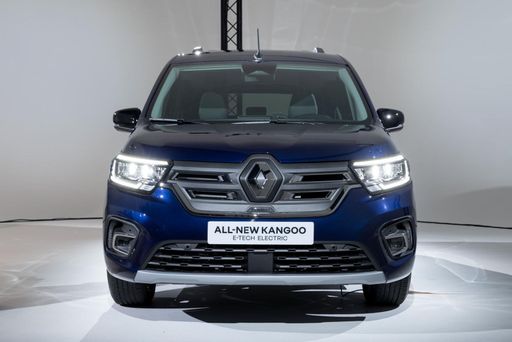
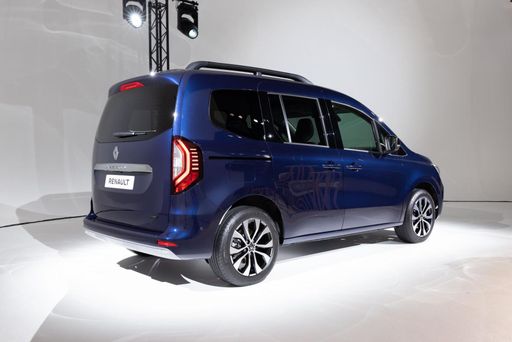
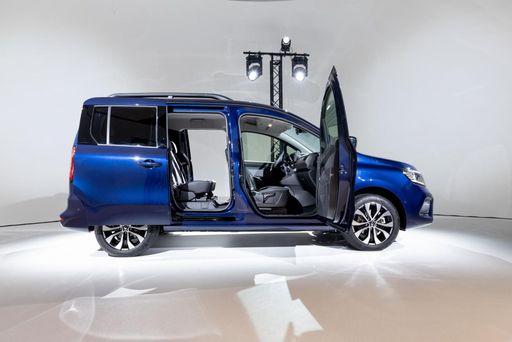
VS

Renault Kangoo vs Fiat Scudo comparison

Compare performance (130 HP vs 180 HP), boot space and price (25,700 £ vs 30,900 £ ) at a glance. Find out which car is the better choice for you – Renault Kangoo or Fiat Scudo?

Renault Kangoo vs Fiat Scudo: Key differences

Renault Kangoo

5 (1 Reviews)
rate
  • visibly cheaper
  • a bit more efficient
  • somewhat more efficient
  • slightly lighter

Fiat Scudo

  • clearly more power
  • moderately more electric range
  • a bit quicker 0–100 km/h
Kangoo

Fiat Scudo vs Renault Kangoo: A Tale of Two Practical Workhorses

In the world of light commercial vehicles, efficiency and practicality often take precedence over flair and extravagance. Two contenders in this arena, the Fiat Scudo and the Renault Kangoo, bring forth unique qualities and innovations that cater to different needs. In this comprehensive comparison, we'll dive deep into their technical aspects, engine options, and what innovations they bring to the table.
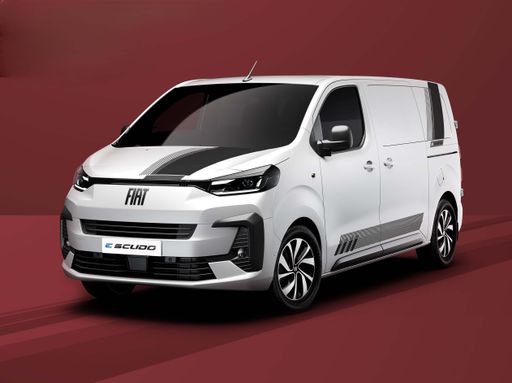
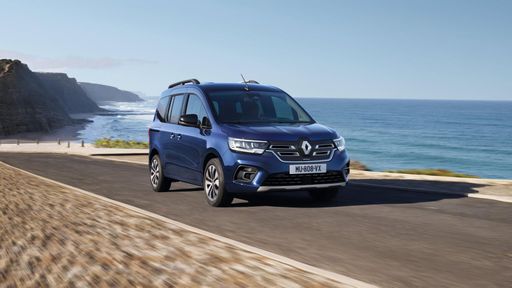
Scudo

Design and Dimensions

When evaluating the Fiat Scudo and the Renault Kangoo, dimensions and design are among the first aspects that catch the eye. As a cargo van, the Scudo stretches across various lengths from 4609 mm to 5330 mm, standing tall with a height ranging between 1881 mm and 1935 mm. It provides a sturdy width of 1920 mm.

In contrast, the Renault Kangoo takes on the form of a high roof wagon, with its length varying from 4486 mm to 4911 mm. Its width slightly edges behind the Scudo at 1860 mm to 1919 mm, and offers a distinct height between 1838 mm and 1869 mm.

Kangoo

Engine Performance and Efficiency

The Fiat Scudo offers a versatile range of engine types, from traditional diesel ranging from 100 HP to 180 HP to eco-friendly electric alternatives providing up to 177 HP. With a focus on reducing environmental impact, its electric variant provides a commendable range of up to 352 km on a single charge, consuming approximately 23.6 to 27 kWh/100km. The diesel engines maintain fuel efficiency, consuming between 6.5 and 7.8 L/100km.

On the other hand, the Renault Kangoo presents a choice between diesel, petrol, and electric engines. Its power output varies from 95 HP to 130 HP in traditional engines and reaches up to 122 HP in its electric model. The Kangoo's electric version can travel up to 285 km per charge, with an energy consumption of 20.2 to 21.5 kWh/100km. For fossil fuel engines, the consumption ranges from 5.2 to 7.1 L/100km, emphasizing efficiency.

Transmission and Drive Dynamics

The daily driving experience is crucial, and both models offer practicality and ease of use. The Fiat Scudo comes equipped with a manual or automatic gearbox, incorporating reduction gearboxes in its electric variants, all while being driven by its front-wheel-drive system.

Similarly, the Renault Kangoo provides versatility with its manual and dual-clutch automatic transmissions in its diesel and petrol options, alongside reduction gearboxes in the electric models. The Kangoo’s front-wheel-drive system ensures that the power delivery is smooth and manageable, ideal for urban settings and tight spaces.

Seating and Capacity

Capacity and versatility often make or break the practicality of such vans. The Fiat Scudo offers seating configurations ranging from 2 to 6 seats, depending on the specific needs for cargo or passenger transport. It also boasts impressive payloads, reaching up to 1805 kg, catering to a wide array of commercial applications.

The Renault Kangoo, while generally designed for more passenger-oriented utility, accommodates up to 7 seats and offers a trunk capacity of up to 950 liters, providing an apt solution for families or small businesses. Its payload capacity peaks at 609 kg, offering a balance between passenger comfort and light cargo handling.

Conclusion: Selecting the Right Workhorse

The choice between the Fiat Scudo and Renault Kangoo ultimately lies in the user's specific needs. For those requiring a robust, cargo-centric vehicle with a focus on load capacity and electric range, the Fiat Scudo is a compelling candidate. Conversely, the Renault Kangoo stands out as a versatile hybrid, capable of handling both passenger transport and light cargo with finesse. Both vehicles present a blend of innovation and practicality, making either a reliable partner in their respective segments.

Here’s where it gets real: The technical differences in detail

Kangoo

Costs and Efficiency:

Price and efficiency are key factors when choosing a car – and this is often where the real differences emerge.

Renault Kangoo is visibly cheaper – starting at 25,700 £ , while the Fiat Scudo costs 30,900 £ . That’s a price difference of around 5,192 £.

Fuel consumption also shows a difference: the Renault Kangoo uses 5.2 L/100km and is a bit more efficient than the Fiat Scudo with 6.2 L/100km. The difference is about 1 L/100km.

In terms of energy consumption, the Renault Kangoo is somewhat more efficient: consuming 20.2 kWh/100km compared to 23.6 kWh/100km for the Fiat Scudo. That’s a difference of about 3.4 kWh/100km.

As for electric range, the Fiat Scudo offers moderately more range – reaching up to 352 km, about 67 km more than the Renault Kangoo.

Scudo

Engine and Performance:

Under the bonnet, it becomes clear which model is tuned for sportiness and which one takes the lead when you hit the accelerator.

When it comes to engine power, the Fiat Scudo offers clearly more power – delivering 180 HP compared to 130 HP. That’s roughly 50 HP more horsepower.

When accelerating from 0 to 100 km/h, the Fiat Scudo is a bit quicker – completing the sprint in 10.5 s, while the Renault Kangoo takes 11.6 s. That’s about 1.1 s quicker.

There’s also a difference in torque: the Fiat Scudo delivers clearly more torque with 400 Nm compared to 270 Nm. That’s about 130 Nm more.

Kangoo

Space and Everyday Use:

Cabin size, boot volume and payload all play a role in everyday practicality. Here, comfort and flexibility make the difference.

Seats: Renault Kangoo offers more seats – 7 vs 6.

In terms of curb weight, Renault Kangoo is slightly lighter – 1,489 kg compared to 1,722 kg. The difference is around 233 kg.

When it comes to payload, the Fiat Scudo carries significantly more – 1,805 kg compared to 610 kg. That’s a difference of about 1,195 kg.

Who wins the race in the data check?

The Fiat Scudo stands well ahead of its rival in the objective data comparison.
This result only shows which model scores more points on paper – not which of the two cars feels right for you.

from £30,900
Scudo

Fiat Scudo

  • Engine Type : Electric, Diesel
  • Transmission : Automatic, Manuel
  • Drive Type : Front-Wheel Drive
  • Power HP : 120 - 180 HP
  • Consumption L/100km : 6.2 - 6.5 L/100km
  • Consumption kWh/100km : 23.6 - 24 kWh/100km
  • Electric Range : 221 - 352 km
Renault Kangoo
Fiat Scudo

Costs and Consumption

View detailed analysis

Engine and Performance

View detailed analysis

Dimensions and Body

View detailed analysis

Renault Kangoo

The Renault Kangoo is the pragmatic chameleon of small vans, marrying van-like practicality with carlike comfort and a cheerful, friendly face that suits both family runs and workday hauls. It's sensible, versatile and annoyingly useful — easy to live with, cheap to run and clever where it counts, so you get more space and fewer compromises than the price suggests.

details

Fiat Scudo

The Fiat Scudo is a practical and unpretentious van that balances hardworking utility with a surprisingly polished cabin, making it a sensible choice for tradespeople and families who need space without fuss. It doesn't pretend to be flashy, but its clever packaging, sensible driving manners and affordable running costs make the Scudo a dependable partner for the daily grind and weekend projects — and it even manages to look tidy in the car park.

details
Renault Kangoo
Fiat Scudo

Costs and Consumption

Price
25,700 - 36,200 £
Price
30,900 - 51,300 £
Consumption L/100km
5.2 - 7.4 L/100km
Consumption L/100km
6.2 - 6.5 L/100km
Consumption kWh/100km
20.2 - 21.5 kWh/100km
Consumption kWh/100km
23.6 - 24 kWh/100km
Electric Range
278 - 285 km
Electric Range
221 - 352 km
Battery Capacity
-
Battery Capacity
-
co2
0 - 168 g/km
co2
0 - 172 g/km
Fuel tank capacity
-
Fuel tank capacity
-

Dimensions and Body

Body Type
High Roof Estate
Body Type
Cargo Van
Seats
5 - 7
Seats
2 - 6
Doors
5
Doors
-
Curb weight
1,489 - 2,041 kg
Curb weight
1,722 - 2,260 kg
Trunk capacity
500 - 950 L
Trunk capacity
-
Length
4,486 - 4,911 mm
Length
-
Width
1,860 - 1,919 mm
Width
1,920 mm
Height
1,838 - 1,869 mm
Height
-
Max trunk capacity
2,500 - 3,050 L
Max trunk capacity
-
Payload
459 - 610 kg
Payload
840 - 1,805 kg

Engine and Performance

Engine Type
Electric, Petrol, Diesel
Engine Type
Electric, Diesel
Transmission
Automatic, Manuel
Transmission
Automatic, Manuel
Transmission Detail
Reduction Gearbox, Manual Gearbox, Dual-Clutch Automatic
Transmission Detail
Reduction Gearbox, Manual Gearbox, Automatic Gearbox
Drive Type
Front-Wheel Drive
Drive Type
Front-Wheel Drive
Power HP
95 - 130 HP
Power HP
120 - 180 HP
Acceleration 0-100km/h
11.6 - 16.7 s
Acceleration 0-100km/h
10.5 - 11.2 s
Max Speed
130 - 135 km/h
Max Speed
-
Torque
240 - 270 Nm
Torque
260 - 400 Nm
Number of Cylinders
4
Number of Cylinders
4
Power kW
70 - 96 kW
Power kW
88 - 132 kW
Engine capacity
1,332 - 1,461 cm3
Engine capacity
1,499 - 2,184 cm3

General

Model Year
2,022 - 2,025
Model Year
2,024 - 2,025
CO2 Efficiency Class
A, F, E
CO2 Efficiency Class
A, F
Brand
Renault
Brand
Fiat
DriveDuel uses data analysis and artificial intelligence to evaluate vehicle data and create content. Content is regularly reviewed and improved. The displayed prices are estimates based on German list prices, adjusted to the respective country’s VAT. Country-specific registration taxes are not included. This information is not legally binding.