VS

Renault Kangoo vs Peugeot Rifter comparison

Compare performance (130 HP vs 136 HP), boot space and price (25,700 £ vs 22,900 £ ) at a glance. Find out which car is the better choice for you – Renault Kangoo or Peugeot Rifter?

Renault Kangoo vs Peugeot Rifter: Key differences

Renault Kangoo

5 (1 Reviews)
rate
  • very slightly more efficient
  • barely lighter

Peugeot Rifter

4.7 (1 Reviews)
rate
  • somewhat cheaper
  • marginally more power
  • a bit more efficient
  • a bit more electric range
  • barely quicker 0–100 km/h
  • marginally more trunk space
Kangoo

Rifter

Introduction: Peugeot Rifter vs Renault Kangoo

The automotive market has seen a significant rise in the popularity of high-roof wagons, catering to both personal and commercial use. Among the notable contenders in this segment are the Peugeot Rifter and the Renault Kangoo. These two vehicles bring to the table distinct attributes, from engine options to innovative features. In this article, we will delve into a comprehensive comparison of these two formidable models, highlighting their technical specifications, innovations, and overall performance.

Kangoo

Design and Comfort

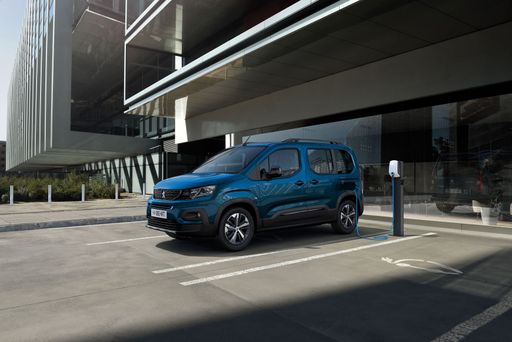
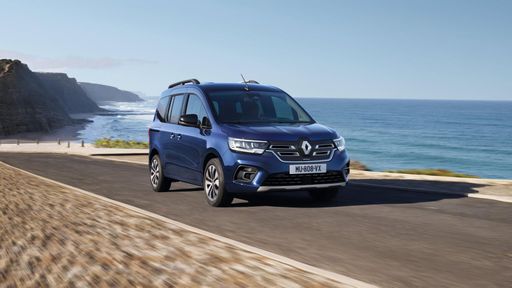
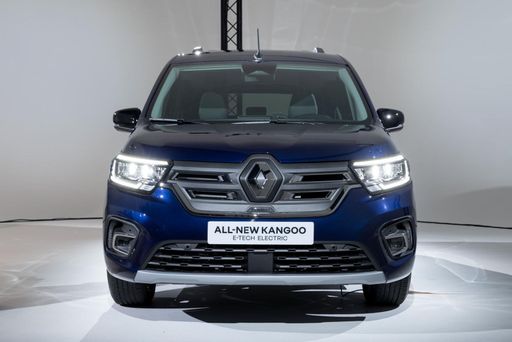
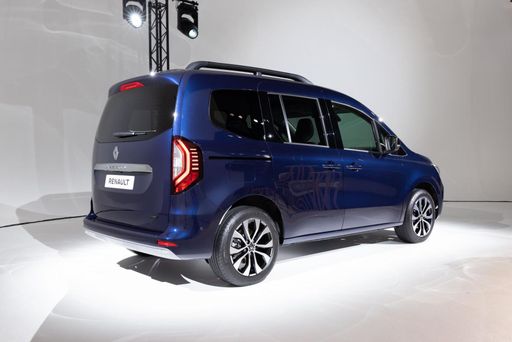
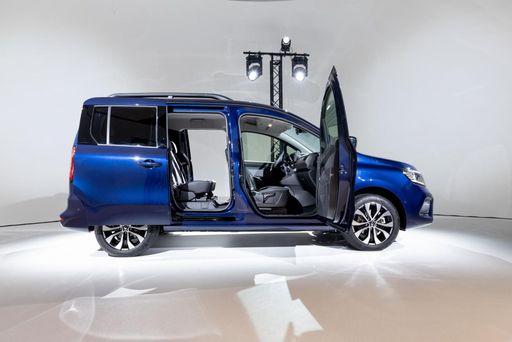
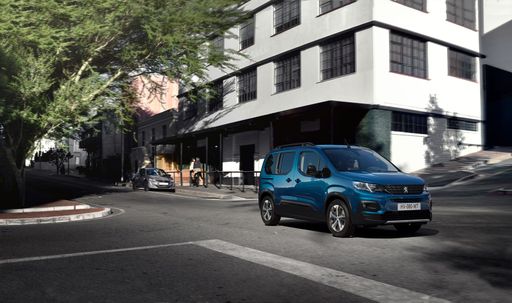
Both the Peugeot Rifter and Renault Kangoo boast a practical design that emphasizes spaciousness and functionality. The Rifter measures 4,405 mm in length, while the Kangoo, slightly longer at 4,911 mm, offers a more extended cabin space. In terms of height, the Kangoo is marginally taller at 1,869 mm compared to the Rifter's 1,818 mm, providing a superior headroom experience.

In terms of seating capacity, both models offer configurations for up to seven passengers, making them suitable for family use. Moreover, both the Rifter and Kangoo prioritize cargo space, with the Rifter providing a trunk capacity of up to 1,050 liters, while the Kangoo maximizes its cargo area with a generous 950 liters.

Rifter

Engine Choices and Performance

The engine options available in these vehicles cater to a variety of driver preferences. The Peugeot Rifter is available with a choice of electric, petrol, and diesel engines, with power outputs ranging from 102 to 136 HP. Its 1,199 cm³ petrol engine can accelerate from 0 to 100 km/h in 11.5 seconds, while the diesel variant emphasizes efficiency with a consumption of just 5.4 L/100 km.

On the other hand, the Renault Kangoo offers a range of diesel and petrol engines with power figures between 95 and 130 HP. The Kangoo's efficient 1,461 cm³ engine impresses with a fuel consumption rating of 5.3 L/100 km, although its acceleration can be a bit sluggish, reaching 0-100 km/h in about 15.6 seconds with the base model.

Kangoo

Innovations and Technology

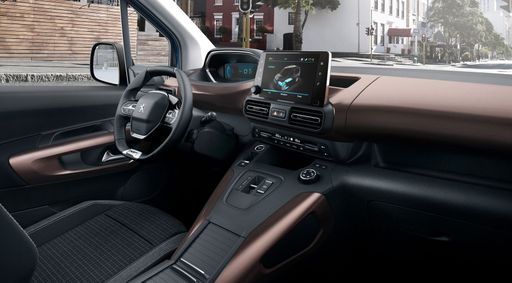
Both models come equipped with technological advancements aimed at enhancing safety and driving experience. The Peugeot Rifter features advanced driver assistance systems such as lane departure warning and adaptive cruise control, providing a layer of safety on long journeys. The interior is also designed for modern connectivity, featuring touchscreen interfaces and smartphone integration.

The Renault Kangoo, while also well-versed in technology, stands out with its practical focus. It offers a unique 'Easy Link' multimedia system, allowing for seamless connectivity and navigation. Additionally, the Kangoo includes safety features like automatic emergency braking and parking assist, aimed at easing urban driving experiences.

Rifter

Electric Options: A Sustainable Future

As the automotive industry moves towards greener energy solutions, both the Rifter and Kangoo have made strides in the electric vehicle space. The Peugeot Rifter offers an impressive electric range of up to 340 km, making it suitable for everyday use without the constant need for recharging. It consumes 19.1 kWh/100 km, highlighting its efficiency as an electric vehicle.

Conversely, the Kangoo provides a slightly lower electric range of 285 km with a consumption of 20.2 kWh/100 km. While both models present viable electric alternatives, the Rifter slightly outshines the Kangoo in range and efficiency.

Kangoo

Conclusion: Which High-Roof Wagon Wins?

Choosing between the Peugeot Rifter and Renault Kangoo largely depends on individual needs and preferences. The Rifter offers superior engine performance, innovative tech, and a greater electric range, making it an excellent choice for the future-oriented driver. Conversely, the Kangoo excels in practicality and space, making it a reliable choice for users with significant loading needs.

Ultimately, both vehicles bring forth their unique strengths, contributing to a competitive market that caters to diverse customer requirements. Whether it is the Rifter or the Kangoo, prospective buyers will find functional and well-designed vehicles in either option.

Here’s where it gets real: The technical differences in detail

Kangoo

Costs and Efficiency:

Price and efficiency are often the first things buyers look at. Here it becomes clear which model has the long-term edge – whether at the pump, the plug, or in purchase price.

Peugeot Rifter is somewhat cheaper – starting at 22,900 £ , while the Renault Kangoo costs 25,700 £ . That’s a price difference of around 2,854 £.

Fuel consumption also shows a difference: the Renault Kangoo uses 5.2 L/100km and is very slightly more efficient than the Peugeot Rifter with 5.4 L/100km. The difference is about 0.2 L/100km.

In terms of energy consumption, the Peugeot Rifter is a bit more efficient: consuming 18.3 kWh/100km compared to 20.2 kWh/100km for the Renault Kangoo. That’s a difference of about 1.9 kWh/100km.

As for electric range, the Peugeot Rifter offers a bit more range – reaching up to 339 km, about 54 km more than the Renault Kangoo.

Rifter

Engine and Performance:

Power, torque and acceleration say a lot about how a car feels on the road. This is where you see which model delivers more driving dynamics.

When it comes to engine power, the Peugeot Rifter offers marginally more power – delivering 136 HP compared to 130 HP. That’s roughly 6 HP more horsepower.

When accelerating from 0 to 100 km/h, the Peugeot Rifter is barely quicker – completing the sprint in 11.3 s, while the Renault Kangoo takes 11.6 s. That’s about 0.3 s quicker.

Looking at top speed, the Renault Kangoo is barely faster – reaching 135 km/h, while the Peugeot Rifter tops out at 132 km/h. The difference is around 3 km/h.

There’s also a difference in torque: the Peugeot Rifter delivers only slightly more torque with 300 Nm compared to 270 Nm. That’s about 30 Nm more.

Kangoo

Space and Everyday Use:

Whether family car or daily driver – which one offers more room, flexibility and comfort?

Both vehicles offer seating for 7 people.

In terms of curb weight, Renault Kangoo is barely lighter – 1,489 kg compared to 1,498 kg. The difference is around 9 kg.

Looking at boot space, the Peugeot Rifter offers marginally more boot space – 1,050 L compared to 950 L. That’s a difference of about 100 L.

For maximum load capacity, the Peugeot Rifter offers moderately more capacity – up to 3,500 L, about 450 L more than the Renault Kangoo.

When it comes to payload, the Peugeot Rifter carries visibly more – 814 kg compared to 610 kg. That’s a difference of about 204 kg.

Who wins the race in the data check?

The Peugeot Rifter is decisively ahead in the objective data comparison.
This result only shows which model scores more points on paper – not which of the two cars feels right for you.

from £22,900
Rifter

Peugeot Rifter

  • Engine Type : Electric, Petrol, Diesel
  • Transmission : Automatic, Manuel
  • Drive Type : Front-Wheel Drive
  • Power HP : 102 - 136 HP
  • Consumption L/100km : 5.4 - 6.5 L/100km
  • Consumption kWh/100km : 18.3 - 19.1 kWh/100km
  • Electric Range : 328 - 339 km
Renault Kangoo
Peugeot Rifter

Costs and Consumption

View detailed analysis

Engine and Performance

View detailed analysis

Dimensions and Body

View detailed analysis

Renault Kangoo

The Renault Kangoo is the pragmatic chameleon of small vans, marrying van-like practicality with carlike comfort and a cheerful, friendly face that suits both family runs and workday hauls. It's sensible, versatile and annoyingly useful — easy to live with, cheap to run and clever where it counts, so you get more space and fewer compromises than the price suggests.

details

Peugeot Rifter

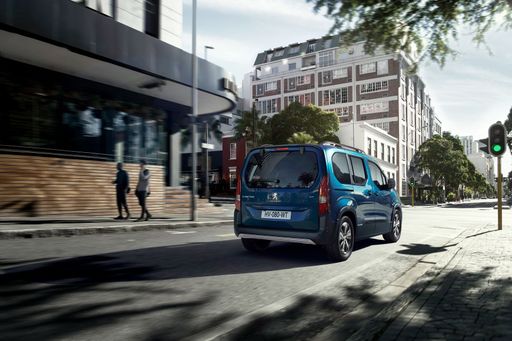
The Peugeot Rifter is a practical, family-friendly people carrier that makes everyday errands and weekend escapes feel effortless thanks to its airy cabin and clever, flexible interior. With chunky, purposeful styling and storage solutions everywhere, the Rifter manages to be both unashamedly useful and unexpectedly likeable.

details
Renault Kangoo
Peugeot Rifter

Costs and Consumption

Price
25,700 - 36,200 £
Price
22,900 - 36,600 £
Consumption L/100km
5.2 - 7.4 L/100km
Consumption L/100km
5.4 - 6.5 L/100km
Consumption kWh/100km
20.2 - 21.5 kWh/100km
Consumption kWh/100km
18.3 - 19.1 kWh/100km
Electric Range
278 - 285 km
Electric Range
328 - 339 km
Battery Capacity
-
Battery Capacity
-
co2
0 - 168 g/km
co2
0 - 157 g/km
Fuel tank capacity
-
Fuel tank capacity
-

Dimensions and Body

Body Type
High Roof Estate
Body Type
High Roof Estate
Seats
5 - 7
Seats
5 - 7
Doors
5
Doors
4 - 5
Curb weight
1,489 - 2,041 kg
Curb weight
1,498 - 1,941 kg
Trunk capacity
500 - 950 L
Trunk capacity
322 - 1,050 L
Length
4,486 - 4,911 mm
Length
4,405 - 4,755 mm
Width
1,860 - 1,919 mm
Width
1,848 mm
Height
1,838 - 1,869 mm
Height
1,818 - 1,837 mm
Max trunk capacity
2,500 - 3,050 L
Max trunk capacity
3,000 - 3,500 L
Payload
459 - 610 kg
Payload
489 - 814 kg

Engine and Performance

Engine Type
Electric, Petrol, Diesel
Engine Type
Electric, Petrol, Diesel
Transmission
Automatic, Manuel
Transmission
Automatic, Manuel
Transmission Detail
Reduction Gearbox, Manual Gearbox, Dual-Clutch Automatic
Transmission Detail
Reduction Gearbox, Manual Gearbox, Automatic Gearbox
Drive Type
Front-Wheel Drive
Drive Type
Front-Wheel Drive
Power HP
95 - 130 HP
Power HP
102 - 136 HP
Acceleration 0-100km/h
11.6 - 16.7 s
Acceleration 0-100km/h
11.3 - 13.5 s
Max Speed
130 - 135 km/h
Max Speed
132 km/h
Torque
240 - 270 Nm
Torque
205 - 300 Nm
Number of Cylinders
4
Number of Cylinders
3 - 4
Power kW
70 - 96 kW
Power kW
75 - 100 kW
Engine capacity
1,332 - 1,461 cm3
Engine capacity
1,199 - 1,499 cm3

General

Model Year
2,022 - 2,025
Model Year
2,024 - 2,026
CO2 Efficiency Class
A, F, E
CO2 Efficiency Class
A, E, F
Brand
Renault
Brand
Peugeot
DriveDuel uses data analysis and artificial intelligence to evaluate vehicle data and create content. Content is regularly reviewed and improved. The displayed prices are estimates based on German list prices, adjusted to the respective country’s VAT. Country-specific registration taxes are not included. This information is not legally binding.