VS

Renault R4 vs Hyundai Inster comparison

Compare performance (150 HP vs 115 HP), boot space and price (27,300 £ vs 20,900 £ ) at a glance. Find out which car is the better choice for you – Renault R4 or Hyundai Inster?

Renault R4 vs Hyundai Inster: Key differences

Renault R4

5 (1 Reviews)
rate
  • noticeably more power
  • very slightly more electric range
  • markedly quicker 0–100 km/h
  • considerably more trunk space
details

Hyundai Inster

4.5 (3 Reviews)
rate
  • markedly cheaper
  • very slightly more efficient
  • barely lighter
details

All details on performance, efficiency, range and trunk space can be found in the technical comparison below – including user reviews for both models.

By Achim Sedelmaier

R4

Hyundai Inster VS Renault R4 — practical comparison for real buyers

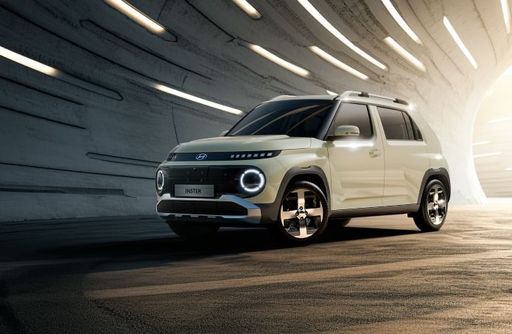
Hyundai Inster VS Renault R4 set up two different answers to the same brief: a modern, compact city‑EV versus a more roomy, comfort‑focused small crossover. The Hyundai Inster feels like a clever urban tool — tight turning, efficient in daily use and packed with electronic assistants that make short trips simple. The Renault R4 leans into practicality and calm: easier loading, a more relaxed ride and a character that encourages longer runs. This comparison looks past badges to help you choose based on how you actually live with a car.
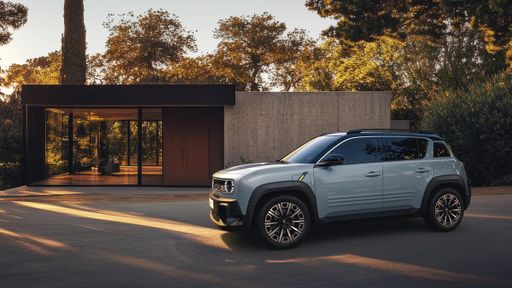
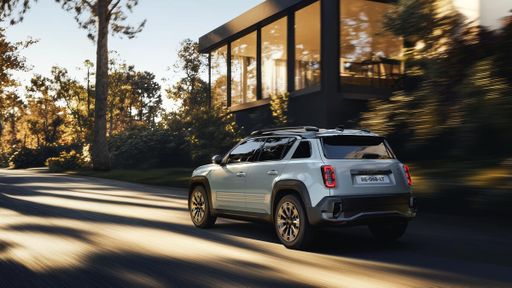
Inster

Character and driving manners

The Hyundai Inster drives like a nimble city specialist: eager at low speeds, with light controls and an emphasis on efficiency rather than outright shove. The Renault R4, by contrast, presents a more composed demeanor — steadier at speed and with more available urge when you need to pass or join a motorway. Inster’s setup rewards short hops and traffic choreography, while R4’s temperament suits anyone who spends time outside stop‑start city grids and wants a calmer, more planted feel. These are trade‑offs: Inster is livelier in town, R4 is less tiring on longer runs.

R4

Comfort and long‑distance behavior

Hyundai Inster surprises with grown‑up suspension tuning for its class, feeling settled over city bumps but showing its limits when speeds climb and wind noise rises. Renault R4 tilts the scales toward comfort: softer damping and quieter cabin manners make sustained motorway miles less wearing. If long trips or frequent high‑speed runs are part of your routine, the R4’s composure will feel like a deliberate design choice; if most miles are local and short, the Inster’s firmer, efficient setup pays off. Both have compromises for rear passengers, but the quality of quiet and ride on longer distances clearly favours the R4.

Inster

Practicality, cabin feel and everyday usability

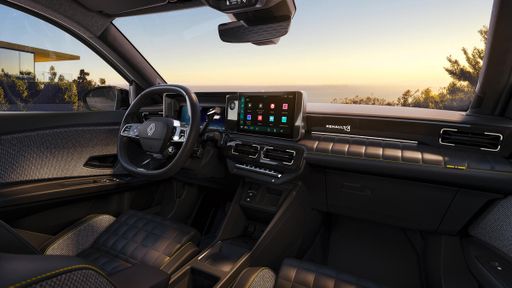
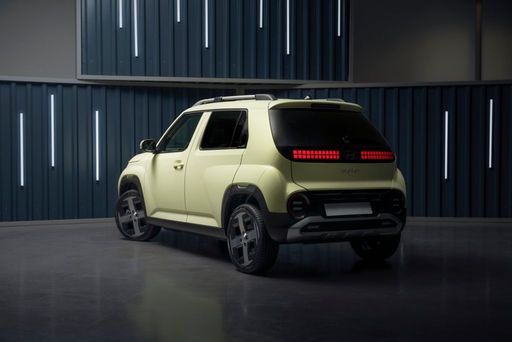
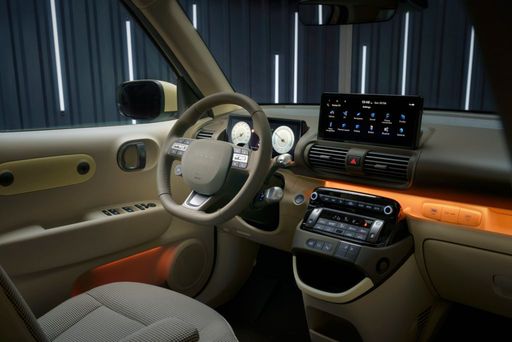
Practical differences are stark where they matter: the Hyundai Inster prioritizes a compact footprint and interior flexibility with slide‑or‑fold features that help in tight urban garages. The Renault R4 prioritizes straightforward loadability — a low sill and user‑friendly boot make hauling luggage and bulky items much less fiddly. Inside, Inster keeps a tech‑heavy cabin with lots of driver aids and synthetic materials that look modern but feel functional, while R4’s clean layout, physical climate controls and Google‑based infotainment read as simpler and more intuitive. If cargo handling and easy loading are frequent needs, the R4’s approach will save time and annoyance; if clever packaging in tight spaces is your daily metric, the Inster earns its keep.

R4

City friendliness, controls and visibility

The Hyundai Inster excels in urban agility: small turning circle, light steering and features built to ease parking make it a confident city companion. The Renault R4 is also city‑friendly but trades a bit of visibility and rear room for a noticeably lower loading lip and very forgiving steering feel. Inster’s extensive driving aids can reduce stress in traffic, though some visibility blind spots and infotainment quirks can irk owners who value clean sightlines. R4’s straightforward controls and responsive Android‑integrated system are easier to live with day‑to‑day, while Inster rewards drivers who prioritise maneuverability and efficiency over simple ergonomics.

Inster

Who should pick which car — buyer fit and trade‑offs

Choose the Hyundai Inster if your life is city‑centric: you want the smallest practical footprint, sharp efficiency and a car that’s easy to park and live with every day. Opt for the Renault R4 if you need more usable luggage space, prefer a quieter, more comfortable highway companion and value straightforward, tactile controls for family duties. The trade‑off is clear — Inster is the urban tool with clever interior tricks, R4 is the everyday crossover that sacrifices a bit of compactness for usability and comfort. If you want the numbers and technical specifics behind those trade‑offs — range, charging behaviour, power and cargo volumes — the detailed technical comparison that follows will unpack them side by side.

Here’s where it gets real: The technical differences in detail

R4

Costs and Efficiency:

Price and efficiency are often the first things buyers look at. Here it becomes clear which model has the long-term edge – whether at the pump, the plug, or in purchase price.

Hyundai Inster is markedly cheaper – starting at 20,900 £ , while the Renault R4 costs 27,300 £ . That’s a price difference of around 6,411 £.

In terms of energy consumption, the Hyundai Inster is very slightly more efficient: consuming 14.3 kWh/100km compared to 15.1 kWh/100km for the Renault R4. That’s a difference of about 0.8 kWh/100km.

As for electric range, the Renault R4 offers very slightly more range – reaching up to 409 km, about 39 km more than the Hyundai Inster.

Inster

Engine and Performance:

Power, torque and acceleration are the classic benchmarks for car enthusiasts – and here, some clear differences start to show.

When it comes to engine power, the Renault R4 offers noticeably more power – delivering 150 HP compared to 115 HP. That’s roughly 35 HP more horsepower.

When accelerating from 0 to 100 km/h, the Renault R4 is markedly quicker – completing the sprint in 8.2 s, while the Hyundai Inster takes 10.6 s. That’s about 2.4 s quicker.

There’s also a difference in torque: the Renault R4 delivers visibly more torque with 245 Nm compared to 147 Nm. That’s about 98 Nm more.

R4

Space and Everyday Use:

Beyond pure performance, interior space and usability matter most in daily life. This is where you see which car is more practical and versatile.

Seats: Renault R4 offers more seats – 5 vs 4.

In terms of curb weight, Hyundai Inster is barely lighter – 1,380 kg compared to 1,510 kg. The difference is around 130 kg.

Looking at boot space, the Renault R4 offers considerably more boot space – 1,045 L compared to 280 L. That’s a difference of about 765 L.

When it comes to payload, the Renault R4 carries somewhat more – 443 kg compared to 357 kg. That’s a difference of about 86 kg.

Who wins the race in the data check?

The Renault R4 is clearly superior overall in the objective data comparison.
This result only shows which model scores more points on paper – not which of the two cars feels right for you.

from £27,300
R4

Renault R4

  • Engine Type Electric
  • Transmission Automatic
  • Drive Type Front-Wheel Drive
  • Power HP 150 HP
  • Consumption kWh/100km 15.1 kWh/100km
  • Electric Range 409 km
Renault R4
Hyundai Inster

Costs and Consumption

View detailed analysis

Engine and Performance

View detailed analysis

Dimensions and Body

View detailed analysis

Renault R4

The Renault R4, affectionately known as the "R4," is a quintessential symbol of French automotive simplicity and practicality. This classic compact car, originally introduced in the early 1960s, won over numerous enthusiasts with its versatile design and dependable performance. Its no-frills charm and robust build made it a beloved choice for rural drivers and city dwellers alike, cementing its status as an iconic piece of automotive history.

details

Hyundai Inster

The Inster has quickly captured the attention of automotive enthusiasts with its striking design and dynamic performance. This model seamlessly blends advanced technology with comfort, making it an ideal choice for both daily commutes and adventurous road trips. With its spacious interior and innovative features, the Inster promises an exhilarating driving experience that doesn’t compromise on practicality.

details
Renault R4
Hyundai Inster

Costs and Consumption

Price
27,300 - 32,800 £
Price
20,900 - 26,200 £
Consumption L/100km
-
Consumption L/100km
-
Consumption kWh/100km
15.1 kWh/100km
Consumption kWh/100km
14.3 - 15.1 kWh/100km
Electric Range
409 km
Electric Range
327 - 370 km
Battery Capacity
-
Battery Capacity
-
co2
0 g/km
co2
0 g/km
Fuel tank capacity
-
Fuel tank capacity
-

Dimensions and Body

Body Type
SUV
Body Type
SUV
Seats
2 - 5
Seats
4
Doors
-
Doors
-
Curb weight
1,510 - 1,537 kg
Curb weight
1,380 - 1,433 kg
Trunk capacity
420 - 1,045 L
Trunk capacity
238 - 280 L
Length
-
Length
-
Width
1,808 mm
Width
1,610 mm
Height
-
Height
-
Max trunk capacity
-
Max trunk capacity
-
Payload
385 - 443 kg
Payload
317 - 357 kg

Engine and Performance

Engine Type
Electric
Engine Type
Electric
Transmission
Automatic
Transmission
Automatic
Transmission Detail
Reduction Gearbox
Transmission Detail
Reduction Gearbox
Drive Type
Front-Wheel Drive
Drive Type
Front-Wheel Drive
Power HP
150 HP
Power HP
97 - 115 HP
Acceleration 0-100km/h
8.2 s
Acceleration 0-100km/h
10.6 - 11.7 s
Max Speed
-
Max Speed
-
Torque
245 Nm
Torque
147 Nm
Number of Cylinders
-
Number of Cylinders
-
Power kW
110 kW
Power kW
71 - 85 kW
Engine capacity
-
Engine capacity
-

General

Model Year
2,025 - 2,026
Model Year
2025
CO2 Efficiency Class
A
CO2 Efficiency Class
A
Brand
Renault
Brand
Hyundai
DriveDuel uses data analysis and artificial intelligence to evaluate vehicle data and create content. Content is regularly reviewed and improved. The displayed prices are estimates based on German list prices, adjusted to the respective country’s VAT. Country-specific registration taxes are not included. This information is not legally binding.