VS

Renault Rafale vs CUPRA Terramar comparison

Compare performance (300 HP vs 272 HP), boot space and price (37,700 £ vs 41,400 £ ) at a glance. Find out which car is the better choice for you – Renault Rafale or CUPRA Terramar?

Renault Rafale vs CUPRA Terramar: Key differences

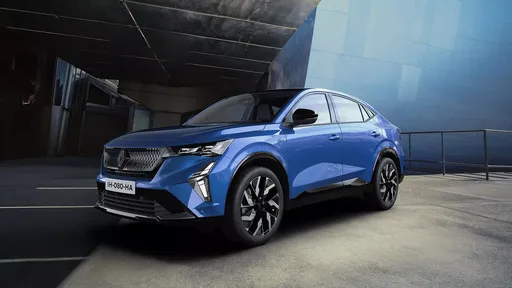
Renault Rafale

4.9 (9 Reviews)
rate
  • marginally cheaper
  • marginally more power
  • somewhat more trunk space
details

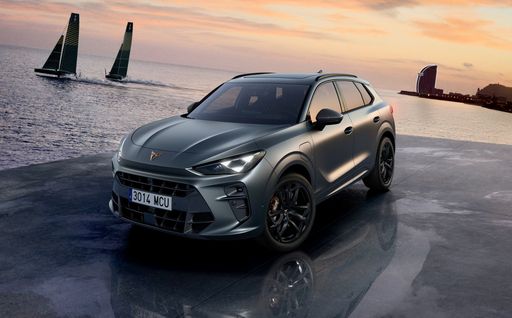
CUPRA Terramar

5 (5 Reviews)
rate
  • noticeably more efficient
  • a bit more electric range
  • only slightly quicker 0–100 km/h
  • marginally lighter
details

All details on performance, efficiency, range and trunk space can be found in the technical comparison below – including user reviews for both models.

By Achim Sedelmaier

Rafale

Quick take: CUPRA Terramar and Renault Rafale in one glance

CUPRA Terramar and Renault Rafale sit in the same compact‑SUV bracket but aim at different instincts: the Terramar leans into sporty styling and plug‑in practicality, while the Rafale trades some of that drama for hybrid efficiency and interior space. In everyday terms the matchup reads as style and adjustable packaging versus roomy rear seats and clever urban tech. Both cars feel modern inside, yet they deliver that modernity differently — one with taut driving manners and a flexible bench, the other with wide rear accommodation and standout infotainment. This is an apples‑to‑apples purchase decision about priorities, not outright superiority. Read on to see how character, comfort and city usability split the choices before the technical tables do the math.
Terramar

Character and driving feel: spirited image vs composed efficiency

The CUPRA Terramar projects a sporty persona and drives with a direct, confident steering feel that rewards mid‑corner control without punishing everyday comfort, especially if you option the adaptive dampers. The Renault Rafale, by contrast, feels more composed and engineered around efficiency and stability — four‑wheel steering sharpens low‑speed manoeuvres but the steering feedback can feel artificially light at higher speeds. In traffic the Terramar’s plug‑in setup often yields a quieter, electric‑first experience, whereas the Rafale’s hybrid focus keeps fuel bills low with a more conventional combustion character under load. Choosing between them is a decision about emotion: pick the Terramar if you want sporty manners and a sharper feel, pick the Rafale if you prefer calm, efficient progress and city agility.

Rafale

Comfort and long‑distance behavior: seats and noise tell the story

On long drives the CUPRA Terramar rewards with supportive front seats and a stable, planted ride that can be tuned toward comfort or a firmer edge via its suspension options, though large wheels will expose more road harshness. The Renault Rafale also stays stable on the motorway but trades off some suppleness for a firmer, more filtered ride that makes short‑sharp bumps more noticeable and the three‑cylinder engine more audible under heavy throttle. Acoustic comfort depends heavily on wheel choice and drive mode in both cars — Terramar can let tyre roar in, Rafale can reveal engine rasp — so real‑world noise varies with spec. If you value seat comfort and long‑haul calm, the Terramar’s ergonomics feel a touch more grown‑up; if you prioritise steady cruising economy and don’t mind a firmer ride, the Rafale holds its own.

Terramar

Practicality and cabin usability: flexible bench vs big rear room

Practical families will notice the CUPRA Terramar’s sliding rear bench immediately — it allows you to shift the balance between rear legroom and cargo space on the fly, which is rare in this segment and very handy for mixed duty. The Renault Rafale answers with a larger, more straightforward boot and a 40:20:40 split that makes hauling skis or a child seat plus adult passenger easier, though its loading lip is higher and ergonomics can be fiddlier. Visibility and parking are trade‑offs: Terramar’s design trims sightlines and leans on cameras, while the Rafale’s rear view is notably restricted and relies on its tech to make up the difference. Inside finish and perceived quality diverge too — Terramar emphasises a sporty, tactile feel with some mixed plastics, Rafale offers reassuring material choices and a more premium impression for the money.

Rafale

City friendliness and daily usability: manoeuvrability, tech and running costs

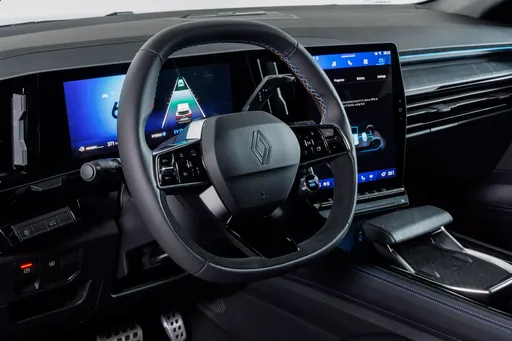
In urban use the Renault Rafale’s four‑wheel steering pays real dividends — it turns a big coupé‑SUV into something surprisingly nimble for parking and tight lanes, and its OpenR infotainment with Google integration is a daily pleasure. The CUPRA Terramar is compact and easy to place, and its plug‑in capability shines for short commutes where you can avoid petrol entirely; however, tighter visibility and a sporty bonnet mean you’ll use cameras more. Running costs and tax considerations tend to favour the Rafale’s efficient hybrid approach in mixed driving, while the Terramar rewards owners who can routinely plug in and exploit electric range. If your life is mostly city and you value seamless connectivity and low fuel bills, the Rafale is the easier daily companion; if short electric hops and a sportier on‑road feel matter most, the Terramar will be more satisfying.

Terramar

Buyer fit and trade‑offs: who should pick which before you check the specs

Buyers who prioritise style, configurable interior space and a plug‑in electric edge will find the CUPRA Terramar more aligned with their lifestyle, especially if they want a car that leans sporty without sacrificing everyday comfort. Shoppers who put rear passenger room, best‑in‑class infotainment and lower ongoing fuel exposure ahead of a sporty image will prefer the Renault Rafale for its practical rear accommodation and city agility. Budget‑minded buyers should note the Rafale usually presents a stronger value proposition, while those seeking a distinct, dynamic look and adjustability will accept the Terramar’s option cost for the feel it delivers. Below you’ll find the technical comparison that lays out the measurable differences so you can match those real‑world impressions to the exact figures that matter for your decision.

Here’s where it gets real: The technical differences in detail

Rafale

Costs and Efficiency:

Price and efficiency are key factors when choosing a car – and this is often where the real differences emerge.

Renault Rafale is marginally cheaper – starting at 37,700 £ , while the CUPRA Terramar costs 41,400 £ . That’s a price difference of around 3,703 £.

Fuel consumption also shows a difference: the CUPRA Terramar uses 1.6 L/100km and is noticeably more efficient than the Renault Rafale with 2 L/100km. The difference is about 0.4 L/100km.

As for electric range, the CUPRA Terramar offers a bit more range – reaching up to 118 km, about 21 km more than the Renault Rafale.

Terramar

Engine and Performance:

Under the bonnet, it becomes clear which model is tuned for sportiness and which one takes the lead when you hit the accelerator.

When it comes to engine power, the Renault Rafale offers marginally more power – delivering 300 HP compared to 272 HP. That’s roughly 28 HP more horsepower.

When accelerating from 0 to 100 km/h, the CUPRA Terramar is only slightly quicker – completing the sprint in 5.9 s, while the Renault Rafale takes 6.4 s. That’s about 0.5 s quicker.

Rafale

Space and Everyday Use:

Whether family car or daily driver – which one offers more room, flexibility and comfort?

Both vehicles offer seating for 5 people.

In terms of curb weight, CUPRA Terramar is marginally lighter – 1,638 kg compared to 1,734 kg. The difference is around 96 kg.

Looking at boot space, the Renault Rafale offers somewhat more boot space – 627 L compared to 540 L. That’s a difference of about 87 L.

When it comes to payload, the CUPRA Terramar carries a bit more – 542 kg compared to 444 kg. That’s a difference of about 98 kg.

Who wins the race in the data check?

The CUPRA Terramar is decisively ahead in the objective data comparison.
This result only shows which model scores more points on paper – not which of the two cars feels right for you.

from £41,400
Terramar

CUPRA Terramar

  • Engine Type : Petrol, Petrol MHEV, Plugin Hybrid
  • Transmission : Automatic
  • Drive Type : All-Wheel Drive, Front-Wheel Drive
  • Power HP : 150 - 272 HP
  • Consumption L/100km : 1.6 - 8.4 L/100km
  • Electric Range : 118 km
Renault Rafale
CUPRA Terramar

Costs and Consumption

View detailed analysis

Engine and Performance

View detailed analysis

Dimensions and Body

View detailed analysis

Renault Rafale

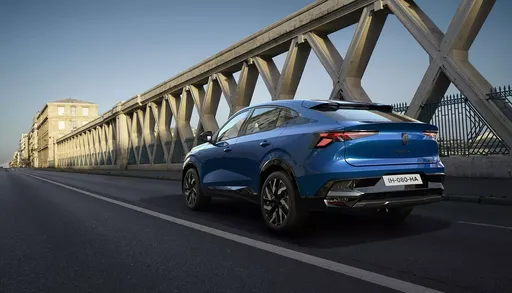
The Renault Rafale dresses bold coupé-inspired lines around a practical crossover body, turning heads without trying too hard. Inside it serves up a comfortable, well-equipped cabin and engaging driving manners, making it a clever choice for buyers who want a bit of panache with their daily commute.

details

CUPRA Terramar

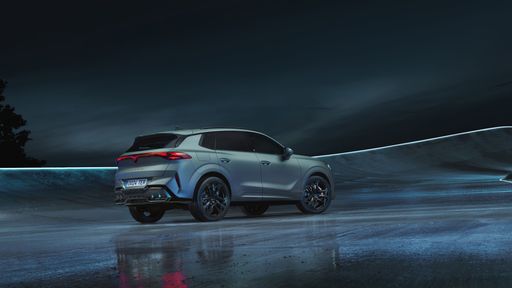
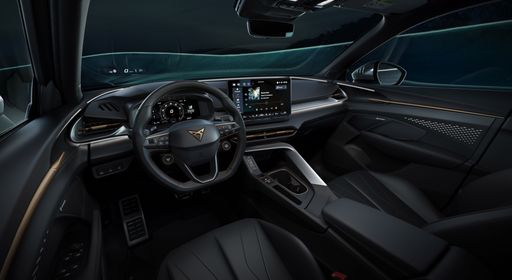
The CUPRA Terramar blends the brand’s sporty DNA with the practicality of a compact crossover, offering striking design and a driver-focused, premium-feeling cabin. It’s aimed at buyers who want engaging handling and athletic looks without giving up everyday usability and modern connectivity.

details
Renault Rafale
CUPRA Terramar

Costs and Consumption

Price
37,700 - 49,700 £
Price
41,400 - 50,600 £
Consumption L/100km
2 - 5 L/100km
Consumption L/100km
1.6 - 8.4 L/100km
Consumption kWh/100km
-
Consumption kWh/100km
-
Electric Range
97 km
Electric Range
118 km
Battery Capacity
-
Battery Capacity
-
co2
43 - 109 g/km
co2
36 - 191 g/km
Fuel tank capacity
-
Fuel tank capacity
-

Dimensions and Body

Body Type
SUV
Body Type
SUV
Seats
5
Seats
5
Doors
-
Doors
-
Curb weight
1,734 - 2,025 kg
Curb weight
1,638 - 1,904 kg
Trunk capacity
539 - 627 L
Trunk capacity
450 - 540 L
Length
-
Length
-
Width
1,886 mm
Width
1,869 mm
Height
-
Height
-
Max trunk capacity
-
Max trunk capacity
-
Payload
415 - 444 kg
Payload
512 - 542 kg

Engine and Performance

Engine Type
Full Hybrid, Plugin Hybrid
Engine Type
Petrol, Petrol MHEV, Plugin Hybrid
Transmission
Automatic
Transmission
Automatic
Transmission Detail
Automatic Gearbox
Transmission Detail
Dual-Clutch Automatic
Drive Type
Front-Wheel Drive, All-Wheel Drive
Drive Type
All-Wheel Drive, Front-Wheel Drive
Power HP
200 - 300 HP
Power HP
150 - 272 HP
Acceleration 0-100km/h
6.4 - 8.9 s
Acceleration 0-100km/h
5.9 - 9.3 s
Max Speed
-
Max Speed
-
Torque
-
Torque
250 - 400 Nm
Number of Cylinders
3
Number of Cylinders
4
Power kW
147 - 221 kW
Power kW
110 - 200 kW
Engine capacity
1,199 cm3
Engine capacity
1,498 - 1,984 cm3

General

Model Year
2025
Model Year
2,024 - 2,025
CO2 Efficiency Class
C, B
CO2 Efficiency Class
F, E, B, G
Brand
Renault
Brand
CUPRA
DriveDuel uses data analysis and artificial intelligence to evaluate vehicle data and create content. Content is regularly reviewed and improved. The displayed prices are estimates based on German list prices, adjusted to the respective country’s VAT. Country-specific registration taxes are not included. This information is not legally binding.