VS

Renault Scénic vs Nissan Ariya comparison

Compare performance (218 HP vs 435 HP), boot space and price (34,600 £ vs 37,300 £ ) at a glance. Find out which car is the better choice for you – Renault Scénic or Nissan Ariya?

Renault Scénic vs Nissan Ariya: Key differences

Renault Scénic

5 (1 Reviews)
rate
  • only slightly cheaper
  • marginally more efficient
  • a bit more electric range
  • barely lighter
  • a bit more trunk space

Nissan Ariya

5 (1 Reviews)
rate
  • significantly more power
  • clearly quicker 0–100 km/h
Scénic

Electric Evolution: Nissan Ariya vs Renault Scénic

In the ever-evolving automotive landscape, electric vehicles (EVs) have taken center stage, showcasing the fusion of innovation and sustainability. Two prominent contenders in this segment are the Nissan Ariya and the Renault Scénic. Both vehicles embody the shift toward eco-conscious transportation, but how do they measure up against each other in key technical aspects and practical applications? Let’s dive deep into the details.
Ariya

Design and Dimensions

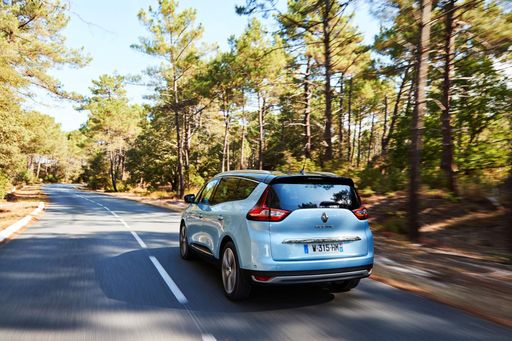
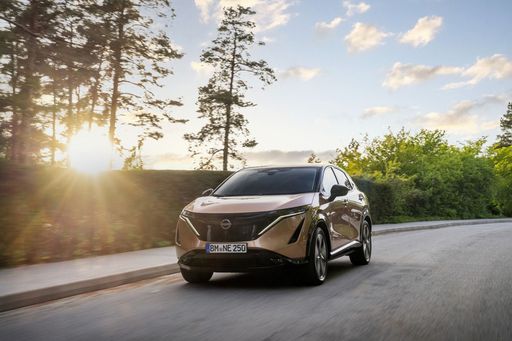
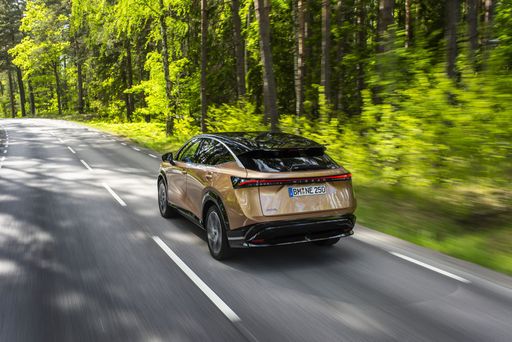
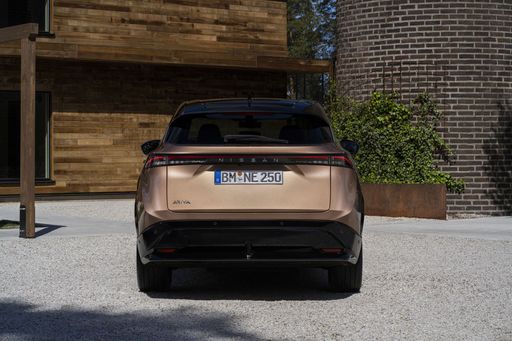
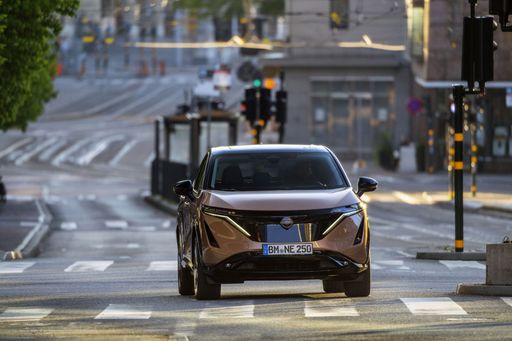
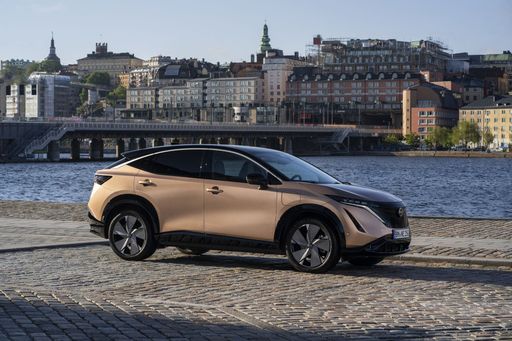
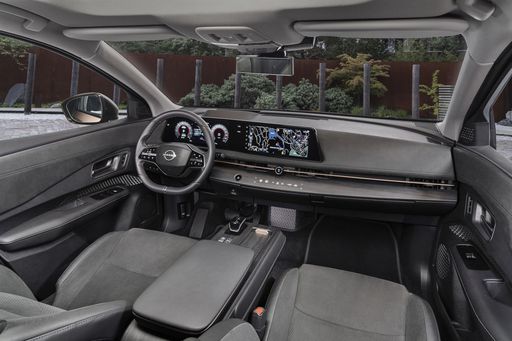
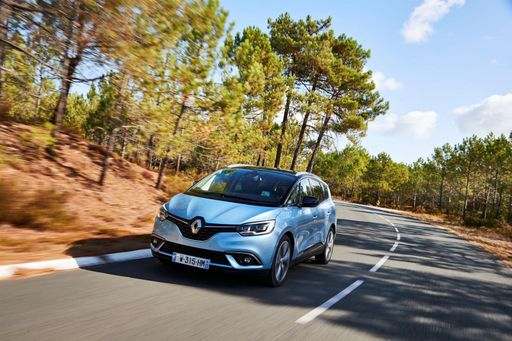
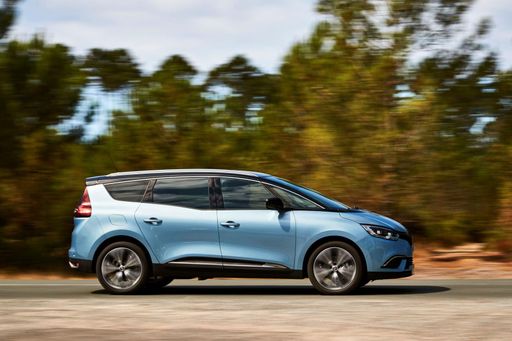
Starting with their aesthetics, the Nissan Ariya presents a bold and futuristic design typical of Nissan's modern styling language, while the Renault Scénic maintains a more classic approach with a focus on practicality and spaciousness. The Ariya measures 4,595 mm in length, 1,850 mm in width, and stands 1,650 mm tall. In comparison, the Scénic is slightly shorter at 4,470 mm, with a width of 1,864 mm and a height of 1,571 mm.

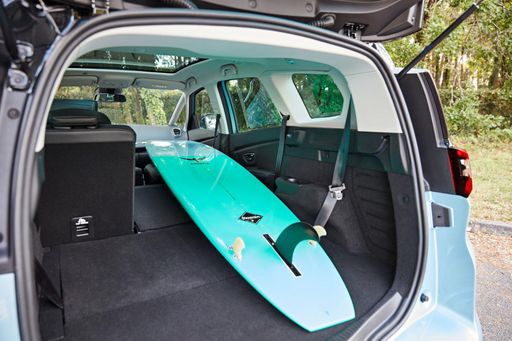
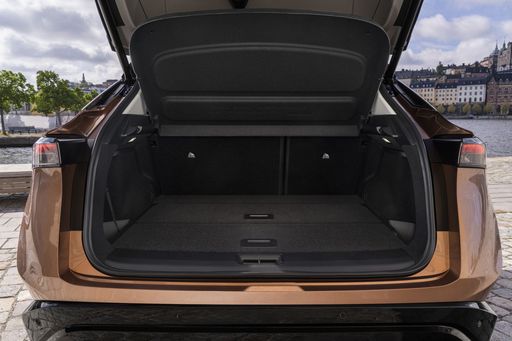
Despite the Ariya's larger footprint, the Scénic carves out a competitive edge with a roomier trunk capacity of 545 liters compared to the Ariya’s 468 liters. This difference makes the Scénic more appealing for families and those requiring extra storage space for everyday needs.

Scénic

Powertrain and Performance

Performance remains a critical factor for buyers choosing between these two electric SUVs. The Nissan Ariya offers a range of power outputs starting from 218 HP, reaching up to an impressive 435 HP in its top variant. This robust performance is complemented by acceleration figures as low as 5 seconds for their highest configuration, making it a potent player in the electric SUV segment.

On the other hand, the Renault Scénic, while slightly less powerful, still provides respectable options with power ratings of 170 HP and up to 220 HP. Its acceleration ranges from 7.9 to 8.6 seconds, demonstrating solid capabilities suited for city driving and highway cruising. The Scénic encapsulates a blend of efficiency and adequate power for everyday commuting needs.

Ariya

Battery and Range

Battery technology is central to the overall appeal of electric vehicles. The Nissan Ariya is available with two battery sizes, 63 kWh and 87 kWh, offering ranges from 402 km to an impressive 531 km, depending on the configuration. This allows drivers to choose the setup that best conforms to their driving habits, whether they require daily commuting capabilities or longer road trips.

In contrast, the Renault Scénic also features a commendable electric range, capable of covering from 420 km to 598 km on a single charge depending on the variant. While both vehicles provide ample range, the Scénic’s edge in the higher energy capacity encourages longer journeys without the frequent need for recharging stops.

Scénic

Efficiency and Charging

Efficiency is another critical consideration for potential EV buyers. The Ariya's consumption rates range from 17.7 kWh/100km to 24.5 kWh/100km, depending on the variant. Meanwhile, the Scénic offers superior efficiency with consumption starting at 16.7 kWh/100km, signifying a more economical choice in urban settings.

Charging capabilities also play a vital role in user convenience. Both the Ariya and Scénic come equipped with advanced charging systems, supporting rapid charging, which can significantly reduce downtime on long journeys. The Ariya, with its substantial battery output, allows for fast charging options that can replenish significant mileage in a short period, making it a competitive choice for frequent travelers.

Ariya

Conclusion: Which One to Choose?

Choosing between the Nissan Ariya and Renault Scénic depends largely on individual preferences and driving requirements. The Ariya stands out for its powerful performance and advanced features, appealing to those seeking both style and responsiveness. Meanwhile, the Scénic shines with its spacious interior, efficiency, and family-friendly design.

As the electric vehicle market continues to mature, both models showcase the direction of automotive innovation, blending sustainability with user-centric designs. Ultimately, prospective buyers will need to weigh performance against practicality to find the EV that best aligns with their lifestyle.

Here’s where it gets real: The technical differences in detail

Scénic

Costs and Efficiency:

Looking at overall running costs, both models reveal some interesting differences in everyday economy.

Renault Scénic is only slightly cheaper – starting at 34,600 £ , while the Nissan Ariya costs 37,300 £ . That’s a price difference of around 2,649 £.

In terms of energy consumption, the Renault Scénic is marginally more efficient: consuming 16.6 kWh/100km compared to 17.7 kWh/100km for the Nissan Ariya. That’s a difference of about 1.1 kWh/100km.

As for electric range, the Renault Scénic offers a bit more range – reaching up to 598 km, about 67 km more than the Nissan Ariya.

Ariya

Engine and Performance:

Power, torque and acceleration are the classic benchmarks for car enthusiasts – and here, some clear differences start to show.

When it comes to engine power, the Nissan Ariya offers significantly more power – delivering 435 HP compared to 218 HP. That’s roughly 217 HP more horsepower.

When accelerating from 0 to 100 km/h, the Nissan Ariya is clearly quicker – completing the sprint in 5 s, while the Renault Scénic takes 7.9 s. That’s about 2.9 s quicker.

Looking at top speed, the Nissan Ariya is slightly faster – reaching 200 km/h, while the Renault Scénic tops out at 170 km/h. The difference is around 30 km/h.

There’s also a difference in torque: the Nissan Ariya delivers clearly more torque with 600 Nm compared to 300 Nm. That’s about 300 Nm more.

Scénic

Space and Everyday Use:

Beyond pure performance, interior space and usability matter most in daily life. This is where you see which car is more practical and versatile.

Both vehicles offer seating for 5 people.

In terms of curb weight, Renault Scénic is barely lighter – 1,822 kg compared to 1,980 kg. The difference is around 158 kg.

Looking at boot space, the Renault Scénic offers a bit more boot space – 545 L compared to 468 L. That’s a difference of about 77 L.

For maximum load capacity, the Renault Scénic offers slightly more capacity – up to 1,670 L, about 320 L more than the Nissan Ariya.

When it comes to payload, the Renault Scénic carries a bit more – 518 kg compared to 420 kg. That’s a difference of about 98 kg.

Who wins the race in the data check?

The Nissan Ariya is decisively ahead in the objective data comparison.
This result only shows which model scores more points on paper – not which of the two cars feels right for you.

from £37,300
Ariya

Nissan Ariya

  • Engine Type : Electric
  • Transmission : Automatic
  • Drive Type : Front-Wheel Drive, All-Wheel Drive
  • Power HP : 218 - 435 HP
  • Consumption kWh/100km : 17.7 - 24.5 kWh/100km
  • Electric Range : 402 - 531 km
Renault Scénic
Nissan Ariya

Costs and Consumption

View detailed analysis

Engine and Performance

View detailed analysis

Dimensions and Body

View detailed analysis

Renault Scénic

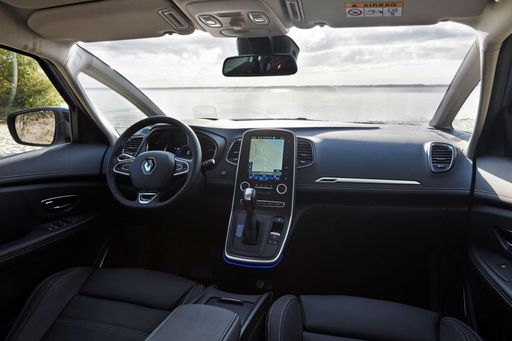
The Renault Scénic is a quietly clever family MPV that balances everyday practicality with unexpected flair, offering a roomy, flexible cabin that makes school runs and weekend escapes less of a chore. It won't dazzle like a sports car, but its composed ride, sensible tech and thoughtful storage solutions make it a superbly pragmatic choice for buyers who prefer substance with a wink.

details

Nissan Ariya

The Nissan Ariya wraps futuristic, sculpted styling around a calm, high-tech cabin, making the switch to electric feel surprisingly easy and grown-up. It’s a comfortable, sensible EV that favors everyday usability and clever packaging over headline-grabbing theatrics — ideal for buyers who want an elegant, low-fuss electric car without the ego.

details
Renault Scénic
Nissan Ariya

Costs and Consumption

Price
34,600 - 44,000 £
Price
37,300 - 54,800 £
Consumption L/100km
-
Consumption L/100km
-
Consumption kWh/100km
16.6 - 17.5 kWh/100km
Consumption kWh/100km
17.7 - 24.5 kWh/100km
Electric Range
420 - 598 km
Electric Range
402 - 531 km
Battery Capacity
-
Battery Capacity
63 - 87 kWh
co2
0 g/km
co2
0 g/km
Fuel tank capacity
-
Fuel tank capacity
-

Dimensions and Body

Body Type
SUV
Body Type
SUV
Seats
5
Seats
5
Doors
5
Doors
5
Curb weight
1,822 - 1,927 kg
Curb weight
1,980 - 2,277 kg
Trunk capacity
545 L
Trunk capacity
415 - 468 L
Length
4,470 mm
Length
4,595 mm
Width
1,864 mm
Width
1,850 mm
Height
1,571 mm
Height
1,650 mm
Max trunk capacity
1,670 L
Max trunk capacity
1,280 - 1,350 L
Payload
514 - 518 kg
Payload
363 - 420 kg

Engine and Performance

Engine Type
Electric
Engine Type
Electric
Transmission
Automatic
Transmission
Automatic
Transmission Detail
Reduction Gearbox
Transmission Detail
Reduction Gearbox
Drive Type
Front-Wheel Drive
Drive Type
Front-Wheel Drive, All-Wheel Drive
Power HP
170 - 218 HP
Power HP
218 - 435 HP
Acceleration 0-100km/h
7.9 - 8.6 s
Acceleration 0-100km/h
5 - 7.6 s
Max Speed
150 - 170 km/h
Max Speed
160 - 200 km/h
Torque
280 - 300 Nm
Torque
300 - 600 Nm
Number of Cylinders
-
Number of Cylinders
-
Power kW
125 - 160 kW
Power kW
160 - 320 kW
Engine capacity
-
Engine capacity
-

General

Model Year
2,025
Model Year
2,022 - 2,025
CO2 Efficiency Class
A
CO2 Efficiency Class
A
Brand
Renault
Brand
Nissan
DriveDuel uses data analysis and artificial intelligence to evaluate vehicle data and create content. Content is regularly reviewed and improved. The displayed prices are estimates based on German list prices, adjusted to the respective country’s VAT. Country-specific registration taxes are not included. This information is not legally binding.