
VS

Renault Trafic Transporter vs Mercedes Vito Transporter comparison

Compare performance (170 HP vs 237 HP), boot space and price (33,200 £ vs 28,800 £ ) at a glance. Find out which car is the better choice for you – Renault Trafic Transporter or Mercedes Vito Transporter?

Renault Trafic Transporter vs Mercedes Vito Transporter: Key differences

Renault Trafic Transporter

  • barely more efficient
  • barely lighter

Mercedes Vito Transporter

  • somewhat cheaper
  • noticeably more power
  • clearly more electric range
Trafic Transporter

Style and Substance: Mercedes Vito Transporter vs. Renault Trafic Transporter

In the competitive world of cargo vans, the Mercedes Vito and Renault Trafic stand out as leading contenders. Both vehicles offer distinct strengths tailored to different types of drivers and businesses. Let's delve deep into their technical details and innovations to see what sets them apart.
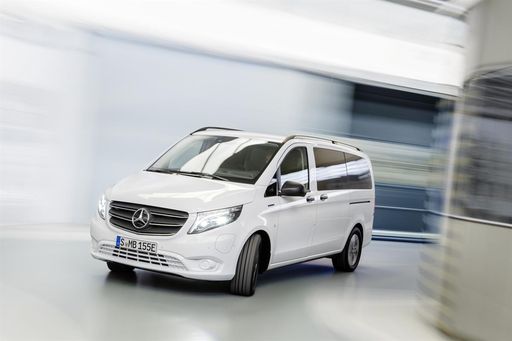
Vito Transporter

Engine and Performance

The Mercedes Vito offers a versatile range of powertrains, with both diesel and electric options available. Diesel engines range from 102 to 237 HP, supported by an engine capacity of 1950 cm3. For those opting for an environmentally-conscious drive, the electric version boasts an impressive electric range of 310-313 km with a battery capacity of 60 kWh.

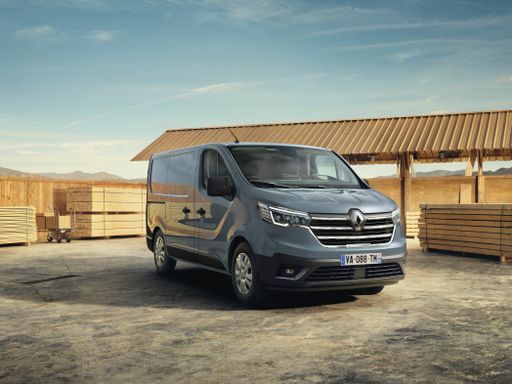
On the other hand, the Renault Trafic keeps things interesting with a variety of diesel engines, offering between 110 to 170 HP. Its engine capacity slightly surpasses the Vito at 1997 cm3. In the electric realm, the Trafic provides a range of 289-292 km, which, while slightly lesser than the Vito, remains competitive.

Transmission and Drive Dynamics

Mercedes Vito offers a range of transmission options: manual, automatic, and reduction gearbox, paired with rear-wheel, front-wheel, or all-wheel drive. This variety ensures that drivers can find a configuration that suits their specific needs, whether it’s for navigating city streets or rugged roads.

The Renault Trafic provides manual, dual-clutch automatic, and reduction gearbox options with a focus on front-wheel drive, offering straightforward handling that's ideal for urban commutes and reliable highway driving.

Fuel Economy and Efficiency

For diesel, the Vito's consumption varies between 6.8 to 7.9 liters per 100 km, promoting a balance of power and efficiency. Meanwhile, Renault Trafic matches this efficiency with a consumption rate of 6.7 to 7.8 liters per 100 km, showcasing its commitment to fuel economy.

In electric mode, the Vito's consumption is slightly more efficient at 20.7 to 21.1 kWh/100 km, compared to the Trafic's 21.3 to 21.5 kWh/100 km, marking a minor edge in energy consumption.

Size and Payload Capacity

The Mercedes Vito offers a range of body lengths from 4895 mm to 5370 mm, delivering overall width and height dimensions of 1928 mm and up to 1945 mm respectively. The payload capacity ranges between 849 to 1000 kg, making it suitable for a variety of cargo needs.

Renault Trafic's dimensions range from 5080 mm to 5480 mm in length, with a width of 1956 mm and variable height up to 2509 mm in some versions. It edges out the Vito in payload capacity, offering between 867 to 1185 kg, which is ideal for businesses requiring more substantial cargo options.

Innovative Features

Mercedes-Benz continues to prioritize innovation with the Vito, incorporating features like advanced driver-assistance systems and enhanced connectivity options, ideal for fleet management and business utility.

Renault, meanwhile, has equipped the Trafic with essential tech features that streamline the driver's experience, from intuitive dashboards to smart storage solutions, ensuring practicality meets digital advancement.

Conclusion

Both the Mercedes Vito and Renault Trafic offer compelling packages for the discerning buyer. While Mercedes leans towards a more luxurious and tech-savvy drive with versatile engine offerings, Renault provides a focus on practicality and payload capacity. Your choice will depend largely on whether you prioritize high-end features and diverse driving configurations or efficient transport with exceptional payload capabilities.

Here’s where it gets real: The technical differences in detail

Trafic Transporter

Costs and Efficiency:

When it comes to price and running costs, the biggest differences usually appear. This is often where you see which car fits your budget better in the long run.

Mercedes Vito Transporter is somewhat cheaper – starting at 28,800 £ , while the Renault Trafic Transporter costs 33,200 £ . That’s a price difference of around 4,419 £.

Fuel consumption also shows a difference: the Renault Trafic Transporter uses 6.6 L/100km and is barely more efficient than the Mercedes Vito Transporter with 6.8 L/100km. The difference is about 0.2 L/100km.

When it comes to electricity consumption, both models perform equally – each averaging 21.2 kWh/100km.

As for electric range, the Mercedes Vito Transporter offers clearly more range – reaching up to 474 km, about 156 km more than the Renault Trafic Transporter.

Vito Transporter

Engine and Performance:

Power, torque and acceleration are the classic benchmarks for car enthusiasts – and here, some clear differences start to show.

When it comes to engine power, the Mercedes Vito Transporter offers noticeably more power – delivering 237 HP compared to 170 HP. That’s roughly 67 HP more horsepower.

Looking at top speed, the Renault Trafic Transporter is moderately faster – reaching 174 km/h, while the Mercedes Vito Transporter tops out at 140 km/h. The difference is around 34 km/h.

There’s also a difference in torque: the Mercedes Vito Transporter delivers clearly more torque with 500 Nm compared to 380 Nm. That’s about 120 Nm more.

Space and Everyday Use:

Beyond pure performance, interior space and usability matter most in daily life. This is where you see which car is more practical and versatile.

Seats: Renault Trafic Transporter offers more seats – 6 vs 5.

In terms of curb weight, Renault Trafic Transporter is barely lighter – 1,848 kg compared to 1,916 kg. The difference is around 68 kg.

For maximum load capacity, the Renault Trafic Transporter offers clearly more capacity – up to 8,900 L, about 2,300 L more than the Mercedes Vito Transporter.

When it comes to payload, the Renault Trafic Transporter carries visibly more – 1,222 kg compared to 884 kg. That’s a difference of about 338 kg.

Who wins the race in the data check?

The Mercedes Vito Transporter sits just ahead overall in the objective data comparison.
This result only shows which model scores more points on paper – not which of the two cars feels right for you.

from £28,800
Vito Transporter

Mercedes Vito Transporter

  • Engine Type : Diesel, Electric, Petrol
  • Transmission : Manuel, Automatic
  • Drive Type : Rear-Wheel Drive, Front-Wheel Drive, All-Wheel Drive
  • Power HP : 102 - 237 HP
  • Consumption L/100km : 6.8 - 9.7 L/100km
  • Consumption kWh/100km : 21.2 - 26.5 kWh/100km
  • Electric Range : 304 - 474 km
Renault Trafic Transporter
Mercedes Vito Transporter

Costs and Consumption

View detailed analysis

Engine and Performance

View detailed analysis

Dimensions and Body

View detailed analysis

Renault Trafic Transporter

The Renault Trafic is a practical, workhorse transporter that hides thoughtful cabin comfort behind a tough, utilitarian exterior, so you can tackle a busy week without sacrificing sanity. It’s a sensible choice for buyers who want reliability and clever flexibility rather than flash, with just enough character to make daily hauling feel less like a chore.

details

Mercedes Vito Transporter

The Mercedes Vito Transporter is a supremely practical workhorse that blends Mercedes refinement with van-like utility, making long days on the road feel surprisingly civilized. With a cleverly thought-out interior and a drive that won’t wear you out, the Vito is the ideal choice for businesses that want capability without sacrificing comfort — and yes, it still looks sharper than most vans at a client meeting.

details
Renault Trafic Transporter
Mercedes Vito Transporter

Costs and Consumption

Price
33,200 - 43,500 £
Price
28,800 - 51,600 £
Consumption L/100km
6.6 - 7.8 L/100km
Consumption L/100km
6.8 - 9.7 L/100km
Consumption kWh/100km
21.2 - 22.2 kWh/100km
Consumption kWh/100km
21.2 - 26.5 kWh/100km
Electric Range
240 - 318 km
Electric Range
304 - 474 km
Battery Capacity
-
Battery Capacity
60 - 90 kWh
co2
0 - 206 g/km
co2
0 - 222 g/km
Fuel tank capacity
80 L
Fuel tank capacity
57 - 70 L

Dimensions and Body

Body Type
Cargo Van
Body Type
Cargo Van
Seats
3 - 6
Seats
2 - 5
Doors
4
Doors
4
Curb weight
1,848 - 2,075 kg
Curb weight
1,916 - 2,518 kg
Trunk capacity
-
Trunk capacity
-
Length
5,080 - 5,480 mm
Length
4,895 - 5,390 mm
Width
1,956 mm
Width
1,928 mm
Height
1,967 - 2,509 mm
Height
1,910 - 1,945 mm
Max trunk capacity
3,300 - 8,900 L
Max trunk capacity
3,100 - 6,600 L
Payload
848 - 1,222 kg
Payload
547 - 884 kg

Engine and Performance

Engine Type
Diesel, Electric
Engine Type
Diesel, Electric, Petrol
Transmission
Manuel, Automatic
Transmission
Manuel, Automatic
Transmission Detail
Manual Gearbox, Reduction Gearbox, Automatic Gearbox
Transmission Detail
Manual Gearbox, Reduction Gearbox, Automatic Gearbox
Drive Type
Front-Wheel Drive
Drive Type
Rear-Wheel Drive, Front-Wheel Drive, All-Wheel Drive
Power HP
110 - 170 HP
Power HP
102 - 237 HP
Acceleration 0-100km/h
10.8 - 15.1 s
Acceleration 0-100km/h
-
Max Speed
110 - 174 km/h
Max Speed
120 - 140 km/h
Torque
245 - 380 Nm
Torque
270 - 500 Nm
Number of Cylinders
4
Number of Cylinders
4
Power kW
81 - 125 kW
Power kW
75 - 174 kW
Engine capacity
1,997 cm3
Engine capacity
1,950 - 1,999 cm3

General

Model Year
2,022 - 2,025
Model Year
2,024 - 2,025
CO2 Efficiency Class
F, G, A
CO2 Efficiency Class
G, A
Brand
Renault
Brand
Mercedes-Benz
DriveDuel uses data analysis and artificial intelligence to evaluate vehicle data and create content. Content is regularly reviewed and improved. The displayed prices are estimates based on German list prices, adjusted to the respective country’s VAT. Country-specific registration taxes are not included. This information is not legally binding.








