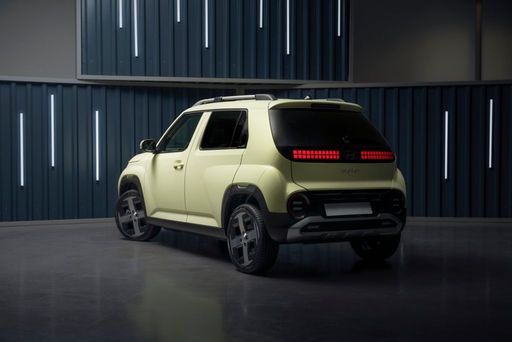
VS

Renault Twingo vs Hyundai Inster comparison

Compare performance (82 HP vs 115 HP), boot space and price (17,100 £ vs 20,900 £ ) at a glance. Find out which car is the better choice for you – Renault Twingo or Hyundai Inster?

Renault Twingo vs Hyundai Inster: Key differences

Renault Twingo

4.3 (2 Reviews)
rate
  • noticeably cheaper
  • only slightly more efficient
  • barely lighter
  • marginally more trunk space
details

Hyundai Inster

4.5 (3 Reviews)
rate
  • visibly more power
  • markedly more electric range
  • somewhat quicker 0–100 km/h
details

All details on performance, efficiency, range and trunk space can be found in the technical comparison below – including user reviews for both models.

By Achim Sedelmaier

Twingo

Direct comparison: Hyundai Inster VS Renault Twingo in everyday terms

Hyundai Inster VS Renault Twingo sets up a classic contrast between a bigger, more capable small car and a compact, city-focused rival. The Hyundai Inster feels like the more grown-up choice: it aims for longer runs and brisk acceleration, while the Renault Twingo parades agility, low running costs and a friendlier price tag. For shoppers this matchup is less about one being better and more about which compromises you can live with — space management, range confidence and how much you care about outright shove versus nimbleness. Read on to see how each car behaves where it matters: daily lanes, long trips and the tight parking spots that decide city life.
Inster

Driving character and usable performance

The Hyundai Inster drives with authority — it gets up to speed more willingly and feels composed when you ask for pace on faster roads, which makes overtakes and motorway stints far less stressful. By contrast the Renault Twingo is punchy where it counts in town, its torque delivery and light controls give you that immediate, stop-start responsiveness commuters love. Choose the Inster if you want confidence for mixed routes or occasional longer journeys; pick the Twingo if most miles are urban and you value sharp, predictable low-speed manners. Both have clear personalities, so your driving pattern should decide which one matches your temperament.

Comfort and long-distance behavior

On long runs the Hyundai Inster settles into a composed rhythm — the heavier feel and longer range translate to fewer stops and a more relaxed cruise, which matters when distance replaces convenience. The Renault Twingo is at home on short hops: its lighter setup and compact footprint are great for city errands, but sustained motorway work reveals its limits and more frequent charging or refueling stops. If you spend time commuting outside the city or enjoy weekend escapes, the Inster will make those miles easier; if your journeys are mostly local, the Twingo’s simplicity is a strong advantage. Both can handle daily driving but reward very different use patterns.

City friendliness, usability and practicality

In tight streets and crowded car parks the Renault Twingo excels — its size and steering make parking painless and urban threading enjoyable, and its trunk is surprisingly sensible for the class. The Hyundai Inster trades a bit of that nimbleness for load-carrying ability and versatility, so you get more comfort for passengers and a stronger ability to haul a week’s worth of gear. If your life revolves around narrow lanes and parallel spots, the Twingo will save you time and stress; if you bring people or luggage often and value stability, the Inster’s compromises become advantages. Practicality here is a matter of priorities: compactness versus capability.

Cabin feel, perceived quality and daily ergonomics

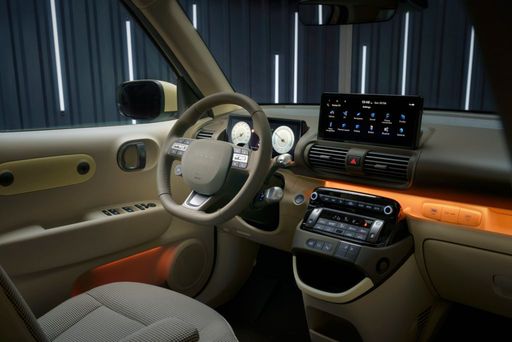
The Hyundai Inster presents a more mature cabin presence with firmer materials and a layout that feels closer to a larger car, which can make it feel more premium day to day. The Renault Twingo keeps things breezy and straightforward — controls are easy to live with, the atmosphere is less polished but more approachable, and everything is functional rather than luxurious. Buyers who equate weightier fit-and-finish with value will prefer the Inster’s interior; those who want uncomplicated, cheerful ergonomics and a lower acquisition cost will appreciate the Twingo. Both cabins suit their roles, but they send different signals about what you’re buying.

Who each car suits and how to choose

Pick the Renault Twingo if you need an affordable, city-centric car that’s simple to park, cheap to run and well matched to short daily trips; it’s the sort of car that lowers stress in urban life. Opt for the Hyundai Inster if your driving mixes in longer journeys, you value stronger on-road performance and a more substantial cabin, and you’re willing to spend a bit more for that flexibility. Neither choice is universally superior — the decision depends on whether your miles are town-heavy or mixed-distance, and whether you prioritise purchase price over range and composure. The technical comparison that follows will map those practical differences to the numbers, so you can match the figures to the lifestyle you intend to lead.

Here’s where it gets real: The technical differences in detail

Twingo

Costs and Efficiency:

Price and efficiency are key factors when choosing a car – and this is often where the real differences emerge.

Renault Twingo is noticeably cheaper – starting at 17,100 £ , while the Hyundai Inster costs 20,900 £ . That’s a price difference of around 3,857 £.

In terms of energy consumption, the Renault Twingo is only slightly more efficient: consuming 13.1 kWh/100km compared to 14.3 kWh/100km for the Hyundai Inster. That’s a difference of about 1.2 kWh/100km.

As for electric range, the Hyundai Inster offers markedly more range – reaching up to 370 km, about 108 km more than the Renault Twingo.

Inster

Engine and Performance:

Under the bonnet, it becomes clear which model is tuned for sportiness and which one takes the lead when you hit the accelerator.

When it comes to engine power, the Hyundai Inster offers visibly more power – delivering 115 HP compared to 82 HP. That’s roughly 33 HP more horsepower.

When accelerating from 0 to 100 km/h, the Hyundai Inster is somewhat quicker – completing the sprint in 10.6 s, while the Renault Twingo takes 12.1 s. That’s about 1.5 s quicker.

There’s also a difference in torque: the Renault Twingo delivers somewhat more torque with 175 Nm compared to 147 Nm. That’s about 28 Nm more.

Space and Everyday Use:

Beyond pure performance, interior space and usability matter most in daily life. This is where you see which car is more practical and versatile.

Both vehicles offer seating for 4 people.

In terms of curb weight, Renault Twingo is barely lighter – 1,275 kg compared to 1,380 kg. The difference is around 105 kg.

Looking at boot space, the Renault Twingo offers marginally more boot space – 305 L compared to 280 L. That’s a difference of about 25 L.

When it comes to payload, the Hyundai Inster carries somewhat more – 357 kg compared to 320 kg. That’s a difference of about 37 kg.

Who wins the race in the data check?

The Hyundai Inster comes out clearly ahead in the objective data comparison.
This result only shows which model scores more points on paper – not which of the two cars feels right for you.

from £20,900
Inster

Hyundai Inster

  • Engine Type Electric
  • Transmission Automatic
  • Drive Type Front-Wheel Drive
  • Power HP 97 - 115 HP
  • Consumption kWh/100km 14.3 - 15.1 kWh/100km
  • Electric Range 327 - 370 km
Renault Twingo
Hyundai Inster

Costs and Consumption

View detailed analysis

Engine and Performance

View detailed analysis

Dimensions and Body

View detailed analysis

Renault Twingo

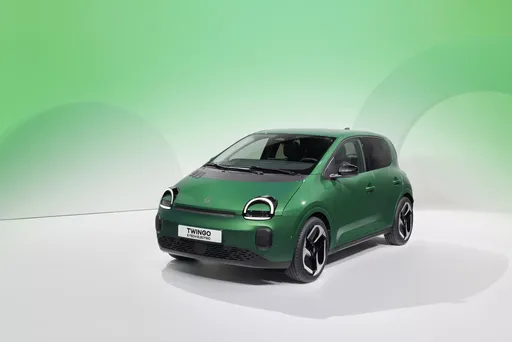
The Renault Twingo is a cheeky city car that turns tight streets and impossible parking spaces into an urban playground with its agile handling and compact footprint. It’s perfect for zipping around town thanks to clever interior packaging and a playful character, though buyers chasing long-distance comfort or huge luggage space should consider other options.

details

Hyundai Inster

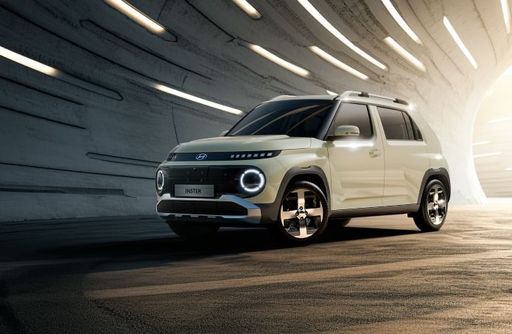
The Inster has quickly captured the attention of automotive enthusiasts with its striking design and dynamic performance. This model seamlessly blends advanced technology with comfort, making it an ideal choice for both daily commutes and adventurous road trips. With its spacious interior and innovative features, the Inster promises an exhilarating driving experience that doesn’t compromise on practicality.

details
Renault Twingo
Hyundai Inster

Costs and Consumption

Price
17,100 - 18,500 £
Price
20,900 - 26,200 £
Consumption L/100km
-
Consumption L/100km
-
Consumption kWh/100km
13.1 kWh/100km
Consumption kWh/100km
14.3 - 15.1 kWh/100km
Electric Range
260 - 262 km
Electric Range
327 - 370 km
Battery Capacity
-
Battery Capacity
-
co2
0 g/km
co2
0 g/km
Fuel tank capacity
-
Fuel tank capacity
-

Dimensions and Body

Body Type
Hatchback
Body Type
SUV
Seats
4
Seats
4
Doors
-
Doors
-
Curb weight
1,275 - 1,294 kg
Curb weight
1,380 - 1,433 kg
Trunk capacity
305 L
Trunk capacity
238 - 280 L
Length
-
Length
-
Width
1,720 mm
Width
1,610 mm
Height
-
Height
-
Max trunk capacity
-
Max trunk capacity
-
Payload
301 - 320 kg
Payload
317 - 357 kg

Engine and Performance

Engine Type
Electric
Engine Type
Electric
Transmission
Automatic
Transmission
Automatic
Transmission Detail
Reduction Gearbox
Transmission Detail
Reduction Gearbox
Drive Type
Front-Wheel Drive
Drive Type
Front-Wheel Drive
Power HP
82 HP
Power HP
97 - 115 HP
Acceleration 0-100km/h
12.1 s
Acceleration 0-100km/h
10.6 - 11.7 s
Max Speed
-
Max Speed
-
Torque
175 Nm
Torque
147 Nm
Number of Cylinders
-
Number of Cylinders
-
Power kW
60 kW
Power kW
71 - 85 kW
Engine capacity
-
Engine capacity
-

General

Model Year
2026
Model Year
2025
CO2 Efficiency Class
A
CO2 Efficiency Class
A
Brand
Renault
Brand
Hyundai
DriveDuel uses data analysis and artificial intelligence to evaluate vehicle data and create content. Content is regularly reviewed and improved. The displayed prices are estimates based on German list prices, adjusted to the respective country’s VAT. Country-specific registration taxes are not included. This information is not legally binding.