VS

Renault Twingo vs Renault R5 comparison

Compare performance (82 HP vs 150 HP), boot space and price (17,100 £ vs 24,000 £ ) at a glance. Find out which car is the better choice for you – Renault Twingo or Renault R5?

Renault Twingo vs Renault R5: Key differences

Renault Twingo

4.3 (2 Reviews)
rate
  • substantially cheaper
  • a bit more efficient
  • somewhat lighter
details

Renault R5

4.4 (2 Reviews)
rate
  • substantially more power
  • noticeably more electric range
  • significantly quicker 0–100 km/h
  • marginally more trunk space
details

All details on performance, efficiency, range and trunk space can be found in the technical comparison below – including user reviews for both models.

By Achim Sedelmaier

Twingo

Renault R5 VS Renault Twingo: real-world differences that matter

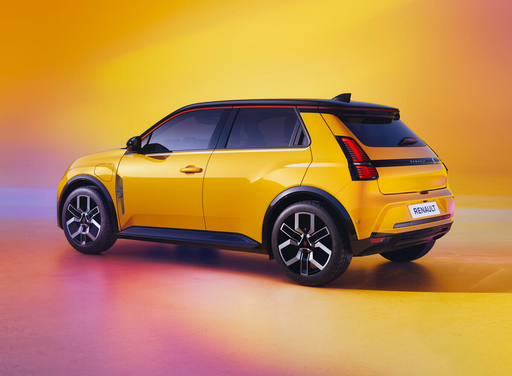
The Renault R5 and Renault Twingo attack city life from different angles, and that shapes how they feel every day. The Renault R5 plays the modern-retro all-rounder with more punch and noticeably longer legs between charges. The Renault Twingo is the urban specialist: tiny footprint, breezy to park, and easier on the wallet. If you split your time between dense streets and occasional motorway runs, the Renault R5 feels the more versatile companion. If your world is tight parking bays, school gates, and short hops, the Renault Twingo leans into that brief with charming simplicity.
R5

Design character and cabin feel

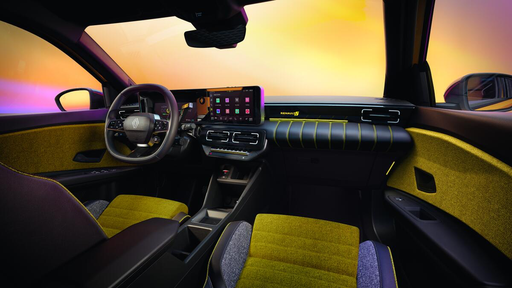
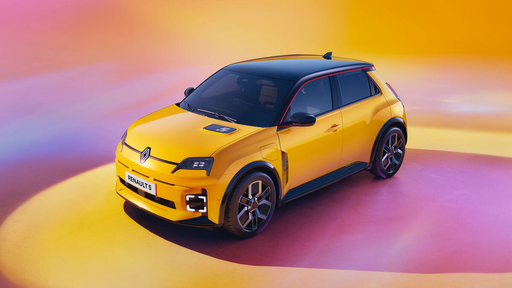
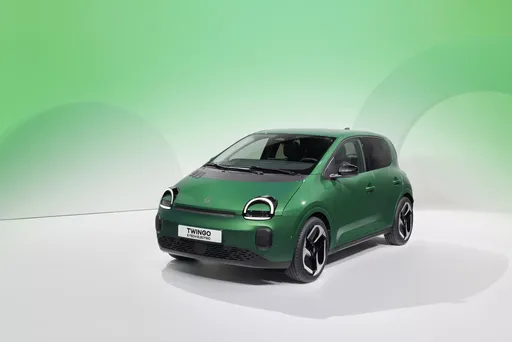
The Renault R5 leans into nostalgia with a grown-up twist, feeling sturdier and more substantial inside than many small EVs. Materials and screens present a step up, and its interface feels like a modern device rather than a retrofit. The Renault Twingo keeps things cheerful and straightforward, with a playful vibe that’s easy to jump into but shows its budget roots in textures and sound insulation. The Renault R5 also offers a proper five-seat layout, which can be the decider for households juggling friends or kids. The Renault Twingo’s four-seat setup suits couples or city sharers who value simplicity over maximum occupancy.

City manners and parking ease

The Renault Twingo is a master of tight streets, turning around in places where others need a three-point plan, and its upright driving position makes gaps and kerbs easy to judge. Its light controls and clear outward view reduce stress in traffic, which is why it shines as a pure city car. The Renault R5 isn’t clumsy though; it’s compact, parks easily, and feels agile, just not quite as “pivot-on-a-coin” as the Twingo. The R5’s stronger shove makes darting into gaps and climbing steep ramps feel more effortless. If your commute is a daily slalom of delivery vans and bollards, the Twingo’s micro-manoeuvrability is addictive; if you want a bit more pace with your precision, the R5 hits the sweet spot.

Practicality and everyday usability

The Renault R5 offers a noticeably bigger and deeper boot, which helps with weekly shops and a folded stroller, though the high loading edge isn’t ideal for heavier items. Rear space in the Renault R5 is usable but foot room can be tight for lanky passengers, so longer trips with adults in the back will still feel compact-class. The Renault Twingo counters with a neat trick: a fold-flat front passenger seat that swallows surprisingly long parcels or flat-pack furniture. Its actual luggage bay and rear bench are modest, reflecting its city-first mission. If you need a small car that still hauls everyday family clutter, the R5 feels more accommodating; if you mostly carry two people and the occasional awkwardly long box, the Twingo’s layout is smarter than it looks.

Ride comfort and long-distance behavior

The Renault R5 rides with a calmer, more mature demeanor, keeping noise and bumps in check better once speeds rise. It still prefers relaxed cruising to relentless high-speed stints, but it recharges quickly on DC and stretches a longer electric range between stops. The Renault Twingo is fine across town yet gets busy and noticeably louder on motorways, which makes sustained distance feel like a chore. With the electric Twingo’s reliance on AC charging, spontaneous intercity trips demand more planning and patience. If your life occasionally includes a cross-country weekend, the R5 is the easier choice; if long trips are rare, the Twingo’s urban comfort outweighs its highway compromises.

Costs, tech and the buyer fit

The Renault Twingo undercuts the Renault R5 on price and keeps running costs tame in town, making it a savvy pick for strict budgets or as a dependable second car. Its simple tech does the basics, and rapid AC charging suits apartment dwellers hopping between errands. The Renault R5 asks more upfront but gives back with richer infotainment, bidirectional energy features and faster road-trip charging, which broadens how you can use the car. Think of the Renault Twingo for tight parking, short journeys and minimal fuss; think of the Renault R5 for style-led commuting, occasional family duties and weekends that wander. From here, the technical comparison will help confirm which set of trade-offs lines up best with your daily routine.

Here’s where it gets real: The technical differences in detail

Twingo

Costs and Efficiency:

Price and efficiency are often the first things buyers look at. Here it becomes clear which model has the long-term edge – whether at the pump, the plug, or in purchase price.

Renault Twingo is substantially cheaper – starting at 17,100 £ , while the Renault R5 costs 24,000 £ . That’s a price difference of around 6,943 £.

In terms of energy consumption, the Renault Twingo is a bit more efficient: consuming 13.1 kWh/100km compared to 14.8 kWh/100km for the Renault R5. That’s a difference of about 1.7 kWh/100km.

As for electric range, the Renault R5 offers noticeably more range – reaching up to 405 km, about 143 km more than the Renault Twingo.

R5

Engine and Performance:

Power, torque and acceleration say a lot about how a car feels on the road. This is where you see which model delivers more driving dynamics.

When it comes to engine power, the Renault R5 offers substantially more power – delivering 150 HP compared to 82 HP. That’s roughly 68 HP more horsepower.

When accelerating from 0 to 100 km/h, the Renault R5 is significantly quicker – completing the sprint in 8 s, while the Renault Twingo takes 12.1 s. That’s about 4.1 s quicker.

There’s also a difference in torque: the Renault R5 delivers visibly more torque with 245 Nm compared to 175 Nm. That’s about 70 Nm more.

Space and Everyday Use:

Whether family car or daily driver – which one offers more room, flexibility and comfort?

Seats: Renault R5 offers more seats – 5 vs 4.

In terms of curb weight, Renault Twingo is somewhat lighter – 1,275 kg compared to 1,447 kg. The difference is around 172 kg.

Looking at boot space, the Renault R5 offers marginally more boot space – 326 L compared to 305 L. That’s a difference of about 21 L.

When it comes to payload, the Renault R5 carries markedly more – 418 kg compared to 320 kg. That’s a difference of about 98 kg.

Who wins the race in the data check?

The Renault R5 is far ahead overall in the objective data comparison.
This result only shows which model scores more points on paper – not which of the two cars feels right for you.

from £24,000
R5

Renault R5

  • Engine Type Electric
  • Transmission Automatic
  • Drive Type Front-Wheel Drive
  • Power HP 122 - 150 HP
  • Consumption kWh/100km 14.8 - 15.2 kWh/100km
  • Electric Range 307 - 405 km
Renault Twingo
Renault R5

Costs and Consumption

View detailed analysis

Engine and Performance

View detailed analysis

Dimensions and Body

View detailed analysis

Renault Twingo

The Renault Twingo is a cheeky city car that turns tight streets and impossible parking spaces into an urban playground with its agile handling and compact footprint. It’s perfect for zipping around town thanks to clever interior packaging and a playful character, though buyers chasing long-distance comfort or huge luggage space should consider other options.

details

Renault R5

The Renault 5 blends classic styling cues with contemporary design, giving it a playful and characterful presence on the road. It’s a city-focused hatchback that feels nimble and cleverly packaged, ideal for drivers who want personality and practicality.

details
Renault Twingo
Renault R5

Costs and Consumption

Price
17,100 - 18,500 £
Price
24,000 - 27,000 £
Consumption L/100km
-
Consumption L/100km
-
Consumption kWh/100km
13.1 kWh/100km
Consumption kWh/100km
14.8 - 15.2 kWh/100km
Electric Range
260 - 262 km
Electric Range
307 - 405 km
Battery Capacity
-
Battery Capacity
-
co2
0 g/km
co2
0 g/km
Fuel tank capacity
-
Fuel tank capacity
-

Dimensions and Body

Body Type
Hatchback
Body Type
Hatchback
Seats
4
Seats
5
Doors
-
Doors
-
Curb weight
1,275 - 1,294 kg
Curb weight
1,447 - 1,524 kg
Trunk capacity
305 L
Trunk capacity
326 L
Length
-
Length
-
Width
1,720 mm
Width
1,744 mm
Height
-
Height
-
Max trunk capacity
-
Max trunk capacity
-
Payload
301 - 320 kg
Payload
396 - 418 kg

Engine and Performance

Engine Type
Electric
Engine Type
Electric
Transmission
Automatic
Transmission
Automatic
Transmission Detail
Reduction Gearbox
Transmission Detail
Reduction Gearbox
Drive Type
Front-Wheel Drive
Drive Type
Front-Wheel Drive
Power HP
82 HP
Power HP
122 - 150 HP
Acceleration 0-100km/h
12.1 s
Acceleration 0-100km/h
8 - 9 s
Max Speed
-
Max Speed
-
Torque
175 Nm
Torque
225 - 245 Nm
Number of Cylinders
-
Number of Cylinders
-
Power kW
60 kW
Power kW
90 - 110 kW
Engine capacity
-
Engine capacity
-

General

Model Year
2026
Model Year
2025
CO2 Efficiency Class
A
CO2 Efficiency Class
A
Brand
Renault
Brand
Renault
DriveDuel uses data analysis and artificial intelligence to evaluate vehicle data and create content. Content is regularly reviewed and improved. The displayed prices are estimates based on German list prices, adjusted to the respective country’s VAT. Country-specific registration taxes are not included. This information is not legally binding.