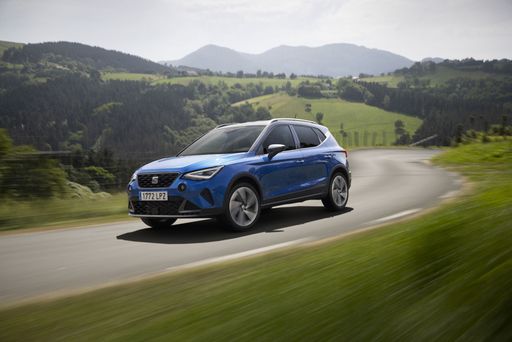
@ SEAT S.A. / SEAT Media Center
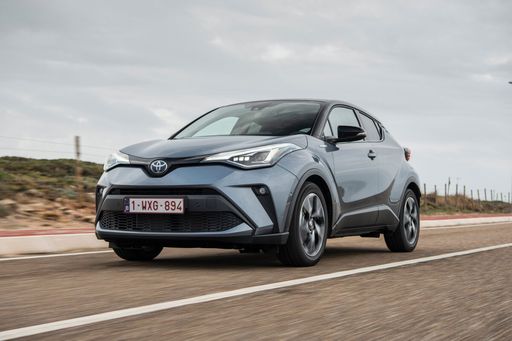
@ Toyota Motor Corporation
VS

SEAT Arona vs Toyota C-HR - Differences and prices compared

Compare performance (150 HP vs 223 HP), boot space and price (19300 £ vs 29100 £) at a glance. Find out which car is the better choice for you – SEAT Arona or Toyota C-HR?

SEAT Arona

4.9 (1 Reviews)
rate

Toyota C-HR

5 (1 Reviews)
rate

Here’s where it gets real: The technical differences in detail

Arona @ SEAT S.A. / SEAT Media Center

Costs and Efficiency:

Price and efficiency are often the first things buyers look at. Here it becomes clear which model has the long-term edge – whether at the pump, the plug, or in purchase price.

SEAT Arona has a clearly advantage in terms of price – it starts at 19300 £, while the Toyota C-HR costs 29100 £. That’s a price difference of around 9832 £.

Fuel consumption also shows a difference: Toyota C-HR manages with 0.80 L and is therefore convincingly more efficient than the SEAT Arona with 5.40 L. The difference is about 4.60 L per 100 km.

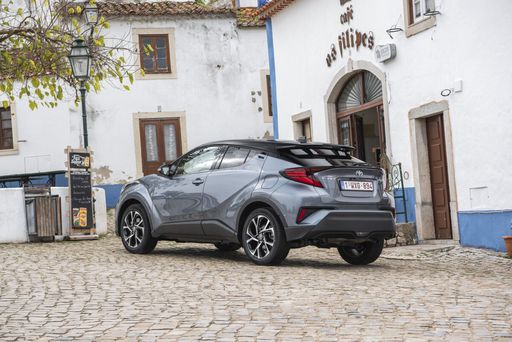
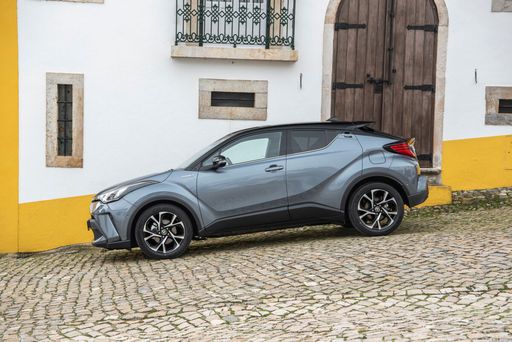
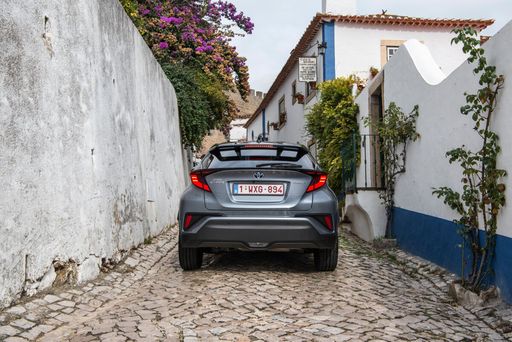
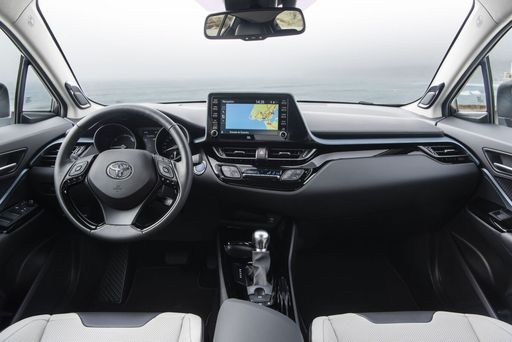
C-HR @ Toyota Motor Corporation

Engine and Performance:

Power, torque and acceleration say a lot about how a car feels on the road. This is where you see which model delivers more driving dynamics.

When it comes to engine power, the Toyota C-HR has a evident edge – offering 223 HP compared to 150 HP. That’s roughly 73 HP more horsepower.

In acceleration from 0 to 100 km/h, the Toyota C-HR is to a small extent quicker – completing the sprint in 7.40 s, while the SEAT Arona takes 8.40 s. That’s about 1 s faster.

In terms of top speed, the SEAT Arona performs to a small extent better – reaching 210 km/h, while the Toyota C-HR tops out at 180 km/h. The difference is around 30 km/h.

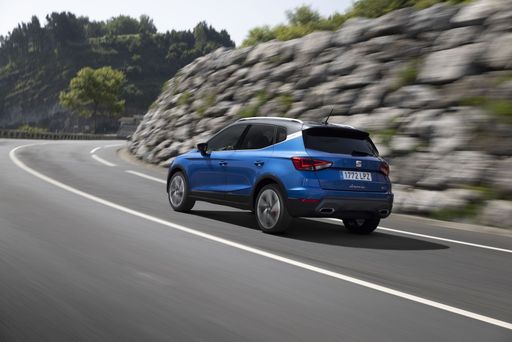
Arona @ SEAT S.A. / SEAT Media Center

Space and Everyday Use:

Cabin size, boot volume and payload all play a role in everyday practicality. Here, comfort and flexibility make the difference.

Seats: offers more seating capacity – vs .

In curb weight, SEAT Arona is distinct lighter – 1188 kg compared to 1505 kg. The difference is around 317 kg.

In terms of boot space, the Toyota C-HR offers a bit more room – 447 L compared to 400 L. That’s a difference of about 47 L.

In maximum load capacity, the SEAT Arona performs barely noticeable better – up to 1280 L, which is about 125 L more than the Toyota C-HR.

When it comes to payload, SEAT Arona a bit takes the win – 522 kg compared to 425 kg. That’s a difference of about 97 kg.

Who wins the race?

The Toyota C-HR proves to be wins the duel decisively and therefore becomes our DriveDuel Champion!
Toyota C-HR is the better all-rounder in this comparison.

from about £29,100
C-HR @ Toyota Motor Corporation

Toyota C-HR

  • Engine Type : Full Hybrid, Plugin Hybrid
  • Transmission : Automatic
  • Drive Type : Front-Wheel Drive, All-Wheel Drive
  • Power HP : 140 - 223 HP
  • Consumption L/100km : 0.8 - 5.1 L
  • Electric Range : 68 km
SEAT Arona
Toyota C-HR

Costs and Consumption

View detailed analysis

Engine and Performance

View detailed analysis

Dimensions and Body

View detailed analysis

SEAT Arona

4.9 (1 Reviews)
rate

The SEAT Arona is a cheeky urban crossover that mixes sharp styling with sensible practicality, making it an appealing choice for buyers who want personality without fuss. It’s zippy in traffic, comfortable enough for daily driving, and brings enough character to make routine journeys feel a little more fun.

details

Toyota C-HR

5 (1 Reviews)
rate

The Toyota C-HR cuts a striking figure with its angular styling and coupe-like profile, so you’ll never go unnoticed in the supermarket car park. It balances everyday practicality with a nimble, city-friendly personality, making routine commutes feel a touch more fun without asking for forgiveness.

details
SEAT Arona
Toyota C-HR
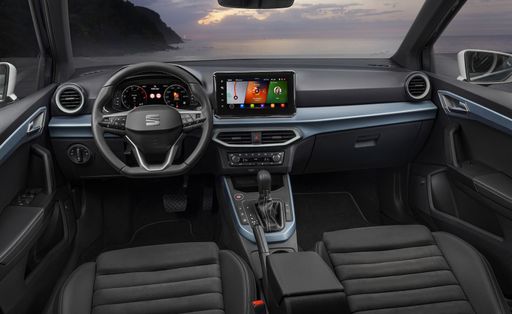
Arona @ SEAT S.A. / SEAT Media Center
C-HR @ Toyota Motor Corporation

Costs and Consumption

Price
19300 - 29300 £
Price
29100 - 42800 £
Consumption L/100km
5.4 - 5.6 L
Consumption L/100km
0.8 - 5.1 L
Consumption kWh/100km
-
Consumption kWh/100km
-
Electric Range
-
Electric Range
68 km
Battery Capacity
-
Battery Capacity
-
co2
122 - 128 g/km
co2
17 - 115 g/km
Fuel tank capacity
40 L
Fuel tank capacity
43 L

Dimensions and Body

Body Type
SUV
Body Type
SUV
Seats
5
Seats
5
Doors
5
Doors
5
Curb weight
1188 - 1268 kg
Curb weight
1505 - 1755 kg
Trunk capacity
400 L
Trunk capacity
350 - 447 L
Length
4153 mm
Length
4362 mm
Width
1780 mm
Width
1832 mm
Height
1537 mm
Height
1558 - 1564 mm
Max trunk capacity
1280 L
Max trunk capacity
1076 - 1155 L
Payload
502 - 522 kg
Payload
375 - 425 kg

Engine and Performance

Engine Type
Petrol
Engine Type
Full Hybrid, Plugin Hybrid
Transmission
Manuel, Automatic
Transmission
Automatic
Transmission Detail
Manual Gearbox, Dual-Clutch Automatic
Transmission Detail
CVT
Drive Type
Front-Wheel Drive
Drive Type
Front-Wheel Drive, All-Wheel Drive
Power HP
95 - 150 HP
Power HP
140 - 223 HP
Acceleration 0-100km/h
8.4 - 11.3 s
Acceleration 0-100km/h
7.4 - 9.9 s
Max Speed
182 - 210 km/h
Max Speed
175 - 180 km/h
Torque
175 - 250 Nm
Torque
-
Number of Cylinders
3 - 4
Number of Cylinders
4
Power kW
70 - 110 kW
Power kW
103 - 164 kW
Engine capacity
999 - 1498 cm3
Engine capacity
1798 - 1987 cm3

General

Model Year
2025
Model Year
2024 - 2025
CO2 Efficiency Class
D
CO2 Efficiency Class
C, B
Brand
SEAT
Brand
Toyota
Is the SEAT Arona offered with different drivetrains?

Available configurations include Front-Wheel Drive.

The prices and data displayed are estimates based on German list prices and may vary by country. This information is not legally binding.