VS

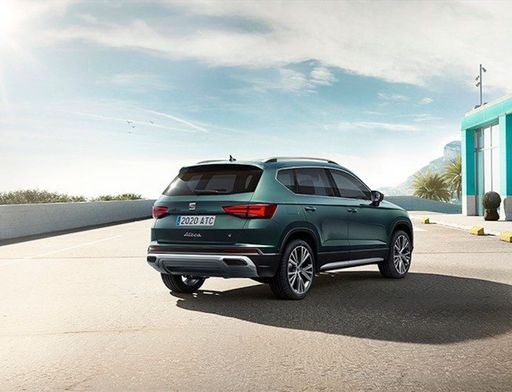
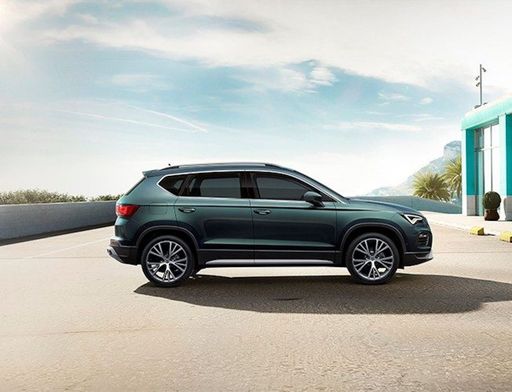
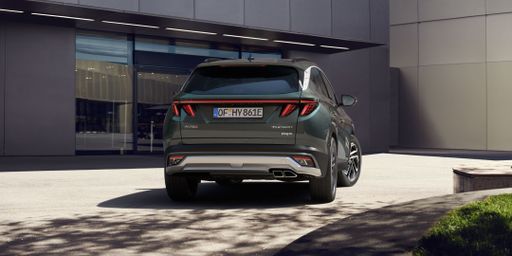
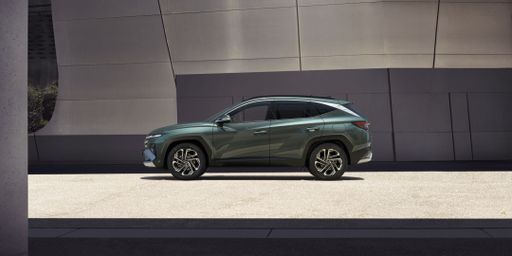
SEAT Ateca vs Hyundai Tucson comparison

Compare performance (150 HP vs 288 HP), boot space and price (25,100 £ vs 20,900 £ ) at a glance. Find out which car is the better choice for you – SEAT Ateca or Hyundai Tucson?

SEAT Ateca vs Hyundai Tucson: Key differences

SEAT Ateca

4.9 (3 Reviews)
rate
  • moderately lighter
details

Hyundai Tucson

4.6 (4 Reviews)
rate
  • noticeably cheaper
  • considerably more power
  • clearly more efficient
  • a bit quicker 0–100 km/h
  • slightly more trunk space
details

All details on performance, efficiency, range and trunk space can be found in the technical comparison below – including user reviews for both models.

By Achim Sedelmaier

Ateca

The automotive market is a crowded space, with SUVs leading the charge in popularity and versatility. Two standout contenders that have caught the attention of drivers and critics alike are the Hyundai Tucson and the SEAT Ateca. Both vehicles offer a blend of performance, comfort, and technology, making them worthy opponents in this segment. Let’s take a detailed look at how these two SUVs stack up against each other in terms of technical specifications, fuel efficiency, and innovative features.

Tucson

Design and Dimensions

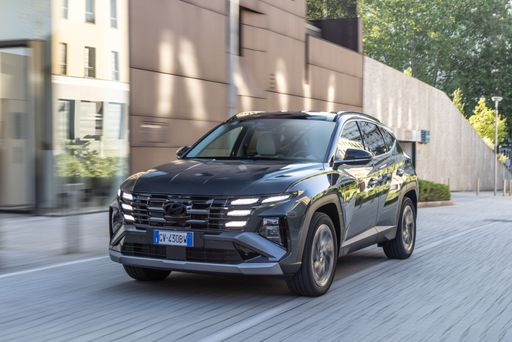
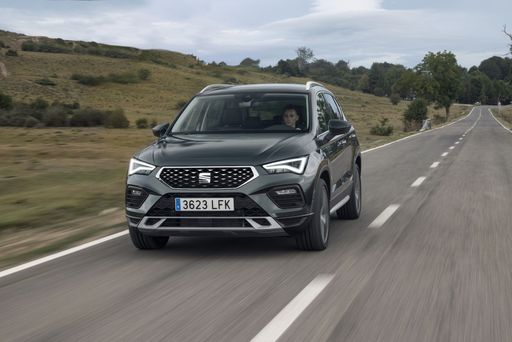
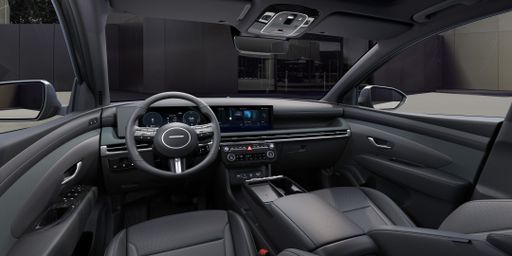
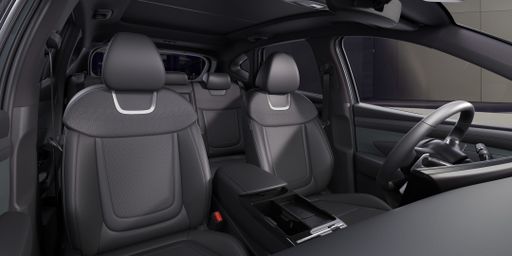
Starting with the dimensions, the Hyundai Tucson measures 4510 mm in length, 1865 mm in width, and 1650 mm in height. It boasts a spacious trunk capacity of up to 620 liters, making it a practical choice for families and those needing extra cargo space. In comparison, the SEAT Ateca is slightly smaller at 4381 mm long, 1841 mm wide, and 1601 mm tall, with a trunk capacity of 510 liters. While both vehicles can accommodate five passengers comfortably, the Tucson tends to offer more interior space and storage options.

Ateca

Engine Performance and Transmission

Engine options play a crucial role in defining the performance of an SUV. The Tucson offers a diverse range of engines including diesel MHEV, petrol MHEV, petrol, full hybrid, and plug-in hybrid configurations, delivering power outputs between 136 and an impressive 252 hp. Its torque figures range from 320 to 367 Nm, showcasing robust capabilities for both city driving and off-road adventures.

The SEAT Ateca, while offering fewer choices, provides solid options with petrol and diesel engines, producing power from 116 to 150 hp. Its torque levels peak at 360 Nm, enabling commendable performance in urban and highway settings. Transmission options for both vehicles include manual and automatic gearboxes, with the Tucson presenting a more advanced double-clutch system for smoother gear transitions.

Tucson

Fuel Efficiency and Eco-Friendliness

Fuel efficiency is always a key consideration for potential buyers. The Tucson offers impressive fuel consumption figures ranging from 5.1 to 6.8 L/100km, depending on the engine choice. Its CO2 emissions are competitive, with the lowest recorded at 126 g/km, making it a more environmentally friendly option overall.

The Ateca, however, is not far behind, with consumption figures ranging between 4.9 and 6.4 L/100km and CO2 emissions as low as 129 g/km. Both vehicles cater to eco-conscious consumers but the Tucson edges out slightly thanks to its hybrid variants and lower emissions for the non-hybrid options.

Ateca

Innovative Features and Technology

In terms of technological innovations, the Hyundai Tucson is equipped with an impressive suite of features including advanced driver assistance systems (ADAS), a digital cockpit, and an updated infotainment system with integration for Apple CarPlay and Android Auto. It also boasts options for ambient lighting, panoramic sunroof, and a comprehensive safety package that includes lane-keeping assist, adaptive cruise control, and blind-spot monitoring.

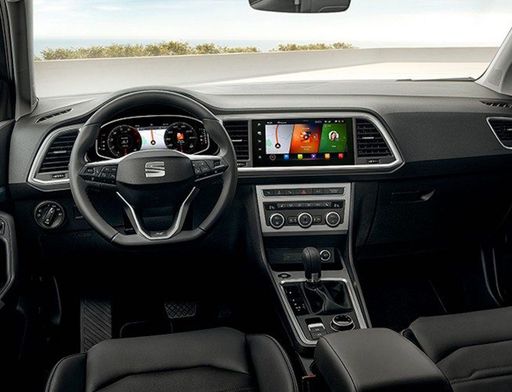
The SEAT Ateca, on the other hand, also offers a range of tech-oriented features, including a touchscreen infotainment system compatible with smart devices, a rear-view camera, and an array of safety features. Though not as extensive as those found in the Tucson, the Ateca provides essential technology that appeals to the majority of drivers.

Tucson

Conclusion

When it comes down to the Hyundai Tucson vs. SEAT Ateca, each SUV brings its own strengths and unique offerings to the table. The Tucson stands out with its extensive engine range, spacious interior, and advanced technological features, catering to those looking for a versatile and high-performing vehicle. The Ateca, while smaller and offering fewer engine choices, remains a solid competitor with strong performance and good fuel economy, making it a practical option for city dwellers.

Ultimately, the choice between the two will depend on personal preferences, whether you prioritize power, space, or technological innovation. Both models are excellent contenders in the competitive SUV segment, ensuring a tough decision for potential buyers.

Here’s where it gets real: The technical differences in detail

Ateca

Costs and Efficiency:

Price and efficiency are often the first things buyers look at. Here it becomes clear which model has the long-term edge – whether at the pump, the plug, or in purchase price.

Hyundai Tucson is noticeably cheaper – starting at 20,900 £ , while the SEAT Ateca costs 25,100 £ . That’s a price difference of around 4,208 £.

Fuel consumption also shows a difference: the Hyundai Tucson uses 2.7 L/100km and is clearly more efficient than the SEAT Ateca with 4.9 L/100km. The difference is about 2.2 L/100km.

Tucson

Engine and Performance:

Power, torque and acceleration say a lot about how a car feels on the road. This is where you see which model delivers more driving dynamics.

When it comes to engine power, the Hyundai Tucson offers considerably more power – delivering 288 HP compared to 150 HP. That’s roughly 138 HP more horsepower.

When accelerating from 0 to 100 km/h, the Hyundai Tucson is a bit quicker – completing the sprint in 7.5 s, while the SEAT Ateca takes 9 s. That’s about 1.5 s quicker.

There’s also a difference in torque: the Hyundai Tucson delivers barely more torque with 379 Nm compared to 360 Nm. That’s about 19 Nm more.

Ateca

Space and Everyday Use:

Whether family car or daily driver – which one offers more room, flexibility and comfort?

Both vehicles offer seating for 5 people.

In terms of curb weight, SEAT Ateca is moderately lighter – 1,345 kg compared to 1,542 kg. The difference is around 197 kg.

Looking at boot space, the Hyundai Tucson offers slightly more boot space – 620 L compared to 510 L. That’s a difference of about 110 L.

When it comes to payload, the Hyundai Tucson carries barely more – 545 kg compared to 525 kg. That’s a difference of about 20 kg.

Who wins the race in the data check?

The Hyundai Tucson is decisively ahead in the objective data comparison.
This result only shows which model scores more points on paper – not which of the two cars feels right for you.

from £20,900
Tucson

Hyundai Tucson

  • Engine Type : Petrol, Full Hybrid, Plugin Hybrid, Diesel MHEV
  • Transmission : Manuel, Automatic
  • Drive Type : Front-Wheel Drive, All-Wheel Drive
  • Power HP : 136 - 288 HP
  • Consumption L/100km : 2.7 - 7.6 L/100km
  • Electric Range : 63 - 70 km
SEAT Ateca
Hyundai Tucson

Costs and Consumption

View detailed analysis

Engine and Performance

View detailed analysis

Dimensions and Body

View detailed analysis

SEAT Ateca

The SEAT Ateca blends sharp, purposeful styling with practical space that turns everyday errands into something a bit more enjoyable. It’s poised and engaging to drive for its segment, offers solid value, and has just enough personality to make you smile on the school run.

details

Hyundai Tucson

Hyundai Tucson marries bold, sculpted looks with a clever, roomy cabin that feels smarter than its price tag suggests. It's composed on the road, easy to live with day-to-day, and a sensible choice for buyers who want SUV style without the showroom theatrics.

details
SEAT Ateca
Hyundai Tucson

Costs and Consumption

Price
25,100 - 36,900 £
Price
20,900 - 47,900 £
Consumption L/100km
4.9 - 6.4 L/100km
Consumption L/100km
2.7 - 7.6 L/100km
Consumption kWh/100km
-
Consumption kWh/100km
-
Electric Range
-
Electric Range
63 - 70 km
Battery Capacity
-
Battery Capacity
-
co2
129 - 144 g/km
co2
62 - 172 g/km
Fuel tank capacity
-
Fuel tank capacity
52 - 54 L

Dimensions and Body

Body Type
SUV
Body Type
SUV
Seats
5
Seats
5
Doors
-
Doors
5
Curb weight
1,345 - 1,514 kg
Curb weight
1,542 - 1,893 kg
Trunk capacity
510 L
Trunk capacity
546 - 620 L
Length
-
Length
4,525 - 4,535 mm
Width
1,841 mm
Width
1,865 mm
Height
-
Height
1,650 mm
Max trunk capacity
-
Max trunk capacity
1,795 - 1,799 L
Payload
516 - 525 kg
Payload
518 - 545 kg

Engine and Performance

Engine Type
Petrol, Diesel
Engine Type
Petrol, Full Hybrid, Plugin Hybrid, Diesel MHEV
Transmission
Manuel, Automatic
Transmission
Manuel, Automatic
Transmission Detail
Manual Gearbox, Dual-Clutch Automatic
Transmission Detail
Manual Gearbox, Dual-Clutch Automatic, Automatic Gearbox
Drive Type
Front-Wheel Drive
Drive Type
Front-Wheel Drive, All-Wheel Drive
Power HP
116 - 150 HP
Power HP
136 - 288 HP
Acceleration 0-100km/h
9 - 11 s
Acceleration 0-100km/h
7.5 - 11.6 s
Max Speed
-
Max Speed
196 - 204 km/h
Torque
200 - 360 Nm
Torque
250 - 379 Nm
Number of Cylinders
3 - 4
Number of Cylinders
4
Power kW
85 - 110 kW
Power kW
100 - 212 kW
Engine capacity
999 - 1,968 cm3
Engine capacity
1,598 cm3

General

Model Year
2025
Model Year
2025
CO2 Efficiency Class
E, D
CO2 Efficiency Class
F, D, E, B
Brand
SEAT
Brand
Hyundai
DriveDuel uses data analysis and artificial intelligence to evaluate vehicle data and create content. Content is regularly reviewed and improved. The displayed prices are estimates based on German list prices, adjusted to the respective country’s VAT. Country-specific registration taxes are not included. This information is not legally binding.