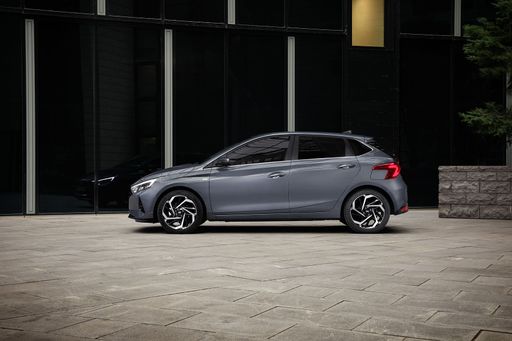
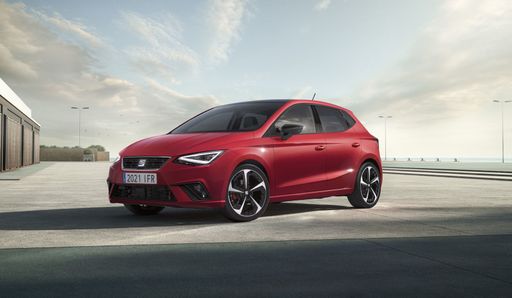
VS

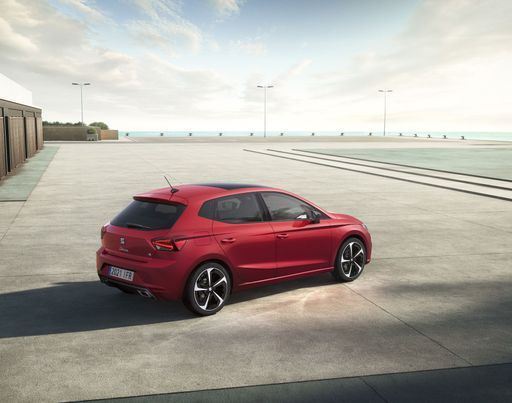
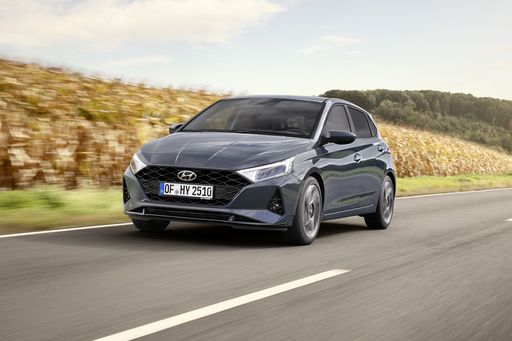
SEAT Ibiza vs Hyundai i20 comparison

Compare performance (150 HP vs 90 HP), boot space and price (16,800 £ vs 18,800 £ ) at a glance. Find out which car is the better choice for you – SEAT Ibiza or Hyundai i20?

SEAT Ibiza vs Hyundai i20: Key differences

SEAT Ibiza

  • a bit cheaper
  • visibly more power
  • slightly more efficient
  • clearly quicker 0–100 km/h
  • only slightly lighter
  • only slightly more trunk space
details

Hyundai i20

4 (1 Reviews)
rate
details

All details on performance, efficiency, range and trunk space can be found in the technical comparison below – including user reviews for both models.

By Achim Sedelmaier

Ibiza

Hyundai i20 vs SEAT Ibiza: Hatchback Titans Compared

In the competitive world of compact cars, two models have managed to capture significant attention: the Hyundai i20 and the SEAT Ibiza. Both of these hatchbacks offer a blend of practicality, style, and technology, making them popular choices among urban commuters and casual drivers alike. Let's dive into the specifics to see how they stack up against each other in the 2024 model year.
i20

Performance and Engine Specifications

The Hyundai i20 boasts a variety of engine choices, including a petrol mild hybrid (MHEV) option as well as standard petrol engines. Power output ranges from 79 to 100 HP, with torque figures reaching up to 200 Nm. This power allows for a range of acceleration times, with the fastest i20 variant accelerating from 0 to 100 km/h in 11.1 seconds and a top speed of 183 km/h.

On the other hand, the SEAT Ibiza also presents a robust range of petrol engine options, producing between 80 and 150 HP, with torque figures peaking at 250 Nm. The Ibiza displays a swifter performance in its upper-tier models, reaching 100 km/h from a standstill in just 8.1 seconds and achieving a top speed of 216 km/h.

Ibiza

Fuel Efficiency and Environmental Impact

Fuel economy is a critical factor for many hatchback buyers. The Hyundai i20 offers competitive consumption figures, averaging between 5.1 and 5.3 L/100km, paired with CO2 emissions ranging from 117 to 120 g/km, placing it in the D efficiency class.

The SEAT Ibiza shows similar fuel efficiency, with consumption ranging from 5.1 to 5.7 L/100km and CO2 emissions between 115 and 128 g/km, depending on the engine. It offers a slightly better efficiency profile in the C class for select models.

i20

Dimensions and Practicality

Both vehicles offer practical dimensions for city driving and parking. The Hyundai i20 measures slightly longer at 4065 to 4075 mm, with a width of 1775 mm and height between 1450 and 1455 mm. It provides a trunk capacity of 352 liters, catering to everyday storage needs comfortably.

The SEAT Ibiza, meanwhile, is marginally shorter at 4059 mm, but offers a slightly wider body at 1780 mm, and a lower height of 1447 mm. It provides a slightly larger trunk space of 355 liters. Both cars comfortably seat five passengers, making them versatile choices for small families or group outings.

Ibiza

Innovation and Features

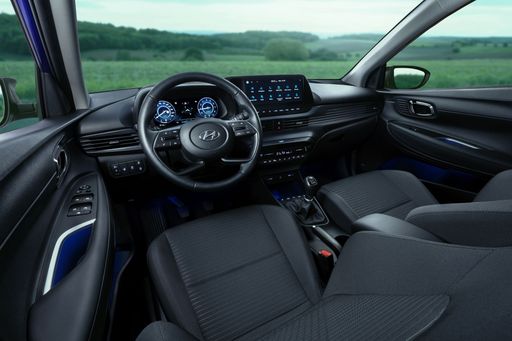
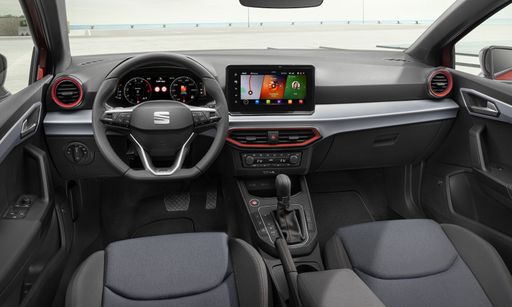
Hyundai has equipped the i20 with a variety of technical enhancements, such as a dual-clutch automatic transmission (DCT) alongside a manual option, and cutting-edge infotainment systems to keep drivers connected.

SEAT has not fallen behind, offering a similar range of dual-clutch automatic and manual transmissions, along with a repertoire of digital features that enhance the driving experience. Both brands have made strides in technological innovation, providing a modern driving feel within the compact class.

i20

Final Thoughts

Choosing between the Hyundai i20 and SEAT Ibiza ultimately comes down to personal preference and specific needs. The i20 emphasizes a more balanced power delivery with mild hybrid options, while the Ibiza offers a bit more punch in its higher trims and slightly larger storage capacity. Both vehicles, with their thoughtful design and modern innovations, maintain their positions as compelling choices in the hatchback segment.

Here’s where it gets real: The technical differences in detail

Ibiza

Costs and Efficiency:

Price and efficiency are often the first things buyers look at. Here it becomes clear which model has the long-term edge – whether at the pump, the plug, or in purchase price.

SEAT Ibiza is a bit cheaper – starting at 16,800 £ , while the Hyundai i20 costs 18,800 £ . That’s a price difference of around 1,972 £.

Fuel consumption also shows a difference: the SEAT Ibiza uses 5 L/100km and is slightly more efficient than the Hyundai i20 with 5.7 L/100km. The difference is about 0.7 L/100km.

i20

Engine and Performance:

Power, torque and acceleration are the classic benchmarks for car enthusiasts – and here, some clear differences start to show.

When it comes to engine power, the SEAT Ibiza offers visibly more power – delivering 150 HP compared to 90 HP. That’s roughly 60 HP more horsepower.

When accelerating from 0 to 100 km/h, the SEAT Ibiza is clearly quicker – completing the sprint in 8.1 s, while the Hyundai i20 takes 11.5 s. That’s about 3.4 s quicker.

There’s also a difference in torque: the SEAT Ibiza delivers clearly more torque with 250 Nm compared to 172 Nm. That’s about 78 Nm more.

Ibiza

Space and Everyday Use:

Beyond pure performance, interior space and usability matter most in daily life. This is where you see which car is more practical and versatile.

Both vehicles offer seating for 5 people.

In terms of curb weight, SEAT Ibiza is only slightly lighter – 1,111 kg compared to 1,145 kg. The difference is around 34 kg.

Looking at boot space, the SEAT Ibiza offers only slightly more boot space – 355 L compared to 352 L. That’s a difference of about 3 L.

When it comes to payload, the SEAT Ibiza carries moderately more – 522 kg compared to 465 kg. That’s a difference of about 57 kg.

Who wins the race in the data check?

The SEAT Ibiza stands well ahead of its rival in the objective data comparison.
This result only shows which model scores more points on paper – not which of the two cars feels right for you.

from £16,800
Ibiza

SEAT Ibiza

  • Engine Type Petrol
  • Transmission Manuel, Automatic
  • Drive Type Front-Wheel Drive
  • Power HP 80 - 150 HP
  • Consumption L/100km 5 - 5.7 L/100km
SEAT Ibiza
Hyundai i20

Costs and Consumption

View detailed analysis

Engine and Performance

View detailed analysis

Dimensions and Body

View detailed analysis

SEAT Ibiza

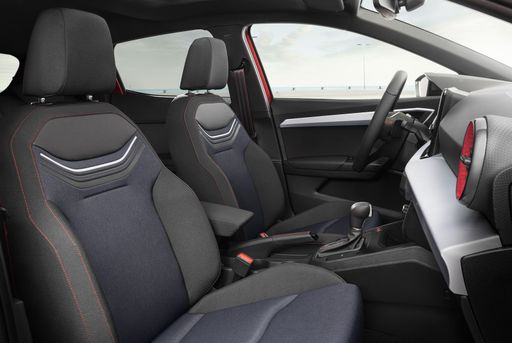
The SEAT Ibiza is a cheeky, well-priced hatchback that blends sharp styling with a grown-up driving character, making it a smart choice for city commuters who still want a bit of fun. Inside it's practical and neatly finished, with sensible kit and easygoing manners that make everyday life less fussy — a car that doesn't try too hard but gets the job done with a smile.

details

Hyundai i20

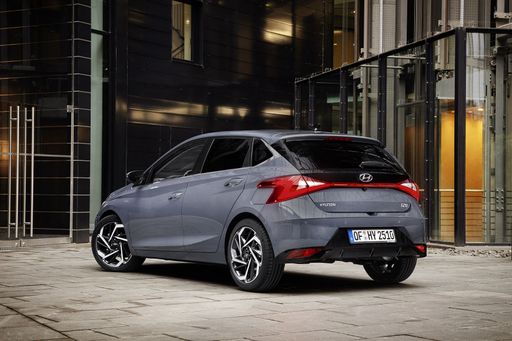
The Hyundai i20 is a cheeky small car that mixes smart styling with sensible practicality, feeling more polished and roomy than you might expect for the money. It’s an easy car to live with, offering engaging handling, a comfy cabin and useful equipment that make daily commutes and weekend errands notably less dull.

details
SEAT Ibiza
Hyundai i20

Costs and Consumption

Price
16,800 - 28,600 £
Price
18,800 - 24,400 £
Consumption L/100km
5 - 5.7 L/100km
Consumption L/100km
5.7 L/100km
Consumption kWh/100km
-
Consumption kWh/100km
-
Electric Range
-
Electric Range
-
Battery Capacity
-
Battery Capacity
-
co2
114 - 128 g/km
co2
128 - 129 g/km
Fuel tank capacity
-
Fuel tank capacity
-

Dimensions and Body

Body Type
Hatchback
Body Type
Hatchback
Seats
5
Seats
5
Doors
-
Doors
-
Curb weight
1,111 - 1,231 kg
Curb weight
1,145 - 1,170 kg
Trunk capacity
355 L
Trunk capacity
352 L
Length
-
Length
-
Width
1,780 mm
Width
1,775 mm
Height
-
Height
-
Max trunk capacity
-
Max trunk capacity
-
Payload
489 - 522 kg
Payload
455 - 465 kg

Engine and Performance

Engine Type
Petrol
Engine Type
Petrol
Transmission
Manuel, Automatic
Transmission
Manuel, Automatic
Transmission Detail
Manual Gearbox, Dual-Clutch Automatic
Transmission Detail
Manual Gearbox, Dual-Clutch Automatic
Drive Type
Front-Wheel Drive
Drive Type
Front-Wheel Drive
Power HP
80 - 150 HP
Power HP
90 HP
Acceleration 0-100km/h
8.1 - 15.3 s
Acceleration 0-100km/h
11.5 - 12.8 s
Max Speed
-
Max Speed
-
Torque
95 - 250 Nm
Torque
172 Nm
Number of Cylinders
3 - 4
Number of Cylinders
3
Power kW
59 - 110 kW
Power kW
66 kW
Engine capacity
999 - 1,498 cm3
Engine capacity
998 cm3

General

Model Year
2025
Model Year
2025
CO2 Efficiency Class
D, C
CO2 Efficiency Class
D
Brand
SEAT
Brand
Hyundai
DriveDuel uses data analysis and artificial intelligence to evaluate vehicle data and create content. Content is regularly reviewed and improved. The displayed prices are estimates based on German list prices, adjusted to the respective country’s VAT. Country-specific registration taxes are not included. This information is not legally binding.