VS

Skoda Fabia vs Hyundai i20 comparison

Compare performance (177 HP vs 90 HP), boot space and price (17,300 £ vs 18,600 £ ) at a glance. Find out which car is the better choice for you – Skoda Fabia or Hyundai i20?

Skoda Fabia vs Hyundai i20: Key differences

Skoda Fabia

5 (1 Reviews)
rate
  • only slightly cheaper
  • significantly more power
  • somewhat more efficient
  • substantially quicker 0–100 km/h
  • marginally lighter
  • very slightly more trunk space

Hyundai i20

4 (1 Reviews)
rate

All details on performance, efficiency, range and trunk space can be found in the technical comparison below – including user reviews for both models.

Fabia

Small Car, Big Personality

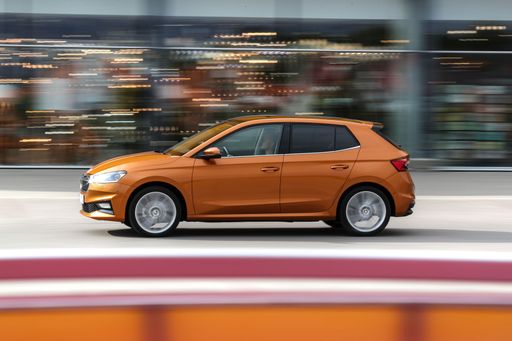
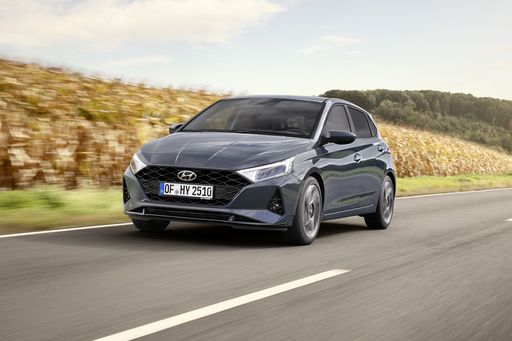
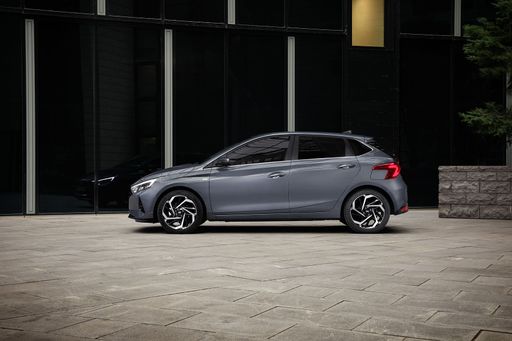
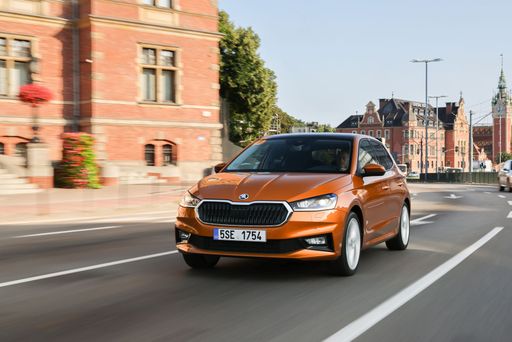
The i20 feels like the extrovert of the pair — youthful, chatty and keen to please anyone looking for a bit of style in their daily commute, while the Fabia presents itself as the sensible sibling: understated, confident and quietly efficient. Both wear their characters on their sleeves, so your choice starts with whether you want to stand out or blend in while enjoying sensible functionality. Neither is trying to be a sports car; they both promise rewarding everyday ownership with different attitudes. Pick the personality that matches your daily mood and the rest will fall into place.
i20

City Chops and Long-Run Composure

Behind the wheel the i20 delights in urban environments with nimble manners and light steering that makes threading through traffic almost effortless, whereas the Fabia trades a touch of that city sprightliness for a more composed, planted feel that suits longer journeys and motorway miles. The Fabia communicates a sense of restraint that inspires confidence at higher speeds, while the i20 keeps the grin alive in tight spaces. Each car has its comfort zone and they both play it well, so consider where most of your miles will be racked up. The key is whether you value playfulness or poise on your daily routes.

Fabia

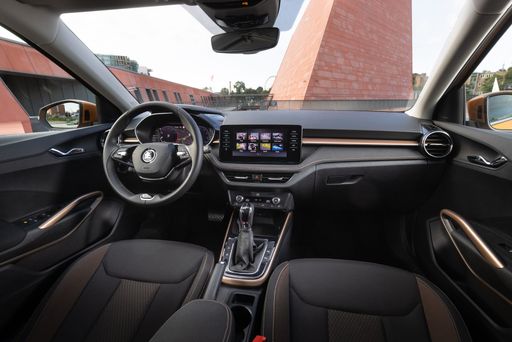
Cabin Vibes: Tech Flair versus Pragmatic Design

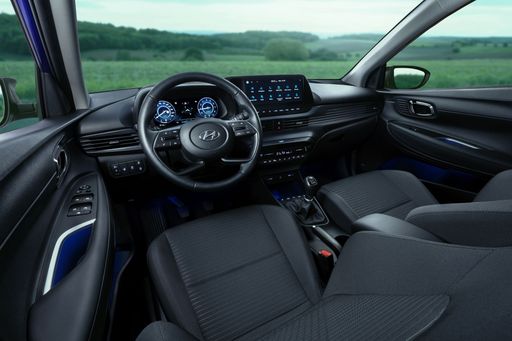
Step inside and the i20 aims to charm with a fresher, more colourful approach and a cabin that feels modern without being fussy, whereas the Fabia opts for a more understated, well-organised interior that prioritises ergonomics and material quality. Controls on the Fabia are straightforward and built for the long haul, while the i20’s layout feels more lifestyle-oriented and friendly to younger buyers. Both cabins are comfortable for everyday use, but they send different signals about who they’re trying to please. If you spend a lot of time inside your car, think about whether you prefer lively styling or quiet functionality.

i20

Practicalities That Make Life Easier

When it comes to everyday usability the Fabia leans into clever, no-nonsense packaging that rewards anyone who carries luggage or family kit on a regular basis, while the i20 counters with thoughtful little details and flexible touches that suit city families and weekend planners alike. Rear-seat comfort is acceptable in both, but each car has its own take on storage and convenience that will sway different buyers. Neither forces compromises you can’t live with, yet each will please a different type of user depending on whether you prize cargo pragmatism or urban versatility. In short, think about what you ferry most often before choosing your side.

Fabia

Street Presence and Personality

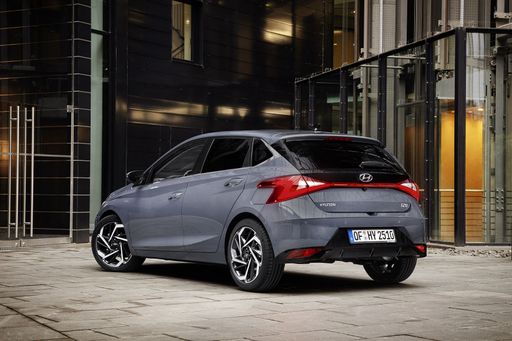
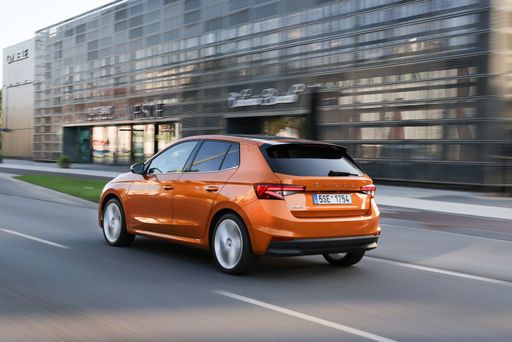
The i20 projects a youthful, contemporary look that tends to catch the eye in stop-start traffic, pairing bubbly styling with a playful stance that’s hard to ignore, whereas the Fabia’s design language is more classic and discreet, appealing to buyers who favour timeless elegance over attention-seeking shapes. Both manage to look grown-up in their own ways, so the decision comes down to whether you want a little flair or quiet competence. Image-conscious shoppers will find options to suit their taste in either camp. Ultimately, each car’s appearance says a lot about the owner before the engine is even started.

i20

Ownership: What You Live With Every Day

Ownership feels straightforward with both models, though the Fabia tilts towards no-nonsense value and practical durability while the i20 offers a bit more personality in its specification and cabin ambience that can feel more rewarding on a daily basis. Serviceability and usability play to different strengths, so one appeals to the frugal pragmatist and the other to those who want a little extra charm in return for their running routine. Insurance, maintenance and resale impressions will be influenced by the image you choose to project as much as the car’s innate qualities. Think about how the car will sit in your life for years, not just the first few weeks.

Fabia

Which Buyer Will Sleep Best?

Commuters and city dwellers who want an easy-to-live-with, fun-to-drive companion are likely to lean toward the i20, while buyers prioritising solid practicality, low fuss and a measured approach to daily driving will find the Fabia a very persuasive choice. Families who need sensible packaging will appreciate the Fabia’s focused approach, whereas younger couples or style-conscious buyers may prefer the i20’s livelier character and cabin ambience. Both cars make strong cases, so match their personalities to your routine and preferences. Your perfect small car is the one that feels right on your regular route.

i20

Keep Reading — The Verdict Awaits

You’ve met the characters, sampled the cabins and weighed the practicalities, but the final decision hangs on a few subtle factors best examined in a real-world drive. Stay with us for the full head-to-head — we’ll dig into final impressions, ownership realities and our DriveDuel Champion will be revealed afterwards. If you’re choosing between charm and common sense, you won’t want to miss how the story ends. Keep reading to find out which car takes the crown.

Here’s where it gets real: The technical differences in detail

Fabia

Costs and Efficiency:

Price and efficiency are key factors when choosing a car – and this is often where the real differences emerge.

Skoda Fabia is only slightly cheaper – starting at 17,300 £ , while the Hyundai i20 costs 18,600 £ . That’s a price difference of around 1,295 £.

Fuel consumption also shows a difference: the Skoda Fabia uses 4.9 L/100km and is somewhat more efficient than the Hyundai i20 with 5.7 L/100km. The difference is about 0.8 L/100km.

i20

Engine and Performance:

Power, torque and acceleration say a lot about how a car feels on the road. This is where you see which model delivers more driving dynamics.

When it comes to engine power, the Skoda Fabia offers significantly more power – delivering 177 HP compared to 90 HP. That’s roughly 87 HP more horsepower.

When accelerating from 0 to 100 km/h, the Skoda Fabia is substantially quicker – completing the sprint in 7.4 s, while the Hyundai i20 takes 11.5 s. That’s about 4.1 s quicker.

There’s also a difference in torque: the Skoda Fabia delivers markedly more torque with 250 Nm compared to 172 Nm. That’s about 78 Nm more.

Fabia

Space and Everyday Use:

Beyond pure performance, interior space and usability matter most in daily life. This is where you see which car is more practical and versatile.

Both vehicles offer seating for 5 people.

In terms of curb weight, Skoda Fabia is marginally lighter – 1,143 kg compared to 1,145 kg. The difference is around 2 kg.

Looking at boot space, the Skoda Fabia offers very slightly more boot space – 380 L compared to 352 L. That’s a difference of about 28 L.

When it comes to payload, the Hyundai i20 carries very slightly more – 465 kg compared to 437 kg. That’s a difference of about 28 kg.

Who wins the race in the data check?

The Skoda Fabia stands well ahead of its rival in the objective data comparison.
This result only shows which model scores more points on paper – not which of the two cars feels right for you.

from £17,300
Fabia

Skoda Fabia

  • Engine Type : Petrol
  • Transmission : Manuel, Automatic
  • Drive Type : Front-Wheel Drive
  • Power HP : 80 - 177 HP
  • Consumption L/100km : 4.9 - 5.6 L/100km
Skoda Fabia
Hyundai i20

Costs and Consumption

View detailed analysis

Engine and Performance

View detailed analysis

Dimensions and Body

View detailed analysis

Skoda Fabia

The Skoda Fabia is a clever, no-nonsense small car that turns everyday chores into a breeze thanks to smart packaging and a surprisingly roomy cabin. It won’t set your pulses racing, but it’s a consistently sensible choice — reliable, easy to live with and blessed with a few neat tricks that make city life less faff.

details

Hyundai i20

The Hyundai i20 is a cheeky small car that mixes smart styling with sensible practicality, feeling more polished and roomy than you might expect for the money. It’s an easy car to live with, offering engaging handling, a comfy cabin and useful equipment that make daily commutes and weekend errands notably less dull.

details
Skoda Fabia
Hyundai i20

Costs and Consumption

Price
17,300 - 30,500 £
Price
18,600 - 24,000 £
Consumption L/100km
4.9 - 5.6 L/100km
Consumption L/100km
5.7 L/100km
Consumption kWh/100km
-
Consumption kWh/100km
-
Electric Range
-
Electric Range
-
Battery Capacity
-
Battery Capacity
-
co2
112 - 126 g/km
co2
128 - 129 g/km
Fuel tank capacity
40 L
Fuel tank capacity
-

Dimensions and Body

Body Type
Hatchback
Body Type
Hatchback
Seats
5
Seats
5
Doors
5
Doors
-
Curb weight
1,143 - 1,278 kg
Curb weight
1,145 - 1,170 kg
Trunk capacity
380 L
Trunk capacity
352 L
Length
4,108 - 4,137 mm
Length
-
Width
1,780 mm
Width
1,775 mm
Height
1,458 - 1,459 mm
Height
-
Max trunk capacity
1,190 L
Max trunk capacity
-
Payload
402 - 437 kg
Payload
455 - 465 kg

Engine and Performance

Engine Type
Petrol
Engine Type
Petrol
Transmission
Manuel, Automatic
Transmission
Manuel, Automatic
Transmission Detail
Manual Gearbox, Dual-Clutch Automatic
Transmission Detail
Manual Gearbox, Dual-Clutch Automatic
Drive Type
Front-Wheel Drive
Drive Type
Front-Wheel Drive
Power HP
80 - 177 HP
Power HP
90 HP
Acceleration 0-100km/h
7.4 - 15.7 s
Acceleration 0-100km/h
11.5 - 12.8 s
Max Speed
175 - 228 km/h
Max Speed
-
Torque
93 - 250 Nm
Torque
172 Nm
Number of Cylinders
3 - 4
Number of Cylinders
3
Power kW
59 - 130 kW
Power kW
66 kW
Engine capacity
999 - 1,498 cm3
Engine capacity
998 cm3

General

Model Year
2,025
Model Year
2,025
CO2 Efficiency Class
D, C
CO2 Efficiency Class
D
Brand
Skoda
Brand
Hyundai
DriveDuel uses data analysis and artificial intelligence to evaluate vehicle data and create content. Content is regularly reviewed and improved. The displayed prices are estimates based on German list prices, adjusted to the respective country’s VAT. Country-specific registration taxes are not included. This information is not legally binding.